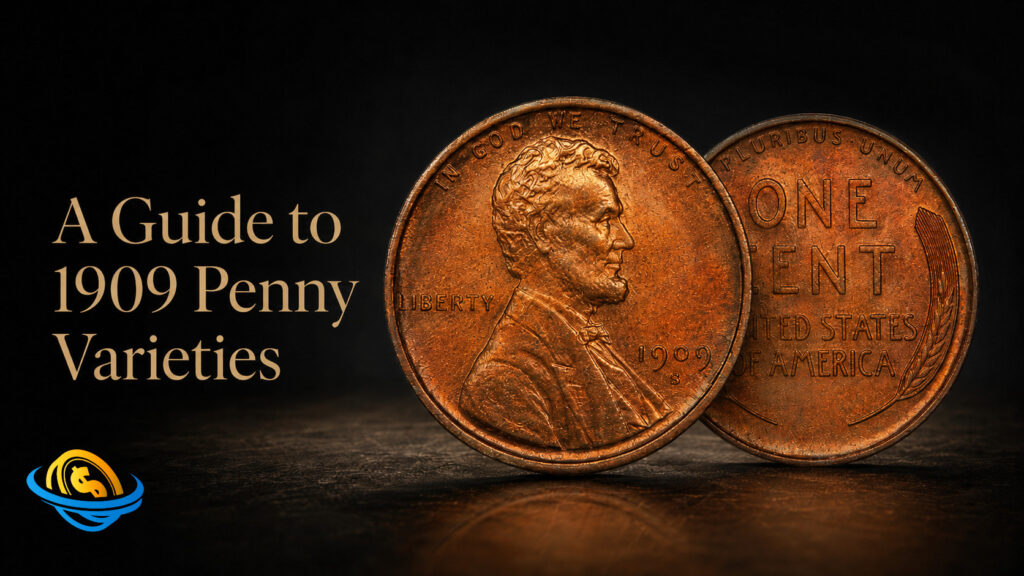
The Lincoln Penny series was first introduced in 1909. And as is so often the case in transitional years, mint errors and especially varieties tend to creep in picture. So let’s take a look at all of the major varieties that exist for the 1909 Lincoln cent.
09 / 09 vdb / 09 s / 09 s vdb
Design varieties are up first and here the best known and often mentioned VDB coins have to be the obligatory first mentioned. Victor D Brenner was responsible for deigning the Lincoln cent. The first circulating coin yo feature a former president, and issued to coincide with the 100th anniversary of his birth as well.
A hundred years later the mint would naturally once again choose to celebrate the birth of the nation’s 16th president with the four coin Lincoln bi-centennial penny set. Depicting his life from a humble birth in rural Kentucky. The formative years in Indiana, Professional life in Illinois and all the way to the Presidency in Washington DC.
But back to the wheat cent. Which as I mentioned was designed by Sculptor Victor D Brenner. And as such it was, by custom, his right to place his initials, discreetly, somewhere on the design. He chose to do so on the reverse, just between the two wheat stalks at the very bottom. Hence the name of the coin – the 1909 VDB cent. This was issued in both Philadelphia and San Francisco.
But apparently the design ruffled some feathers, as the issue had barely hit the coining presses before an order was given to halt production completely. Mint officials decided that the most expeditious way to deal with the problem was to simply remove the VDB from the design altogether. And so was born the first design variety. The VDB and No VDB coins for the 1909 penny.
Now today the VDB coins, from either mint, is both more sought after and more valuable by sheer virtue of the fact that there were fewer of them minted. The Philadelphia coin is the most obtainable as it has nearly 28 million coins, so you can’t exactly call that rare. Although compared to the 72 million of the no VDB example it is comparatively – not as easy to find.
Now the San Francisco, or S mint, VDB coin on the other hand is a completely different story. San Francisco minted 1.825 million No VDB cents in 1909. So already a low mintage for the Lincoln series. But the 1909 S VDB penny only saw 484 000 coins leave the mint before production was halted.
In today’s market an average circulated 1909 penny would fetch about $5 to $10 maybe. With a 1909 VDB coin doubling that to around $10 to $20. Moving up from there to a decent graded coin at, say, the MS64 level. Then the 09 commands a price between $50 to $100. And the 09 VDB raises that to between $80 and $150 at the same grade point.
During 2022 a gem beauty of a coin, at the grade level of PCGS MS67+ Red was sold at auction for a highly respectable $7200.
Similarly during 2021 an 09 VDB penny graded by PCGS as MS68 Red, which places it at the very top of the condition census was sold at auction for an almost unbelievable $56 400.
Like I mentioned the San Francisco coins are significantly scarcer and here prices start to rise quite dramatically. The 1909 S Lincoln penny in an average circulating grade is already worth around a $100. With an MS64 coin comfortably selling between $600 and $700 each. Then add the VDB initials to the S mintmark and you are looking at a thousand dollar coin in circulating grades already. Stepping up to an MS64 and you are staring at a $3500 to possibly $4500 in today’s market.
2020 saw the auction of a top level registry set example of the 1909 S wheat cent, in a PCGS slab graded as MS67 Red, sell at auction for $16 800.
But the 1909 S VDB cent has to take the crown here as well. During the spring of 2022 a coin graded as MS67 Red by PCGS was sold at auction for no less than $168 000.

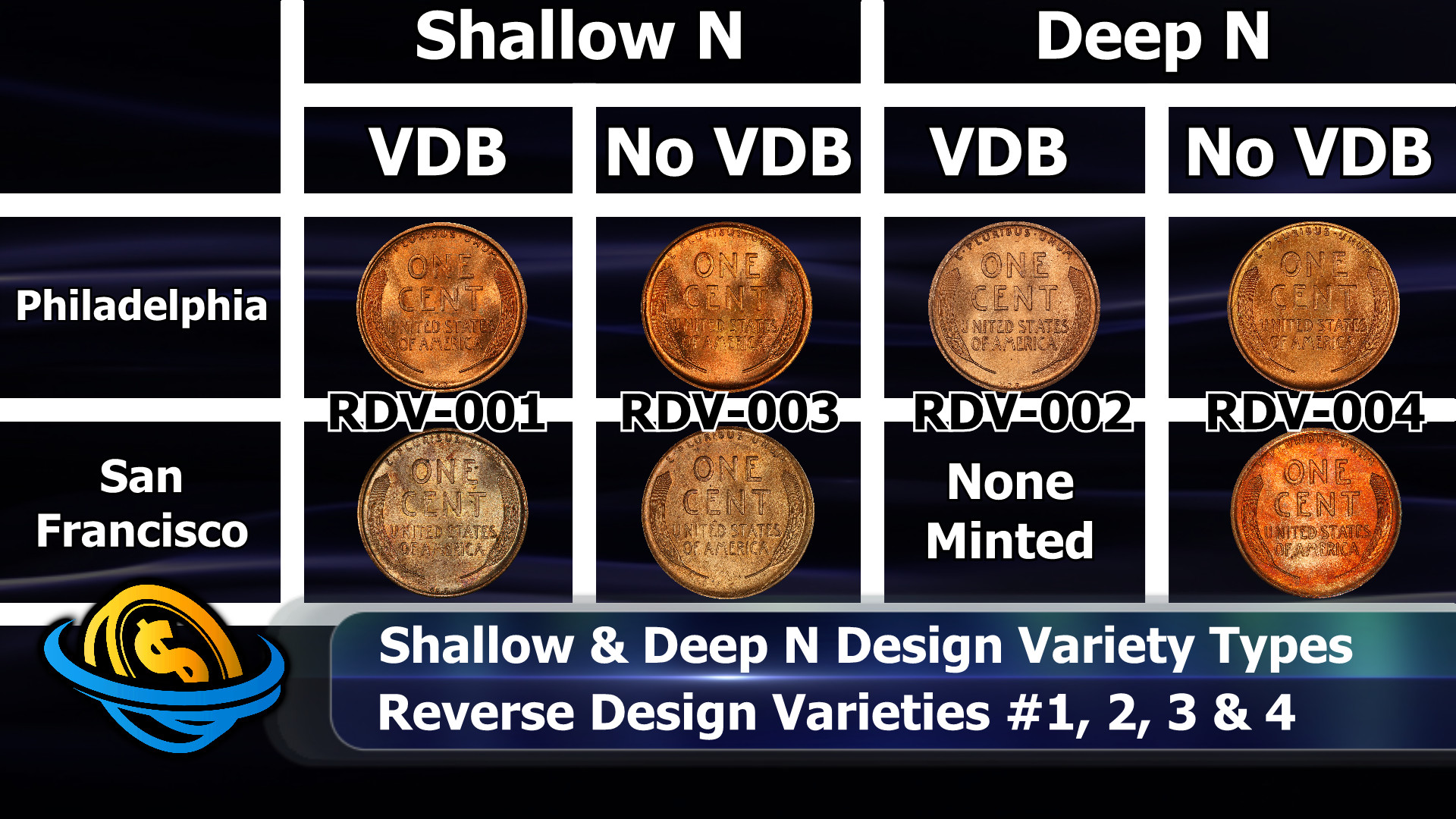
RDV001-004
Now that’s not all there is, in terms of design varieties for the 1909 penny either, and it constantly amazes me that almost no-one talks about this. When it comes to the 1982 penny it is generally agreed that you have to collect all 7 or 8 varieties. The wide and close AM varieties of the 90’s are well known. And that’s not even broaching the numerous large and small date types through the years. But the 1909 deep and shallow N types largely fly under the radar for some reason.
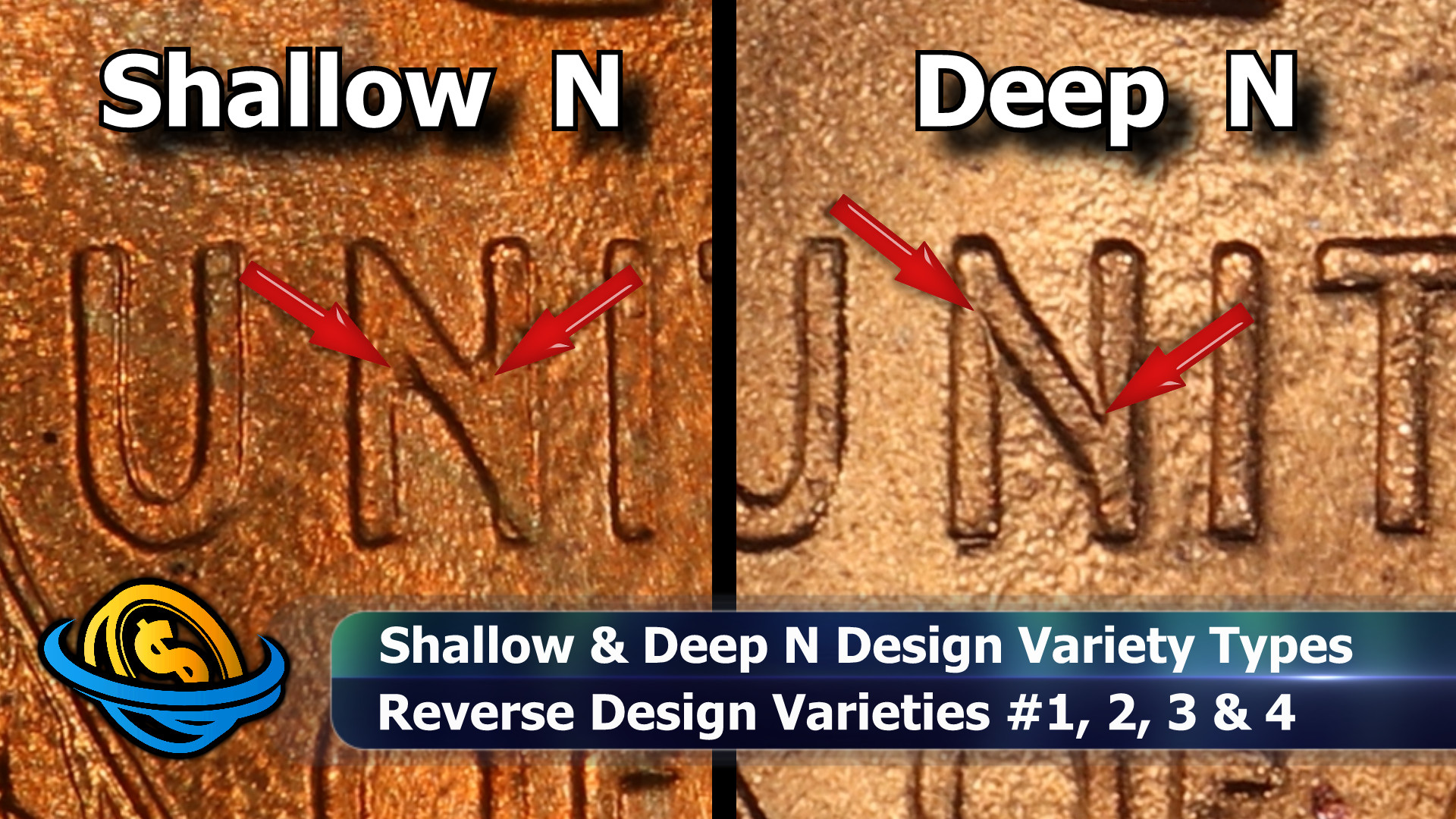
On this coin you look at the word N of UNITED to find that some are shallow cut where the connecting sections are almost parallel to each other. And then on design varieties 2 and 4 you have a deeply cut relief with sharper edges and a more harshly cut, defined letter N. These appear on both the VDB and No VDB coins in both cases. Although the deep N VDB coin is unique to Philadelphia. Whereas the Shallow N VDB, as well as the Deep N No VDB and Shallow N No VDB types are found for all three working mints. And because the design variety is not widely sought by most collectors, it does not add or detract from the value of the coin whatsoever.
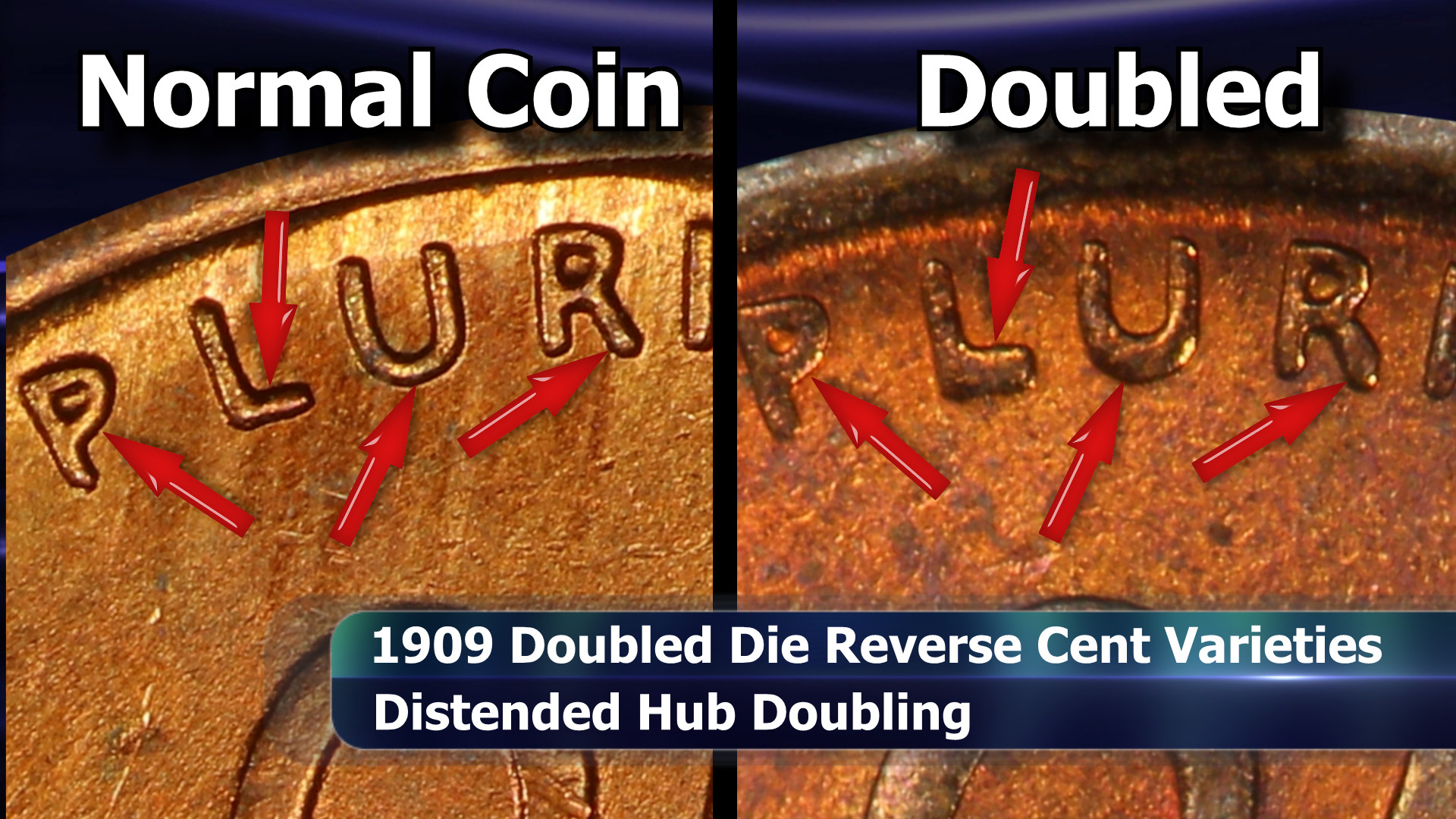
Now moving on to doubled die varieties there are quite a few to look out for on the 1909 pennies. Beginning with doubled die reverse varieties there are about a dozen or so minor varieties to look for. But without diving too deep into minutia almost all of those fall into one of two broader categories. Most of which share largely the same characteristics. These are distorted and distended hub doubled coins.
DDR-001 to 012
The first is an example of class II or a distorted hub doubled coin. Here the doubling is clearly seen on the letters of E PLURIBUS UNUM. This is boldest on the various U’s in the motto as well as the L of PLURIBUS. As well as the base of the letter E. As I mentioned already there are numerous other varieties that share similar characteristics, but on this specific coin die markers include a small die gouge on the base of the L in PLURIBUS. A diagonal die scratch to the left of the T in CENT. And a long diagonal die scratch from west to east through the C of Cent. But not all of the varieties will share these exact die markers.
The other grouping I mentioned are the distended hub doubled or Class VI doubled coins. These may be a little more difficult to diagnose but your primary focus should still be on the letters of E PLURIBUS UNUM. But in most cases here the letters will simply appear thicker than they aught to be. This is especially clear in the present example where all the letters appear to be fat or really thick at their base. The dots separating the words are especially noticeable with fantastic doubling here. The tops of the letters of ONE are also similarly affected.
Unfortunately none of these doubled die reverse varieties are listed in the cherrypickers guide. And as such neither PCGS or NGC will attribute them as varieties. If you are looking to grade them as varieties, ANACS might be a better option. Because of this low market recognition factor the premium for these varieties over the base coin is also relatively low.
FS-01-1909-1102 / 012.1 DDO002
Moving on to some more recognizable or better known varieties from there, we find a doubled die obverse variety for the 1909 VDB cent. This is again a distended hub doubled coin. As a result the defining characteristic is additional thickness to the deign elements. In this case the letters of LIBERTY are all thicker on their vertical sections when compared to a normal coin. But the numbers on the date are the real stars of this show, with additional thickness and in an early die state even fair separation lines on the tails of both number nines.
Depending on the die state of the coin you have die markers for this variety also include die chips inside the cavities of the letter B of LIBERTY as well as the R of that same word. Although it should be noted that the die chip in the R is also found on non variety coins as well. In lated die states clash marks can also be seen to the right of Lincoln’s thought. As well as the corresponding clash marks to the lower end of the C in CENT on the reverse of the coin.
In 2021 a coin like this, graded by PCGS as MS67 Red was sold at auction for $9 600.

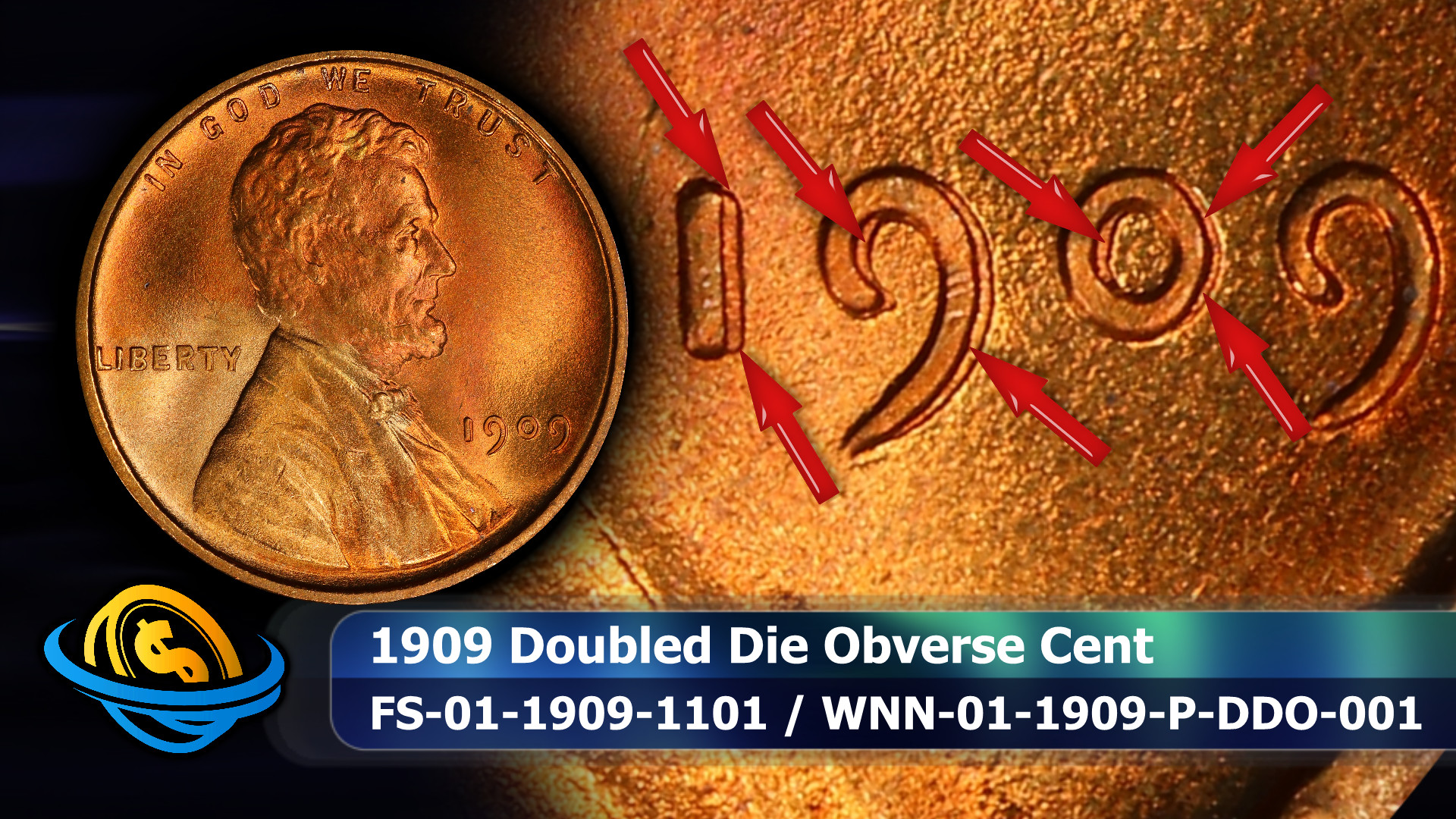
FS-01-1909-1101 / 012 DDO-001
However the 1909 VDB cent has a far stronger and more impressive doubled die variety to look for. This coin is the result of offset hub doubling with a fairly strong spread on the obverse of the coin. Most of the doubling here displays towards a south easterly direction to a lesser or greater degree.
There is some doubling to be seen on Lincoln’s lips, to start with, although this is definitely not the strongest doubling on this particular variety. We move then to the letters of “LIBERTY”. Where the B, the E, R, T and Y are all doubled quite nicely. With the doubling becoming stronger and more defined as you move closer to Lincoln’s shoulder. The strongest doubling however is reserved for the date. Or at least the first three digits of the date. Here there is very bold doubling on the number 1, the first 9 and the 0 as well. And this is definitely your primary place of interest when looking for this particular variety.
During the 2018 ANA Worlds Fair of Money a coin matching this description, graded as PCGS MS67 Red was sold at auction for $12 000.
FS-01-1909S-1502 / 012.3 RPM-002
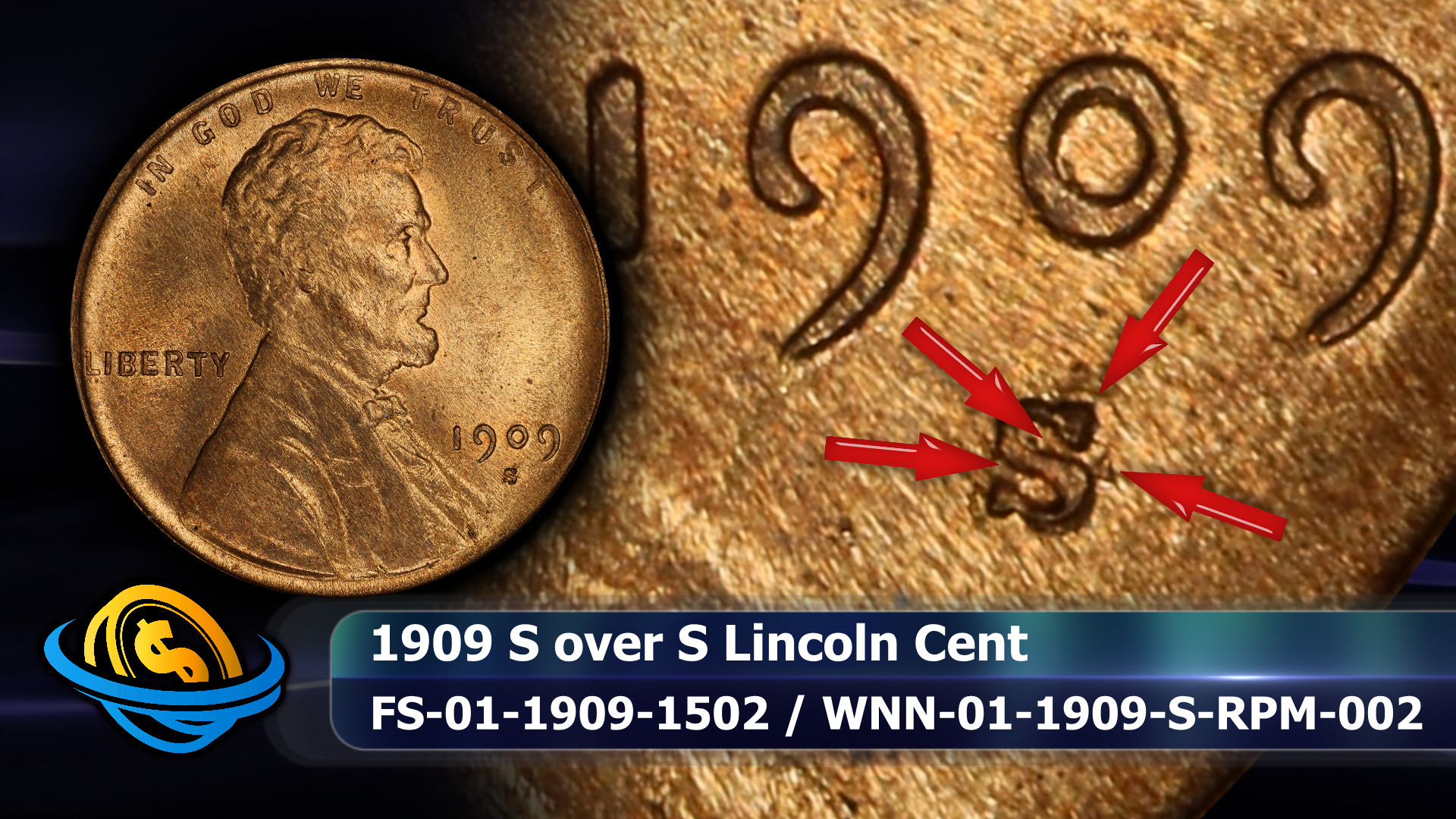
Having dealt with the doubled die varieties, we can now move to the San Francisco mint in order to locate the repunched mintmark variety coins available for this date. There are two repunched mintmark types to look for here. Both are located on the regular 1909 S or the no VDB type coin.
First up is the S over Horizontal S type. Where the initial S mintmark was placed onto the working die sideways or in a horizontal orientation. The second impression was thus necessitated in order to correct the orientation of the S in it’s upright position. Look towards the lower rounding of the S to see what remains of the serif from the initial S impression. The biggest challenge with this variety is finding a coin in a sufficiently early die state as to see the horizontal orientation of the initial impression. As this may fade with later die states, though it does nether-the-less remain clear that the mintmark was repunched.
For this coin, the finest known example, standing at a grade of MS67 Red from PCGS was sold at auction in 2018 during the sale of the ESM collection for $24 000.
FS-01-1909S-1501 012.2 RPM-001
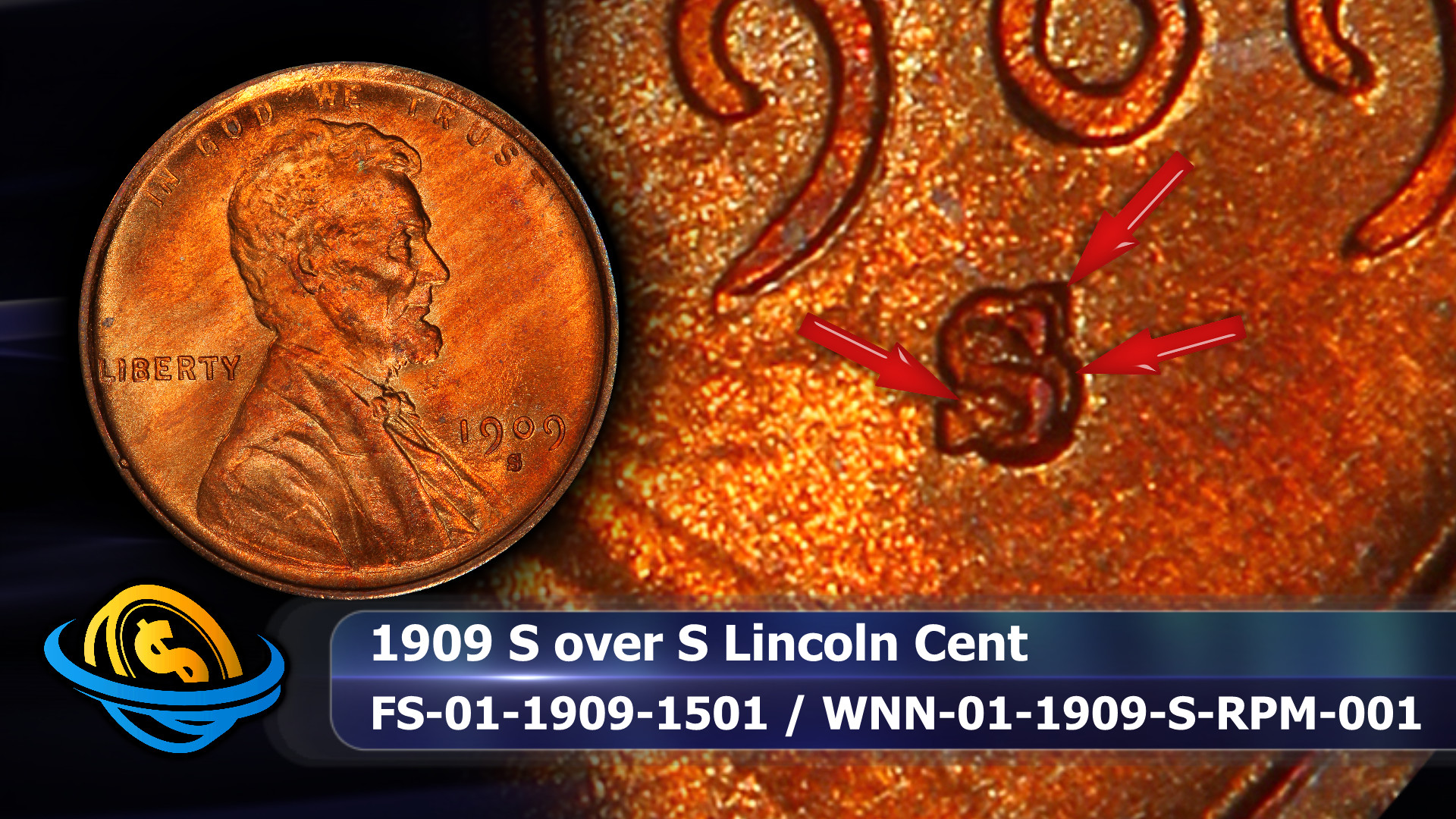
The second repunched mintmark variety coin for the 1909 S Lincoln penny is perhaps not as widely known as the previous coin. Owing I suspect, to the fact that is is omitted from the popular red book. Though it is far scarcer to locate and resultant in greater demand by specialist collectors.
The initial S mintmark in this case was placed towards the north east of the final position, with clear doubling to the top serif, as well as the bottom serif. Although in the case of the bottom serif it might not be quite as… visually dramatic. Similar doubling is then also present towards the lower rounding of the S as well.
In 2019 one of these variety coins, a beautiful fiery copper red example slabbed by PCGS as MS66 Red was sold at auction for $3290.
And that largely concludes all the varieties of note for the 1909 Lincoln cent.