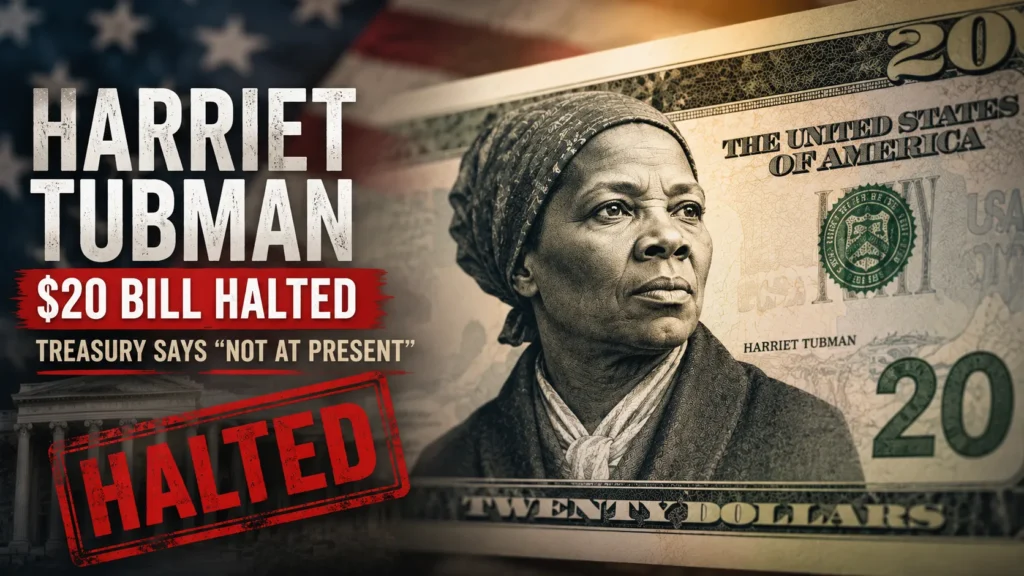
The Harriet Tubman $20 bill is off the table, again, at least for now. Asked by Spectrum News this month whether the Treasury Department still intended to place the abolitionist’s portrait on the note, Treasury Secretary Scott Bessent answered, “We are not at present.” He offered no further explanation, and a Treasury spokesperson declined to comment beyond the remark.
The statement quietly closes, or at minimum suspends, one of the longest running stories in American paper money: a $20 bill redesign first announced in 2016, delayed under one administration, revived under the next, and now shelved again under a third. For collectors of United States currency, it means the most anticipated Federal Reserve Note redesign in a generation has no timeline at all.
A Decade of Delays for the Tubman $20
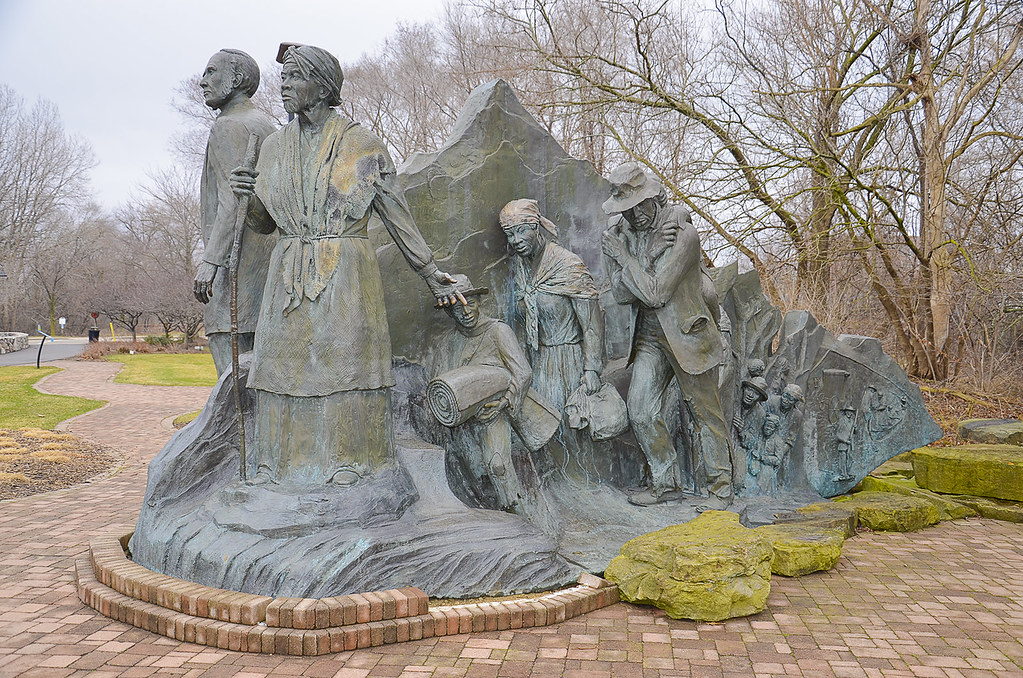
The plan dates to April 2016, when then Treasury Secretary Jacob Lew announced that Harriet Tubman would replace Andrew Jackson on the face of the $20 bill, a decision Lew said followed thousands of responses from the public. The symbolism was pointed. Jackson was a slaveholder; Tubman escaped slavery in 1849 and returned to Maryland roughly thirteen times over the following decade, personally guiding about seventy people to freedom as a conductor on the Underground Railroad. She would have been the first African American to appear on the face of United States paper currency, and the first woman on a modern note. There is even a numismatic footnote buried in the choice of denomination: twenty dollars was the monthly pension Tubman eventually received from the federal government for her Civil War service.
The redesigned note was originally slated for unveiling in 2020, timed to the centennial of the 19th Amendment. It never arrived. During the first Trump administration, then Secretary Steven Mnuchin pushed the redesign back to 2028, citing the development of new anti counterfeiting technology. The Biden administration announced in January 2021 that it would resume and accelerate the effort, and Secretary Janet Yellen put the project back on track, though on a timeline that stretched to 2030 alongside the broader redesign of the $5 and $10 notes.
That 2030 target is what Bessent’s answer now casts into doubt. The secretary had already signaled little urgency: pressed for an update by Representative Joyce Beatty of Ohio at a May 2025 hearing, he replied only that his staff would get back to her.
The Trump $250 Bill Question
The timing of the announcement drew immediate attention to a parallel Treasury effort. The department has been preparing for a proposed $250 note bearing President Trump’s portrait, tied to the nation’s 250th anniversary. Asked how the two decisions fit together, Bessent noted that the $250 bill would require an act of Congress, since federal law has barred living persons from U.S. currency since 1866, and added that changing any existing note takes many years of lead time.
Critics were quick to observe that the Tubman redesign has had a decade of lead time already. No new historical figure has appeared on U.S. paper currency since 1928, when the current portrait lineup was largely fixed. Whether the next addition is Tubman, Trump, or no one at all is now an open question.
Congress Pushes Back: The Harriet Tubman Tribute Act
Legislative pressure has not gone away. On Harriet Tubman Day, March 10, 2025, Senator Jeanne Shaheen of New Hampshire introduced the Harriet Tubman Tribute Act of 2025 (S. 923), which would require every $20 note printed after December 31, 2030 to carry Tubman’s portrait, with only a narrow counterfeiting exception allowing a delay of up to two years. Representative Beatty has filed companion legislation in the House, her Woman on the Twenty Act, continuing an effort she began in 2015.
Shaheen, who has pressed four consecutive administrations on the issue, said she was extremely disappointed by Bessent’s decision and pledged to keep pursuing a path to put Tubman on the note. Neither bill has advanced far in the current Congress, and with Treasury now openly uncommitted, the redesign’s fate rests more heavily on legislation than at any point since 2016.
The 2024 Harriet Tubman Commemorative Coins
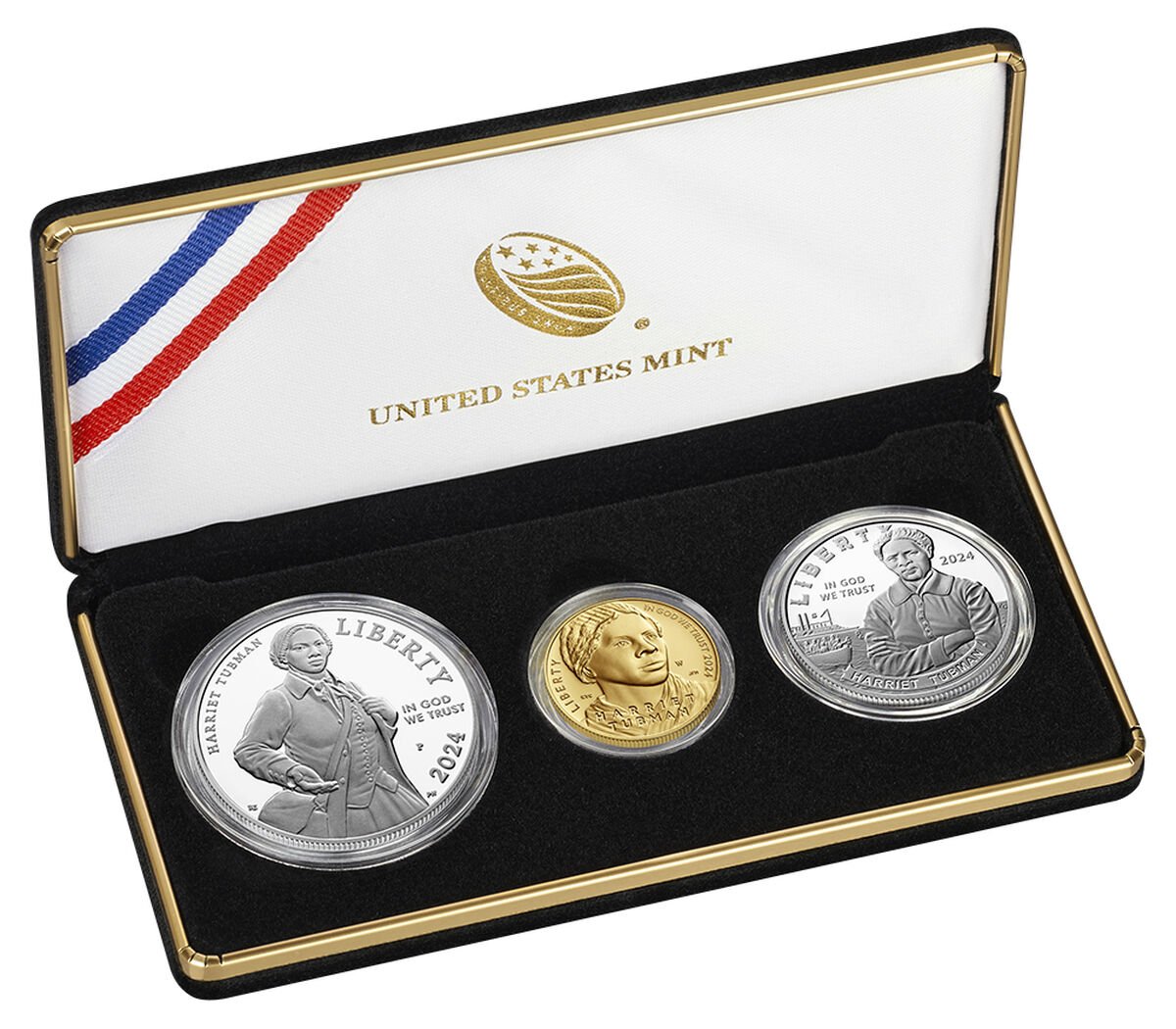
Collectors who want Tubman on legal tender do not have to wait for the Bureau of Engraving and Printing. In January 2024 the U.S. Mint released the Harriet Tubman Commemorative Coin Program, authorized by Public Law 117-163 to mark the bicentennial of her birth around 1822. The three coins trace the three chapters of her life: the silver dollar depicts her Underground Railroad years, with silhouettes crossing a bridge of clasped hands beneath the Big Dipper pointing to the North Star; the clad half dollar honors her Civil War service as a nurse, scout, and spy, including the Combahee River Raid, in which she became the first woman to lead an armed expedition in the war and helped free more than 700 enslaved people; and the $5 gold coin portrays her later years in Auburn, New York, ringed by inscriptions of her seven core values. Surcharges from the program were directed to the National Underground Railroad Freedom Center and the Harriet Tubman Home.
Those coins were struck precisely because the paper note kept slipping. They may now stand for some time as the only federal money to bear her image.
What Happens Next for the $20 Redesign
Nothing in Bessent’s statement forecloses a future redesign. “Not at present” is not “never”, and the security driven redesign cycle that was to carry the new $20 into circulation around 2030 continues on its own institutional track at the Bureau of Engraving and Printing. But a project that has now been announced, delayed, revived, and halted across four administrations has become something rarer than any note it might produce: a case study in how slowly American paper money changes, and how much political weight a single portrait can carry. For now, the woman who never lost a passenger on the Underground Railroad remains waiting at the station.