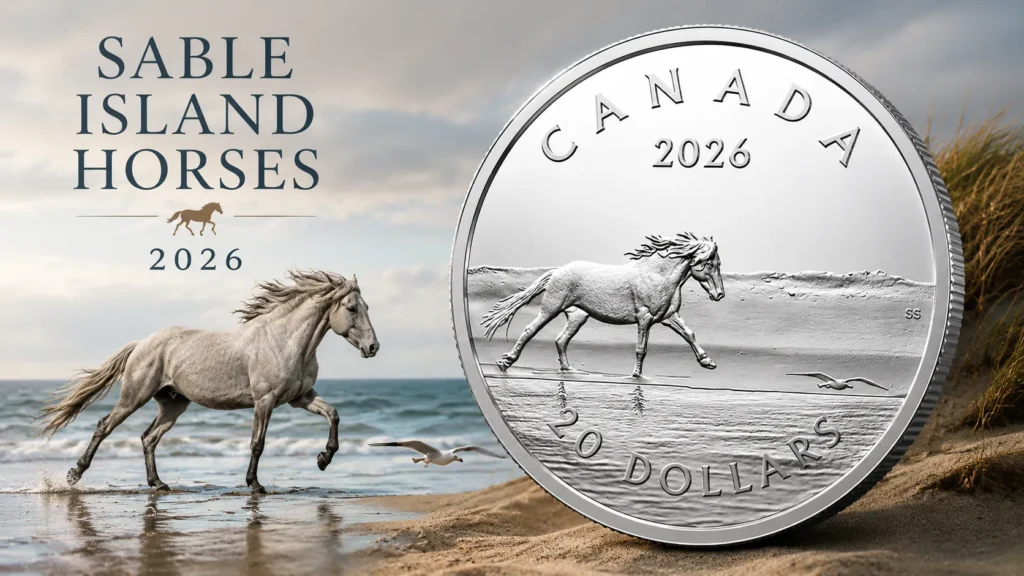
The Royal Canadian Mint has released a new 2026 Sable Island Horses 1 oz. fine silver coin, bringing one of Canada’s most beloved wild animals back to a Canadian coin for the first time in 20 years. The last time the Sable Island horse appeared on a Canadian coin was in 2006, and the timing of this return is no accident: 2026 marks 65 years since the horses gained federal protection in 1961.
Priced at $229.95 CAD with a mintage of just 7,000 pieces worldwide, the coin pairs a photorealistic engraving of a galloping stallion with a story that reaches back through three centuries of survival on a windswept sandbar, and through one remarkable episode of Canadian public life.
The Sable Island Horses: The Herd That Refused to Disappear
Sable Island sits roughly 300 kilometres off the coast of Nova Scotia, a crescent of shifting sand in the North Atlantic. The horses that live there are descended from animals introduced in the 1700s, and for nearly 300 years they have survived in isolation, largely untouched by human influence. They are the island’s only terrestrial mammal, foraging on marram grass and beach pea, drinking from freshwater ponds and from waterholes they dig themselves in the dune hollows.
That survival was very nearly cut short. In 1960, the Canadian government proposed removing the horses permanently and selling them off, citing concerns over malnutrition, inbreeding and the island’s harsh conditions. What followed was one of the more touching chapters in Canadian conservation history. A wave of public outcry rose up, and letters from concerned Canadians of all ages, many of them children, reached then Prime Minister John Diefenbaker, who was moved to intervene personally.
Speaking in the House of Commons on June 2, 1960, Diefenbaker assured Parliament that the horses and their descendants would continue to live on the island, later describing the letter campaign as “an example of the processes of good citizenship.” The horses gained protected status in 1961 through an amendment to the Canada Shipping Act, an unusual legislative home for a herd of wild horses, but an effective one. In 2013, Sable Island became a National Park Reserve under the Canada National Parks Act, placing the island and its naturalized horses under the care of Parks Canada. In 2008, the Nova Scotia Legislature had already declared them the Provincial Horse of Nova Scotia.
Sixty five years after Diefenbaker’s intervention, the horses are still running free. The coin exists to say so.
The Coin Design: Sandy Sharkey’s The Stallion and the Sea
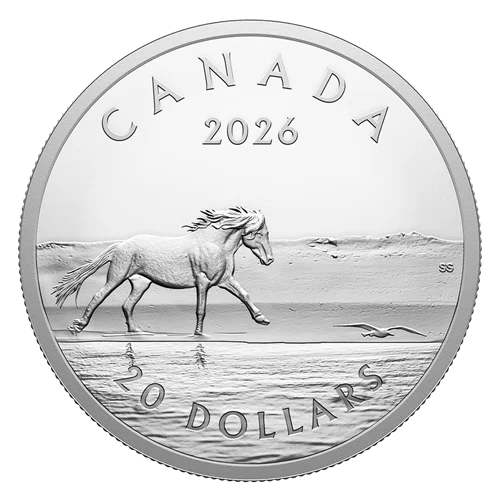
The reverse carries no allegorical reinterpretation and no stylized composition. It is a photograph, rendered in silver. The design is based on The Stallion and the Sea, an image captured by Canadian equine photographer Sandy Sharkey during a visit to Sable Island in 2014, showing one of the island’s wild stallions galloping at full speed along the beach, with a herring gull riding the wind beside him.
Translating a photograph into engraved relief is a demanding exercise, and the Mint acknowledges as much. It notes that adapting a photograph to a coin is not something it does often, and that the reverse relies on a mix of frostings and varied relief heights to re-create the tonal contrasts of the original image. On a proof finish, that layering of frosted textures against mirrored fields is what gives the stallion its sense of motion against the flat shine of the sea.
Sharkey called it a great honour to have her image adorn an official Royal Canadian Mint coin, describing the wild horses as a source of pride for all Canadians, “symbolizing the free spirit that exists in all of us.”
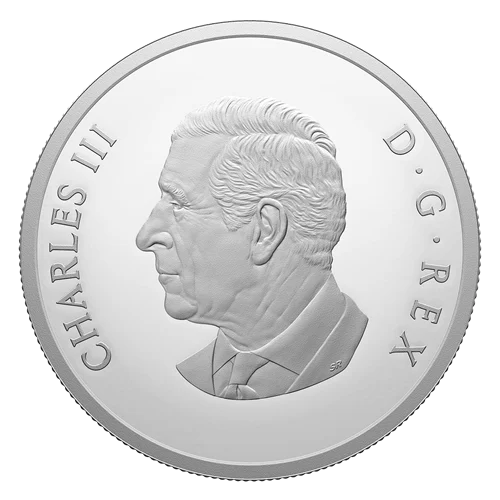
The obverse features the effigy of His Majesty King Charles III by Canadian artist Steven Rosati.
Sable Island Horses Silver Coin Specifications, Mintage and Price
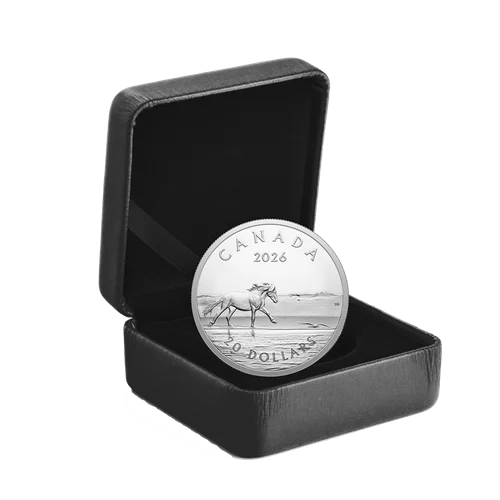
The 2026 Sable Island Horses coin is struck in 1 oz. (31.39 g) of 99.99% pure silver, measures 38 mm in diameter with a serrated edge, carries a $20 face value and a proof finish, and is limited to a worldwide mintage of 7,000 pieces at an issue price of $229.95 CAD. Each coin comes encapsulated in a black Royal Canadian Mint branded clamshell with a black beauty box, accompanied by a serialized certificate. Canadian buyers pay no GST/HST on the issue.
A 7,000 mintage places this comfortably in the Mint’s limited collector tier, low enough to matter, and low enough that a popular Canadian wildlife theme returning after a two decade absence could move quickly.
Why This Coin Matters to Collectors
Wildlife coins are the Royal Canadian Mint’s bread and butter, but this one carries more than a handsome animal portrait. It commemorates a moment when public sentiment, expressed in handwritten letters, changed government policy and saved a wild population outright. As Zoe Lucas, President of the Sable Island Institute, notes, the horses are recognized internationally as a unique population, valued both scientifically and culturally, and have inspired painting, photography, film, dance and literature.
For collectors, the appeal works on two levels. Those who hold the 2006 issue finally have its successor. And for a new generation encountering the story for the first time, the coin does what the best commemoratives do: it keeps a promise visible. Diefenbaker told Parliament in 1960 that these animals and their posterity would continue to live on their island. Sixty five years on, a stallion at full gallop in fine silver is the proof.