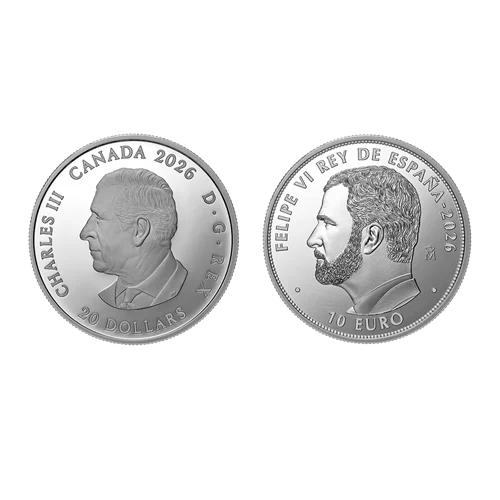
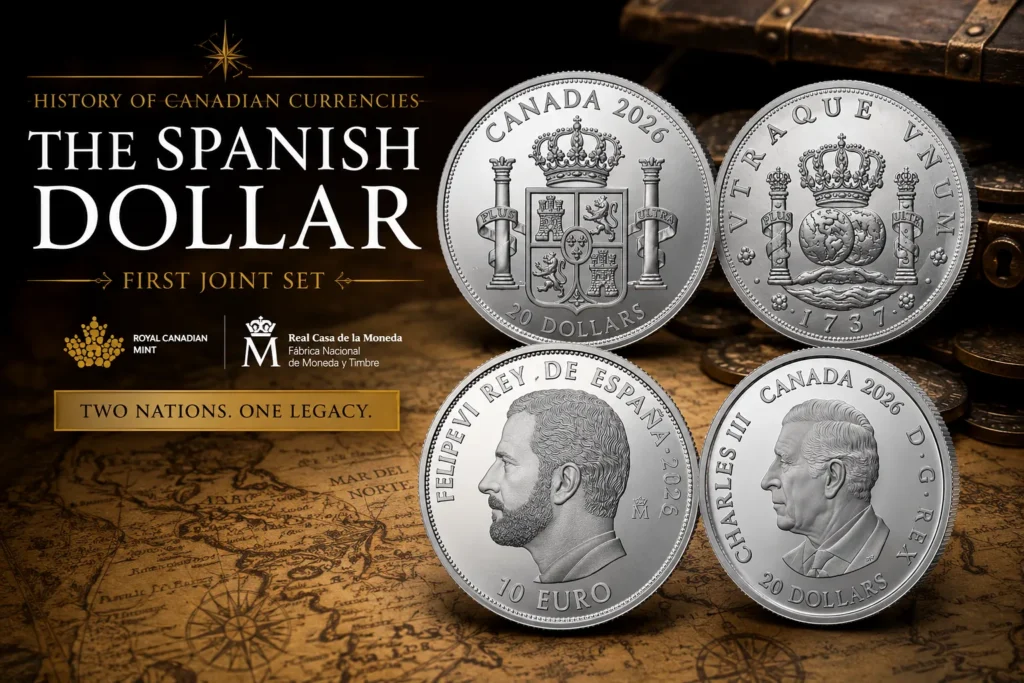
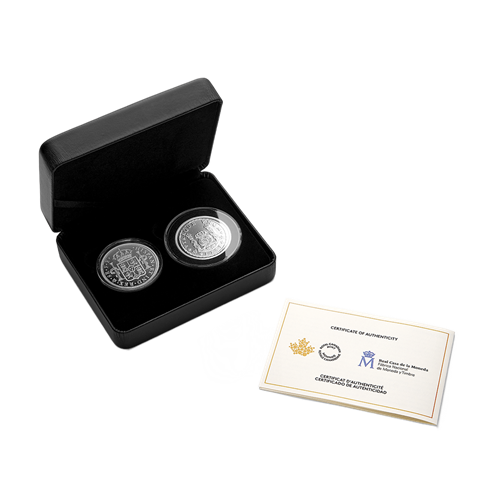
For the first time, the Royal Canadian Mint and the Royal Spanish Mint (FNMT-RCM) have issued a coin set together, and the subject could hardly be better chosen. The History of Canadian Currencies: The Spanish Dollar, Fine Silver Two-Coin Set pairs a Canadian $20 silver proof with a Spanish 10 euro silver proof, each carrying a historic rendering of the coin that once ran the world’s commerce: the Spanish dollar, or 8 Reales, the “Real de a Ocho.”
The set is limited to 6,500 units worldwide, retails for $499.95 CAD, and is sold only as a pair. Neither coin will be offered separately, and each set ships with a joint serialized certificate of authenticity from both mints, itself a first.
The Coin That Ran the World
Before there was a Canadian dollar, an American dollar, or indeed most of the currencies we take for granted, there was the Spanish dollar. From the late fifteenth century to the mid nineteenth, the eight-real piece circulated across oceans and continents with a consistency of weight and purity that made it the world’s first genuinely global currency. It underwrote trade between empires, settled accounts in ports that had never seen Spain, and entered popular imagination as the “pieces of eight” of pirate lore, so called because the coins were routinely cut into eight wedge-shaped “bits” to make change. The expression “two bits” for a quarter survives from that habit to this day.
The coin’s reach extended firmly into what is now Canada, where traders, merchants and settlers relied on it long before a domestic monetary system existed. The Royal Canadian Mint frames this release as part of its History of Canadian Currencies program precisely because the Spanish dollar helped shape that system, and there is a plausible case, still debated, that the dollar sign itself descends from the ribbon-wrapped Pillars of Hercules that appear on the coin’s reverse. Those pillars appear twice in this set.
The Canadian Coin: A Pillar Dollar in .9999 Silver
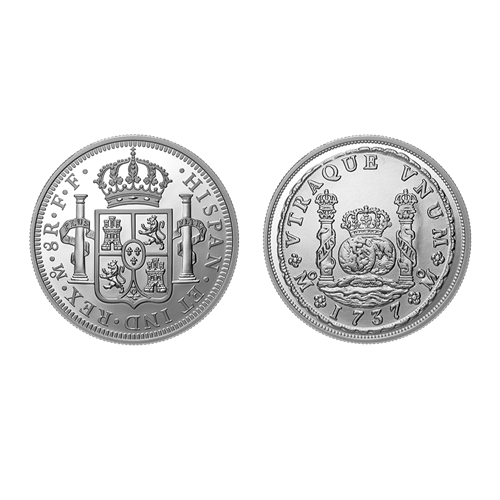
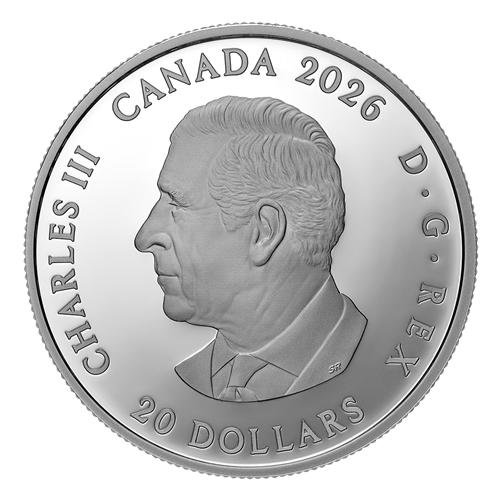
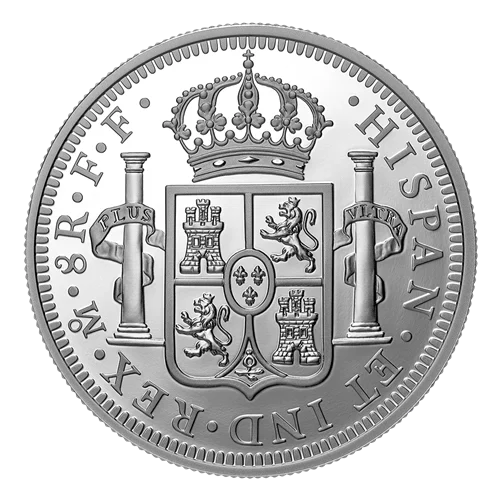
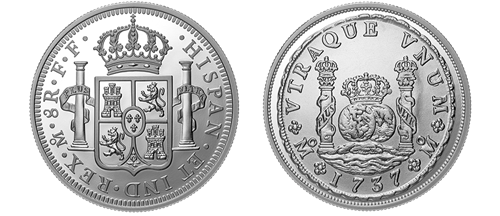
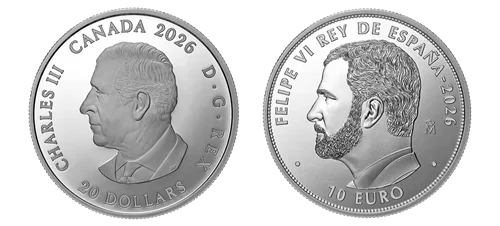
The Canadian half of the pairing is the 2026 $20 Fine Silver Coin, Pillar Dollar, struck in 99.99% pure silver at 31.39 grams and 38 millimetres, with a serrated edge and proof finish. Its reverse, engraved by RCM Engravers, recreates a Spanish 8 Reales struck in 1779: the crowned shield of the Spanish royal arms flanked by the Pillars of Hercules bearing the motto PLUS ULTRA (“further beyond”), with the legend HISPAN ET IND REX (“King of Spain and the Indies”), the Mexico City mint mark Mo, the denomination 8 R, and the assayer’s initials F F. The obverse carries Steven Rosati’s effigy of King Charles III.
The choice of a Mexico City strike is faithful history rather than convenience. The pillar dollars that flooded world trade were products of Spain’s New World mints, and it was those coins, not peninsular issues, that Canadian settlers would actually have handled.
The Spanish Coin: A Columnario in .999 Silver
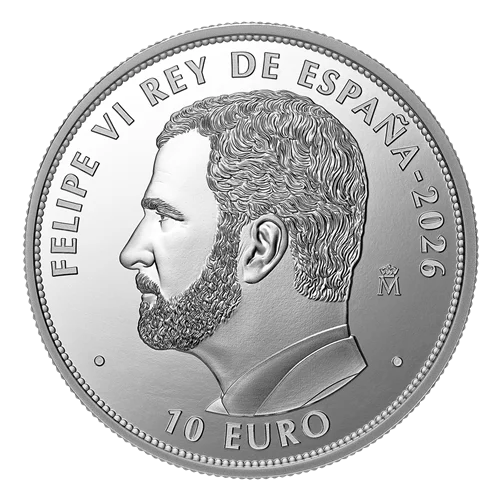
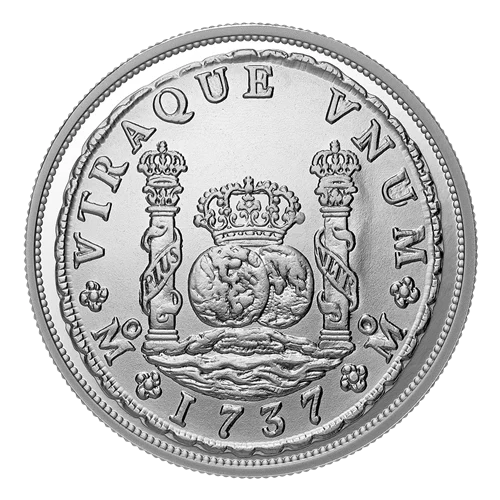
The Spanish contribution is the 2026 10 Euro 1 oz. Fine Silver Coin, Real de a Ocho, struck in 99.9% pure silver at 31.415 grams and 37 millimetres, with a milled edge and proof finish. Both faces are the work of FNMT-RCM engraver Luis José Diaz Salas. The reverse depicts a Real de a Ocho minted in Mexico in 1737, of the “columnar” type named for the two Pillars of Hercules flanking twin globes, a symbol of Spanish dominion over both hemispheres. Above the pillars runs PLUS ULTRA once more, encircled by VTRAQUE VNUM, an allusion to the union of the Old and New Worlds under the Spanish Crown. The obverse bears the effigy of King Felipe VI.
The two reverses are deliberately not the same coin. The Spanish piece honours the columnarios of 1732 to 1773, while the Canadian piece represents a later pillar dollar, so the set reads as two chapters of the same story rather than two versions of one design. The purity split, .999 for Spain and .9999 for Canada, simply follows each mint’s customary standard for collector silver.
A Set Built as a Statement
The presentation matches the occasion: individually encapsulated coins in a custom black clamshell case, housed in a black beauty box carrying both mints’ logos. Isabel Valldecabres, President and CEO of the Royal Spanish Mint, described the set as a tribute to a shared monetary heritage and to “the enduring connections forged through trade, trust, and craftsmanship.”
For collectors, the appeal runs on two tracks. World coin and trade dollar enthusiasts get a two-nation homage to the most consequential silver coin ever struck, rendered by the successor institutions to the mints that made it matter. And collectors of modern issues get something genuinely scarce in this hobby: a true first. National mints collaborate more often than they once did, but a debut pairing between Ottawa and Madrid, on this theme, with a shared certificate and a 6,500 worldwide cap, is the kind of release that tends to be remembered as the start of something rather than a one-off. Whether a second chapter follows is up to the mints. The first one is already written in silver.