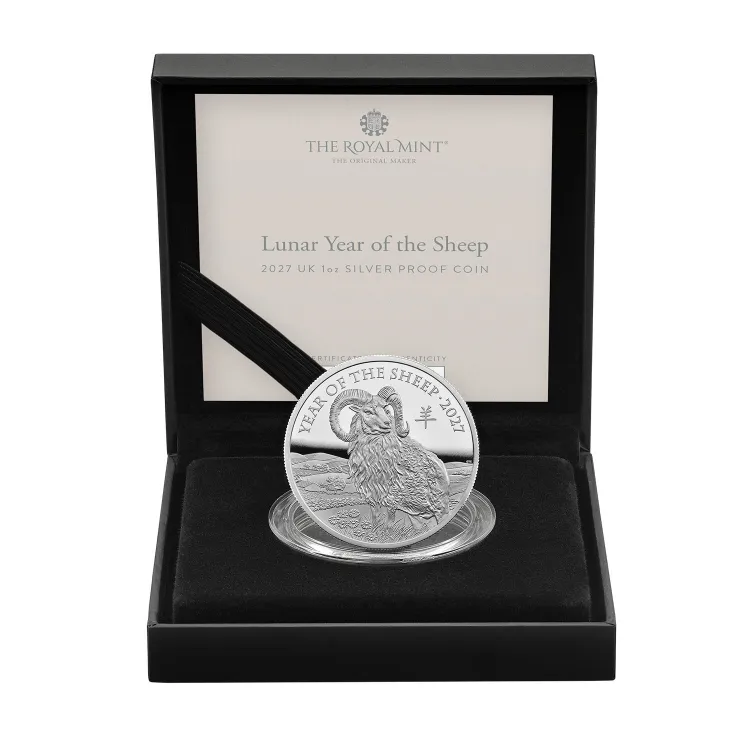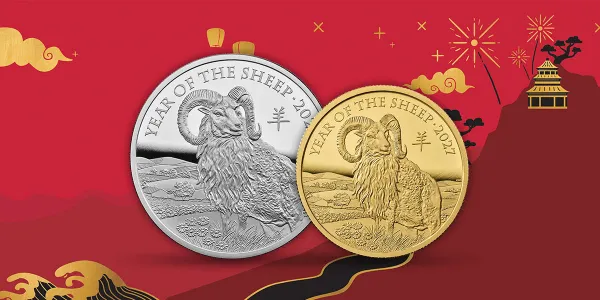
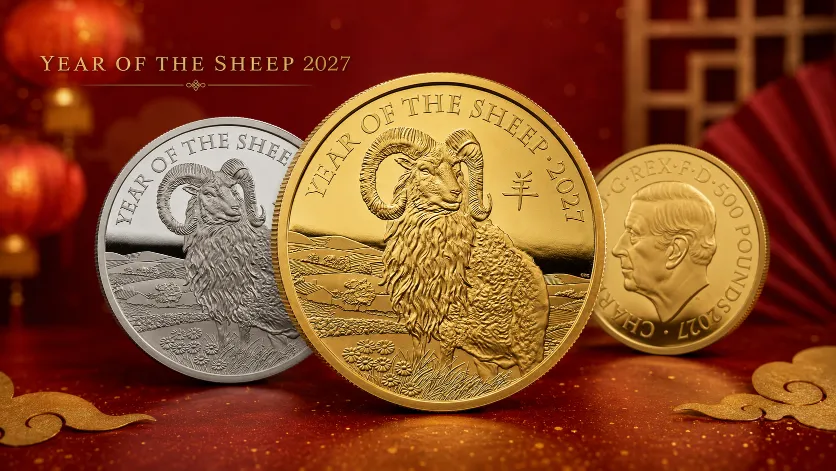
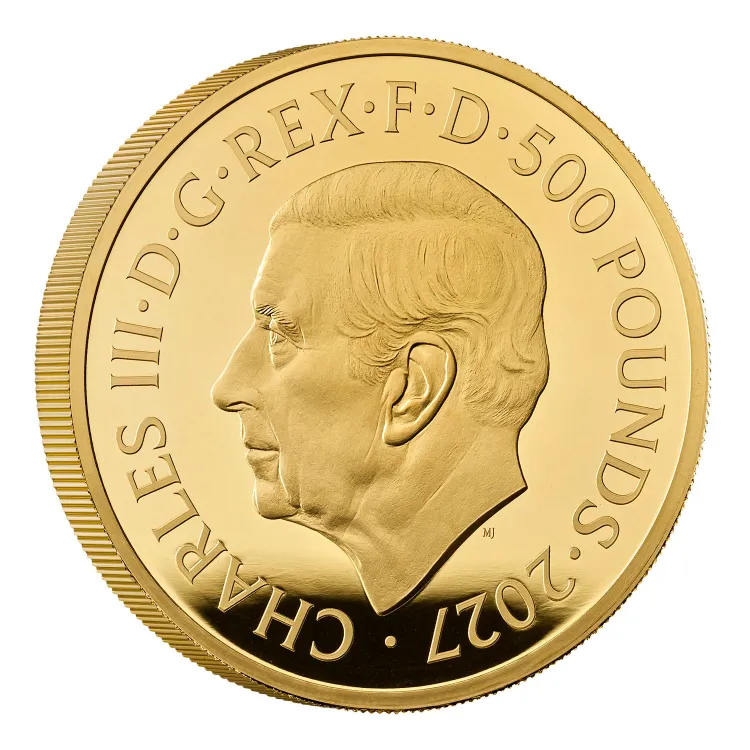
The Royal Mint has opened sales on its 2027 Lunar Year of the Sheep range, seven coins running from a £17.50 cupro-nickel £5 up to a 5oz gold proof limited to 88 pieces. Every coin in the range carries the same reverse by American designer Chris Costello, paired with Martin Jennings’ definitive portrait of King Charles III.
This is the second release of a series that has effectively started over. The Shēngxiào Collection ran a complete twelve year rotation from the 2014 Horse to the 2025 Snake, then began again with the 2026 Horse. The Sheep, eighth of the twelve zodiac signs, arrives with Chinese New Year on 6 February 2027.
A Series That Started Again
When the Royal Mint issued the first UK lunar coins in 2014, the pitch was continuity. Wuon-Gean Ho, a British-Chinese artist and printmaker, drew the opening Horse and most of the animals that followed, and collectors who bought in early were buying into a single visual language they could follow for twelve years. That continuity was never absolute. Harry Brockway took the 2019 Pig and the 2021 Ox, P.J. Lynch drew the 2020 Rat, and Costello closed the cycle with the 2025 Snake.
The restarted collection looks less like a set and more like a rotating commission. William Webb designed the 2026 Horse, placing the animal beneath a clock striking twelve. Costello now has the Sheep. For anyone who completed the first cycle, that is a meaningfully different proposition: the second run is shaping up as twelve individual artistic statements rather than one artist’s sustained argument.
The Designer
Costello has been drawing coins and medals since 2010, and the credit list is unusually deep for an artist working across two national mints.
At the U.S. Mint his designs include the obverses of the 2016 Mark Twain and National Park Service commemorative silver dollars, the reverse of the 2017 American Liberty 225th Anniversary gold coin, which took the Best Gold Coin award at the 2019 Coin of the Year awards, and the obverse of the 2024 Harriet Tubman $5 gold. He also drew the Block Island quarter reverse of 2018, the 2021 Tuskegee Airmen quarter, and the Nina Otero-Warren and Bessie Coleman entries in the American Women Quarters programme.
His Royal Mint work began with the reverse of the 2020 Mayflower £2, a joint project between the two mints marking the voyage’s 400th anniversary, and continued with the 2025 Snake that closed the first Shēngxiào cycle. The Sheep is his return to the series, and the fact that the Mint went back to him for the new cycle’s second coin says something about how the Snake landed.
Reading the Reverse
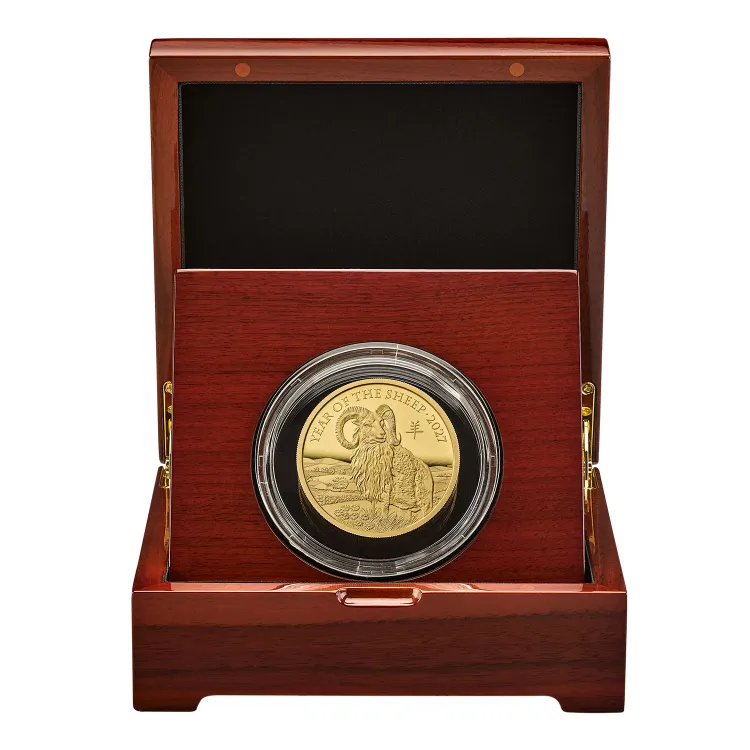
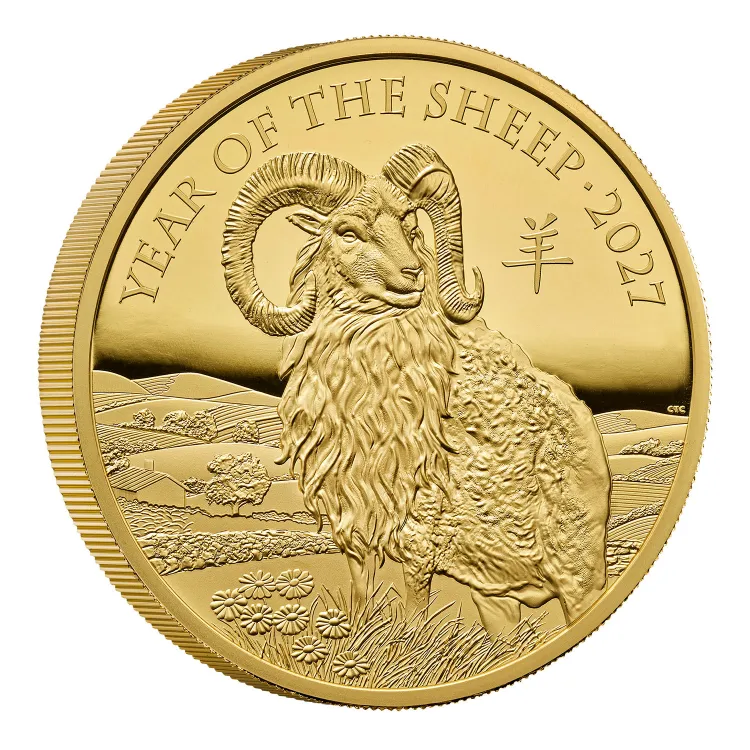
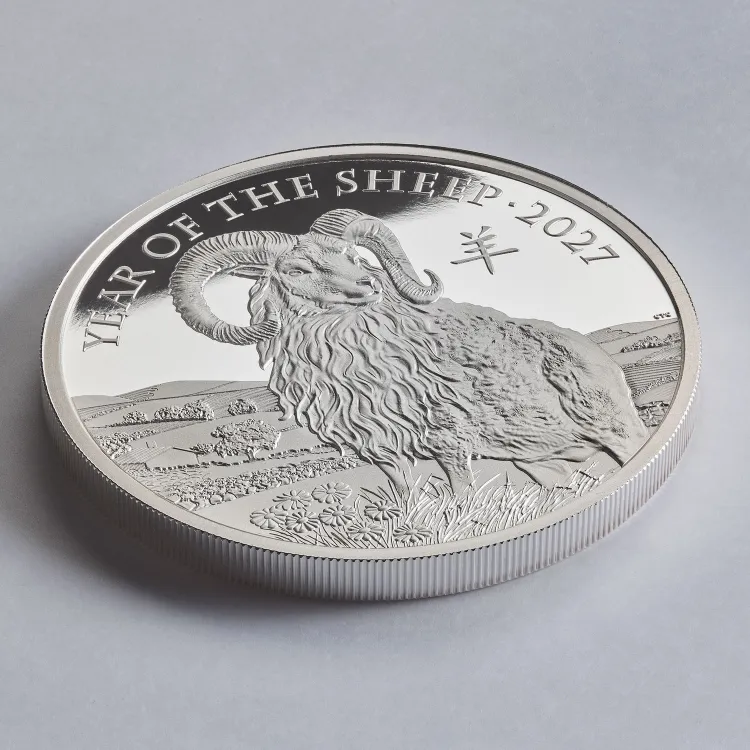
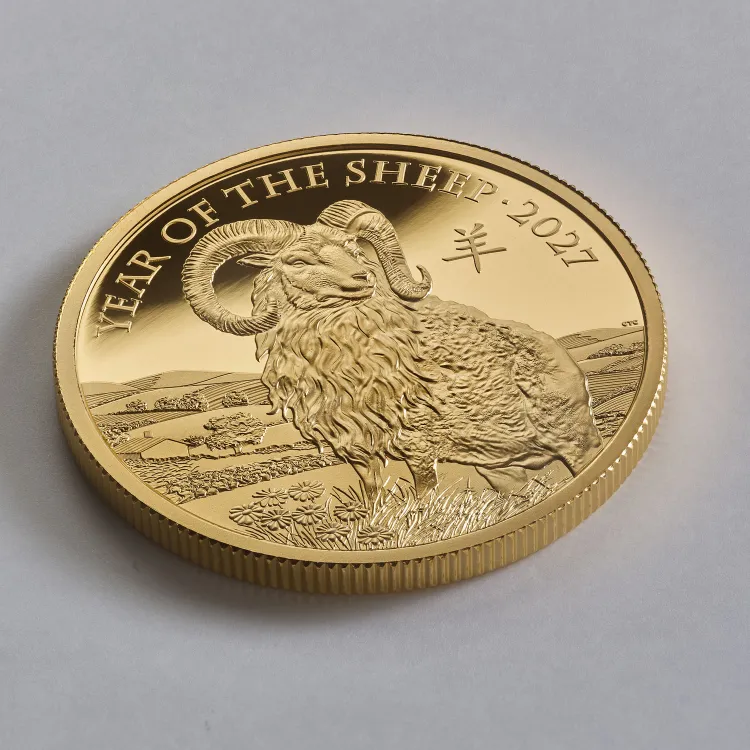
Costello’s sheep is a ram, thickly fleeced and heavily horned, standing in the foreground of a rolling open landscape that runs back to a low horizon. The inscription reads YEAR OF THE SHEEP 2027, with the Chinese character 羊 set at the right of the field. The Mint describes the animal’s pose as conveying strength and leadership, while framing the design overall around gentleness, grace and resilience.
The choice of a horned ram is not neutral, and it quietly resolves an old problem. The character 羊 does not distinguish between sheep, goat and ram, which is why the same lunar year is marketed under different animals depending on who is doing the marketing. The Royal Mint itself acknowledged this back in 2015, noting that yang is generic across all three. The point still holds in 2027: the Mint is selling the Year of the Sheep while the London Chinatown Chinese Association is preparing to celebrate the Year of the Goat. A ram with substantial curled horns reads convincingly as either.
The obverse is the Jennings portrait across all seven coins, with denominations spanning 50p on the smallest gold piece to £500 on the largest.
Working With Chinatown
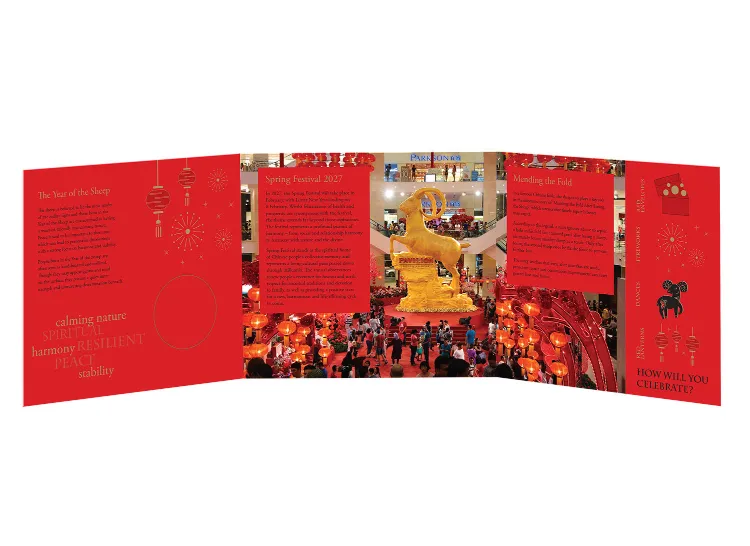
The Mint lists the range as produced in collaboration with the London Chinatown Chinese Association, the body founded in 1978 that has become the official organiser of London’s Chinese New Year celebrations, now the largest such event outside Asia. The LCCA has confirmed its 2027 London celebrations for Sunday 7 February, the day after the new year itself.
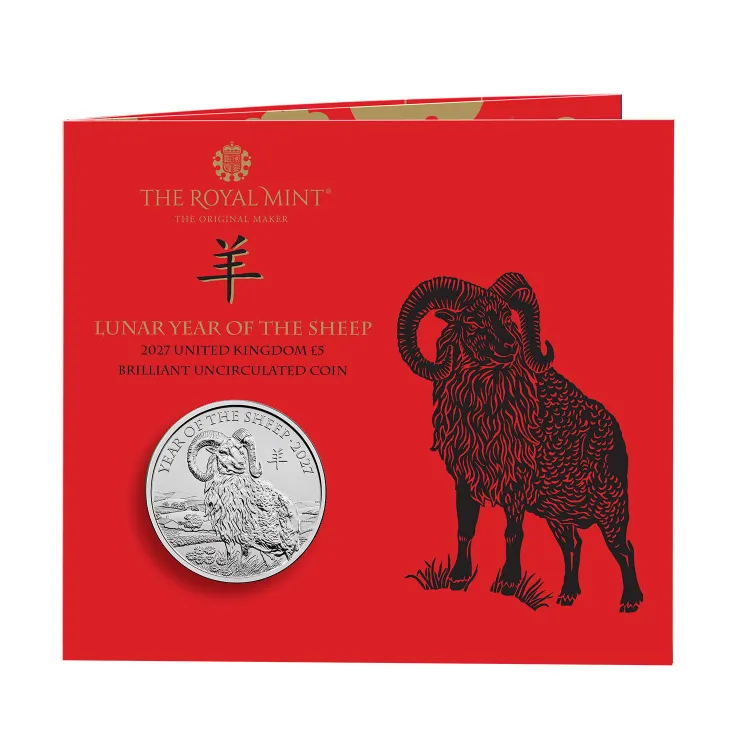
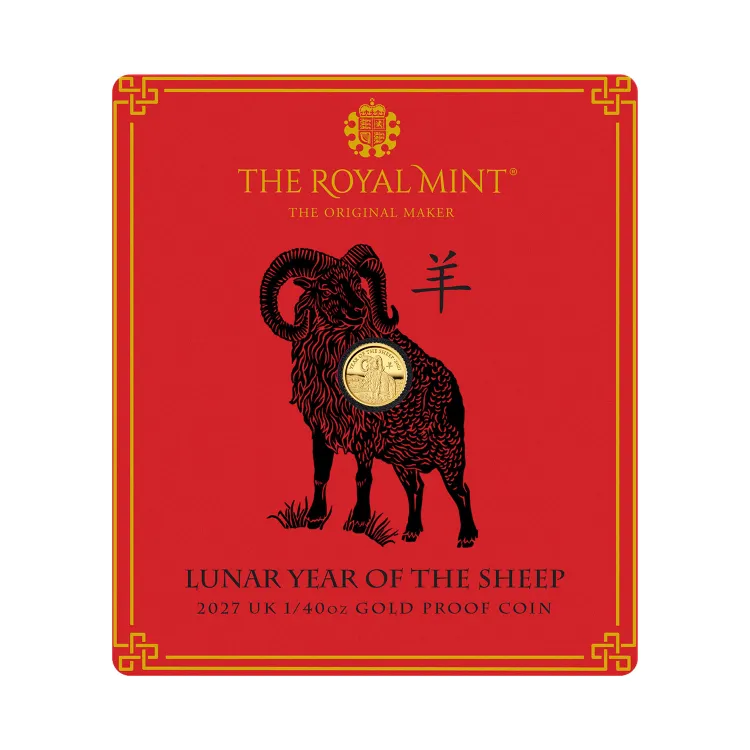
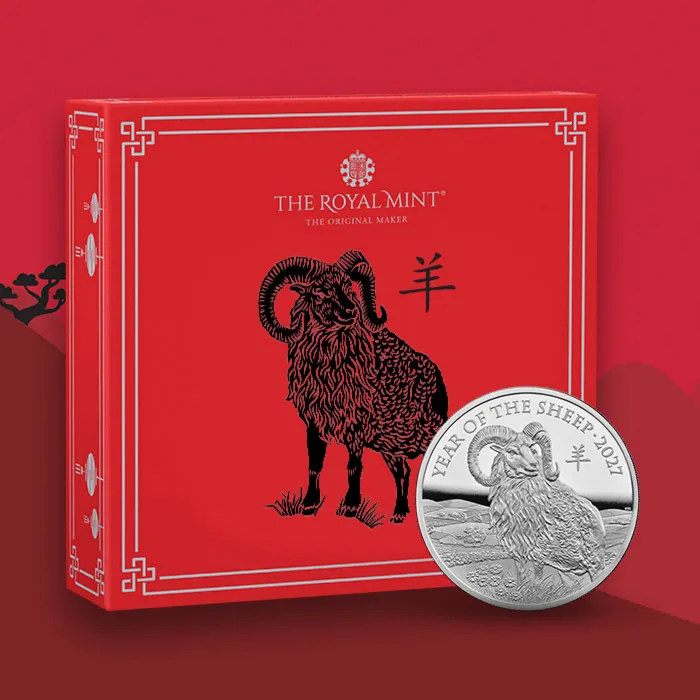
That partnership shows up in the packaging as much as the design. The £5 Brilliant Uncirculated coin and the 1/40oz gold proof both ship in a traditional red envelope, the form used for gifting money at the new year, and the Mint says the 5oz silver proof’s packaging draws directly on Chinese design.
The Range
Seven products, and the structure will be familiar to anyone who followed the first cycle.
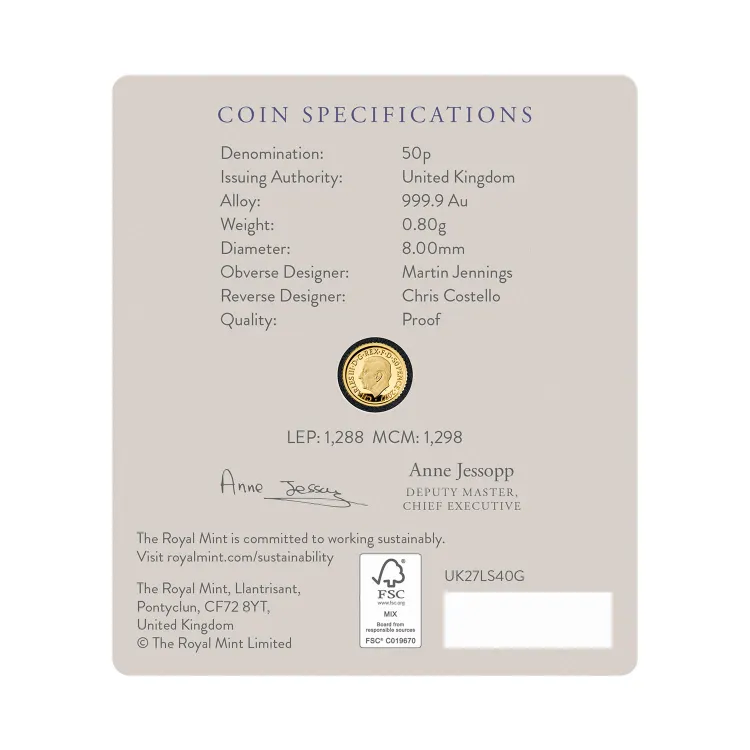
The £5 Brilliant Uncirculated coin in cupro-nickel is the entry point at £17.50, 28.28 g and 38.61 mm, presented in a red envelope folder and issued without a stated edition limit. Immediately above it sits the range’s most interesting piece of pricing: the 1/40oz gold proof, a 50p denomination weighing 0.80 g at just 8.00 mm across, limited to 1,288 and priced within pounds of the silver proof. It is the piece that puts gold from the national mint inside a gift budget, and it is also the only gold coin in the range not carrying the 100% recycled gold designation.
The 1oz silver proof is the volume piece, a £2 denomination at 31.21 g and 38.61 mm with a limited edition presentation of 3,288. The 5oz silver proof is the range’s showpiece in the metal, a £10 coin of 156.30 g struck at 65.00 mm, limited to 200 and the only edition in the range not built on the number eight.
The gold tier runs 1/4oz, 1oz and 5oz, all three struck in 999.9 fine gold from 100% recycled stock, and all three carrying the pattern of auspicious editions that has run through this series since 2014: 288, 388, and, at the top, 88. The 5oz gold at £500 face and 50.00 mm is the range’s trophy, and the smallest edition the Mint has put behind any coin in the range.
| Coin | Denomination | Weight | Diameter | Limited edition | Max coin mintage | Launch price |
|---|---|---|---|---|---|---|
| £5 Brilliant Uncirculated (cupro-nickel) | £5 | 28.28 g | 38.61 mm | Not stated | Not stated | £17.50 |
| 1/40oz Gold Proof | 50p | 0.80 g | 8.00 mm | 1,288 | 1,298 | £145.00 |
| 1oz Silver Proof | £2 | 31.21 g | 38.61 mm | 3,288 | 3,698 | £147.50 |
| 5oz Silver Proof | £10 | 156.30 g | 65.00 mm | 200 | 206 | £710.00 |
| 1/4oz Gold Proof | £25 | 7.80 g | 22.00 mm | 288 | 298 | £1,275.00 |
| 1oz Gold Proof | £100 | 31.21 g | 32.69 mm | 388 | 398 | £4,905.00 |
| 5oz Gold Proof | £500 | 156.30 g | 50.00 mm | 88 | 95 | £23,715.00 |
Prices are as listed by the Royal Mint at launch. Gold prices in particular move with the metal market. Product codes run UK27LSBU, UK27LS40G, UK27LSS1, UK27LSS5, UK27LSQO, UK27LSG1 and UK27LSG5. At the time of writing the two largest gold coins are listed as available to order with shipping from early October, while the rest of the range is in stock.
Reading the Mintage Figures
The Mint publishes two numbers for each coin, and they are not the same thing. The limited edition presentation is the ceiling on that specific product. The maximum coin mintage is the ceiling on the coin itself, across every product it might appear in. The gap between them is where a range like this hides its flexibility.
On the 1oz silver proof that gap is 410 coins, the widest in the range. On the 5oz gold it is seven, on the 5oz silver six. Those narrow gaps matter more than the wide one. A collector buying the 5oz gold proof is buying into a coin of which no more than 95 will ever exist in any form, which is a genuinely small number for a modern Royal Mint issue, and considerably smaller than the 200 struck for the equivalent piece in silver.
One absence is worth noting. There is no bullion coin in this range, and there has not been one in the lunar series since the Mint moved the programme to proof and Brilliant Uncirculated formats only from 2021. Collectors looking for a stacking entry point in the Shēngxiào design will not find one here.
What It Means
The first Shēngxiào cycle sold itself on completion, twelve animals, one artist, one shelf. The second is asking a different question of collectors, because a rotating roster of designers turns each year into its own decision rather than an obligation to the set. Costello’s ram is a strong argument for saying yes to this one, and the Mint’s willingness to hand him a second commission after the Snake suggests the confidence runs both ways. Whether the sheep proves as commercially durable as the dragon or the snake is another matter. Quiet signs rarely do. But with the new year falling on 6 February 2027 and London’s parade the day after, the Mint has given itself a long runway, and the 88 piece gold will almost certainly be gone well before anyone lights a firecracker.
Frequently Asked Questions
When does the Year of the Sheep begin? Chinese New Year falls on 6 February 2027, beginning the Year of the Sheep. The London Chinatown Chinese Association has scheduled its London celebrations for Sunday 7 February 2027.
Who designed the Royal Mint’s 2027 Year of the Sheep coin? The reverse is by Chris Costello, an American designer who has worked for both the U.S. Mint and the Royal Mint. The obverse is Martin Jennings’ definitive portrait of King Charles III.
How many coins are in the 2027 Year of the Sheep range? Seven: a cupro-nickel £5 Brilliant Uncirculated coin, 1oz and 5oz silver proofs, and 1/40oz, 1/4oz, 1oz and 5oz gold proofs.
What is the smallest edition in the range? The 5oz gold proof, with a limited edition presentation of 88 and a maximum coin mintage of 95.
Why is it called the Year of the Sheep and not the Year of the Goat? The Chinese character 羊 covers sheep, goat and ram without distinguishing between them. The Royal Mint has used Sheep since 2015, while other organisations, including the LCCA, refer to 2027 as the Year of the Goat.
Are the gold coins made from recycled gold? The 1/4oz, 1oz and 5oz gold proofs are struck in 100% recycled gold. The 1/40oz gold proof is not listed with that designation.
Is there a bullion version of the 2027 Year of the Sheep coin? No. The Royal Mint discontinued bullion issues in the lunar series from 2021, and the programme has run in proof and Brilliant Uncirculated formats since.
Is this the start of a new Shēngxiào cycle? The second cycle began with the 2026 Year of the Horse, after the first twelve year run closed with the 2025 Year of the Snake. The 2027 Sheep is the second coin of the new cycle.