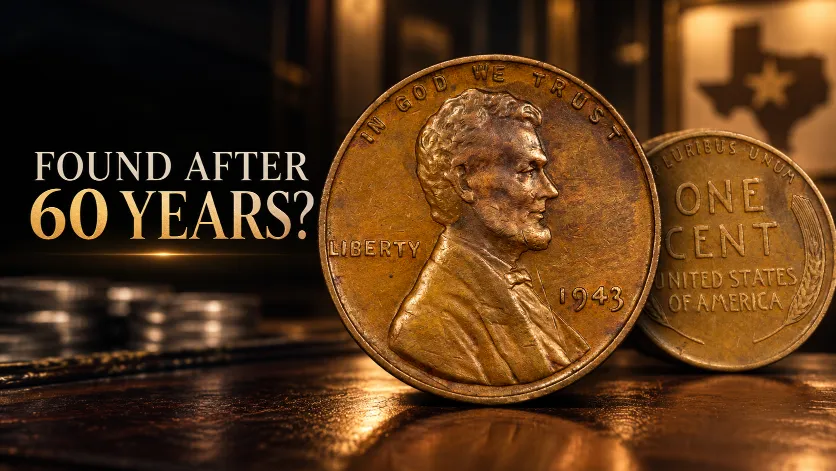
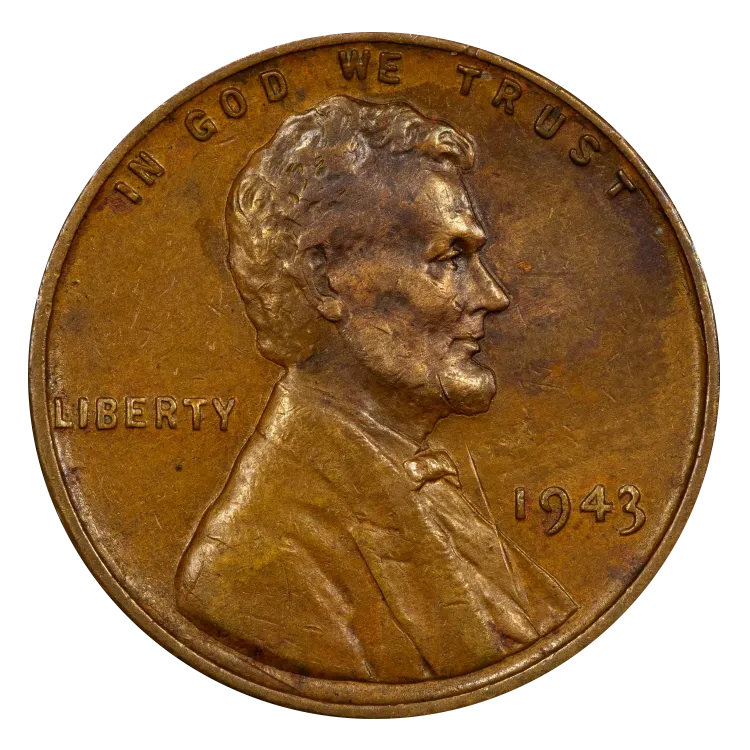
For more than 60 years, a Texas family owned a coin that, by every rule of probability, should have been a fake. Nearly every copper coloured cent dated 1943 that turns up in a drawer or a jar is a plated steel cent or a doctored date. This one is not. The 1943 bronze cent, now certified Extra Fine 40 by Professional Coin Grading Service (PCGS) and valued at $235,000, has been acquired by U.S. Coins and Jewelry of Houston, and goes on public display at the firm’s Katy Freeway showroom on Saturday, October 3.
By WNN’s count, it is only the 26th 1943 bronze cent that can be traced as an individual coin. For most collectors, the only chance to stand in front of one has been a visit to the Smithsonian or the American Numismatic Association. From this weekend, a Houston showroom joins that very short list.
A wartime accident in bronze
In 1943 the United States needed its copper for the war effort, so the Mint struck the year’s cents in steel. More than a billion of these “steelies” came off the presses at Philadelphia, Denver and San Francisco. A handful of bronze planchets left over from 1942, however, stayed behind in the machinery and were struck with the 1943 date alongside them.
Nobody intended them. That is precisely why they matter. The 1943 bronze cent has since become one of the most famous rarities in American numismatics, a coin that sits among the top few entries in Whitman Publishing’s 100 Greatest U.S. Coins.
Rumours, a cafeteria and a legend
The coin’s fame grew faster than its population. In the years after the war, a persistent rumour held that Henry Ford would hand a new automobile to whoever produced the first copper 1943 cent. Ford denied it. The story refused to die.
Then, in 1947, a teenager found a genuine example in the change he received in his high school cafeteria. Since then only a small number of authentic pieces have come to light, and they rarely reach the open market. Every discovery feeds the legend, and the legend sends thousands of hopeful owners to the grading services every year.
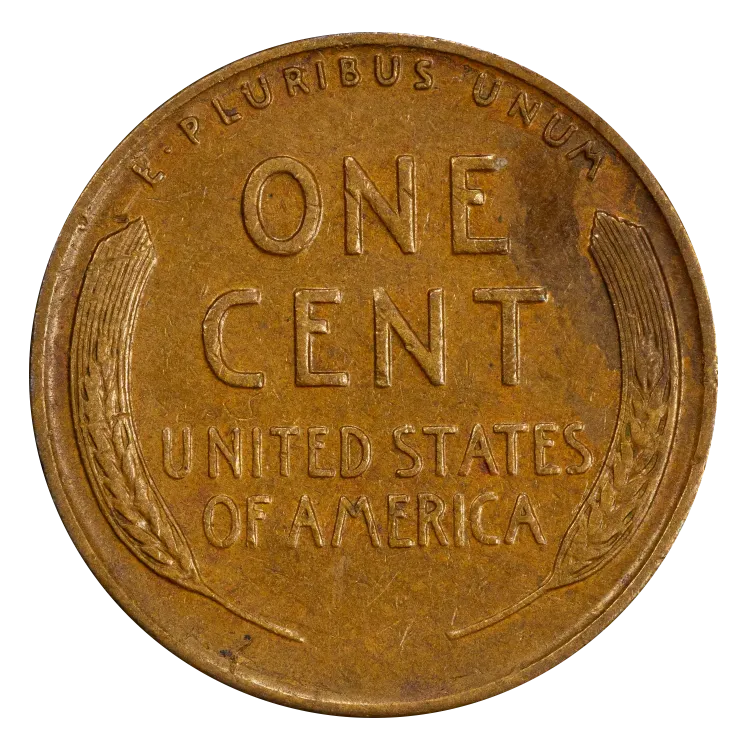
Six decades in a family collection
This example’s path is quieter than most. The family bought it from a collector in the early 1960s and simply kept it, never having it authenticated. When they finally brought it to professional appraiser Alvin Stern, he worked with them to submit it to PCGS.
The verdict was the one almost nobody receives. PCGS graded the coin XF40 BN under certification number 54723120, encapsulated in its Gold Shield holder with NFC anti-counterfeiting technology. The PCGS population report records it as the only example at that grade, with 11 graded higher. This is a Philadelphia striking, carrying no mintmark.
Stern then offered the coin to U.S. Coins and Jewelry, where co-owner Kenny Duncan Jr. bought it specifically to put on display. Duncan called owning one a dream of a lifetime.
The one in thousands
Duncan’s own experience explains why. Over the years, he has examined thousands of 1943 cents brought in by people convinced they owned the rare version. Every one proved to be a steel cent or a copper plated imitation. U.S. Coins and Jewelry has been trading in Houston since 1985, and this is the first genuine 1943 bronze cent the store has ever had.
PCGS sees the same pattern on a national scale. Company President Stephanie Sabin describes the coin as “one of the most frequently submitted and most widely misidentified coins we see,” adding that the overwhelming majority of submissions are ordinary steel cents or plated counterfeits. Confirming a real one, as PCGS did here, is rare.
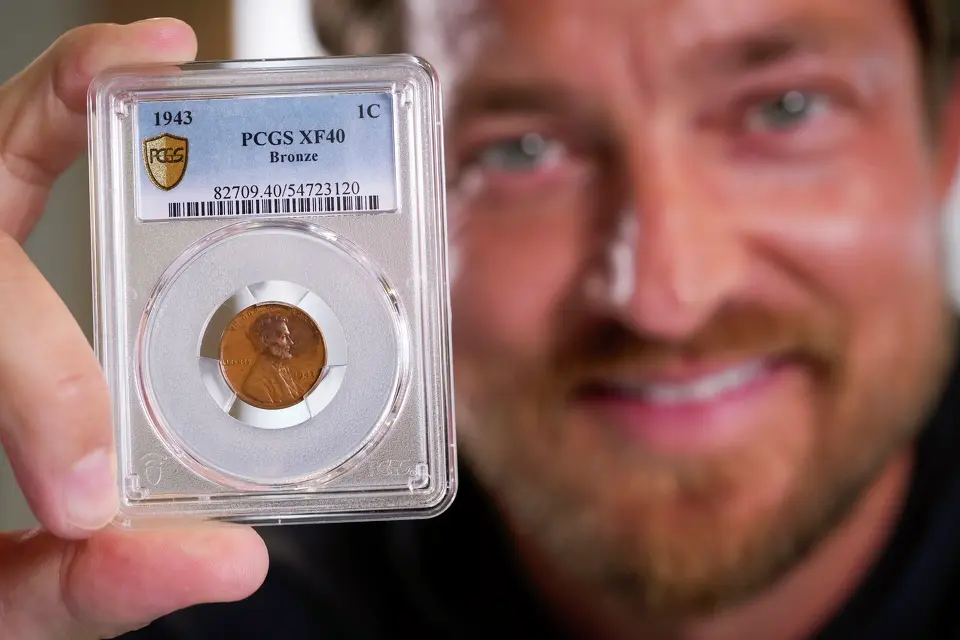
The 26th coin
Most reports on the 1943 bronze cent, including the announcement of this one, repeat a figure of around 20 known. WNN’s census, built coin by coin from auction appearances, certification histories and pedigree chains, traces 25 individual specimens before this one: 17 from Philadelphia, a single coin from Denver and 7 from San Francisco. The same 17, 1 and 7 breakdown appeared in a Stack’s Bowers catalogue as recently as March 2026.
Counting coins rather than certificates is the whole point. Population reports for the issue are swollen by crossovers, regrades and resubmissions, and at least one Philadelphia example has carried two different PCGS grades and two certificate numbers while remaining a single physical coin. One further caveat travels with the Philadelphia total: one of the 17 was struck on an unusual alloy with a small silver content, and may yet prove to be an experimental piece rather than an accidental strike on a leftover bronze planchet.
The Houston coin matches none of the 25. Six decades with one family, outside the market and never submitted for grading, left it with no trail to confuse it with any recorded specimen. That makes it the 26th traced 1943 bronze cent, and the 18th from Philadelphia.
On view in Houston
The coin goes on show in the second floor showroom of U.S. Coins and Jewelry at 8501 Katy Freeway, Houston, from Saturday, October 3. The store is open Monday to Friday from 10 a.m. to 5 p.m., and on Saturday from 10 a.m. to 3 p.m.
A legend that rewards the patient
The 1943 bronze cent has spent eight decades as the coin everybody hopes to find and almost nobody does. This example’s story is the rare exception that keeps the hope alive: a coin bought quietly in the 1960s, set aside, and only now confirmed as the 26th traced survivor of a wartime accident at the Mint. For collectors, its arrival in a public showroom is a chance to see the real thing up close. For everyone holding a copper coloured 1943 cent of their own, it is a reminder that the only answer worth trusting comes from professional authentication.
Frequently asked questions
What is a 1943 bronze cent? A 1943 bronze cent is a Lincoln cent struck in 1943 on a leftover bronze planchet instead of the steel used for that year’s wartime cents. WNN’s census traces 26 individual examples across all three mints, including the coin now on show in Houston, which makes it one of the most famous rarities in American numismatics.
Why were most 1943 pennies made of steel? During World War II the United States needed copper for the war effort, so the Mint struck 1943 cents in steel. More than a billion steel cents were made at Philadelphia, Denver and San Francisco, while a few bronze planchets left in the presses produced the rare bronze examples.
How much is the Houston 1943 bronze cent worth? The coin, graded Extra Fine 40 by PCGS under certification number 54723120, carries a PCGS Price Guide value of $235,000. The purchase price paid by U.S. Coins and Jewelry has not been disclosed.
Where can I see the 1943 bronze cent in Houston? The coin is on public display in the second floor showroom of U.S. Coins and Jewelry at 8501 Katy Freeway, Houston, from Saturday, October 3, 2026. The store is open Monday to Friday from 10 a.m. to 5 p.m. and Saturday from 10 a.m. to 3 p.m.
How did a family own a 1943 bronze cent without knowing it? The family bought the coin from a collector in the early 1960s and never had it authenticated. More than 60 years later, they took it to appraiser Alvin Stern, who helped them submit it to PCGS, where it was confirmed as genuine.
I have a copper coloured 1943 penny. Is it the rare one? Almost certainly not. PCGS says the 1943 bronze cent is among the most frequently submitted and most misidentified coins it sees, and most turn out to be steel cents or copper plated counterfeits. A steel cent will stick to a magnet, but only professional authentication by a major grading service can confirm a genuine bronze example.
Did Henry Ford really offer a car for a copper 1943 penny? No. A rumour that Henry Ford would give a new car for the first copper 1943 cent circulated after the war, but Ford denied it. The story nonetheless helped make the coin a household legend.
How many 1943 bronze cents exist? WNN’s census traces 26 individual 1943 bronze cents: 18 from Philadelphia, including the Houston coin, 1 from Denver and 7 from San Francisco. The often quoted figure of about 20 is out of date, and grading service population reports overstate the total because crossovers and regrades can give one coin several certificates. PCGS lists the Houston coin as its only 1943 bronze cent at XF40, with 11 certificates at higher grades.