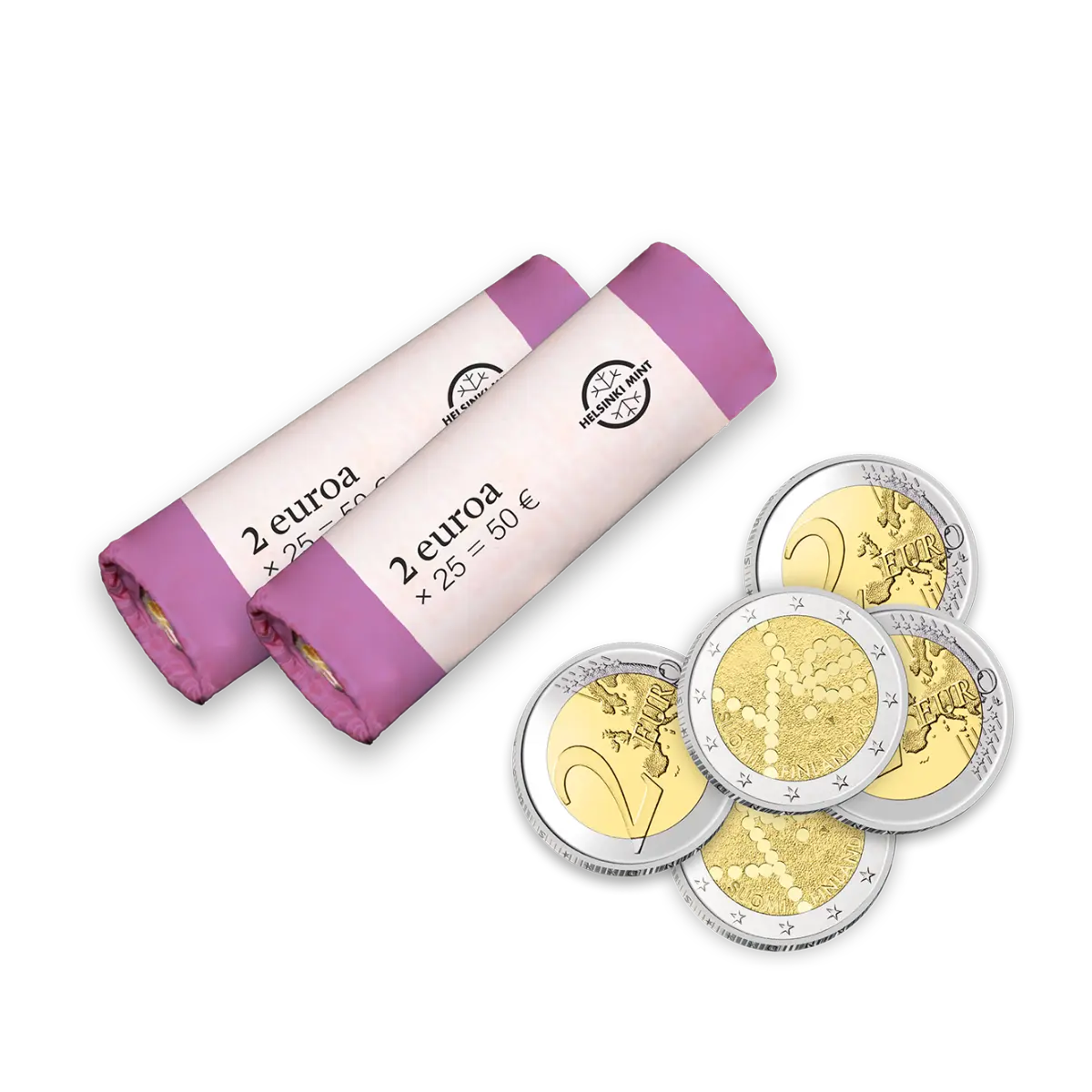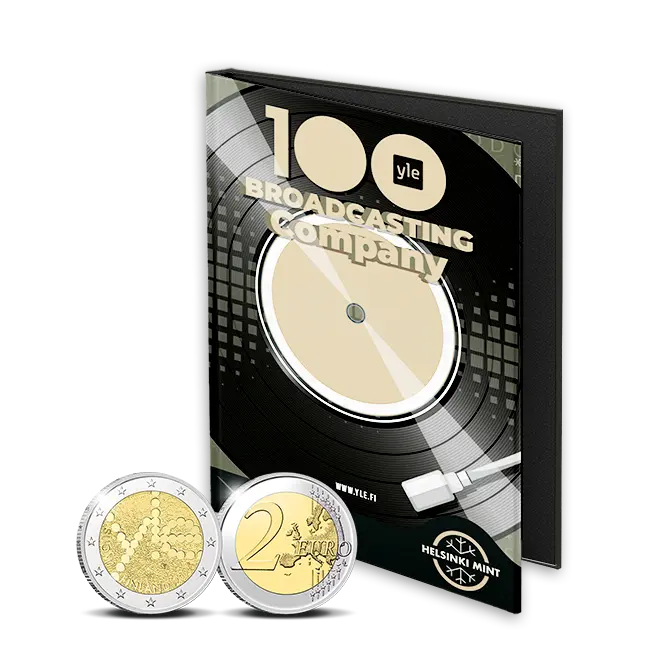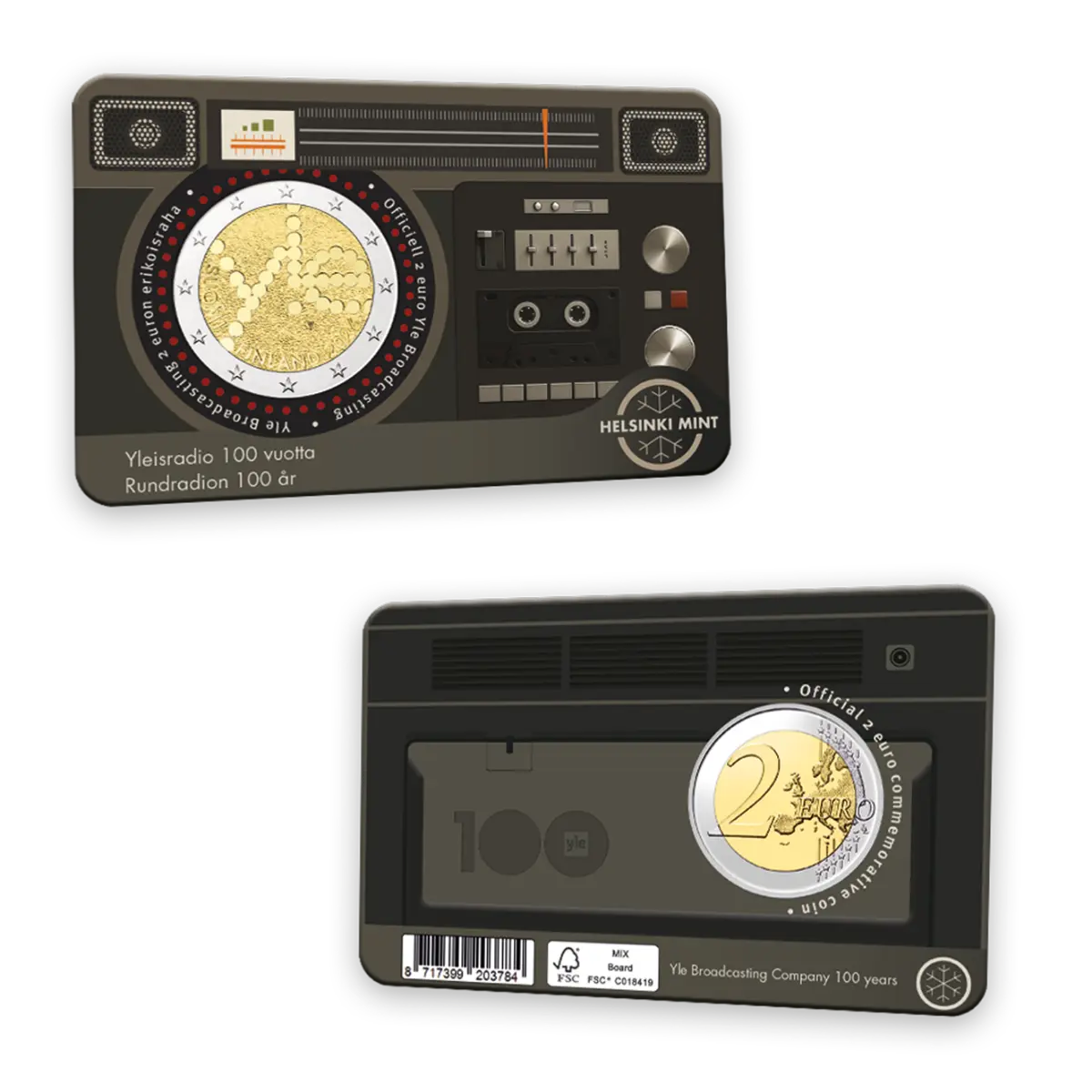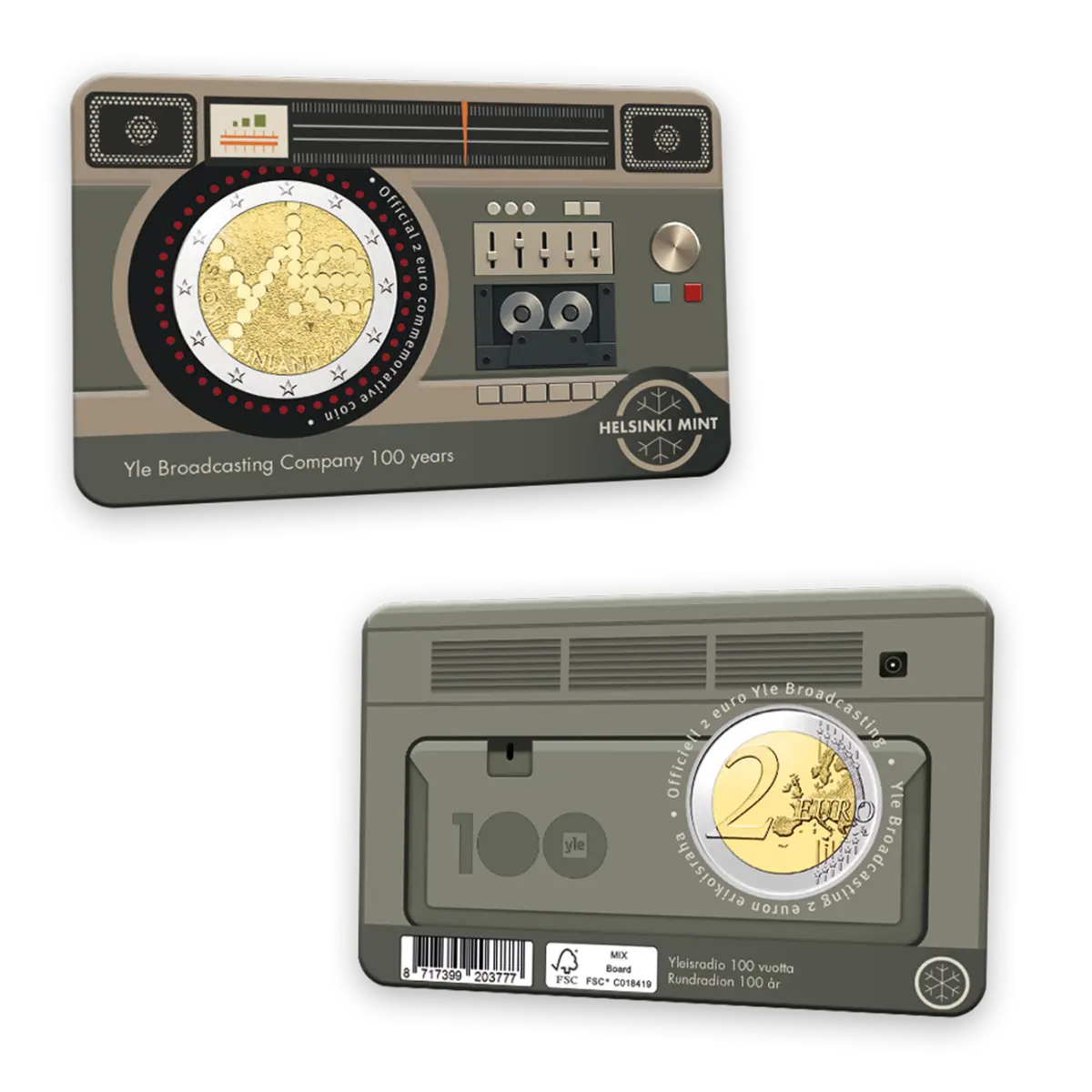
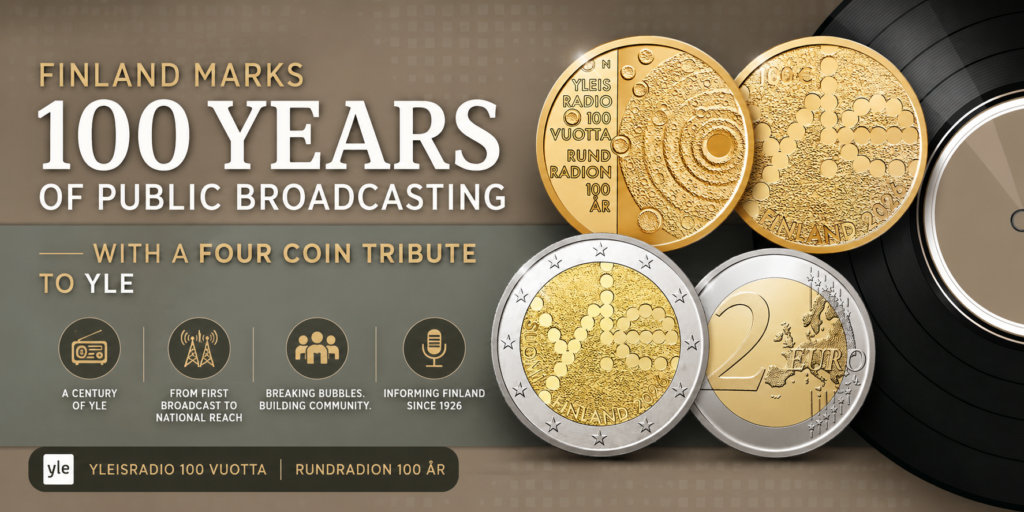
A century after a small studio on Helsinki’s Unioninkatu went on the air for the first time, Finland is putting its national broadcaster on a coin. The Helsinki Mint has released an official commemorative collection, commissioned by the Finnish Ministry of Finance, marking 100 years of Yleisradio, the company most Finns simply call Yle.
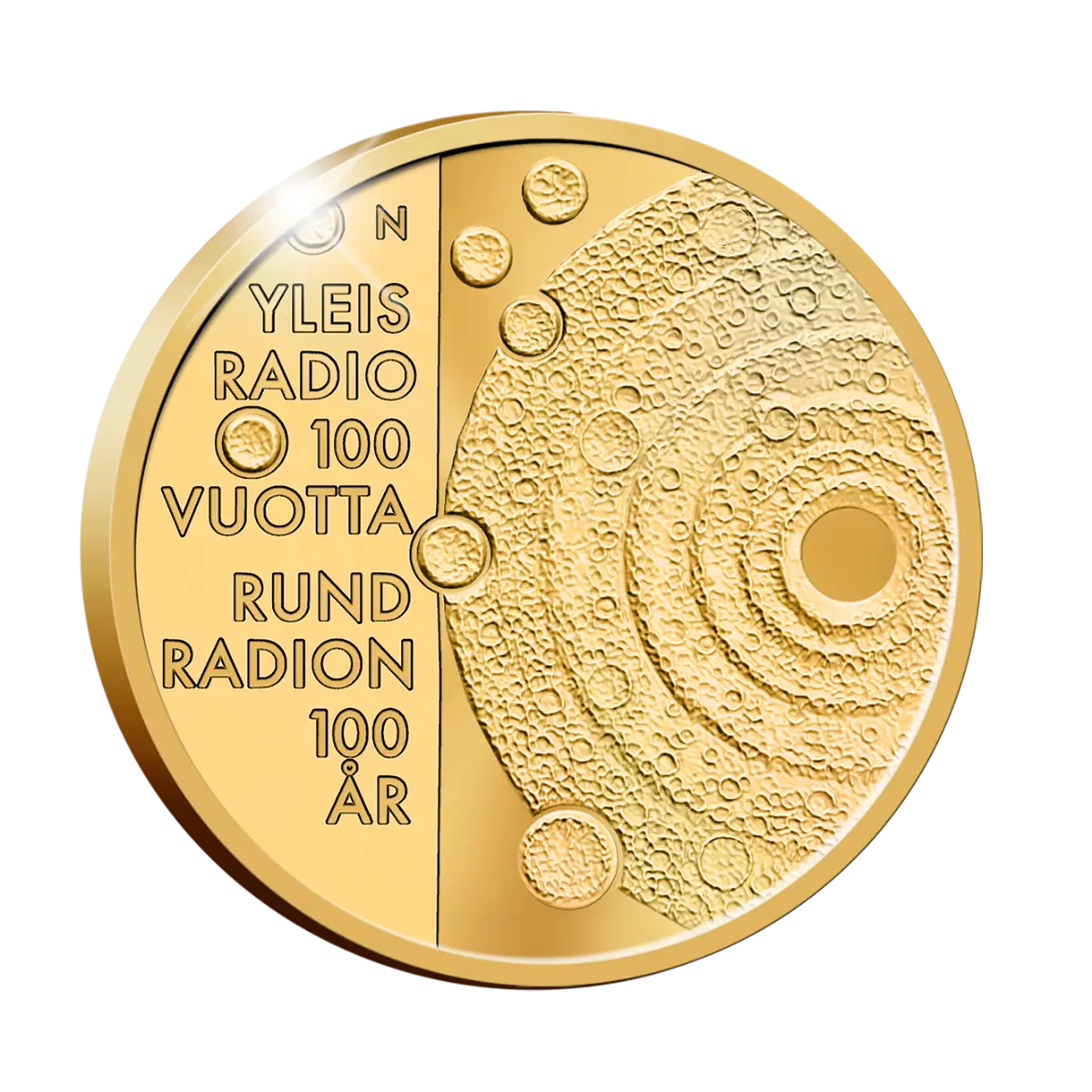
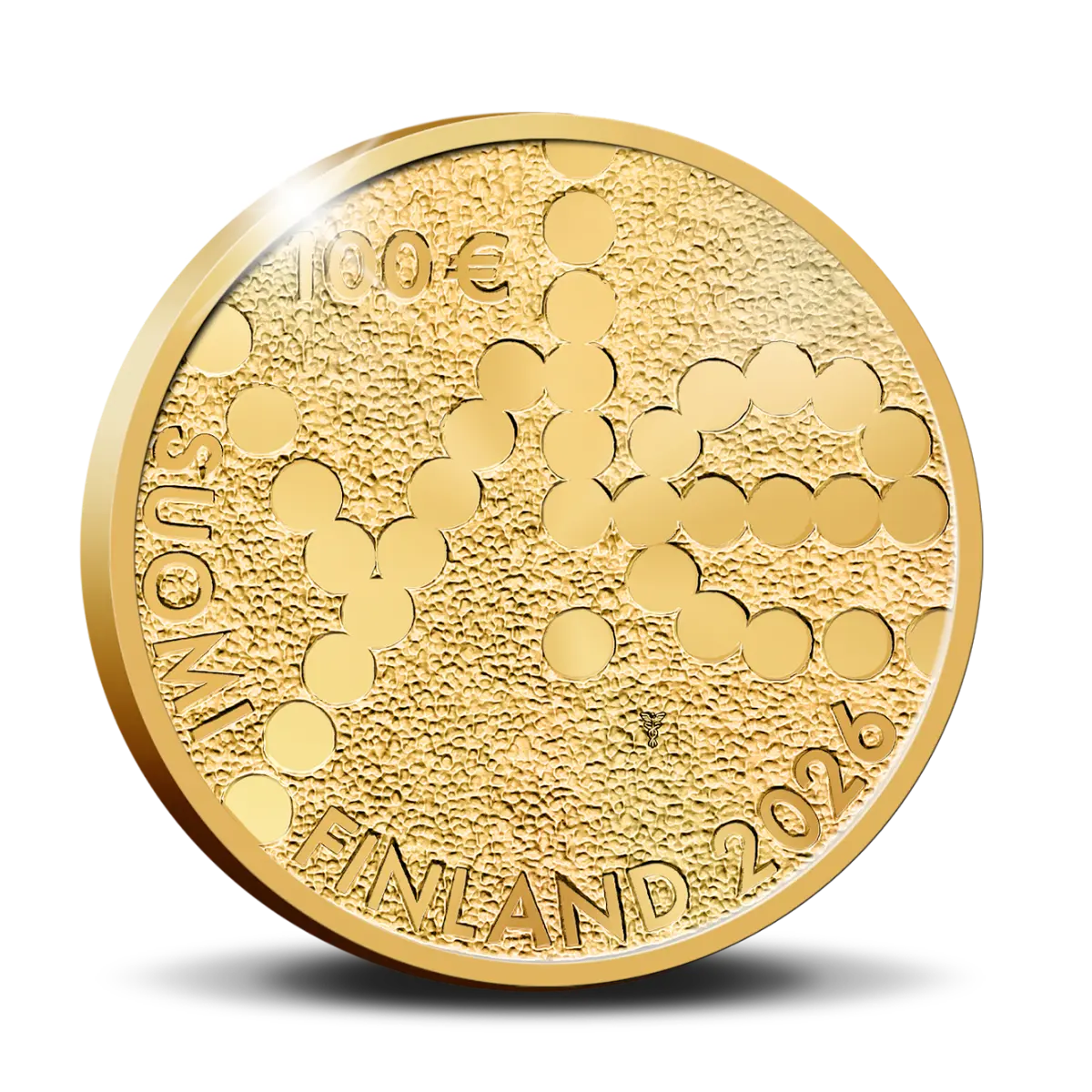
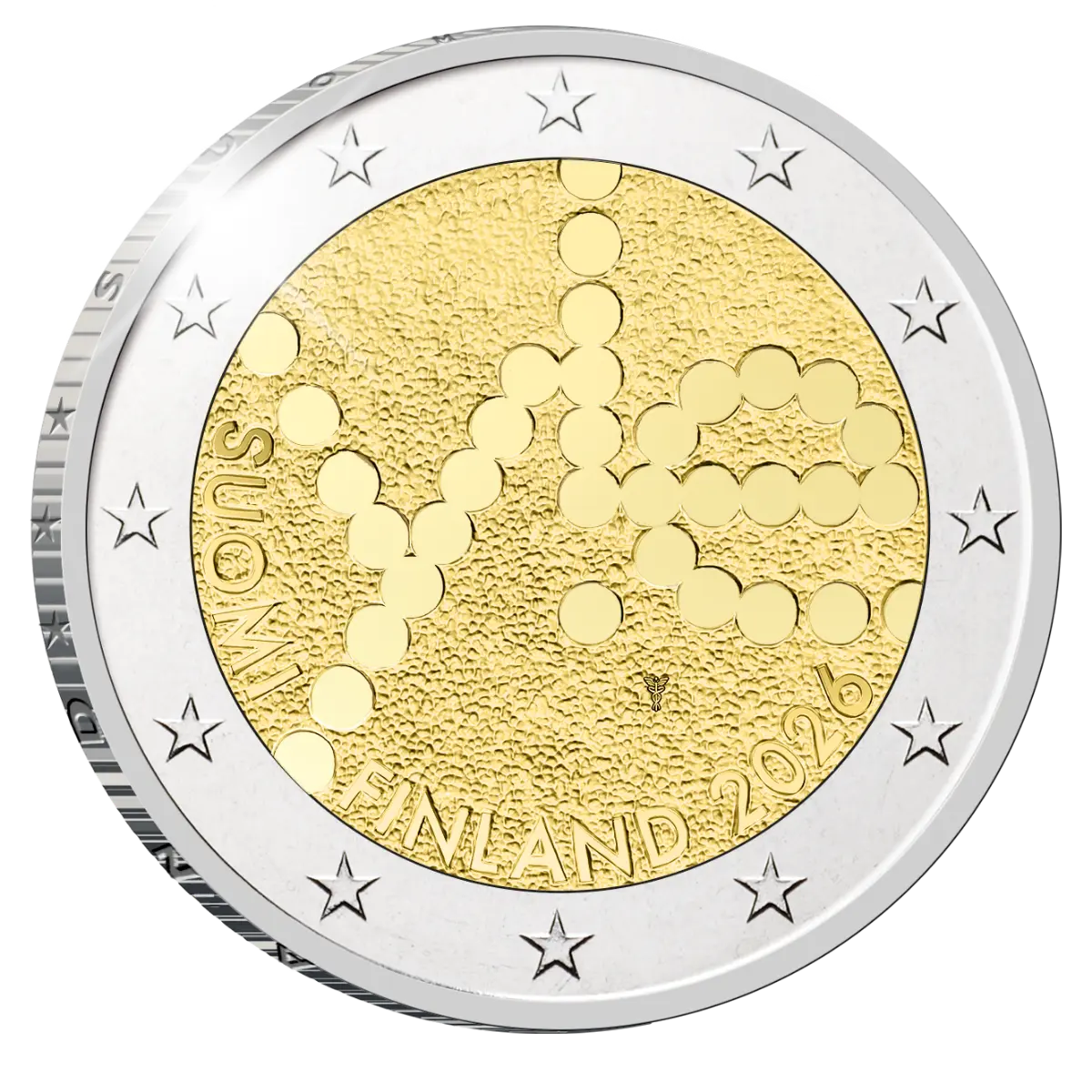
The program runs across four formats: a 2 euro brilliant uncirculated coincard issued in two language variants, a 2 euro proof, an official 2 euro coin roll, and a strictly limited 100 euro gold coin. All four were designed by Finnish architect and coin designer Petri Neuvonen, whose previous Finnish anniversary work includes the 2025 Erik Allardt 20 euro and the University of Turku centennial gold coin.
From a single studio to a national institution
Yleisradio, formally O.Y. Suomen Yleisradio – A.B. Finlands Rundradio at its founding, was established in Helsinki on 29 May 1926, and its first broadcast went out from a studio at Unioninkatu 20 on 9 September that same year. The reach was modest. Most of the country could not hear it.
That changed quickly. By 1928 transmissions covered Finland nationwide, and by the early 1930s roughly 100,000 households were tuning in to Yle programming. Television tests followed in 1957 under the name Suomen Televisio, later renamed Yle TV1, with regular broadcasting beginning on 1 January 1958. Today Yle operates three national television channels, thirteen radio channels and services, and twenty five regional radio stations, a public broadcaster of a kind that has, in many countries, quietly faded into the background of national life. In Finland, it has not.
The design: bubbles, broken
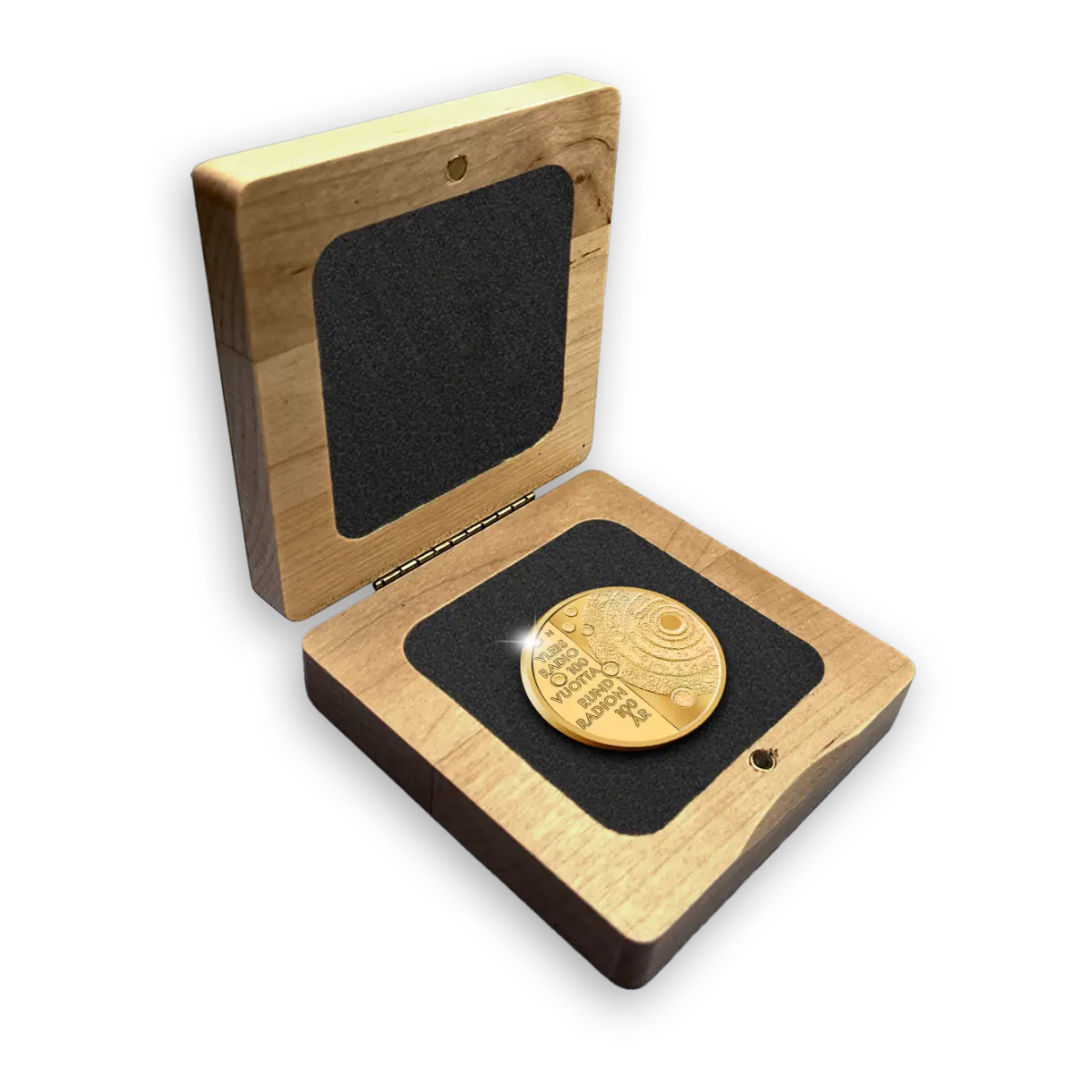
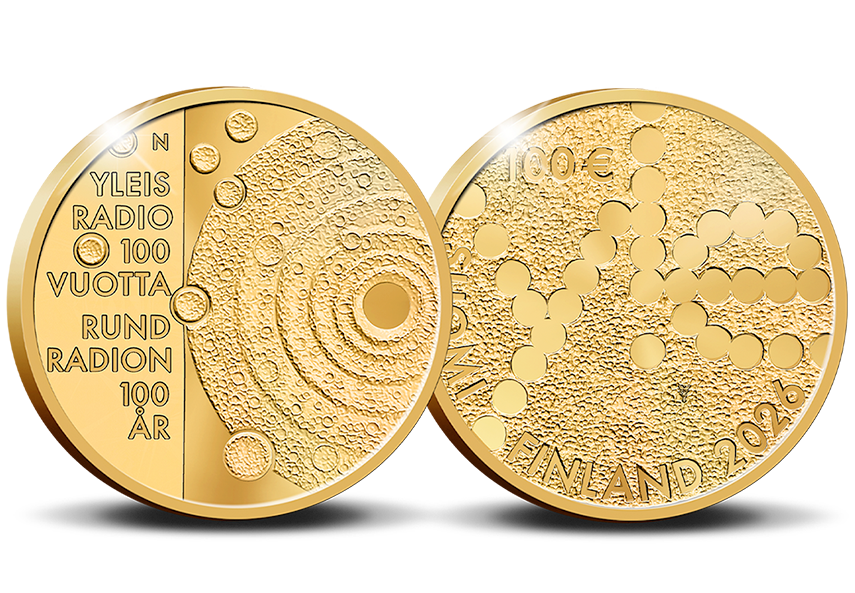
Neuvonen’s central idea for the program is a quiet rebuke of the modern media environment. The composition places people inside separate information bubbles that distort their view of the world around them, and shows public broadcasting as the force that breaks those bubbles and pulls communities back toward shared knowledge and content. The motifs on the 100 euro gold reverse extend the concept further, casting Yle as a disruptor of information silos and a uniting actor across Finnish society.
It is an unusually pointed brief for a national anniversary coin. Most centennial designs reach for a portrait, a building, or a stylized logo. This one argues a thesis, that public broadcasting is not merely an institution to be commemorated but a function worth defending. Both sides of the coin carry YLEISRADIO 100 VUOTTA and RUNDRADION 100 ÅR, the centennial declared in Finland’s two national languages.
The collection, format by format
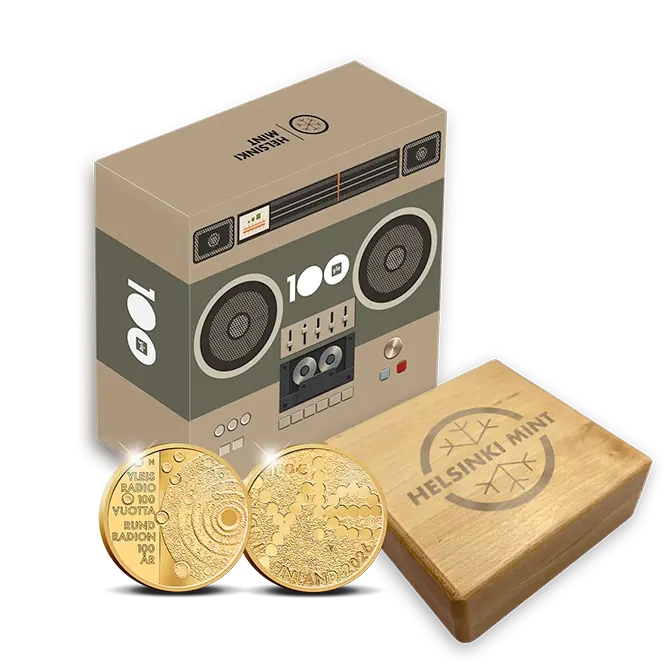
The headline piece is the Finland 100 Euro “100 years Yle Broadcasting” Gold, struck in 5.65 grams of gold alloy composition (Gold 917/1000, Silver 40/1000, Copper 43/1000) at 22.0 mm with a smooth edge. Mintage is capped at 600 pieces and the issue carries no Value Added Tax under standard EU treatment of investment gold. At €1,395.00, it is priced as a collector piece rather than a bullion play, with the centennial premium reflecting both the design and the mintage tier.
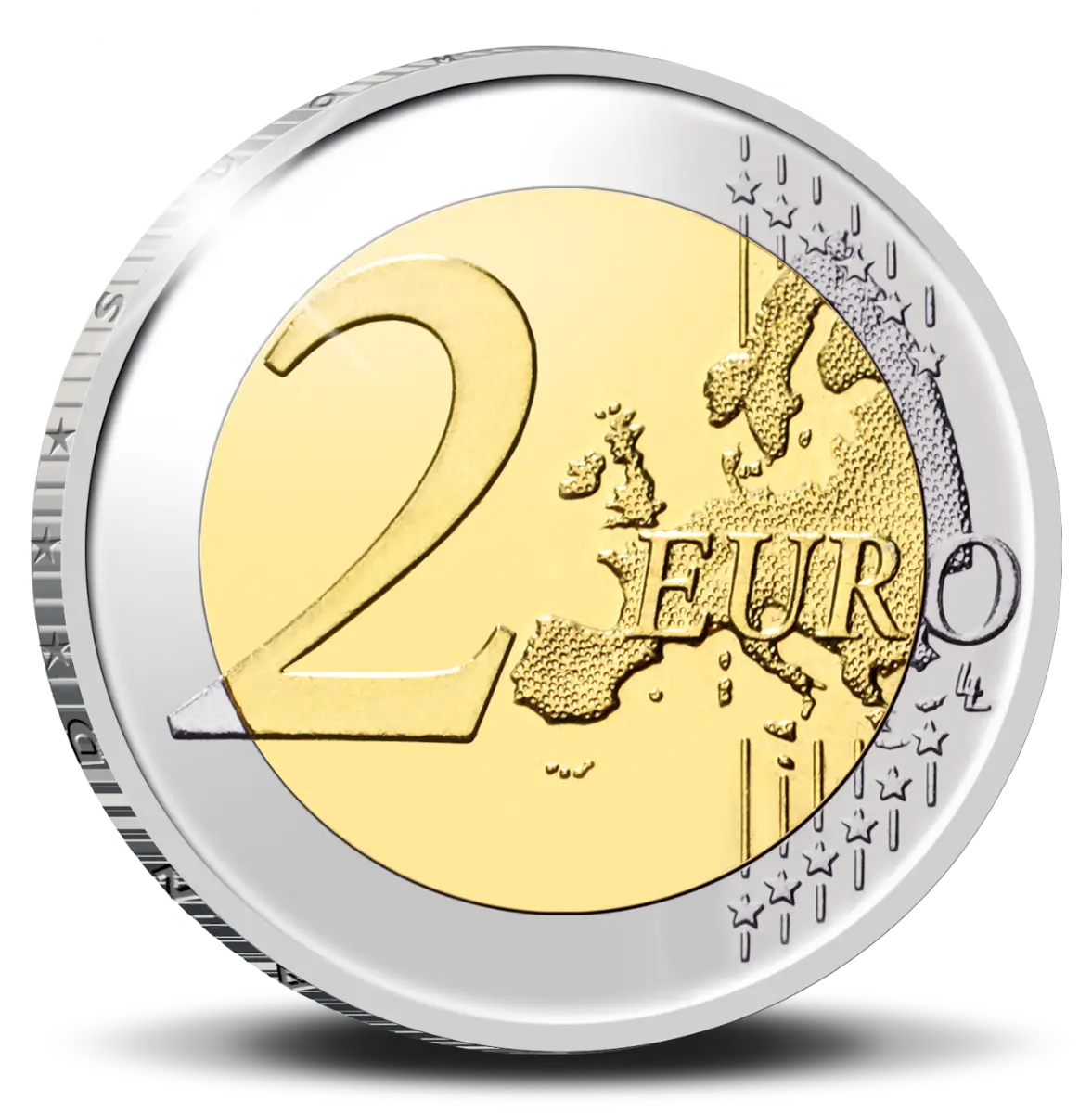
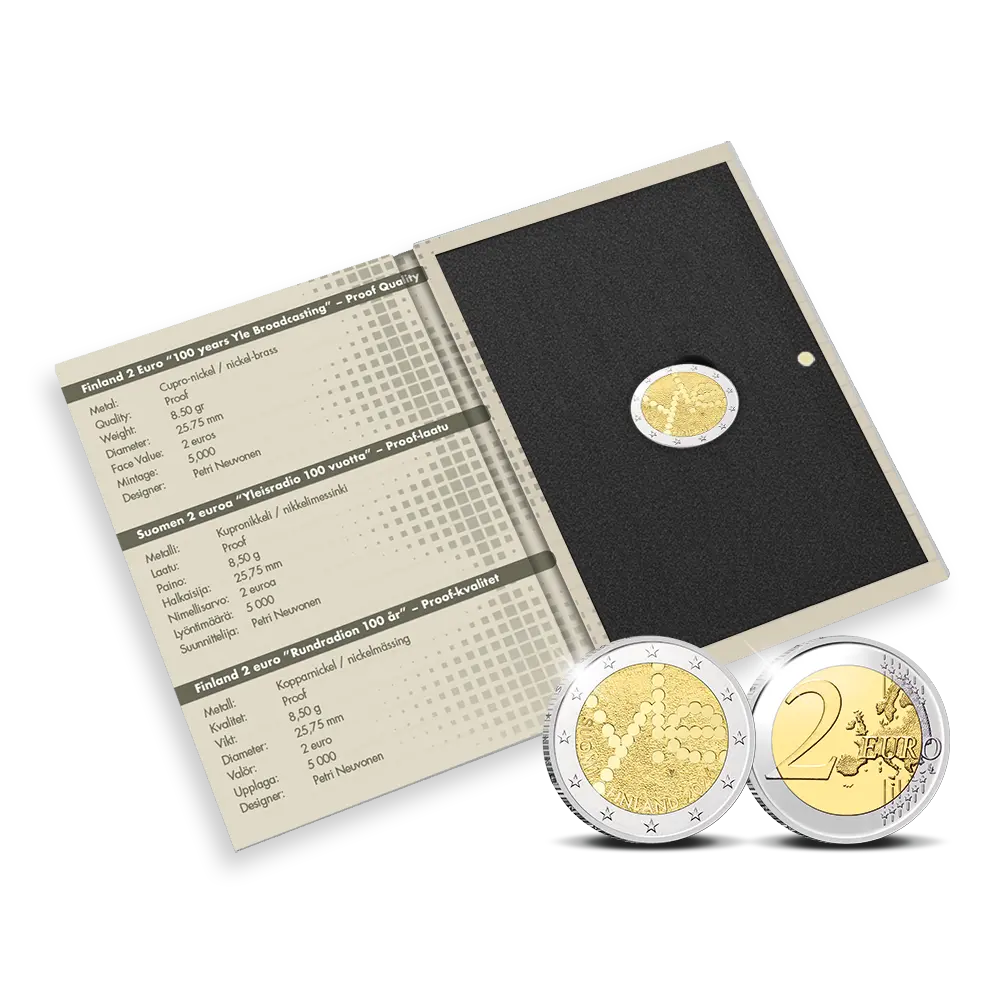
The 2 euro Proof Quality is presented in a folder built around a record player motif, a nod to Yle’s broadcasting heritage, and offers the most refined finish in the program. Mintage is 5,000, retail is €32.50, and the coin shares the BU version’s specifications: copper nickel and nickel brass, 8.5 grams, 25.75 mm.
The 2 euro BU in Coincard is the volume issue, and Helsinki Mint has split it across two language variants to serve both the home market and the international one. The Finnish/Swedish coincard carries the inscription Yleisradio 100 vuotta / Rundradion 100 år, while the English coincard reads Yle Broadcasting Company 100 years. Each variant has a mintage of 50,000 and retails at €12.50. The coincard art frames the coin within a stylized vintage radio receiver, cassette deck, dials, speaker grilles intact, a deliberate visual link to the broadcaster’s early hardware.
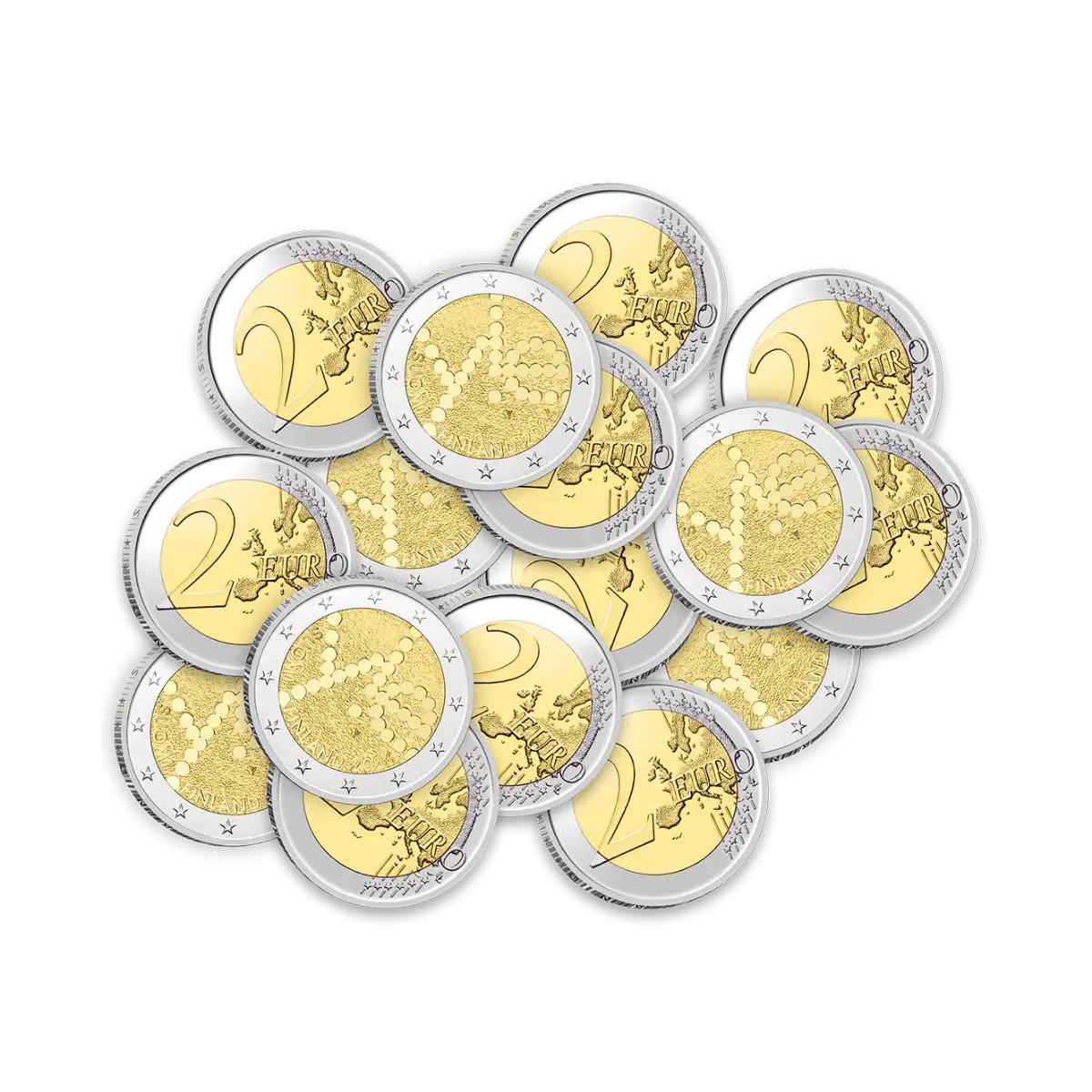
Finally, the 2 euro Coin Roll packs 25 BU pieces (€50 face value) at €235.00, with a mintage of 3,000. The Helsinki Mint product page already lists the roll as almost sold out, which is consistent with how Finnish 2 euro rolls have historically performed at issue.
What it adds up to
A centennial commemorative is, in one sense, a routine numismatic exercise, every national broadcaster, every old institution, eventually gets one. What lifts this program slightly above the routine is the design argument underneath it. Neuvonen has not produced a celebration so much as a defence: a coin program that treats public broadcasting as something Finns should actively want, not simply something they happen to have.
For collectors of modern Finnish issues, the gold’s 600 piece mintage and the proof’s 5,000 cap are the pieces to watch. For everyone else, the BU coincards in their record themed packaging make a clean and unusually thoughtful entry point, a small object that, if Neuvonen’s design holds up to its own ambition, will still be saying something useful about media and shared reality long after the centennial year is over.