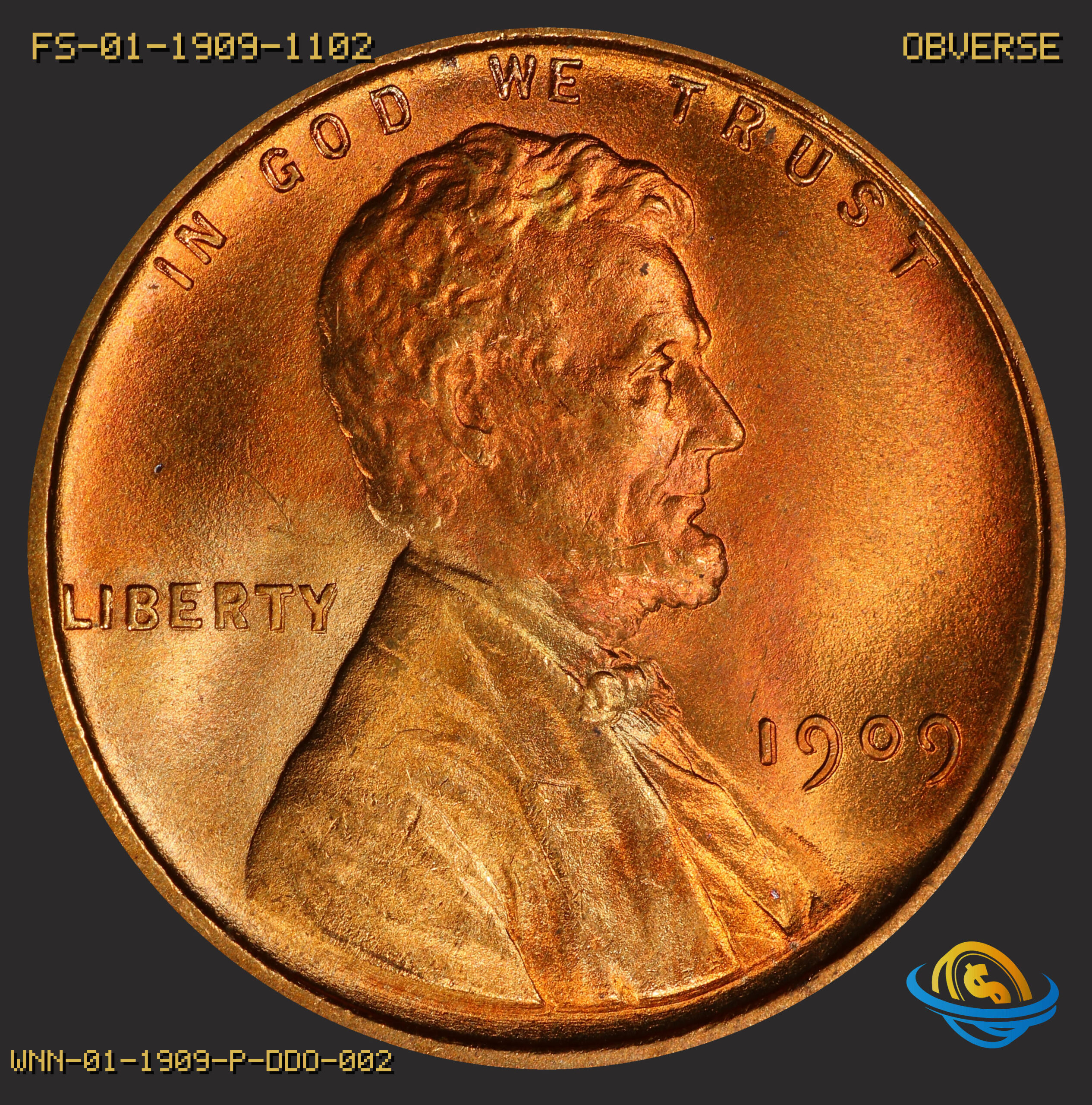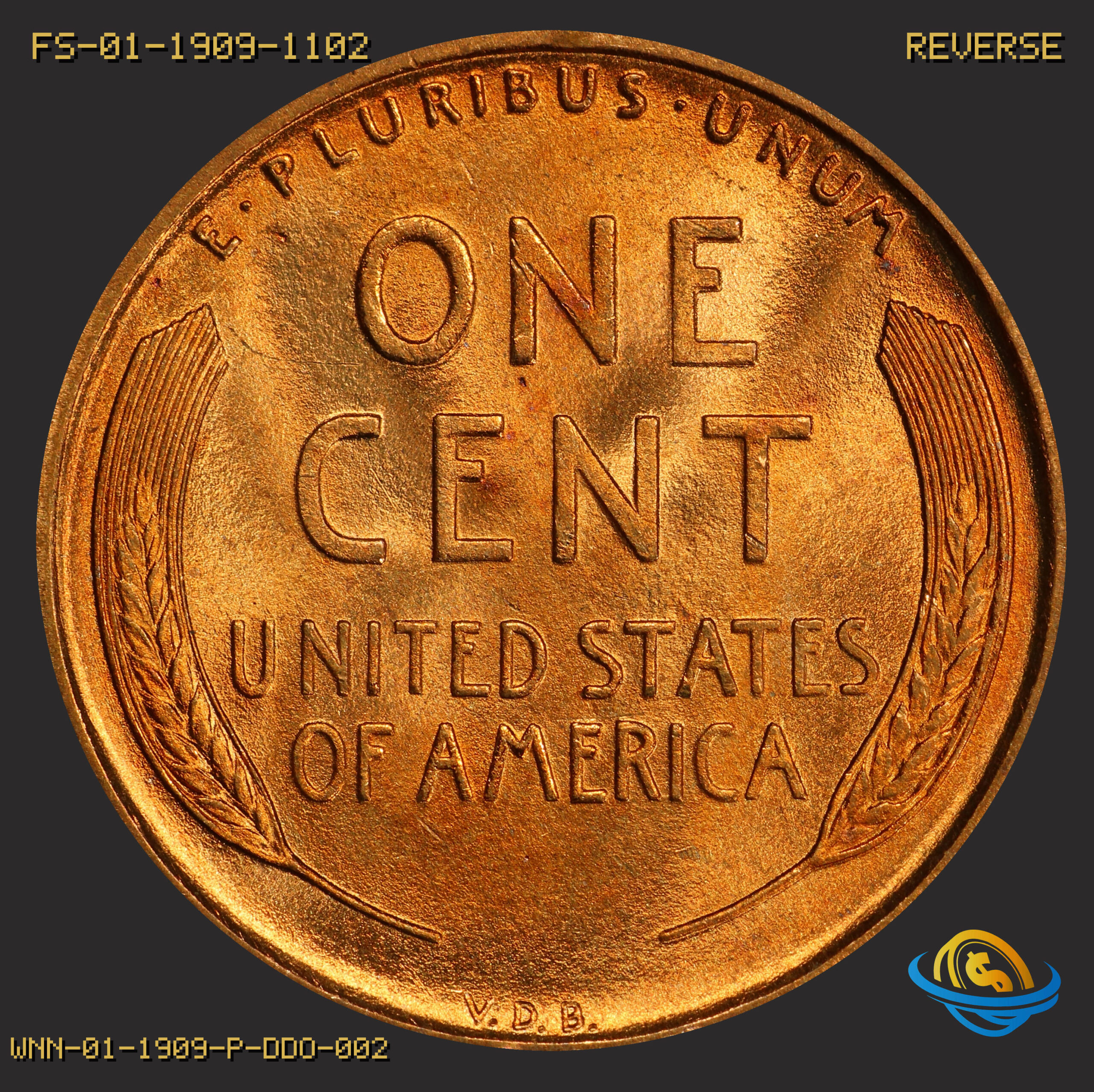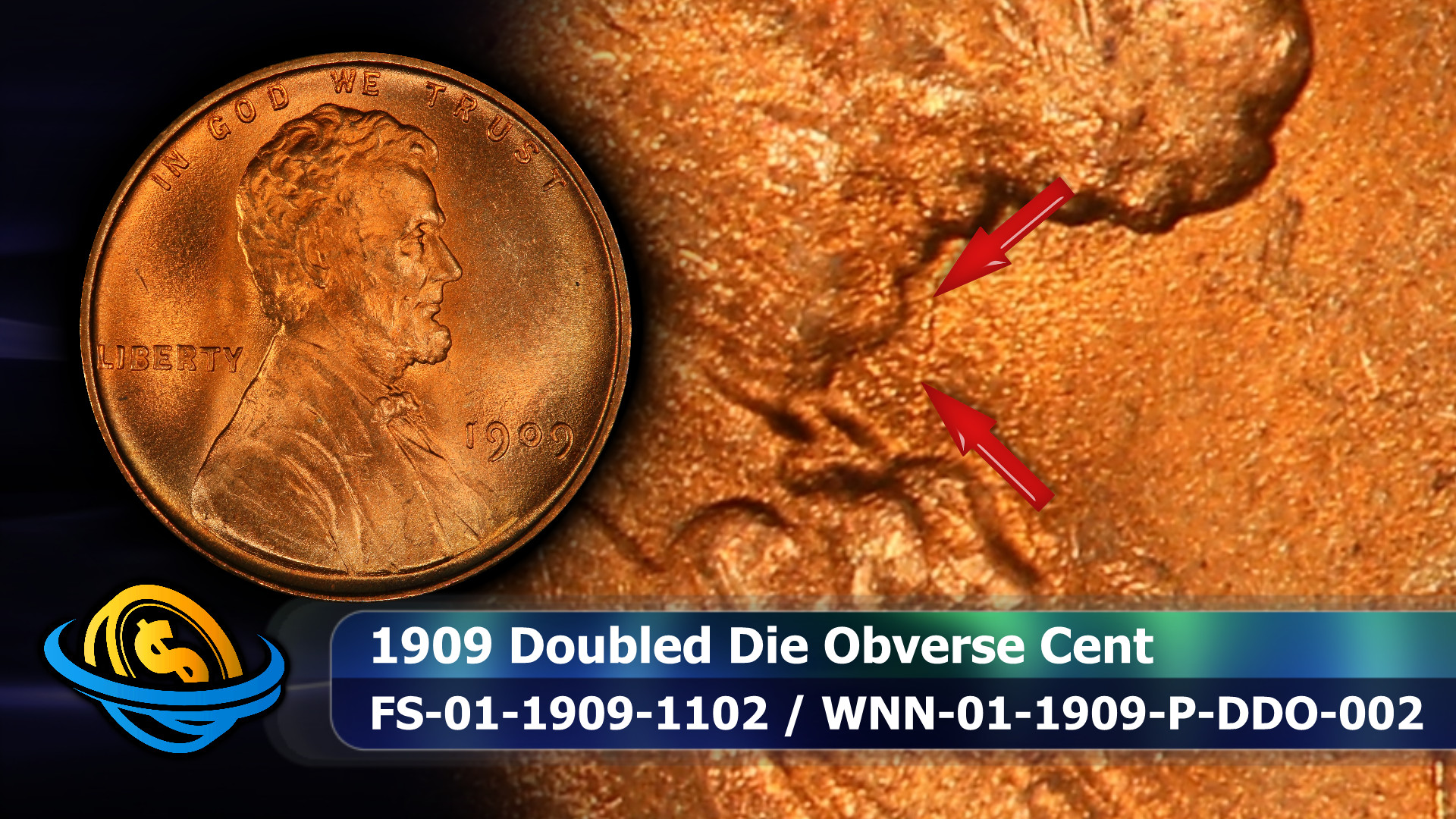
The second attributed doubled die for the 1909 VDB shows spreading at varying orientations across the obverse. While less dramatic than some Lincoln cent DDOs, confirmed examples are desirable given the collectibility of the 1909 VDB date. The CPG cross-reference designation 015.1 appears in specialized Lincoln cent publications. This Class VI Distended Hub doubling produces characteristic extra thickness rather than a visually offset secondary image. The thickening is most pronounced across all four date digits, with neat separation lines particularly visible in the 909 sequence. A subtle extra thickness also appears on the letters of LIBERTY.
Also listed as FS-1102 in the Fivaz-Stanton Cherrypickers’ Guide, giving this variety cross-system significance. Cross-referenced as CDDO-002 in Crawford, WDDO-002 in Wexler, and CONECA 2-O-VI. Three die stages document the progression of die markers on both sides. The book notes that while not a dramatic variety, it is well worth searching for as the primary doubled die on this date.
Identification Notes
Date digits (all four; especially 909 sequence); LIBERTY letters
Obverse Diagnostics
Multi-directional doubling across obverse lettering and date. Class VI Distended Hub Doubling. Extra thickness on all date digits with separation lines visible in 909. Slight extra thickness on LIBERTY letters.
Reverse Diagnostics
Normal reverse.
Die Markers
Obverse:
Stage A: Die chip in upper B of LIBERTY.
Stage B: Die chips upper and lower B and lower R of LIBERTY.
Stage C: Die chip in upper R of LIBERTY; die clash at Lincoln’s throat.
Reverse:
Stage A: Die scratches NNE from upper right O in ONE; SW from upper left right wheat ear; NNE from lower left N in ONE; VDB reverse.
Stage B: Stage A markers are weaker.
Stage C: Die clash mark at lower C of CENT.
However the 1909 VDB cent has a far stronger and more impressive doubled die variety to look for. This coin is the result of offset hub doubling with a fairly strong spread on the obverse of the coin. Most of the doubling here displays towards a south easterly direction to a lesser or greater degree.
There is some doubling to be seen on Lincoln’s lips, to start with, although this is definitely not the strongest doubling on this particular variety. We move then to the letters of “LIBERTY”. Where the B, the E, R, T and Y are all doubled quite nicely. With the doubling becoming stronger and more defined as you move closer to Lincoln’s shoulder.
The strongest doubling however is reserved for the date. Or at least the first three digits of the date. Here there is very bold doubling on the number 1, the first 9 and the 0 as well. And this is definitely your primary place of interest when looking for this particular variety.
During the 2018 ANA Worlds Fair of Monmey a coin matching this description, graded as PCGS MS67 Red was sold at auction for $12 000.