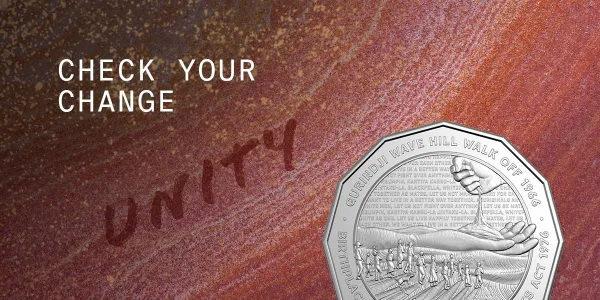
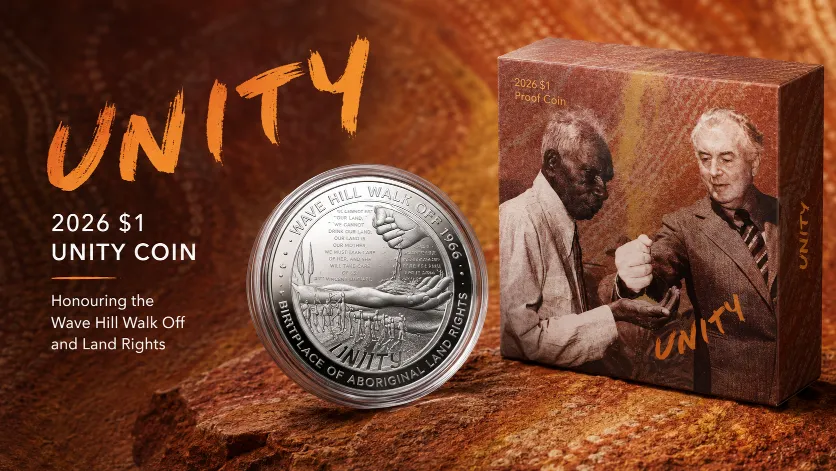
Sixty years ago a stockman walked off a cattle station and, without meaning to at first, changed the way Australia thinks about land. The Royal Australian Mint has now put that walk onto a fifty-cent coin. Released on 20 July, the new Unity collection marks the 60th anniversary of the Wave Hill Walk Off and the 50th anniversary of the Aboriginal Land Rights (Northern Territory) Act 1976, the legislation the walk-off helped bring into being.
What makes this release unusual is where it’s headed. The Mint is issuing collector versions in silver proof and uncirculated card, but it is also striking the design for circulation. From August, the story of the Gurindji strike will be riding around in the country’s loose change, in tills, in glove boxes, in the bottom of school bags.
The Walk-Off
For decades the Gurindji had lived and worked on Wave Hill station in the Northern Territory, a property held by the British pastoral firm Vestey Brothers. Aboriginal workers were the backbone of the cattle industry there, yet they took home a fraction of what non-Indigenous workers were paid. Many were paid in rations of meat scraps, tea and sugar rather than wages. Families lived in humpies of corrugated iron, often without floors, lighting or sanitation. Reports stretching back to the 1930s documented the mistreatment, the racism and the conditions, and behind them eight decades of dispossession.
In 1965 the Commonwealth Conciliation and Arbitration Commission finally ruled that Aboriginal pastoral workers should be paid equally. Then it deferred the increase until 1968. To the men and women who had worked for generations on Country that had always been theirs, a wage rise held three years out of reach read less like justice than an insult.
So on 23 August 1966, Gurindji man Vincent Lingiari led roughly 200 Gurindji, Mudburra and Warlpiri people off the station. They left the only work and housing they had, knowing exactly what they were risking: uncertainty, hunger, the real chance of retaliation. They went anyway.
From Strike to Land Rights
The walk-off could have ended as an industrial footnote. It did not, because the Gurindji reframed it. They established a camp at Daguragu, also known as Wattie Creek, close to sacred sites, and made plain that the dispute was never really about wages. It was about the land itself.
Supporters who had arrived expecting a strike found themselves witnessing something larger, a claim of ownership grounded in tens of thousands of years of custodianship. The standoff lasted the better part of a decade. It drew in unions, activists and a public increasingly unable to look away, and it came to speak for thousands of Aboriginal people across northern and central Australia whose experience it mirrored.
The turn came in 1975. Prime Minister Gough Whitlam travelled to Daguragu and formally handed a portion of Gurindji land back to its traditional owners. In the moment that fixed the day in the national memory, he poured a handful of red soil into Vincent Lingiari’s palm. A year later the Aboriginal Land Rights (Northern Territory) Act 1976 became the first Australian law to let First Nations peoples claim land on the basis of traditional ownership. The thread ran on: in 2020, native title over Wave Hill station itself was recognised for the Gurindji people.
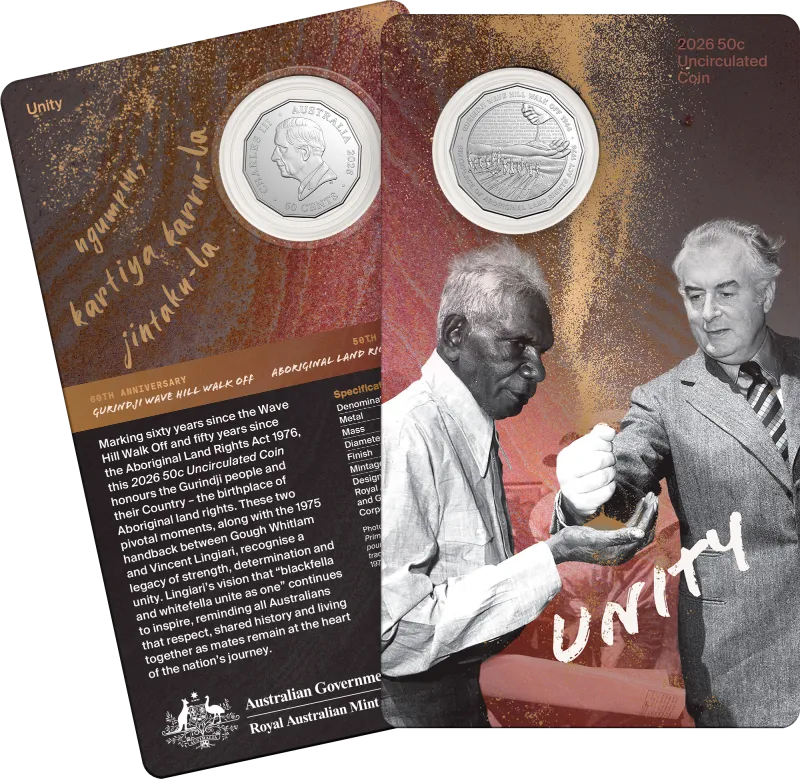
The Story in the Design
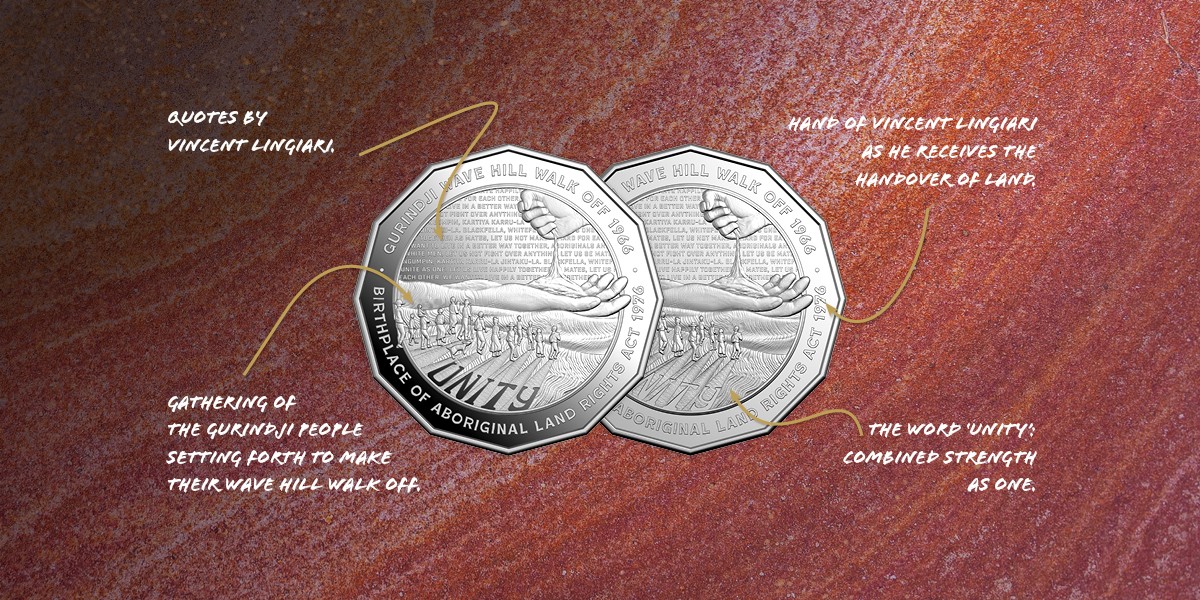
The reverse compresses that whole arc into a single scene. In the foreground a gathering of Gurindji people stand together beneath a hard sun, their shadows thrown long across the landscape as they set out on the walk-off. The eye follows those shadows toward distant hills, where the horizon resolves into a hand, Vincent Lingiari’s, open to receive the land being handed back. Land and hand become one image, which is the point: the connection between Traditional Owners and Country made literal in metal.
Across the sky run the words of Vincent Lingiari. Woven into the overlapping shadows of the crowd is the single word that names the coin, UNITY, the collective strength that came from standing together. It is a design that asks to be read rather than simply looked at, and it rewards the reading.
Check Your Change
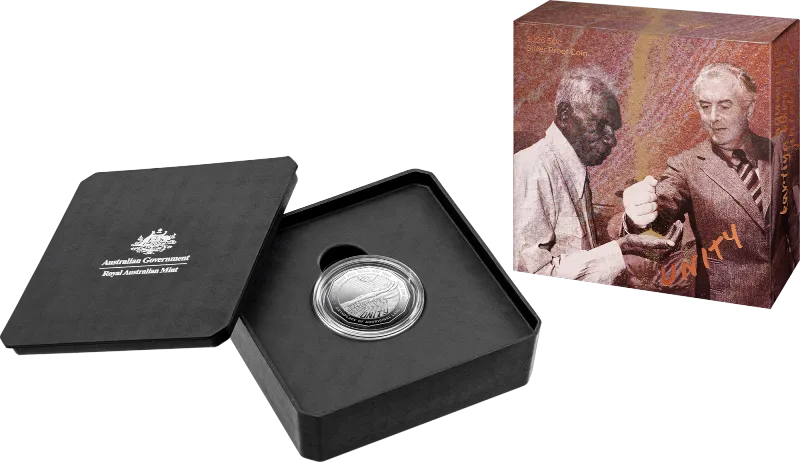
The Unity coins go on sale from Thursday 6 August through the Mint’s online shop, its contact centre, the Mint shop in Canberra and participating authorised distributors.
The 2026 50c Uncirculated Coin, presented in a card, carries a mintage of 60,000 and sells for $17.50, limited to ten per person. The 2026 50c Silver Proof Coin is the collector centrepiece, struck to a mintage of just 6,500 at $150.00, one per person. Alongside them, the circulating 50c enters general use from August, which is the release worth watching. There is no purchase, no packaging and no premium attached to finding one, only the small surprise of turning over your change and recognising it.
The Coin in Circulation
A coin cannot undo eighty years of exploitation, and this one does not pretend to. What it can do is keep a story moving. Every time the Unity 50c passes from one hand to another it stages, in miniature, the gesture at the heart of its own design, something handed back, something carried forward. Fifty years after the soil fell into Vincent Lingiari’s palm, the courage of the Gurindji people is about to become one of the most quietly circulated stories in the country, fifty cents at a time.