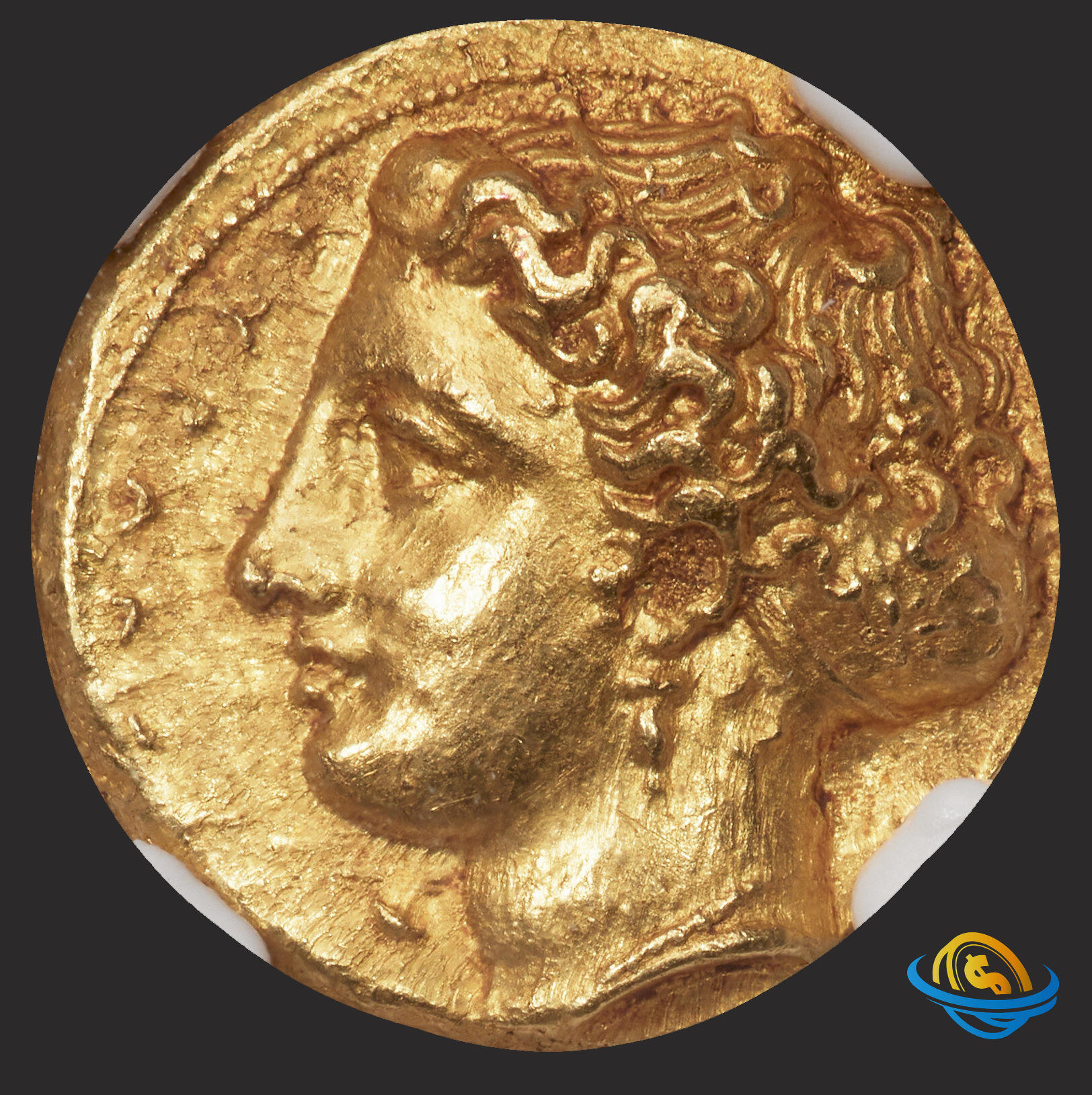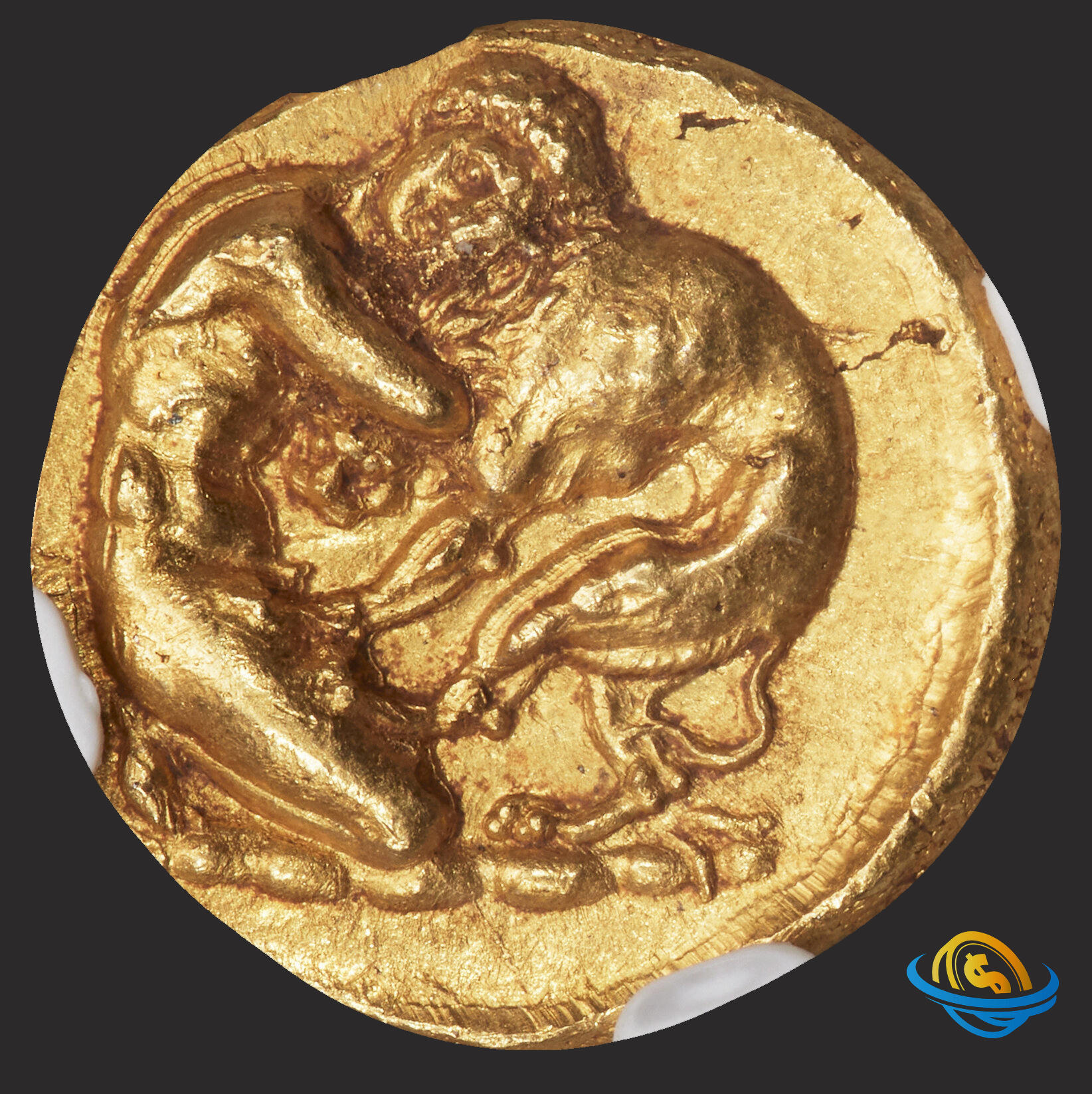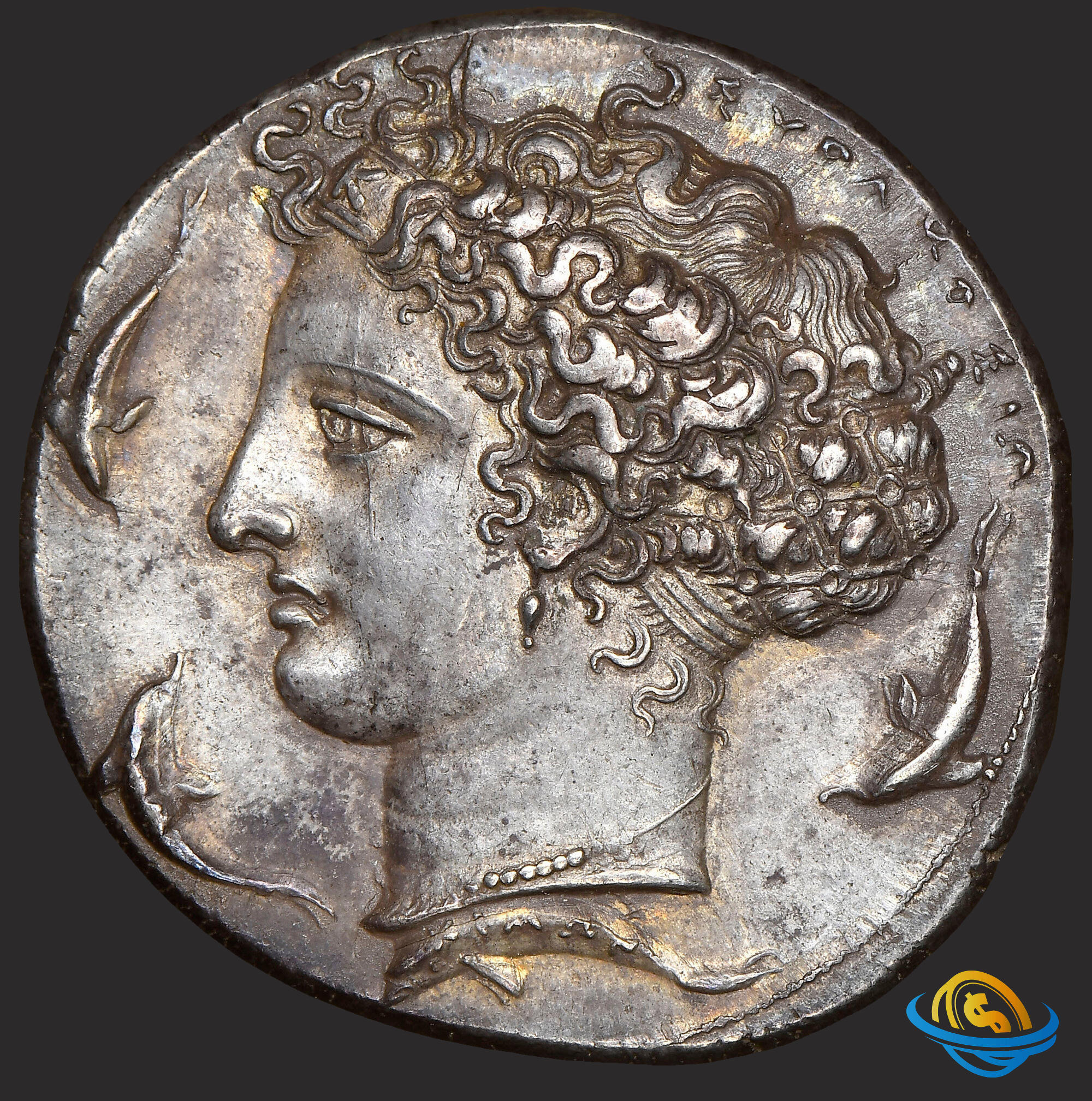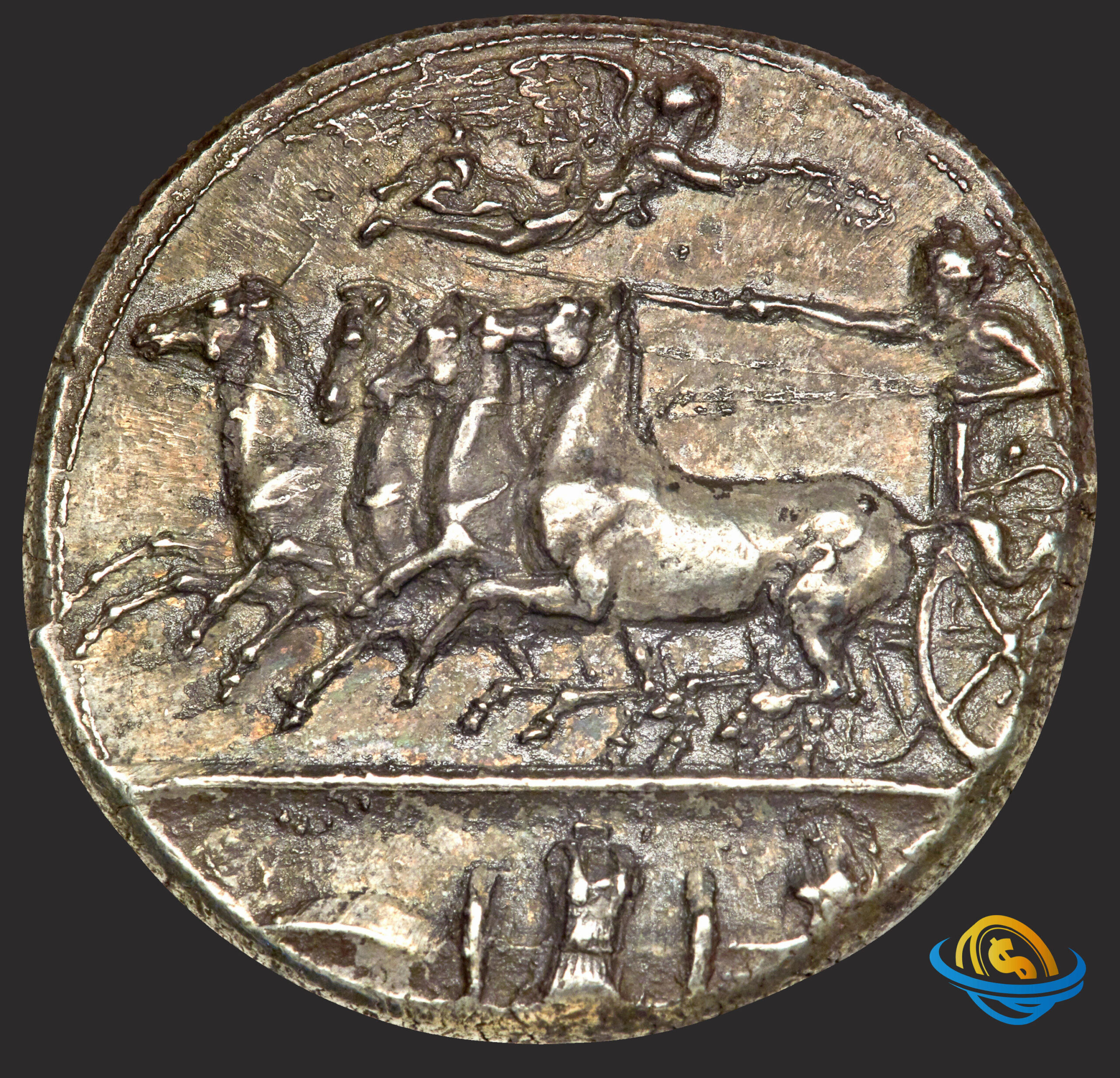
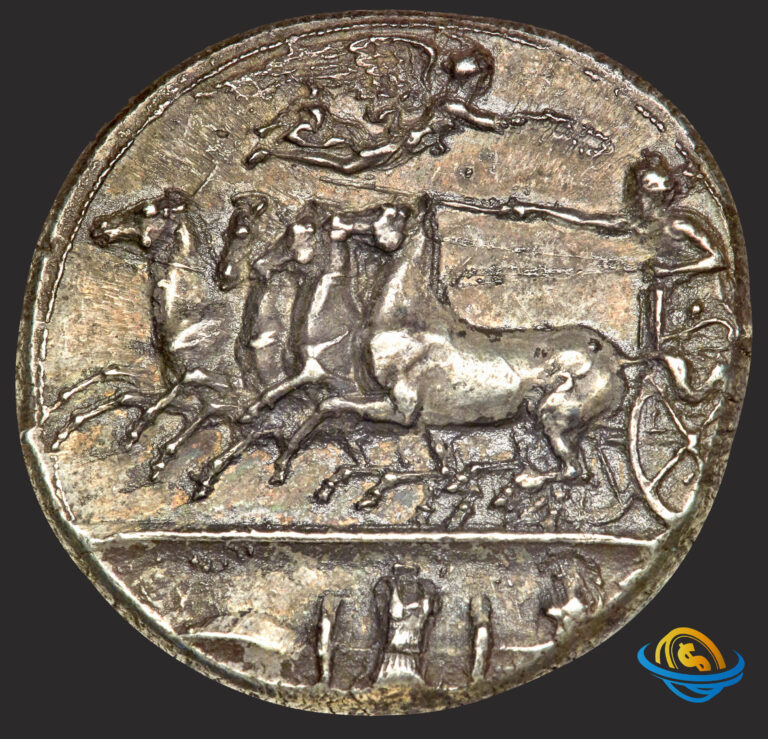
A decadrachm is a large silver coin of the Greek world, valued at ten drachms. It was never an ordinary small change denomination. By weight, scale, and visual ambition, the decadrachm belonged to the upper register of ancient coinage: a piece large enough to carry major artistic statements and valuable enough to represent serious wealth.The most famous decadrachms were struck at Syracuse in Sicily during the late fifth and early fourth centuries B.C. At this moment, Syracusan coinage reached one of the high points of classical Greek art. The broad silver flans gave engravers an unusually generous surface, allowing designs of remarkable depth, motion, and refinement.Many Syracusan decadrachms show a racing quadriga, or four horse chariot, on one side. The other often depicts the head of Arethusa, the nymph associated with the sacred spring of Syracuse, surrounded by dolphins. These were not decorative choices alone. The quadriga evoked victory, civic pride, and aristocratic display, while Arethusa and the dolphins tied the coin to the mythology, landscape, and maritime identity of the city.The exact function of decadrachms could vary. Some may have served as high value money, while others appear to have had ceremonial, commemorative, or prestige purposes. Their size made them impractical for small daily transactions, but ideal for payments, gifts, prizes, or public statements of wealth and authority.
Today, decadrachms are among the most admired of all ancient coins. Their importance rests on more than rarity. They unite value, civic identity, mythology, and artistic mastery in a single object. In the best examples, the decadrachm is not merely a denomination. It is Greek coinage operating at monumental scale.
Example Usage
A decadrachm is a large ancient Greek silver coin worth ten drachms, famous for spectacular Syracusan examples. A Syracusan decadrachm uses its broad silver surface to present one of the most celebrated artistic designs of the ancient Greek world.