A Core Reference for America’s Most Popular Classic Silver Dollar
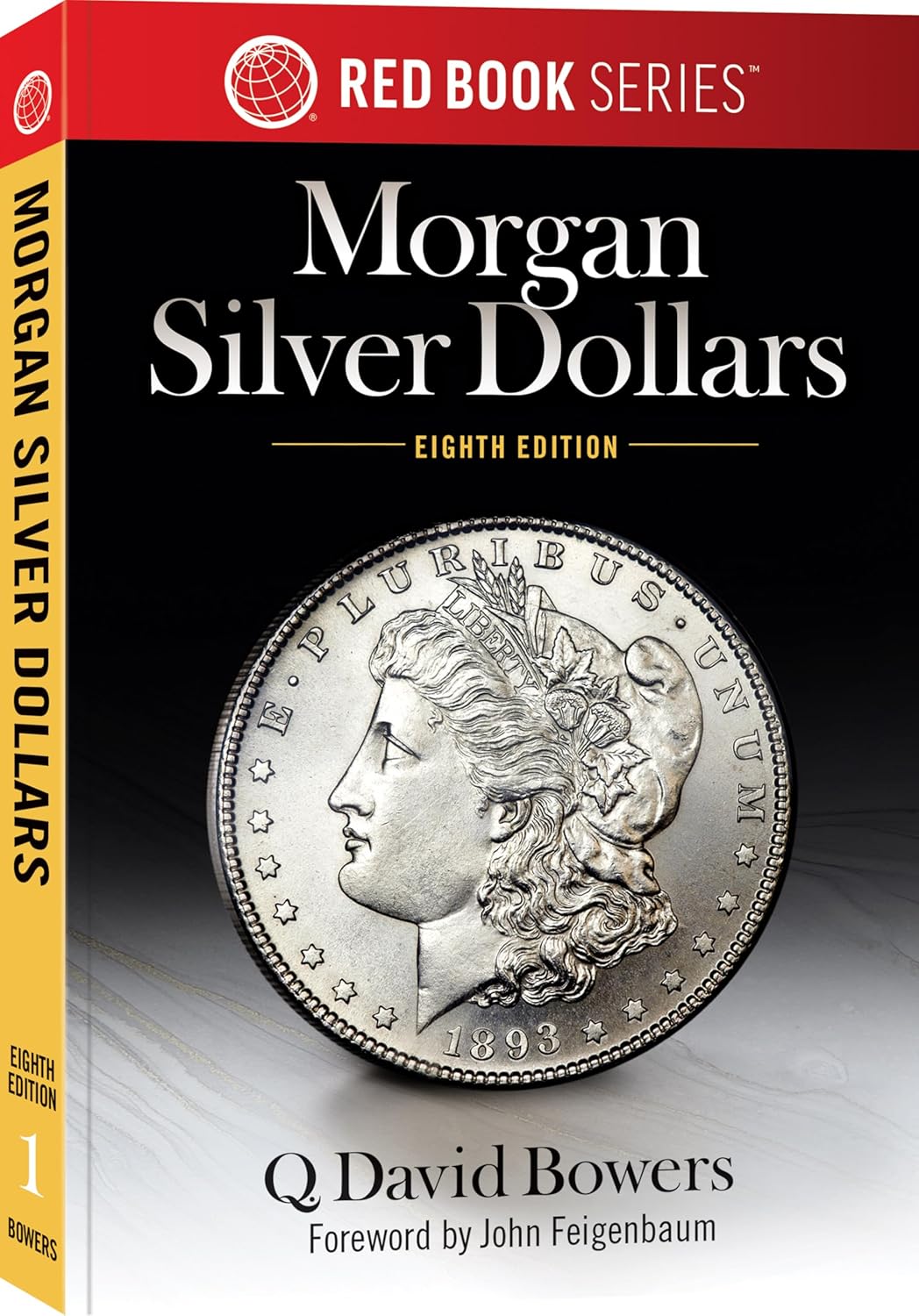
Few U.S. coins inspire collector loyalty quite like the Morgan silver dollar. Large, historic, widely collected, and full of interesting date-and-mintmark challenges, the series has become one of the cornerstones of American numismatics. For collectors who want a single dedicated reference on the series, Whitman’s A Guide Book of Morgan Silver Dollars, 8th Edition remains one of the most useful books to have on the shelf.
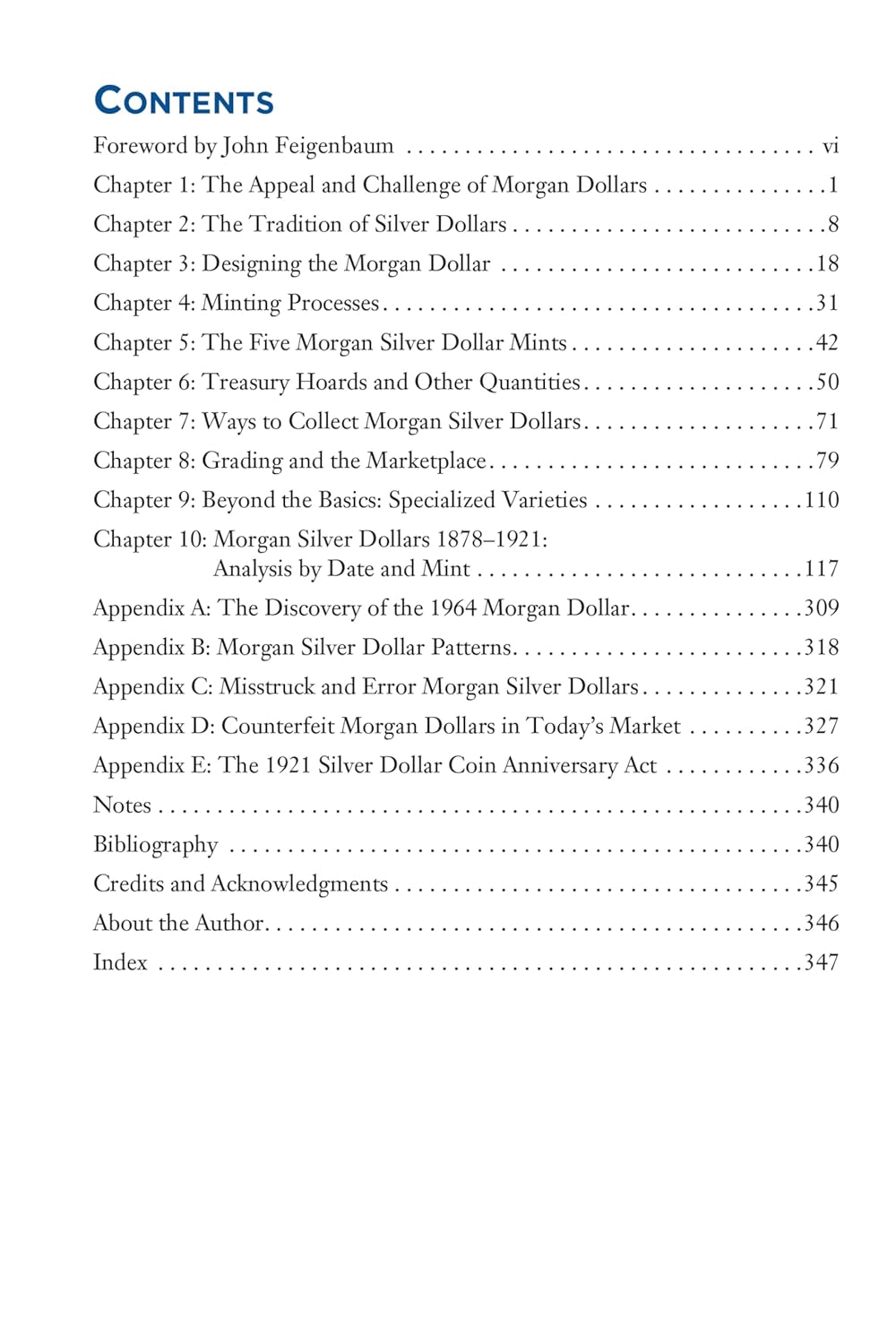
Part of Whitman’s respected Red Book Series, this expanded eighth edition covers the Morgan dollar from its 1878 debut through its original minting history, Treasury releases, famous hoards, collecting strategies, market values, varieties, counterfeit detection, and the modern 1921–2021 anniversary issues.
What This Book Covers
This guide is not just a price list. It gives collectors a broader understanding of why Morgan dollars matter, how the series developed, and how the market treats different dates, mintmarks, grades, and varieties.
The book includes updated retail pricing, market analysis for each date and mintmark, GSID catalog numbers for quick coin identification, and an updated foreword by Whitman publisher John Feigenbaum.
For collectors, the most useful sections include:
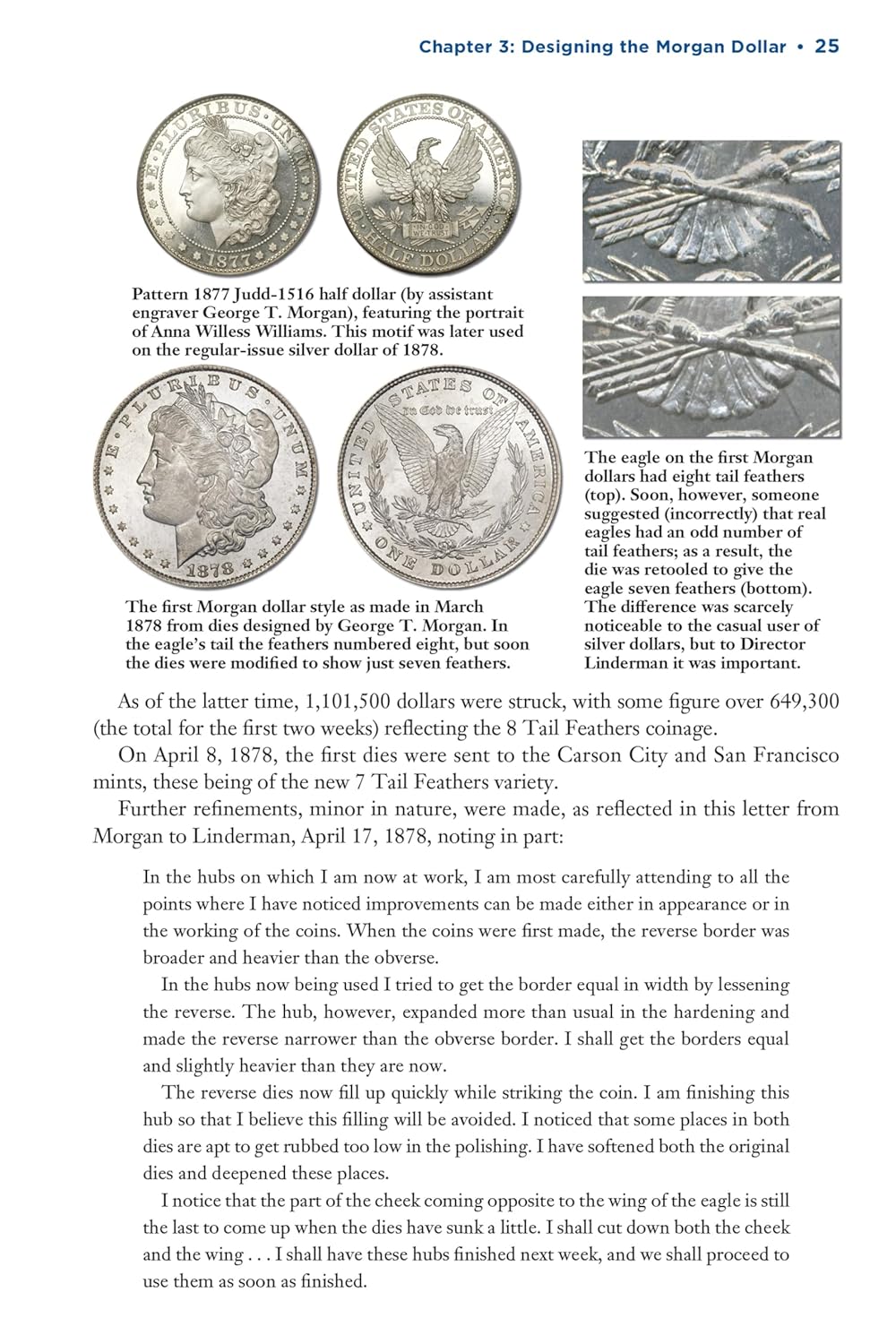
Morgan dollar history — origins of the design, minting background, Treasury releases, hoards, and the coin’s role in American collecting.
Date-and-mintmark analysis — guidance for each issue in the series, including availability, demand, and market behavior.
Values and market trends — retail pricing in multiple grade levels, useful for comparing common dates, key dates, and condition rarities.
Grading guidance — help with understanding wear, eye appeal, strike quality, luster, and the differences between circulated, Mint State, and premium-quality examples.
Varieties and cherrypicking — useful background for collectors interested in die varieties and standout coins.
Counterfeit awareness — especially important in a series where better dates and high-grade examples can carry significant premiums.
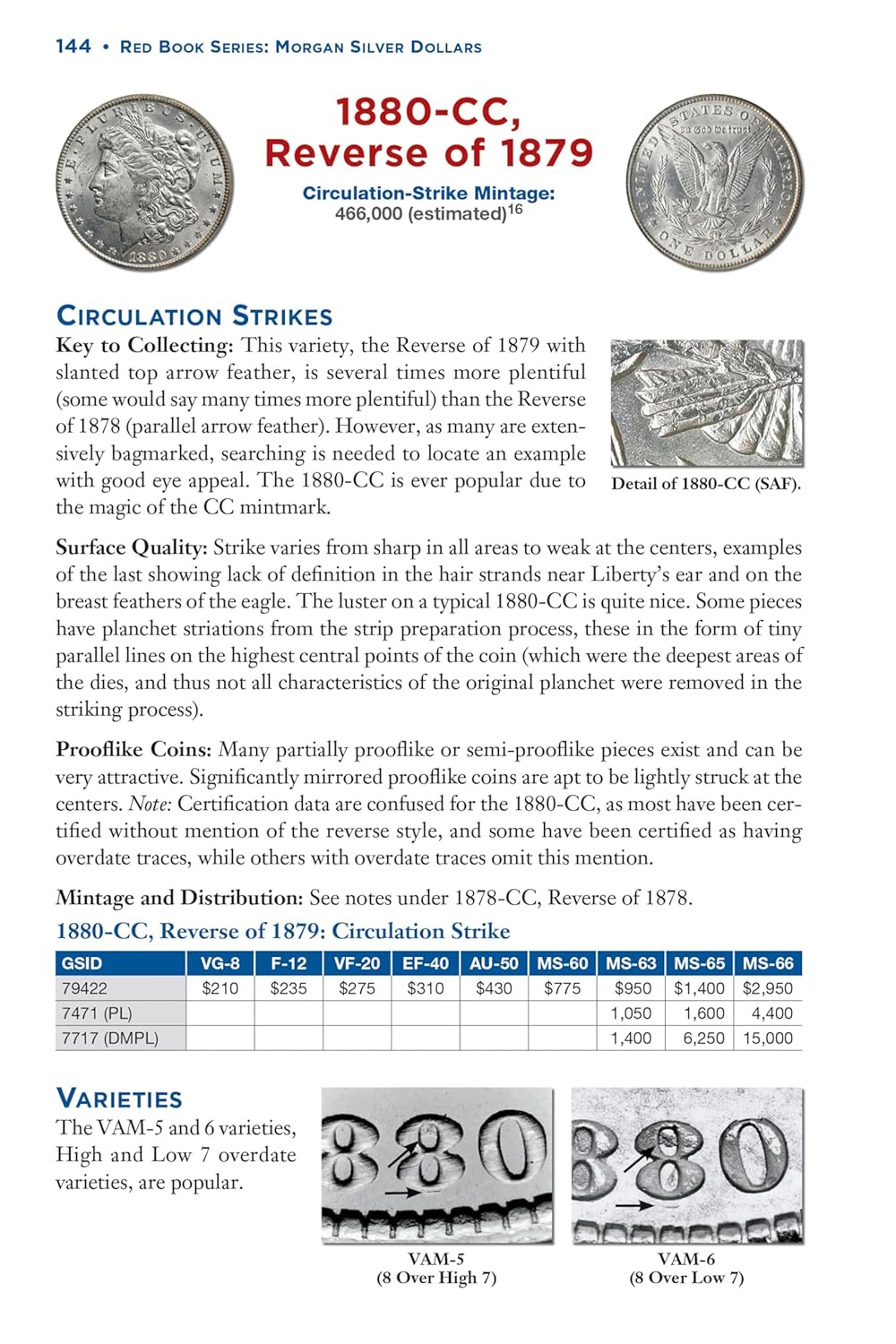
Illustrations — full-color images of coins, including toned examples, Proofs, errors, and notable varieties.
Why It Belongs in a Coin Collector’s Library
Morgan dollars are easy to start collecting, but difficult to master. A beginner might buy a few attractive common dates and feel comfortable at first, but the series quickly becomes more complicated. Strike quality varies by mint. Some dates are common in circulated grades but scarce in higher Mint State. Some coins are available in quantity but hard to find with strong eye appeal. Others are condition rarities where a small grade difference can make a major price difference.
That is where a dedicated guide like this becomes valuable. It helps a collector move beyond simply asking, “What is this coin worth?” and start asking better questions:
Is this date actually scarce, or just popular?
Is the coin weakly struck or worn?
Is the toning attractive or a problem?
Is this a common issue in an uncommon grade?
Is this a coin worth upgrading later?
Are there known varieties or counterfeit concerns?
For anyone building a Morgan dollar set, those questions matter.
Strongest Features
The biggest strength of this book is that it combines history, collecting strategy, grading, market data, and variety information in one focused volume. Many collectors own a general Red Book, but a dedicated series guide gives more room for context.
The market analysis is especially useful because Morgan dollars are not a flat, one-size-fits-all series. A common 1881-S Morgan dollar behaves very differently from a tougher Carson City issue, a Proof, a high-grade conditional rarity, or a coin with exceptional toning. Having issue-by-issue commentary helps collectors understand those differences.
The full-color photographs are another major advantage. Morgan dollars are highly visual coins, and photographs help explain topics like luster, strike, toning, Proof surfaces, and eye appeal more clearly than text alone.
Best For
This book is useful for several types of collectors:
New collectors learning the Morgan dollar series
Intermediate collectors building date-and-mintmark sets
Advanced collectors studying varieties and condition rarity
Bullion buyers moving into collectible silver dollars
Dealers and sellers who need quick series-specific context
Collectors interested in toned coins, Proofs, errors, and hoards
It is also a good companion to a general U.S. coin price guide, because it gives the Morgan dollar series more depth than a broad catalogue can provide.
Limitations
No printed price guide can stay perfectly current forever. Morgan dollar prices can move, especially for key dates, high-grade coins, beautifully toned examples, and coins with strong registry-set demand. The values in the book are helpful as a reference point, but collectors should still compare recent auction records, dealer prices, and certified population data before making expensive purchases.
Also, while the book introduces varieties and counterfeit awareness, collectors who specialize deeply in VAM varieties or authentication may eventually want more specialized references. This guide is excellent as a broad Morgan dollar reference, but it is not the final word on every die variety.
Verdict
A Guide Book of Morgan Silver Dollars, 8th Edition is one of the most practical references a Morgan dollar collector can own. It is approachable enough for beginners, detailed enough for serious collectors, and broad enough to remain useful even as a collection grows.
For a coin and numismatics website’s resources section, this is an easy recommendation. Morgan dollars are one of the most widely collected U.S. coin series, and this guide gives collectors the historical background, grading knowledge, market context, and collecting strategy needed to approach the series with more confidence.
Recommended for: Morgan dollar collectors, U.S. type coin collectors, silver dollar buyers, variety hunters, and anyone building a numismatic reference library.
Not ideal for: Collectors who only want a pocket-sized price list, or advanced VAM specialists who need a dedicated die-variety reference.