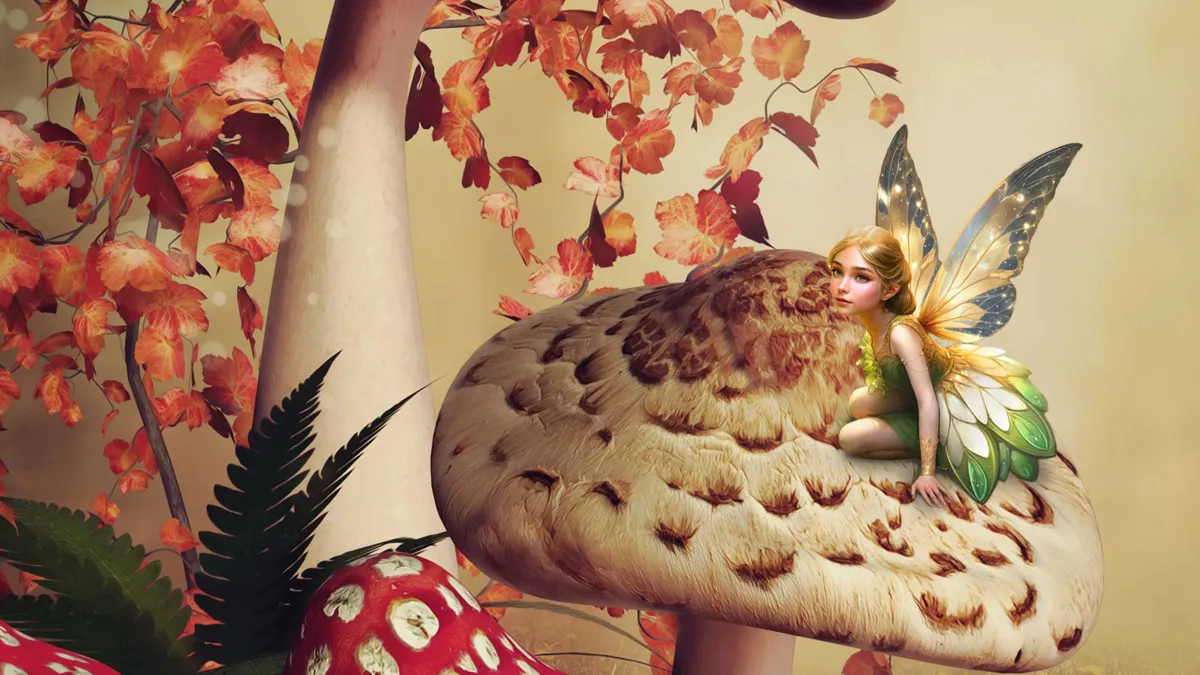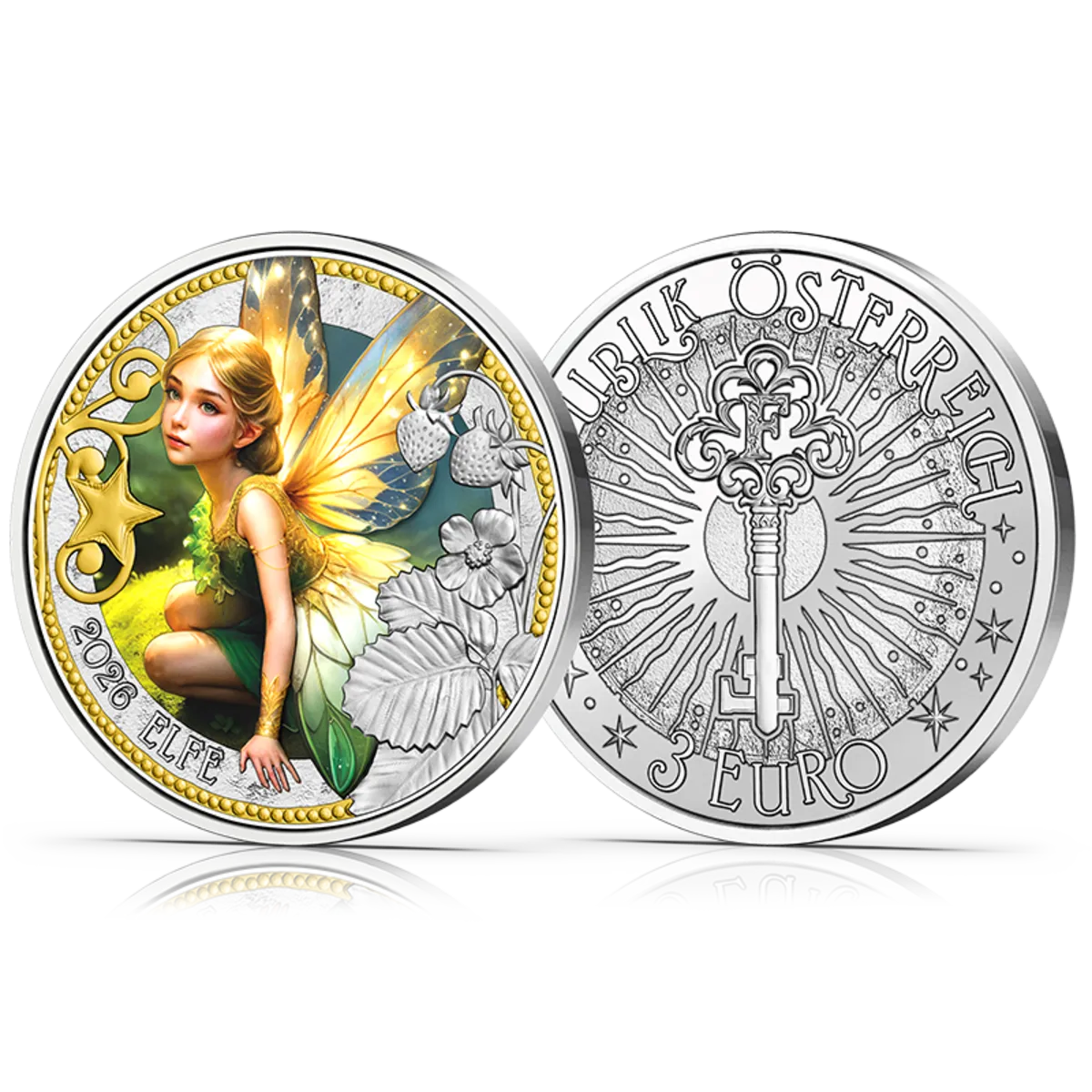
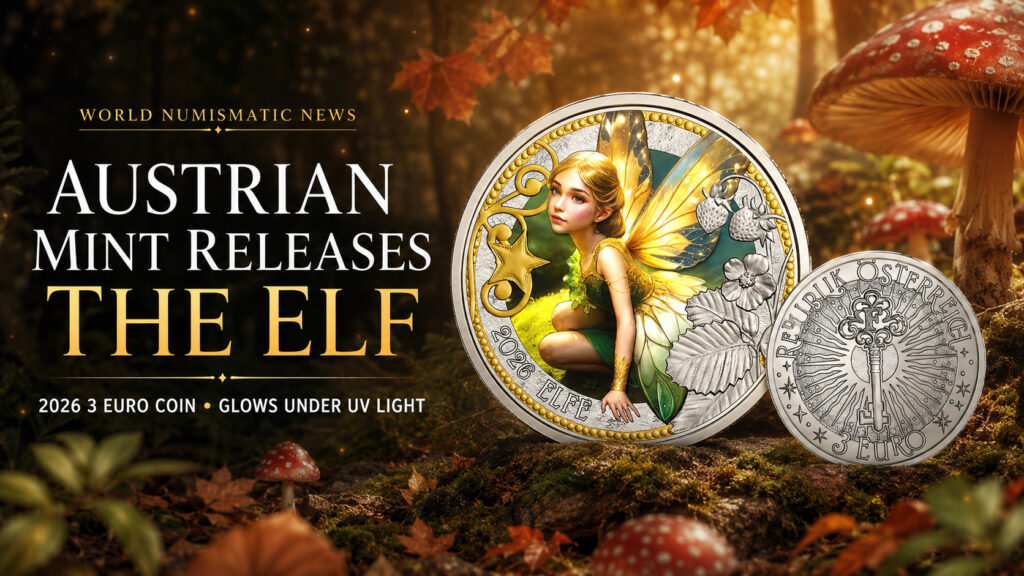
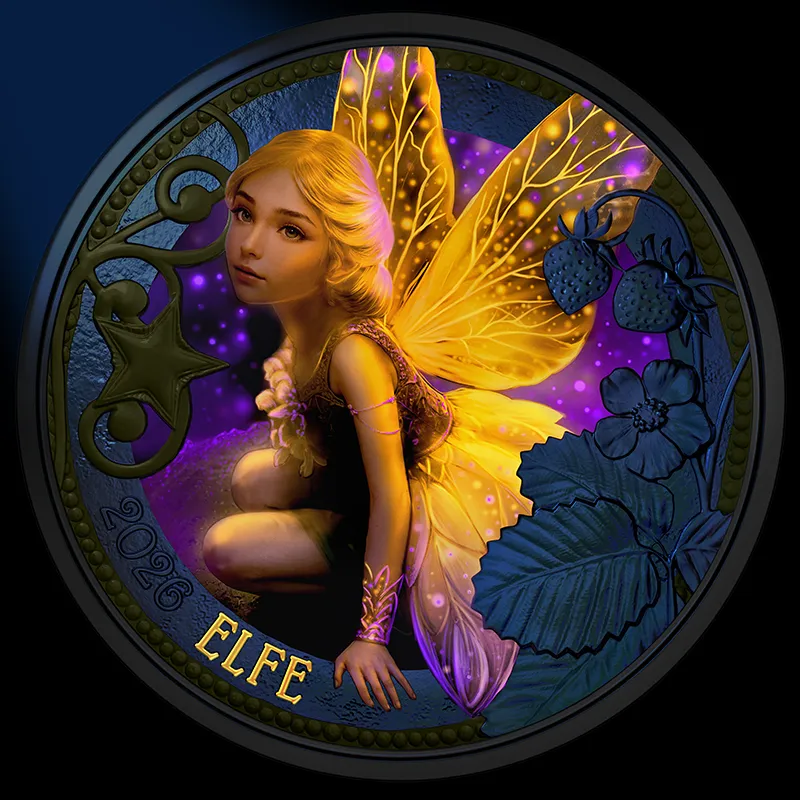
The Austrian Mint has set a June 17 release date for the third instalment of its current 3 Euro programme, “Magical and Mythical Creatures.” This time the subject is the elf, a winged figure in a small green dress, alighting briefly on the reverse beside strawberry leaves and a gilded ornament. Like the trolls and hippocamps that share the series, she glows when ultraviolet light passes over her.
The new coin retails for 16.80 euros, carries a mintage of 65,000 in uncirculated quality, and is the latest in a run of Austrian 3 Euro pieces that have made UV reactive printing a small but distinctive house feature.
The Coin
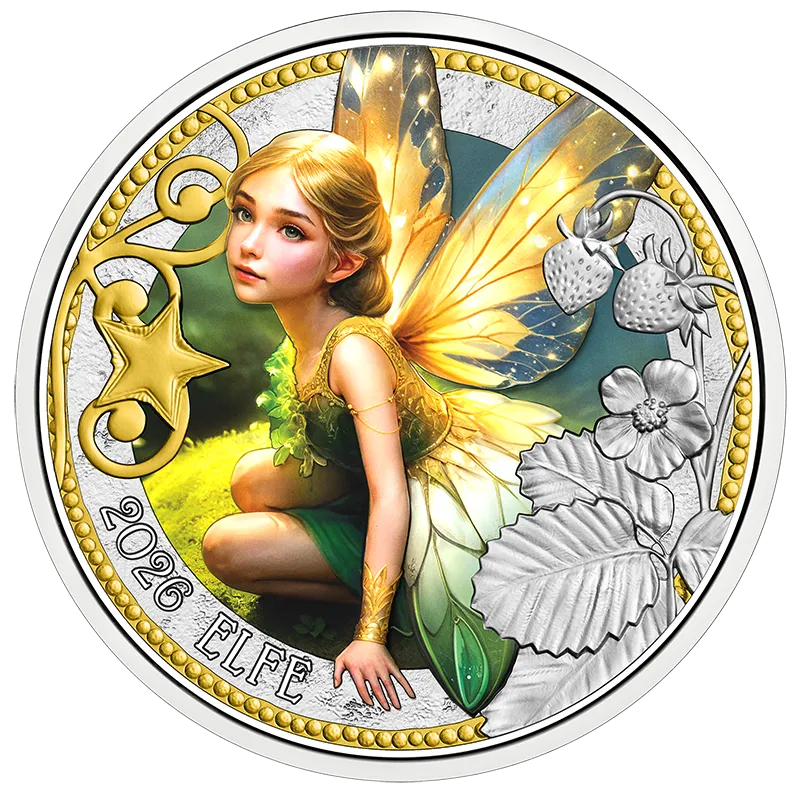
The reverse, by designers Anna Schlindner and Rebecca Wilding, places the elf at rest rather than in flight, a quiet narrative choice in a series that could easily have leaned on motion. Strawberries and their blossoms fill the foreground; to her left, a gilded ornament and a single star sit inside a border that is itself broken by the relief. The inscription ELFE and the figure’s colouring both shift under UV, which is the mechanical detail the series is built around. Without the torch, the coin reads as a polished folk tale vignette. With it, the motif comes forward.
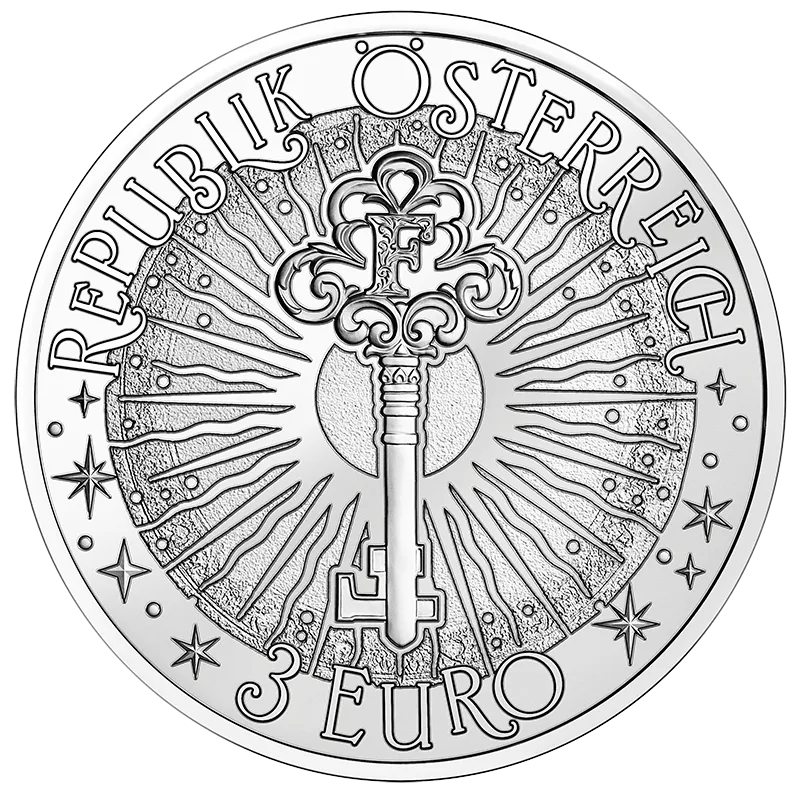
The obverse turns toward a different idiom. An ornamented key bearing the letter F, for fairy tale, sits over a recessed sun in silhouette. Irregular lettering and a scatter of stars around the rim push the design toward the storybook register the series has cultivated from the start.
Specifications are standard for the programme: 34 millimetres, 16 grams, copper alloy, uncirculated. The coin ships without packaging.
The Series and Its Host
The “Magical and Mythical Creatures” run is, in collector terms, a children’s series first and a numismatic one second. Its collector album is a book, In the Garden of Mythical Creatures, written by the Austrian children’s author Thomas Brezina, whose career runs to more than 550 titles translated into thirty five languages. The Mint sells an accompanying UV torch as a separate accessory, and the framing of the programme leans openly toward the gift market: birthdays, first communions, graduations.
The folklore brief on the Austrian Mint’s product page is more careful than the format would suggest. It distinguishes elves from fairies, noting that the two are conflated in everyday English but come from different mythological roots, and traces the modern, friendly image back to nineteenth century children’s books. The most substantive paragraph is the one on Iceland’s huldufólk, the hidden people, and the genuine procedural weight they carry in Icelandic planning law, where the cultural significance of large stones and rocks is one of the factors a project review may consider. It is an unexpected place for that piece of information to surface in a coin description.
What It Is, and What It Isn’t
This is a routine programme release rather than a numismatic event. The mintage is generous, the metal is base, the price is modest, and the secondary market for the earlier issues in the series, the Troll most notably, sits broadly in line with retail.
What the series does well is something the wider modern Mint sector has spent the last decade circling: a coherent narrative wrapper, a literary collaborator with real reach, an inexpensive entry point, and a gimmick that genuinely works on the object rather than around it. The UV reactive inks are not novel in 2026, but Austria has used them with more design discipline than most. The Elf is the latest evidence of that.
For collectors building the “Magical and Mythical Creatures” set, the Elf is a necessary piece, and for parents and gift givers, it is exactly what the Mint designed it to be: a small, glowing object with a story attached.