
The headline number in this group came not from a coin at all but from a kilogram of refined gold, and the headline coin sold for less than two-thirds of it. That gap is the most honest thing about this week’s GreatCollections Top Ten, a board where pure metal and pure rarity sat at the same table and split the difference.
What ties the ten together is a green sticker. Nine of the ten carry CAC approval, the market’s shorthand for “graded conservatively and worth the number on the holder,” and the names attached read like a provenance roll call: the Coronet, Cremorne, Noble, and Bella collections. We’re following GreatCollections’ own countdown, from Number 10 up to the finest-known Morgan they crowned Number 1, an order built on desirability rather than dollars, which is why the sale’s single most expensive lot lands midway through. All results are in U.S. dollars and include the buyer’s fee.
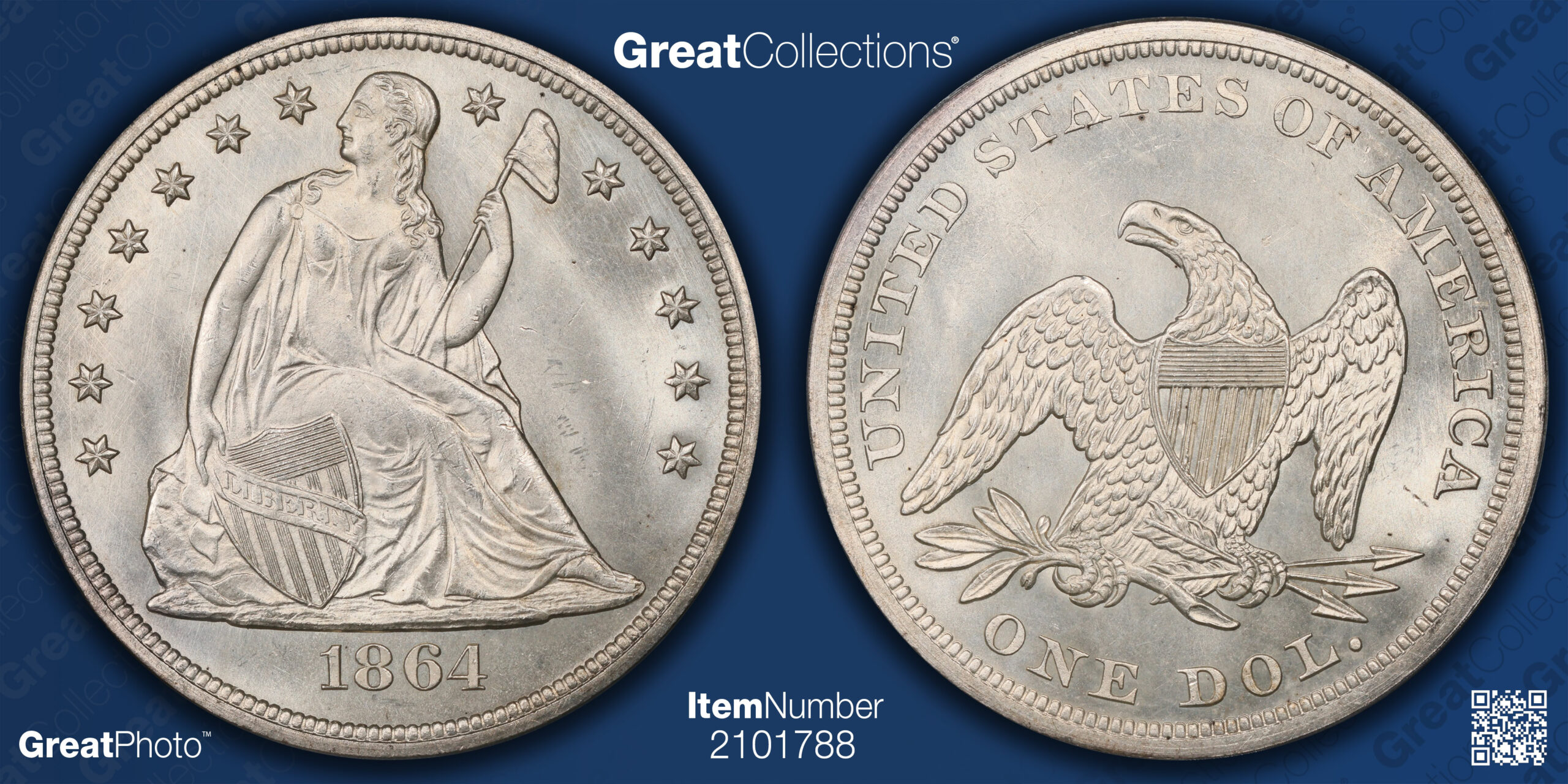
1864 Seated Liberty Dollar, PCGS MS-65 CAC, $52 312.50
In 1864, the silver dollar was a coin most Americans never saw. The Union was hoarding hard money through the Civil War, and the Mint struck just 30,700 Seated dollars for circulation that year, most of which promptly sailed east as trade silver and never came home. That export trade is precisely what makes a survivor like this one a small contradiction: a coin that mostly left the country, turning up generations later blast white and frozen in time. The cartwheel luster rolls unbroken across pristine fields, the strike is crisp, and the eye appeal pushes past what the assigned grade promises. Of the few Mint State examples that exist, Gems are rarer still, and this CAC-approved MS-65 holds its own against coins graded a notch above it.
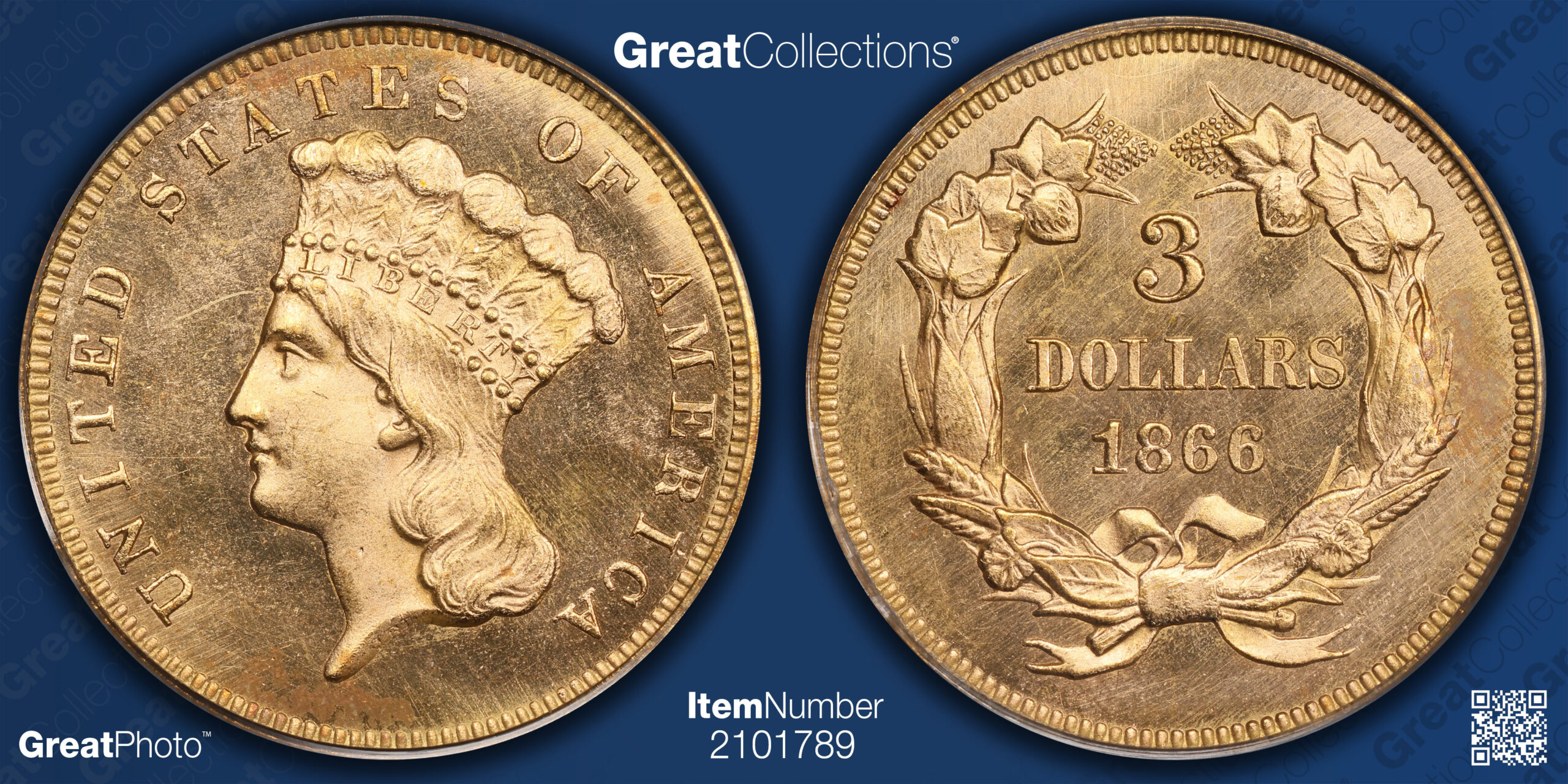
1866 Three-Dollar Gold Piece, PCGS MS-66 CAC, $68 119.88
The three-dollar gold piece is one of the strangest things the United States ever decided to mint. Struck in tiny numbers from 1854 to 1889, it never solved any problem the country actually had, and it survives today less as money than as a curiosity collectors prize for exactly that reason. This 1866 example, struck as a fractured nation began stitching itself back together, is tied for the finest known. The surfaces are frosty yellow-gold with subtle prooflike flashes pooling in the fields, the strike is sharp, and bold die polish on both faces lends it a character all its own. An odd denomination, gorgeously preserved: the kind of coin that endures precisely because it never quite belonged.
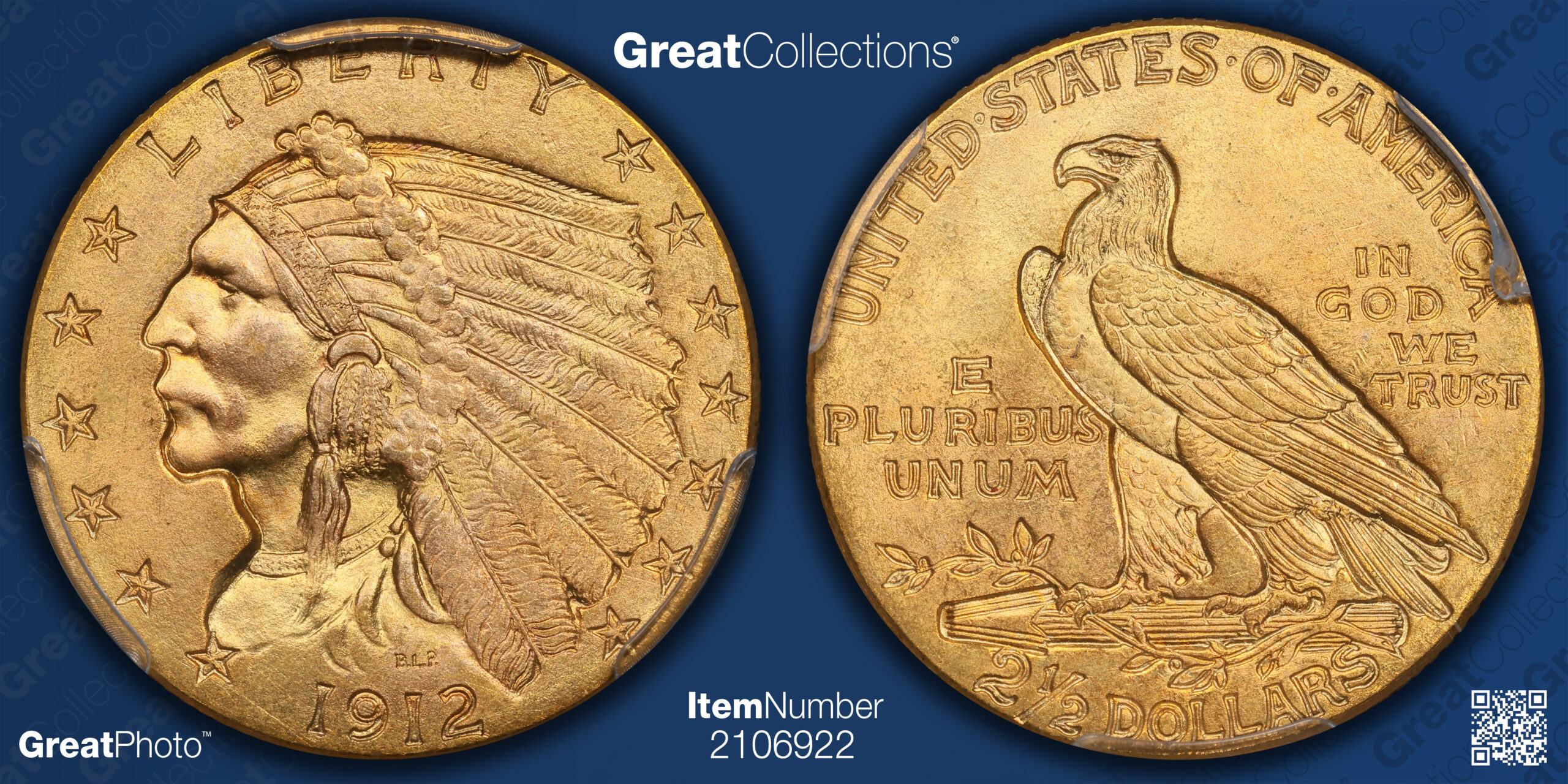
1912 Indian Quarter Eagle, PCGS MS-65+ CAC, $36 118.12
Bela Lyon Pratt did something no American coin designer had tried before, and it has been frustrating grading rooms ever since. His Indian quarter eagle carries an incuse design, the devices sunk into the field rather than raised above it, which means wear and quality both hide in the same recessed surface. True Gems are genuinely hard to find because the design works against the grader’s eye. The 1912 has long been counted among the series’ underrated dates, and this MS-65+ ranks near the top of what exists, with only MS-66+ finer at PCGS. The original skin shows rich gold warmed by a faint purple patina, and luster moves freely across the satiny surface. An underrated coin in a condition that quietly outranks its reputation.
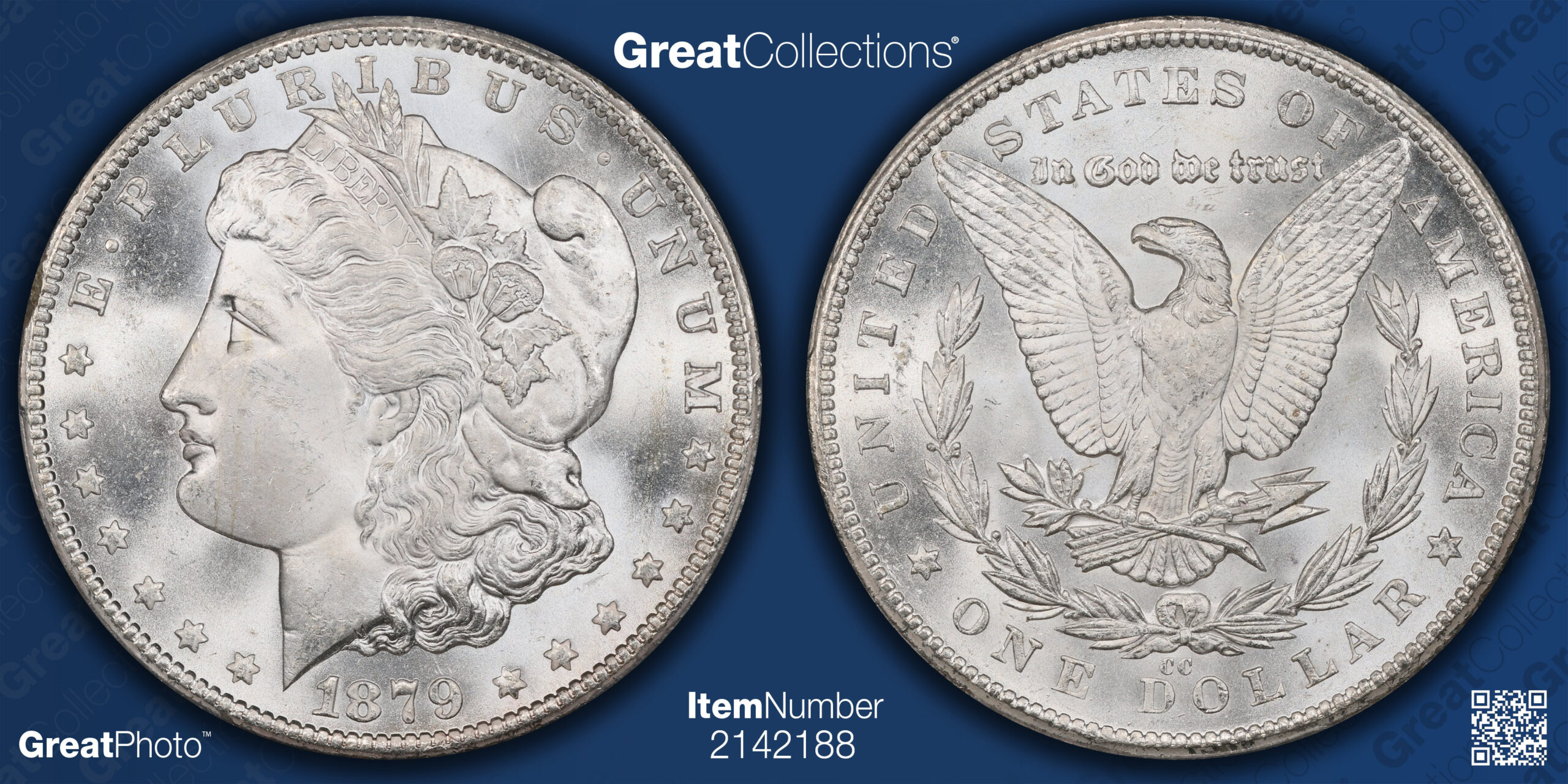
1879-CC Morgan Dollar, PCGS MS-65+ CAC (Coronet Collection), $50 062.50
Two letters do most of the work on this coin: C and C. The Carson City mintmark turns an ordinary Morgan into a chase, and the 1879-CC is among the scarcest the frontier mint ever produced. This one, from the Coronet Collection, is blast white from rim to rim, with bright rolling luster sweeping both sides and a strike sharp enough to carry the grade past the light chatter in the fields. At the MS-65+ level it sits among the most desirable survivors of the date, with MS-66+ marking the finest known. Carson City gives a Morgan its romance; condition like this gives it its price.
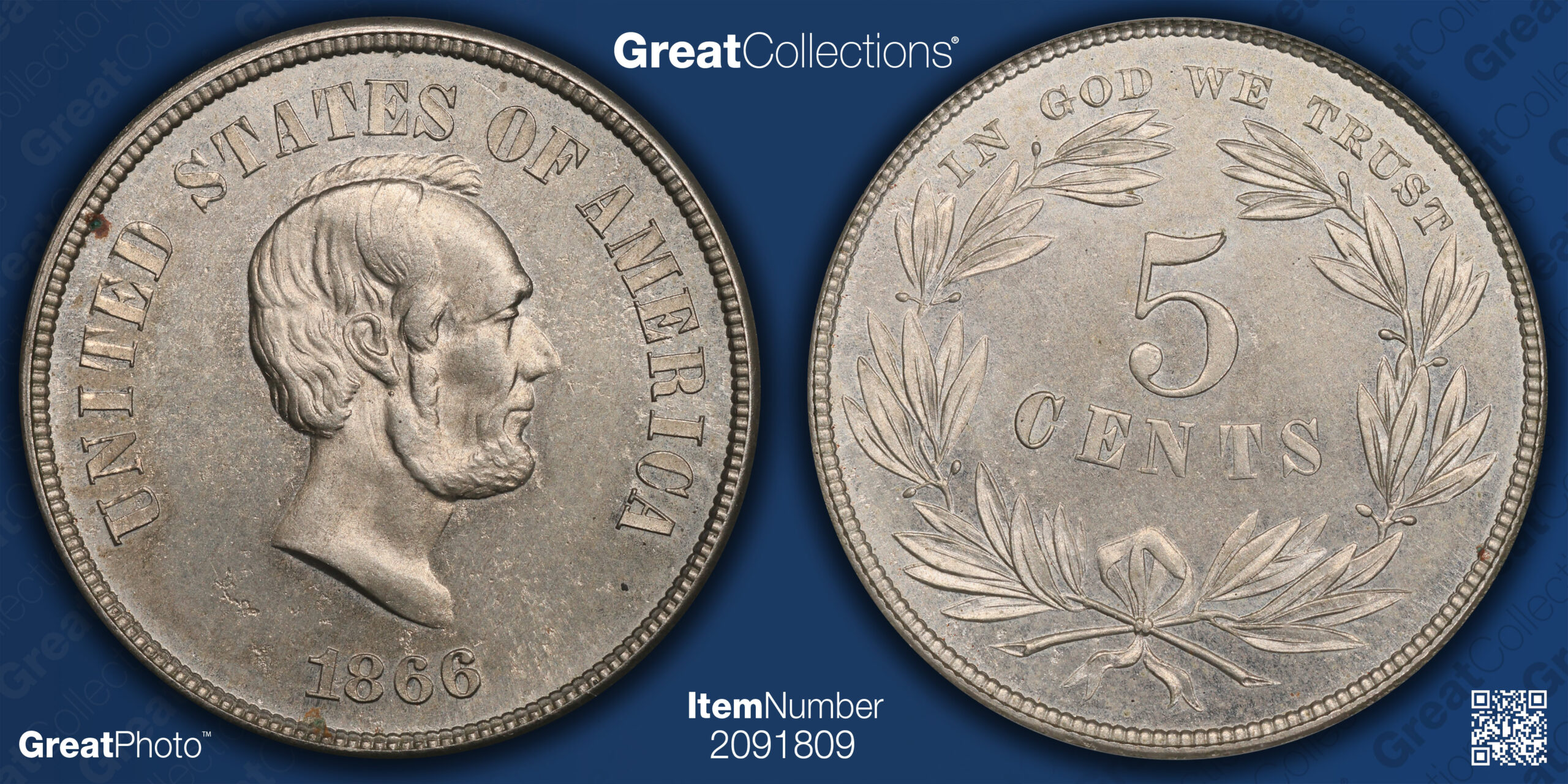
1866 Pattern Five Cents, Judd-486, PCGS Proof-64, $19 406.25
In 1866 the Mint was still arguing with itself about what a five-cent piece should look like, and the experiments it left behind are now among the most coveted patterns in the series. This one wears a portrait of Lincoln, assassinated barely a year earlier, more than four decades before his profile would ever reach a circulating American coin. Struck in nickel with a plain edge and paired with the Tall 5 reverse, it comes from the Cremorne Collection of Patterns and Test Pieces, its bright surfaces touched with light patina over moderately reflective fields. Fewer than ten are known in all grades. It is a what-might-have-been in metal, the Lincoln nickel that history filed away.
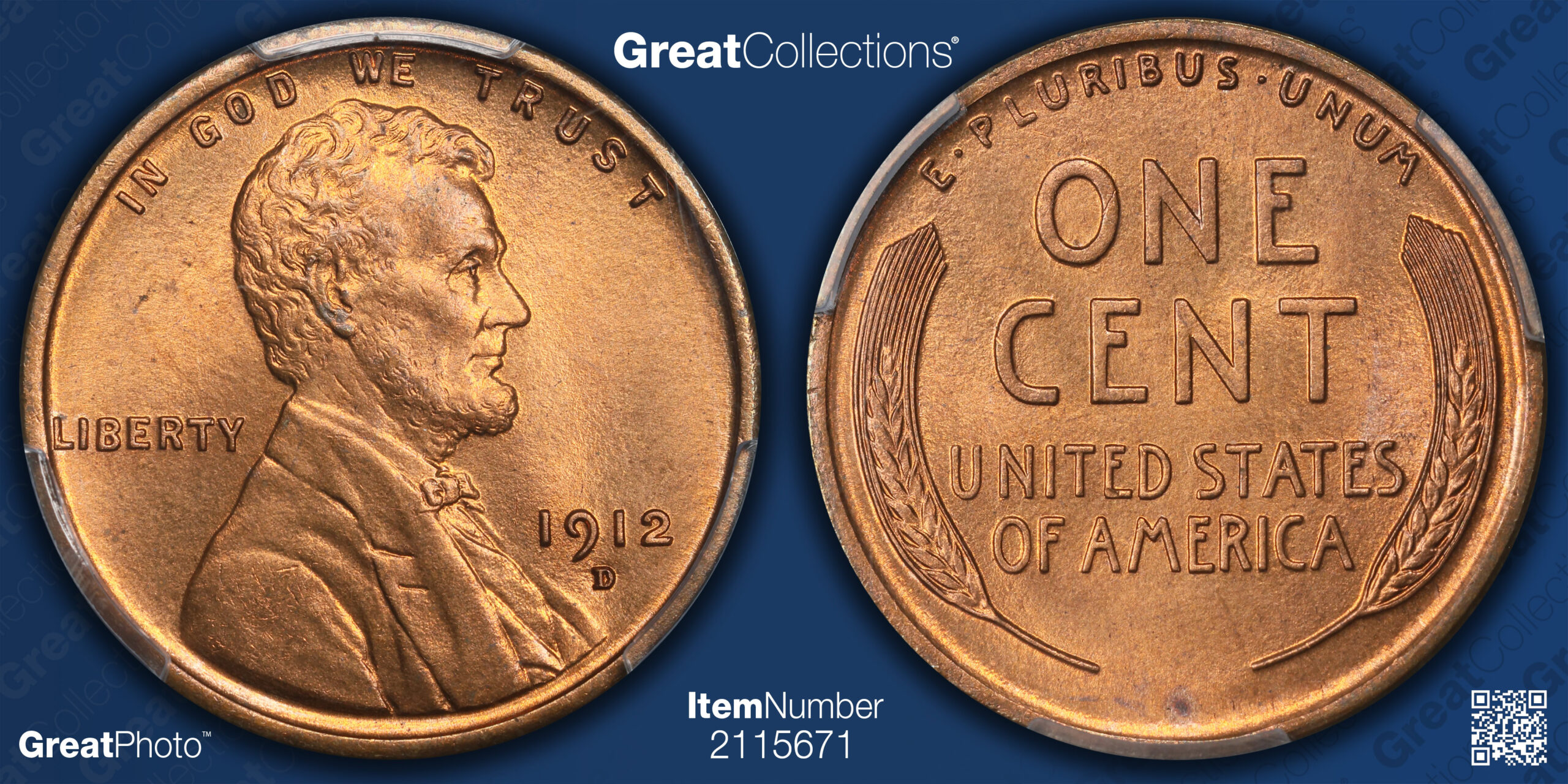
1912-D Lincoln Cent, PCGS MS-66+ RD CAC, $21 922.88
It is a one-cent coin, and it sold for the price of a well-equipped car. The early Denver wheat cents are notorious for soft strikes and for surviving brown rather than red, which is exactly what makes this one extraordinary: full red color, satiny luster, and virtually no carbon spotting, with a strike crisp enough to embarrass the reputation of the issue. The date itself is common; the condition is not. PCGS has certified just sixteen other examples at MS-66+ RD, with a single coin finer in MS-67. The lesson of the lot is the lesson of conditional rarity in miniature, pennies are everywhere, and a penny like this is almost nowhere.
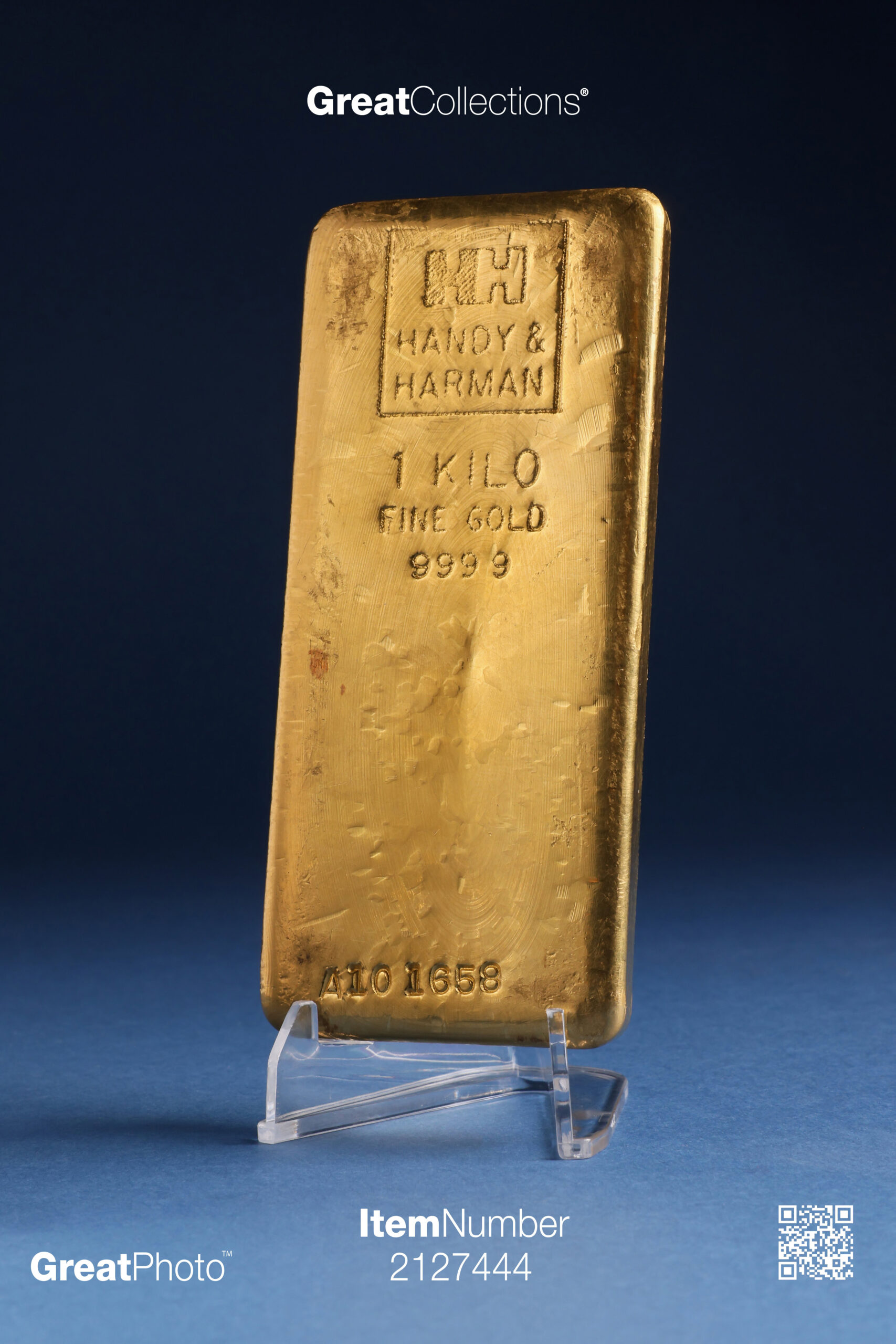
Handy & Harman Gold Kilo Ingot, ND (1989–1996), 999.9 Fine, $151 312.50
The lot that brought the most money in this group is not, strictly speaking, a coin. It is a kilogram of gold, 32.15 troy ounces of it, refined to 999.9 fine, poured and finished between 1989 and 1996 and stamped with the Handy & Harman mark, the HH logo above the firm’s name, alongside the words 1 KILO and FINE GOLD and the serial number A101658. From the Noble Collection of Rare Gold Coins & Bullion, its yellow surfaces still carry the texture and handling marks of a working bullion bar. And there is the quiet rebuke of the board: against nine pedigreed rarities, a plain ingot outbid every one of them. An ounce of gold, the market reminds us, is still an ounce of gold.
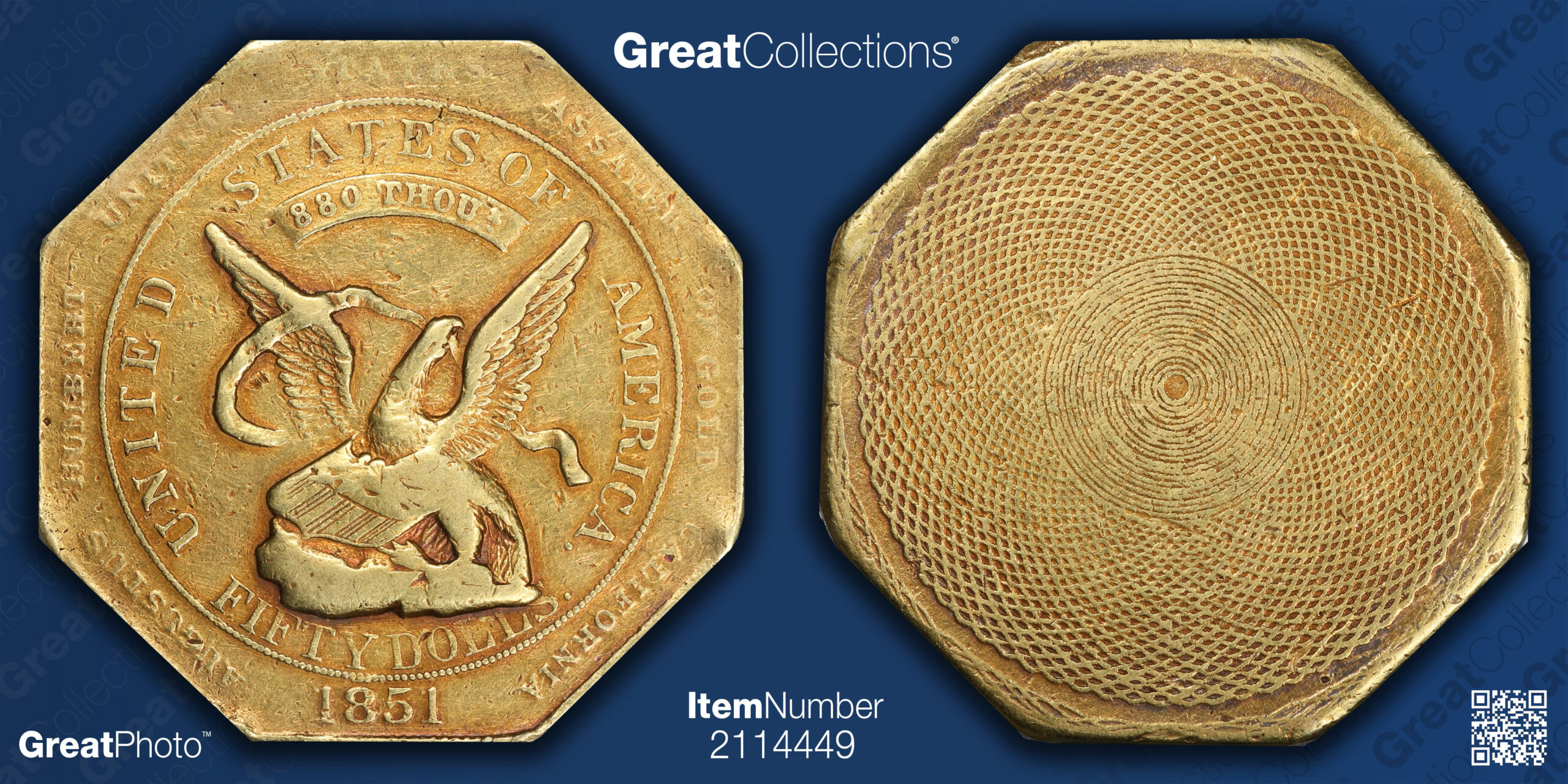
1851 Augustus Humbert $50, PCGS XF-40 CAC, $58 921.88
Before there was a U.S. branch mint in San Francisco, California made its own fifty-dollar pieces. This octagonal $50 “slug” is Gold Rush money in the most literal sense, struck under Augustus Humbert, the U.S. Assayer sent west to bring order to a territory awash in raw gold. As the second-generation U.S. Assay Office fifty, it introduced die-engraved legends, date, and fineness, marked 880 THOUS., with a reeded edge replacing the earlier lettered one. Evenly worn to XF-40, it wears dark orange patina in the protected areas that throws the iconic eagle and engine-turned fields into relief. PCGS has graded only four in Uncirculated. Heavy, octagonal, and unmistakably frontier, it is money from a place that couldn’t wait for Washington to catch up.
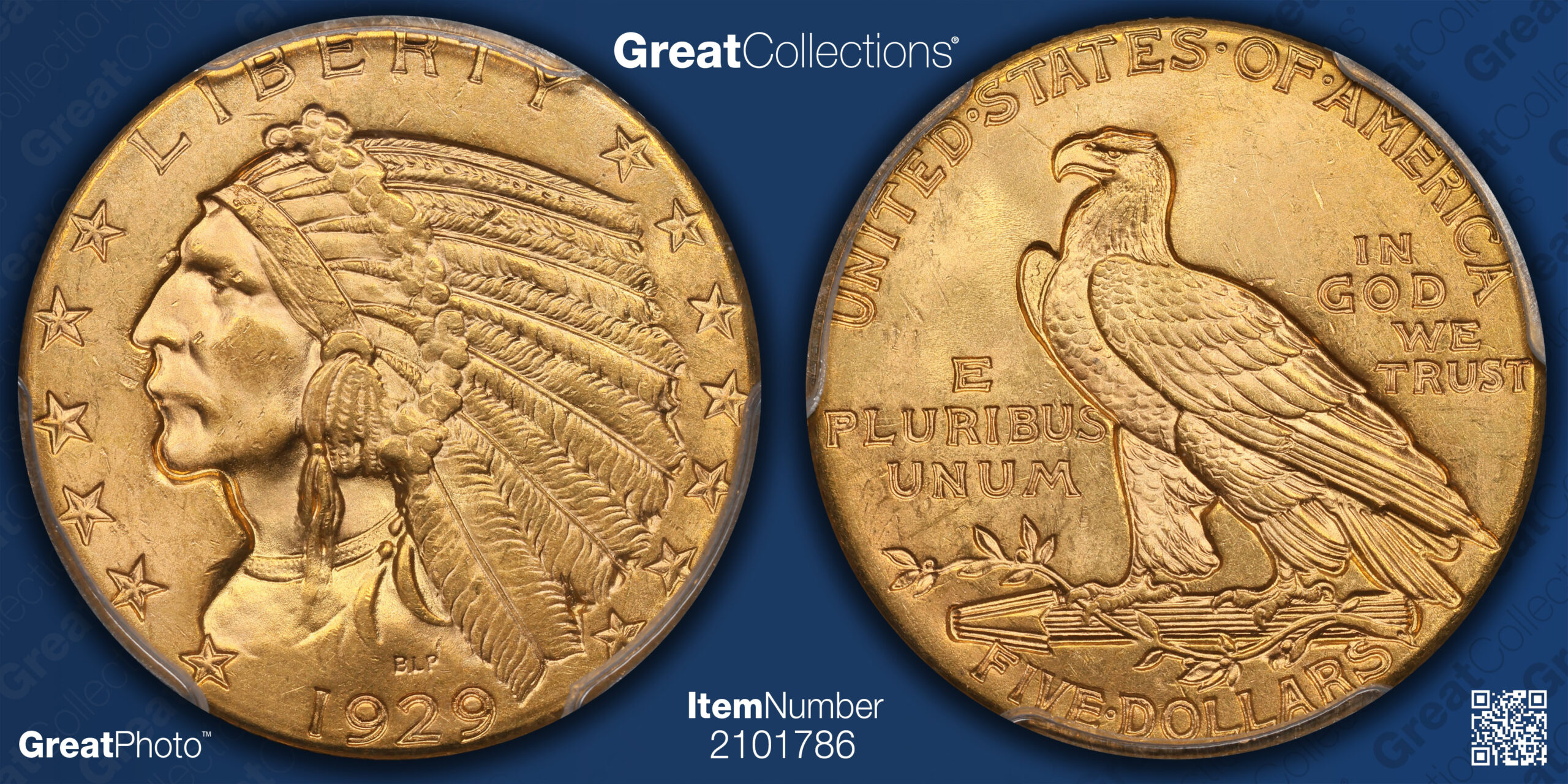
1929 Indian Half Eagle, PCGS MS-63 CAC, $48 386.25
Every series has a last year, and the Indian half eagle’s was 1929. After two decades of Pratt’s sunken design, the five-dollar gold piece was struck a final time in modest numbers, and most never reached collectors, melted or held back as the gold coinage era wound toward its end. That is why the 1929 is seldom seen in Choice Mint State and almost never finer. This one, resting in an older 1990s-generation holder, shows pleasing cartwheel luster and original skin, rich golden color across the incuse work, and fields exceptionally clean for the grade, with only faint chatter on the high points. A coin defined by its position in line: the last of its kind, and scarce because of it.
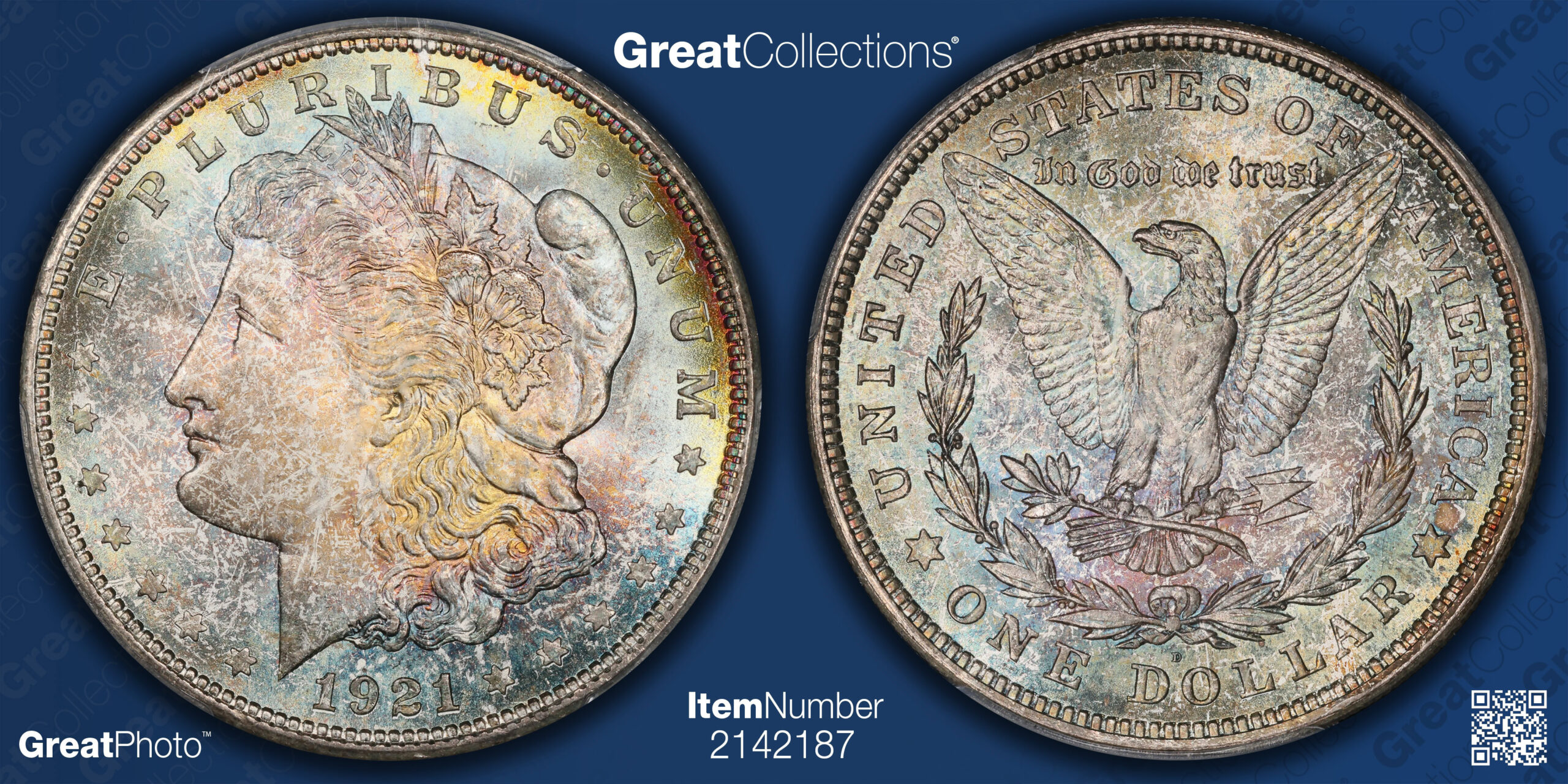
1921-D Morgan Dollar, PCGS MS-67+ CAC (Bella Collection), $95 062.50
The Morgan dollar had been dead for sixteen years when it came back for one of them in 1921. Production had stopped in 1904; the design returned for a single year before the Peace dollar replaced it, and 1921 marks the only year a Morgan was ever struck at Denver. From that one-year Denver run comes the coin GreatCollections crowned Number 1: the single finest the date PCGS has ever graded, drawn from the Bella Collection. Across both faces runs extraordinary rainbow toning, soft blue, gold, rose, lavender, and sea-green shifting as the coin turns, with blazing luster burning up through the color and a strike sharp enough to leave only minimal chatter on the high points. It was not the most expensive lot of the sale. It was the one collectors most wanted, and that is the whole point: at MS-67+, color and condition beat carat weight.
The market underneath the board
Read top to bottom, the board tells a consistent story. The money chased two things, pure gold and proven condition, and where the two met a green CAC sticker, it chased hardest. A kilo of bullion took the top dollar figure, but the lots that drew the most bids were the trophies with names attached: fifty-eight for the finest-known Bella Morgan, fifty-seven for the Humbert slug. That is where the collector market is pointing right now, toward the single-finest, the conservatively graded, and the coin that arrives with a collection’s name already on it. Metal sets the floor. Provenance and condition set the ceiling, and on this board the ceiling kept rising.