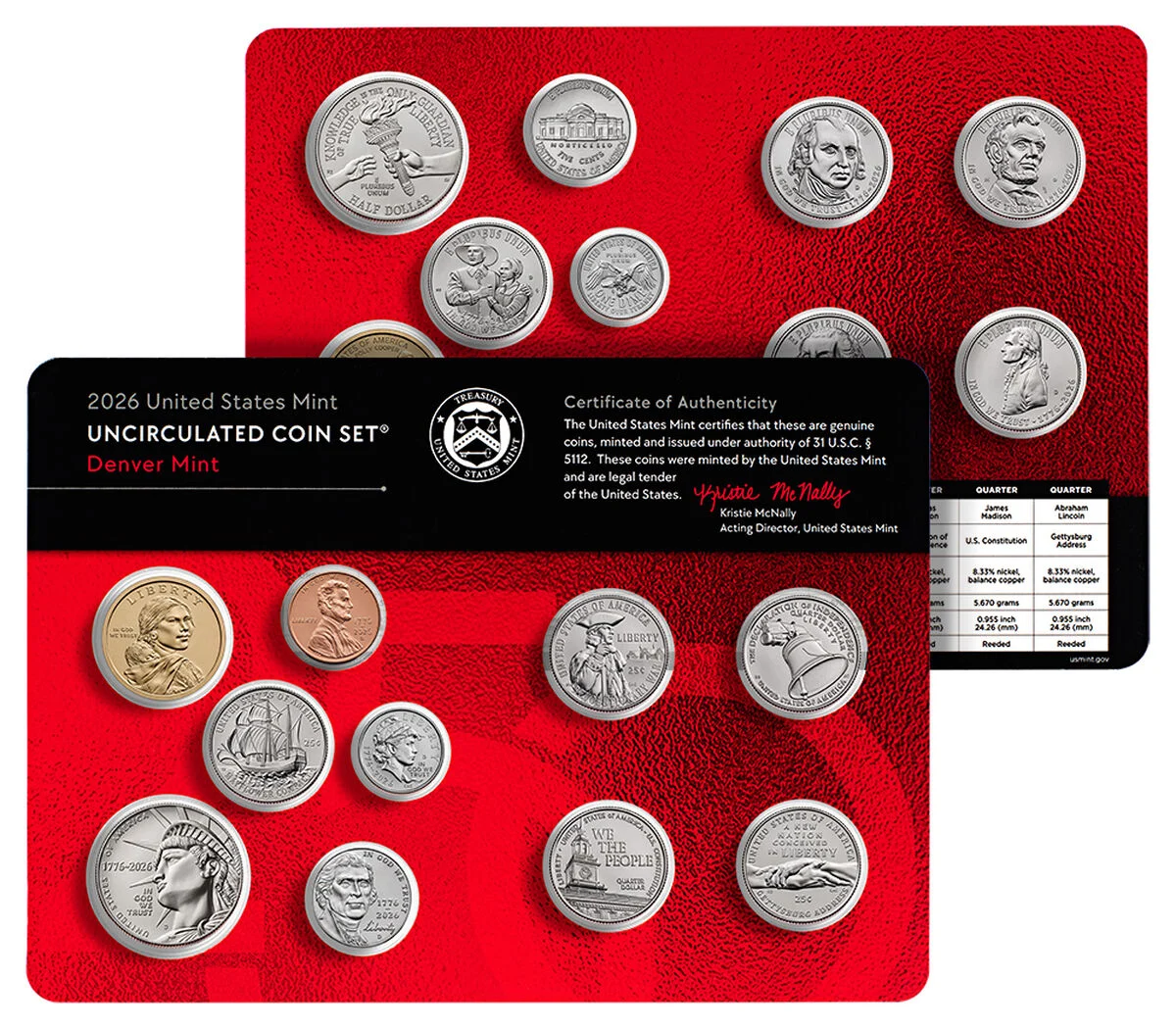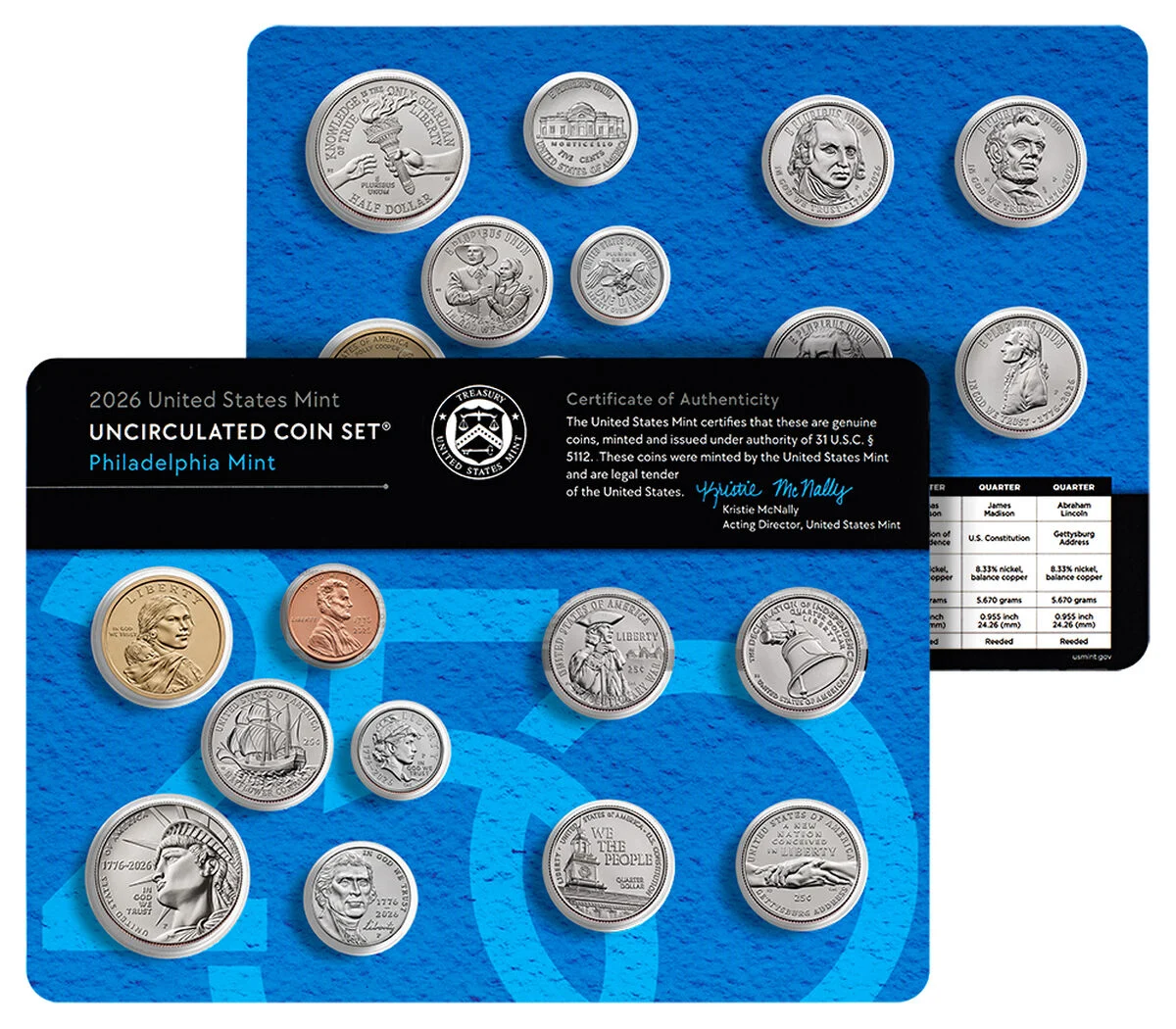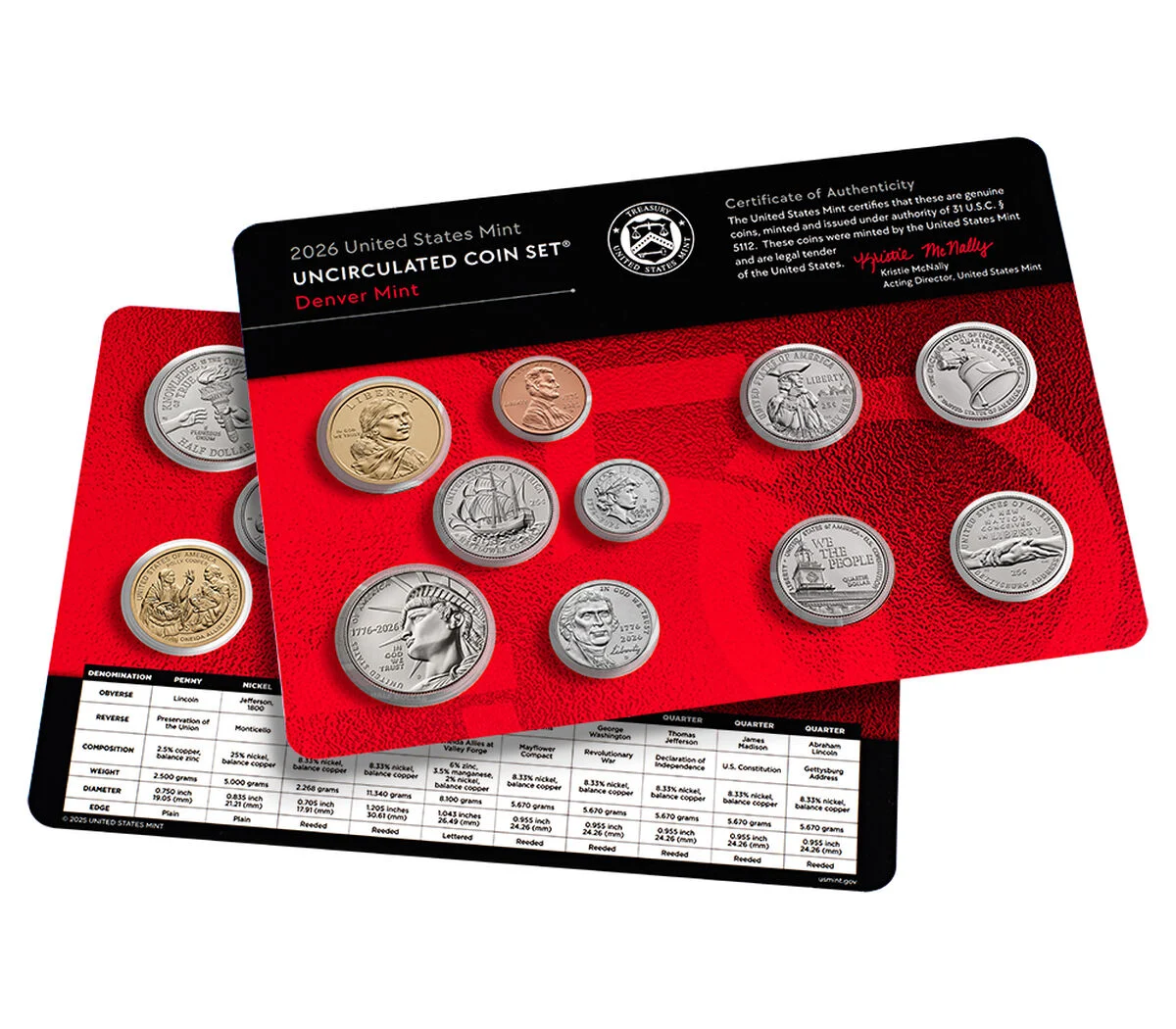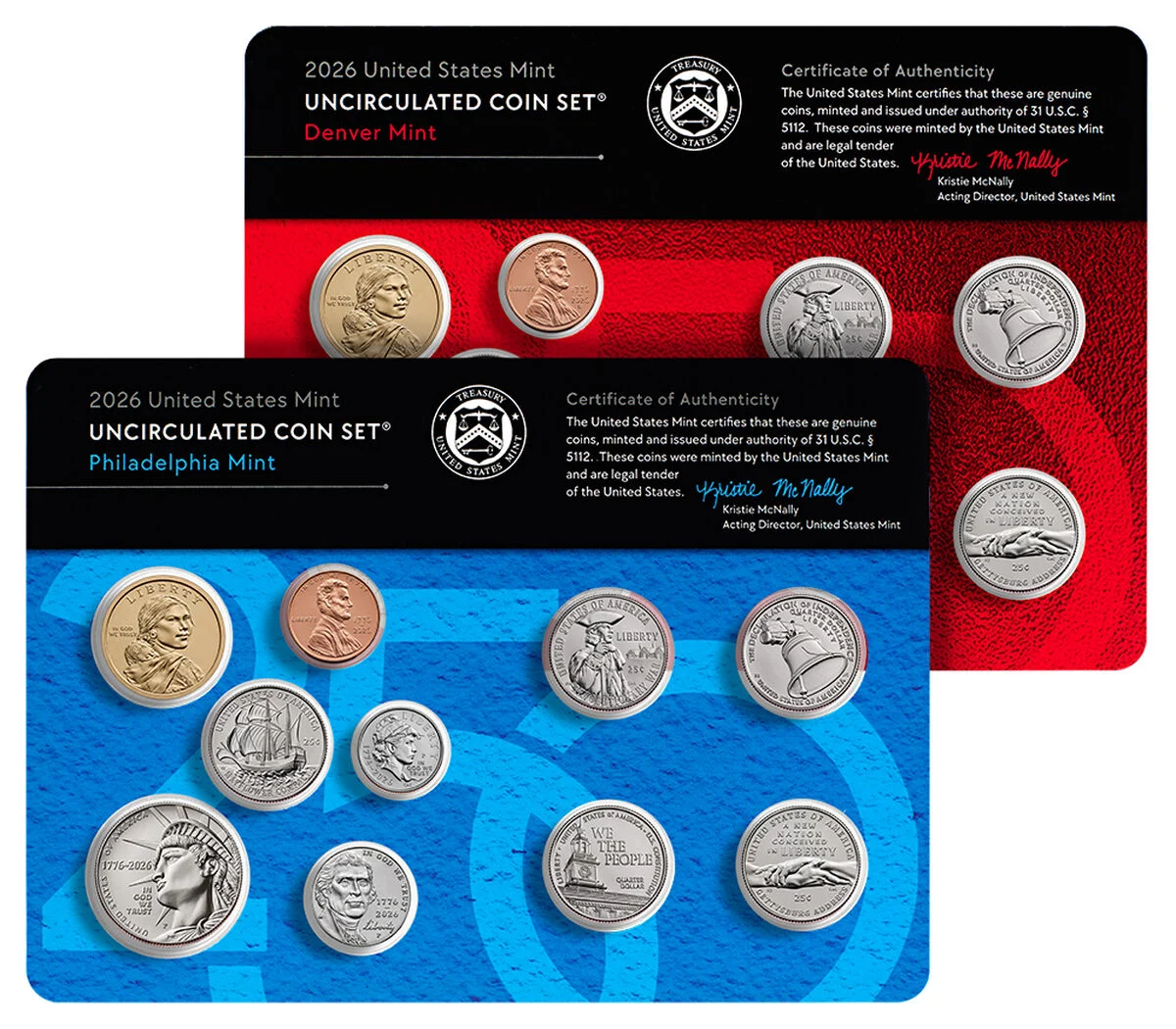
The annual uncirculated set is usually the most predictable product on the U.S. Mint’s calendar: the same denominations, the same satin finish, a fresh date stamped on familiar designs. The 2026 edition, which goes on sale June 30 at noon Eastern, breaks that pattern in nearly every coin it holds.
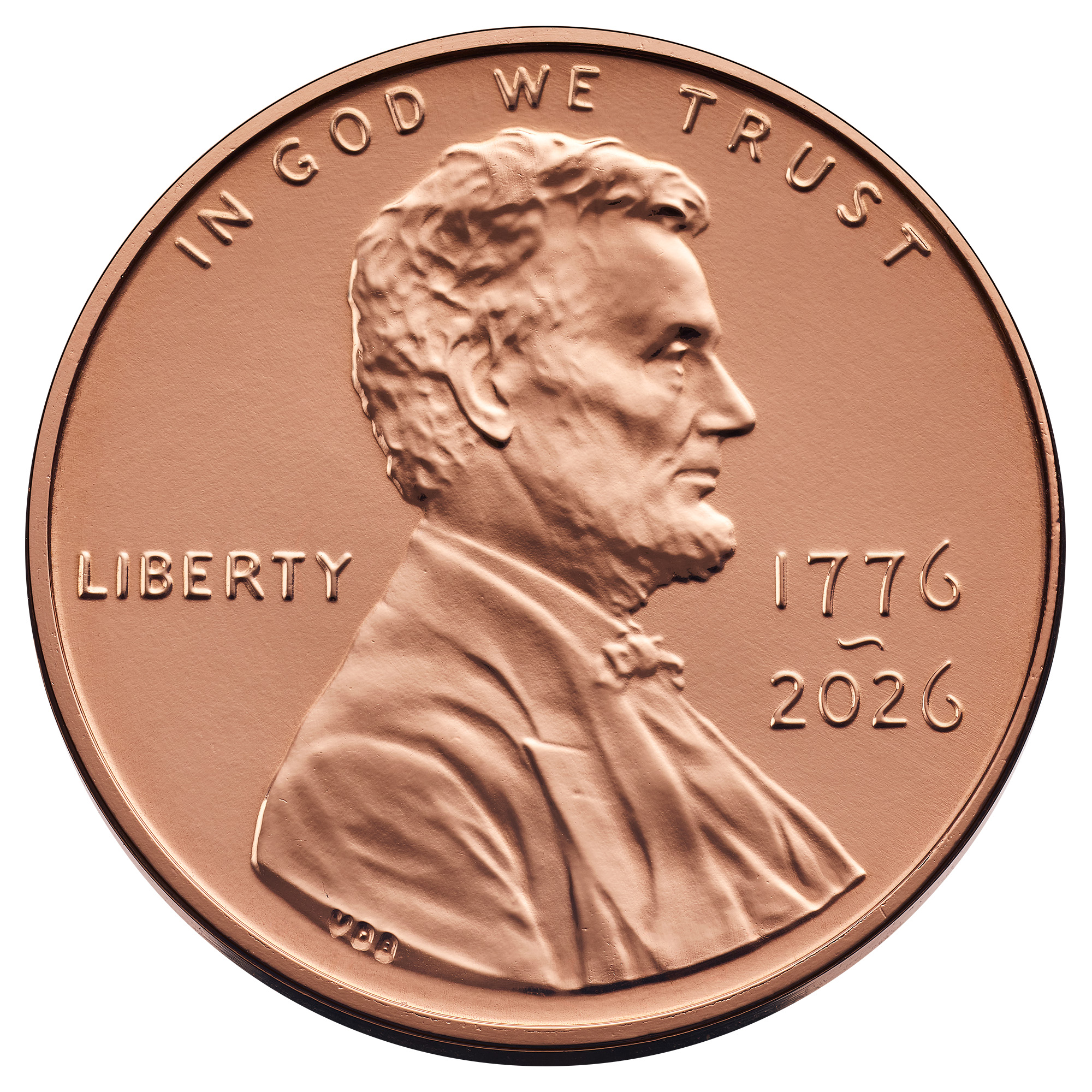
Inside its two cards are five new Semiquincentennial quarters, a half dollar that sets Kennedy aside for the first time since 1964, a dime with Liberty back on the obverse for the first time since 1945, and a Lincoln cent that, for the first year in more than two centuries, was never struck for circulation at all. For collectors who buy this set out of habit, 2026 is the year the habit earns its keep.
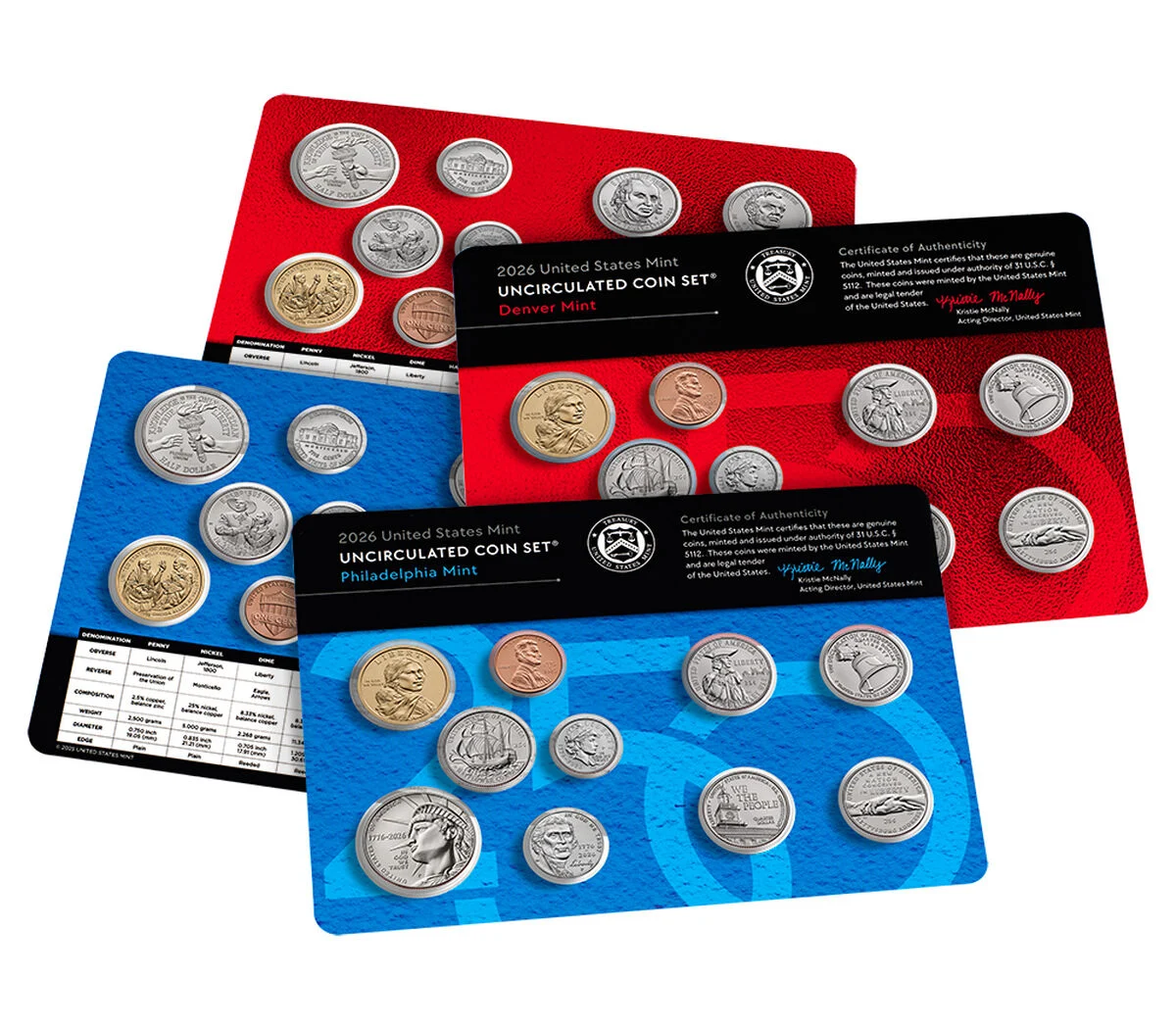
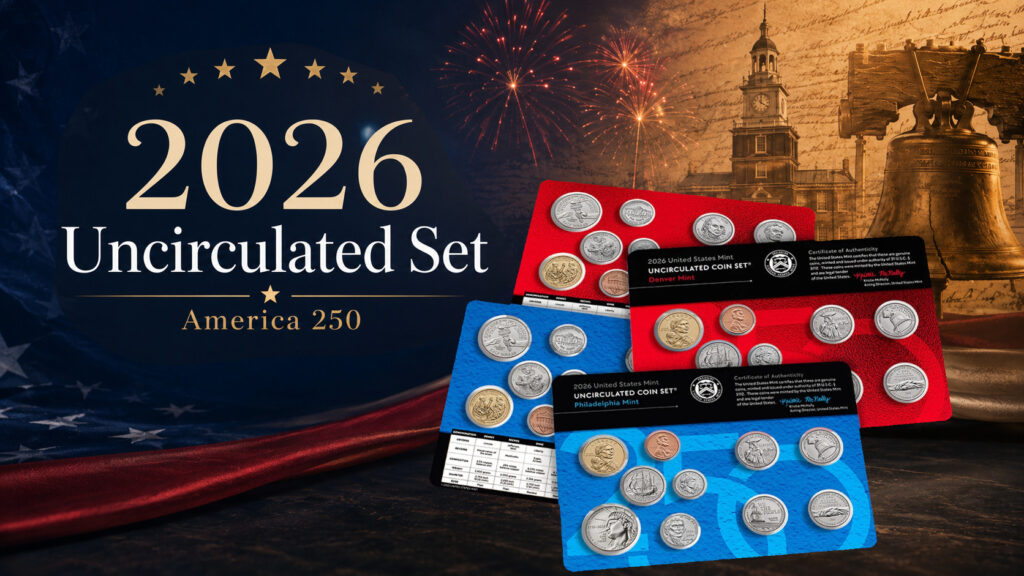
What’s in the Set
The set, catalog number 26RJ, is priced at $124.50 and contains 20 coins across two cards: one struck at the Philadelphia Mint, one at Denver, with 10 encapsulated coins each. Every coin carries an uncirculated quality finish, and each card includes a printed certificate of authenticity with the coin specifications on the back.
The Mint has set no formal mintage limit but capped the product at 300,000 sets. Subscription orders, and any order placed in the first 24 hours after the on sale time, are limited to 10 sets per household. Sales open at noon Eastern on June 30.
That much is routine. What’s on the cards is not.
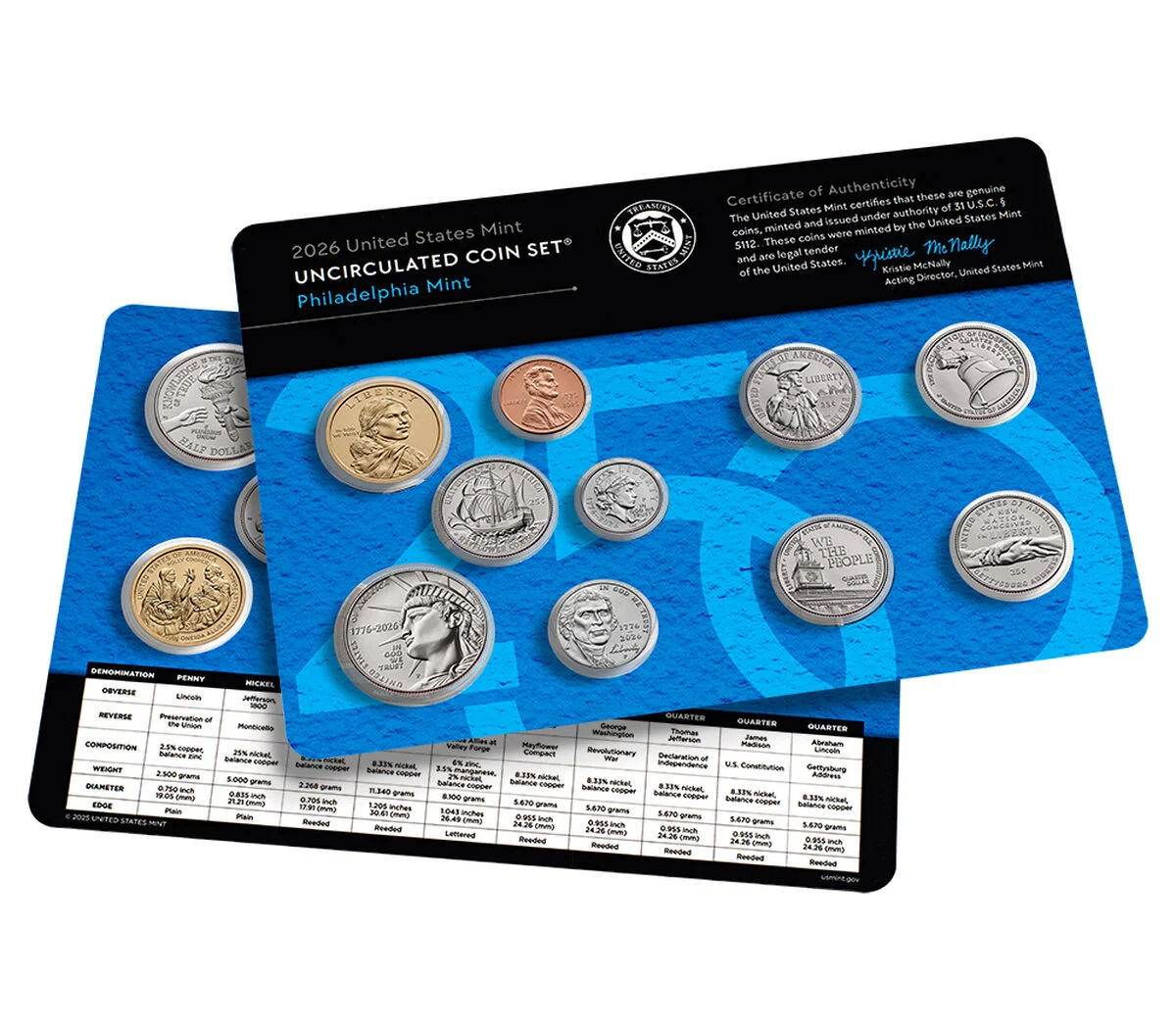
The Semiquincentennial Quarters
Each card carries the full run of five 2026 Semiquincentennial quarters, the circulating program marking 250 years since the Declaration of Independence. The reverses move chronologically through the American story rather than honoring places or people: the Mayflower Compact, framed as an early step toward government by consent; the Revolutionary War, honoring the resolve to push through the trials of war for liberty; the Declaration of Independence, carrying the Liberty Bell; the U.S. Constitution, depicting Independence Hall in Philadelphia, where both founding documents were debated and signed; and the Gettysburg Address, reaching past the founding to one of the country’s defining speeches on what that founding meant.
It’s an unusually narrative quarter program, less a tour of landmarks than a five coin argument about where liberty came from and what it cost to keep.
| Coin | Denom. | Design and how it ties to the Semiquincentennial |
|---|---|---|
| Lincoln cent | 1¢ | Dual date “1776 ~ 2026.” In 2026 struck only for collectors, not for circulation. Design otherwise standard (Lincoln obverse, Union Shield reverse). |
| Jefferson nickel | 5¢ | Dual date “1776 ~ 2026.” Standard design otherwise, and still a circulating coin. |
| Emerging Liberty dime | 10¢ | One year only. Returns Liberty to the dime obverse for the first time since 1945. |
| Mayflower Compact quarter | 25¢ | Reverse honors the 1620 Compact and Plymouth Colony as an early step toward government by consent, framed as a precursor to the Declaration and the Constitution. |
| Revolutionary War quarter | 25¢ | Reverse honors the resolve to push through the trials of war in pursuit of liberty. |
| Declaration of Independence quarter | 25¢ | Reverse features the Liberty Bell, the symbol most closely tied to the Declaration. |
| U.S. Constitution quarter | 25¢ | Reverse depicts Independence Hall in Philadelphia, where both founding documents were debated and signed. |
| Gettysburg Address quarter | 25¢ | Reverse honors Lincoln’s 1863 address, carrying the founding story forward into what it came to mean. |
| Enduring Liberty half dollar | 50¢ | One year only. Sets aside Kennedy and the presidential coat of arms for a new obverse emblematic of the Statue of Liberty. |
| Native American dollar | $1 | Obverse keeps Sacagawea and her infant son. Reverse shows Polly Cooper sharing the Oneida Nation’s gift of corn with Washington at Valley Forge (“Oneida Allies at Valley Forge”), tying the coin to the Revolutionary War. |
Polly Cooper and the Native American Dollar
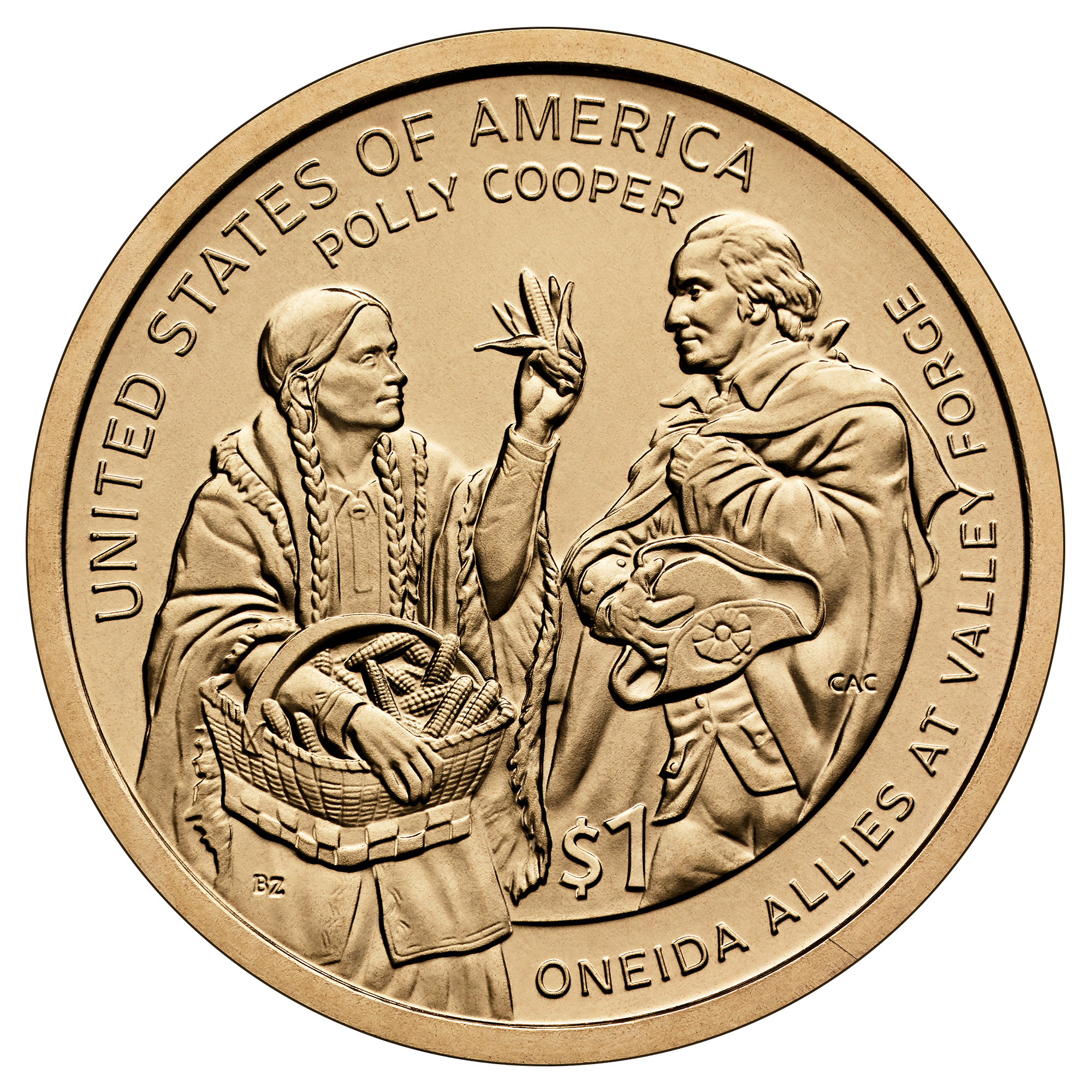
The 2026 Native American dollar keeps the familiar obverse, Sacagawea carrying her infant son, Jean Baptiste, along with its golden color and distinctive edge lettering. The reverse is where the year’s theme returns. It portrays Polly Cooper holding a basket as she shares the Oneida Nation’s gift of corn with General Washington, who removes his hat in a gesture of gratitude. The inscriptions read UNITED STATES OF AMERICA, POLLY COOPER, $1, and ONEIDA ALLIES AT VALLEY FORGE.
The design draws on the winter of 1777–78, when members of the Oneida Nation carried corn to Washington’s starving army at Valley Forge. Polly Cooper is remembered for staying to help feed the troops and, by tradition, refusing payment for the work. It’s the kind of founding era story that rarely reaches circulating coinage, an ally’s contribution rather than a battle, told on the smallest denomination most people actually handle.
Liberty Returns, the Dime and the Half Dollar
Two of the year’s one year only redesigns share these cards, and both bring Liberty back to coins she’d long since left.
The Emerging Liberty Dime restores Liberty to the obverse of the dime for the first time since 1945, the year the Winged Liberty Head, or “Mercury,” dime gave way to the Roosevelt portrait that has held the spot ever since. For 2026 only, Liberty steps back onto the ten cent piece after an eighty year absence.
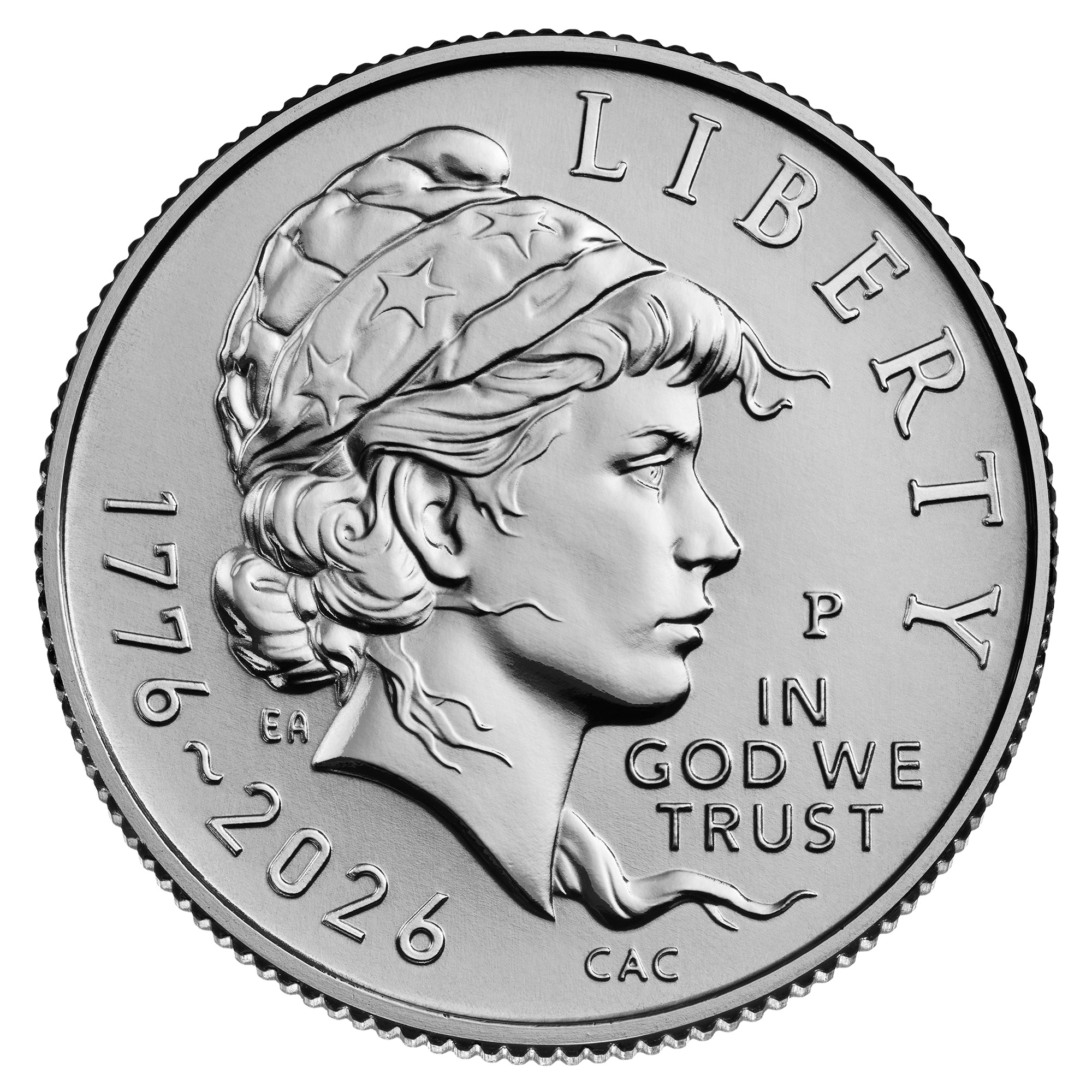
The Enduring Liberty Half Dollar goes further. For one year only, it sets aside both President John F. Kennedy and the presidential coat of arms, the design pairing the half dollar has worn since 1964, in favor of a new obverse emblematic of the Statue of Liberty. It’s the first non Kennedy half dollar most living collectors will have pulled from a Mint set, and a reminder that even the most settled portraits in American coinage are, ultimately, on loan.
The Sleeper: A Cent Made Only for Collectors
The nickel and the cent both carry the dual date “1776 ~ 2026,” and on the nickel that’s the whole story, a Jefferson five cent piece dressed for the anniversary and still very much a circulating coin.
The cent is a different matter. In late 2025 the Mint ended production of the circulating one cent coin, striking the final circulating penny at Philadelphia on November 12 and closing a 232 year run. As a result, no Lincoln cent was made for general circulation in 2026. The only 2026 dated cents are numismatic strikes, available through Mint collector products, which makes this set the principal source for the Philadelphia and Denver cents in uncirculated finish.
A coin once produced by the billions now arrives in a capped collector product, in the anniversary year, available only to the people who go looking for it. For modern Lincoln cent specialists, that’s not a footnote. It may be the single most consequential coin on either card.
What It Captures
Most years, an uncirculated set is a convenience, a clean, dated run of the nation’s pocket change, bought to keep a collection current. The 2026 set is something closer to a record of a year when the pocket change itself changed: five quarters arguing the case for the founding, Liberty back on the dime and the half, and a cent that crossed from everyday currency into collector only territory while the set was still in production. Collectors who buy it for habit will end up holding history; collectors who recognize what’s inside it already know they’re holding the only convenient way to gather most of it in one place.