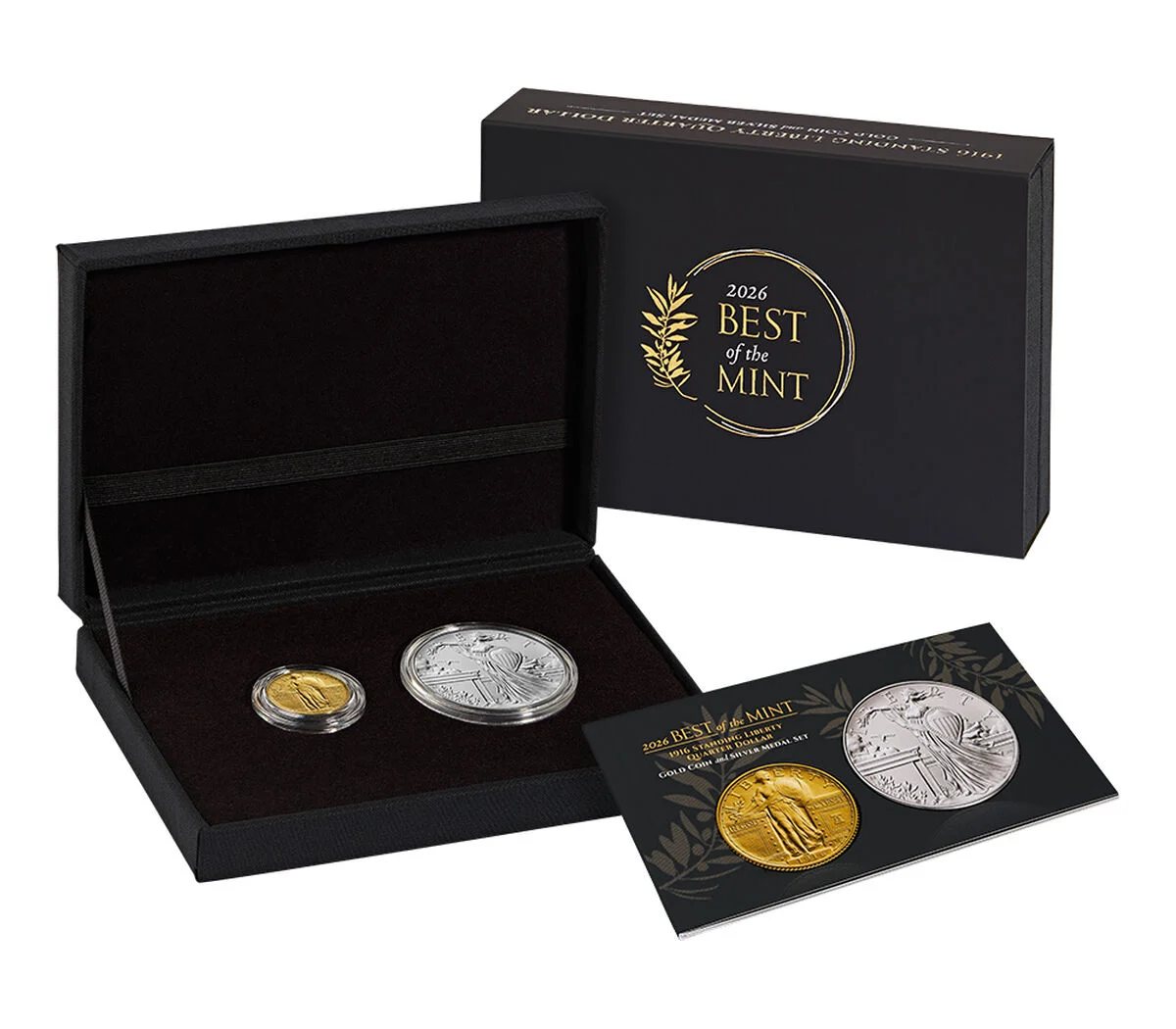
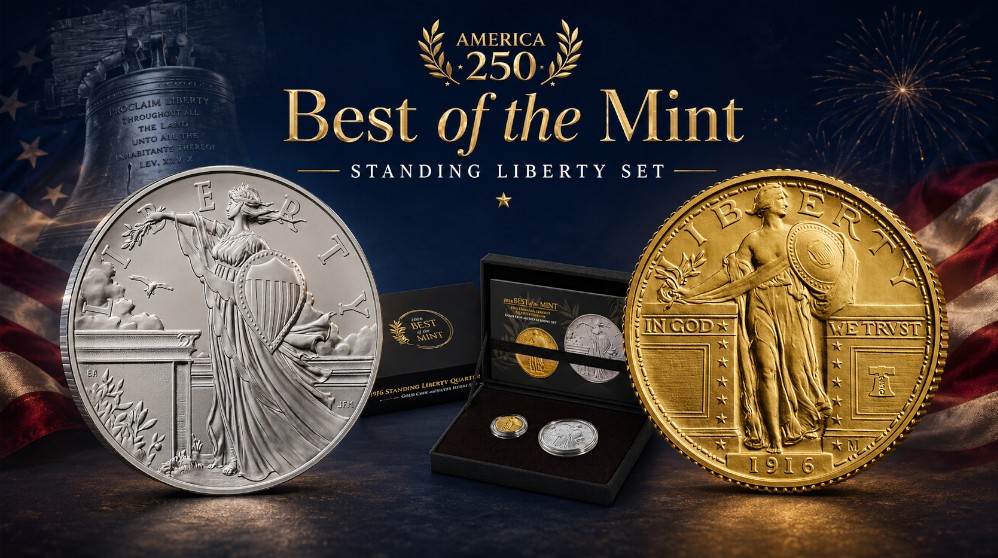
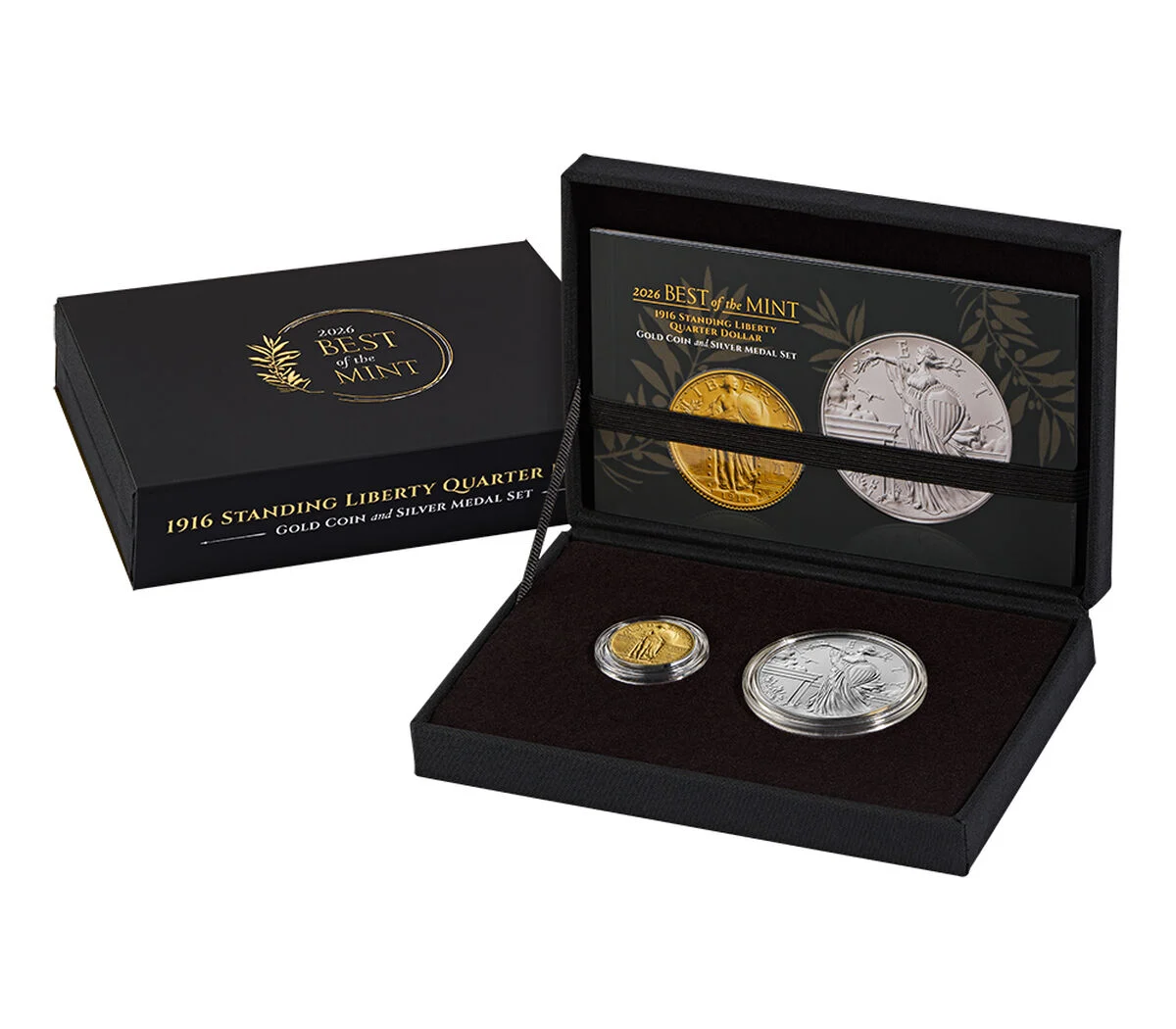
The United States Mint will release the Best of the Mint 1916 Standing Liberty Quarter Dollar Gold Coin and Silver Medal Set on July 10, 2026, at noon Eastern, the second of five gold-and-silver pairings the Mint has built around its own greatest hits for the nation’s 250th anniversary. For the first three days, orders are capped at one set per household, a restriction that lifts the following Monday, July 13, at noon.
For collectors, the appeal is simple: one of the most admired designs in American coinage, a quarter that circulated in silver for barely two decades, rendered here in a quarter-ounce of 24-karat gold and paired with a newly sculpted silver medal that reinterprets the same figure. The mintage is limited to 30,000 sets.
How the Standing Liberty made the list
The Best of the Mint program is, in effect, the Mint grading its own history. To mark the Semiquincentennial, the Mint assembled a list of 21 historic coins spanning its output from the 1792 founding to the twenty-first century, then narrowed it, with public input and expert recommendations, to five standouts. The Standing Liberty Quarter shares that shortlist with the 1916 Mercury Dime, the 1916 Walking Liberty Half Dollar, the 1804 Silver Dollar, and the 1907 Saint-Gaudens High Relief Double Eagle.
Consider the company it keeps. Three of the five honorees date to a single extraordinary year, 1916, when the Mint retired a generation of workmanlike designs and let a group of outside sculptors reimagine American silver. Hermon Atkins MacNeil won the invitational competition for the new quarter, beating a field that included Adolph Weinman, the sculptor whose Mercury Dime and Walking Liberty Half now sit beside MacNeil’s quarter on the same list of five. The three coins that reset American coinage in 1916 have, a century later, been chosen together again.
A short life for a celebrated coin
Part of what makes the original coin so coveted is how little of it there is. The first Standing Liberty quarters were struck in December 1916, and only about 52,000 left the presses before the year ended, the lowest mintage of any regular-issue U.S. silver coin of the twentieth century. MacNeil’s design was also short-lived in its first form: within months the figure was reworked, and the coin ran only through 1930 before the Washington Quarter replaced it in 1932. A celebrated design, a fleeting production window, and a first-year rarity: the reasons the 1916 quarter tops want-lists are the same reasons it earned a place in this series.
The gold coin
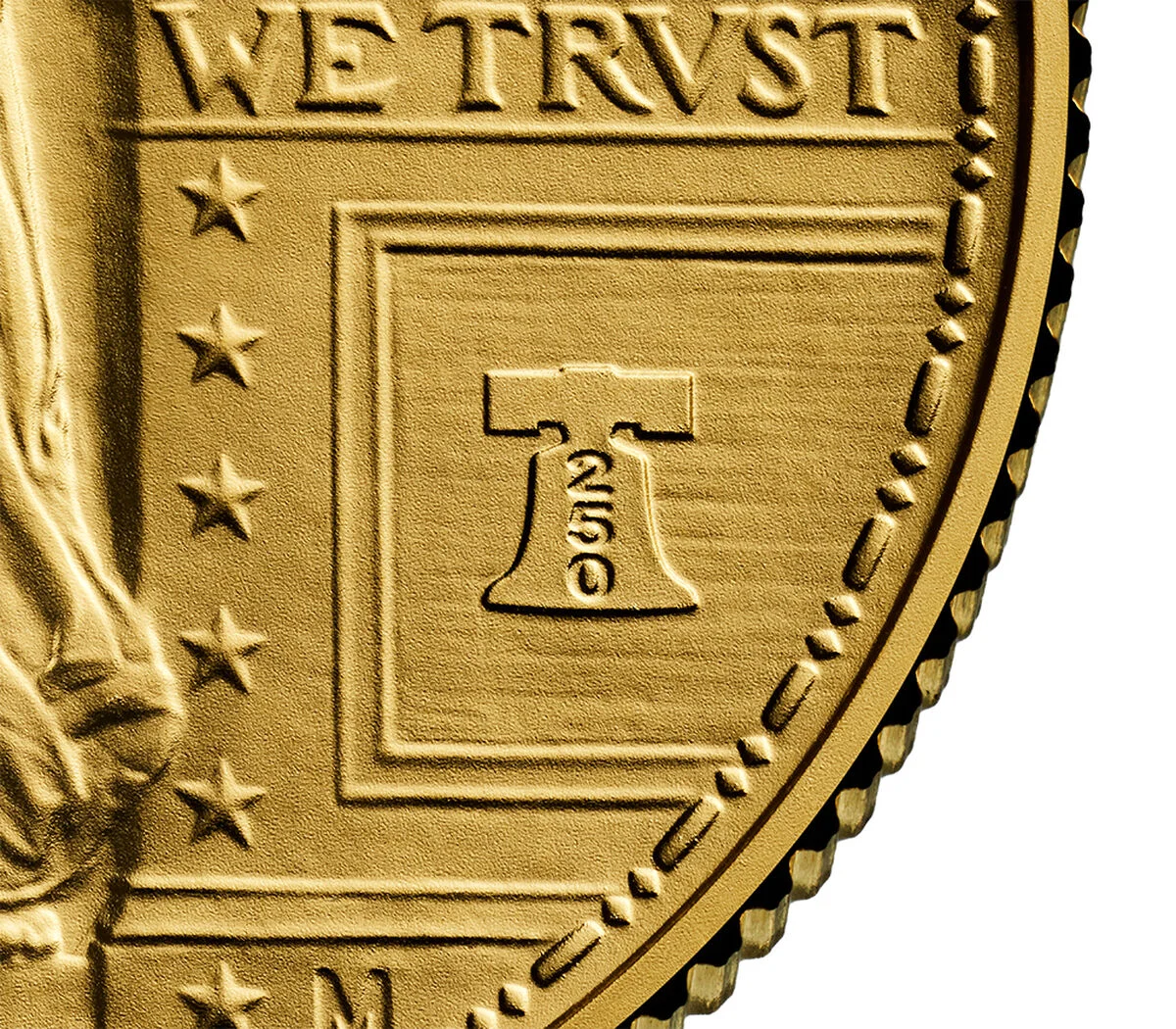
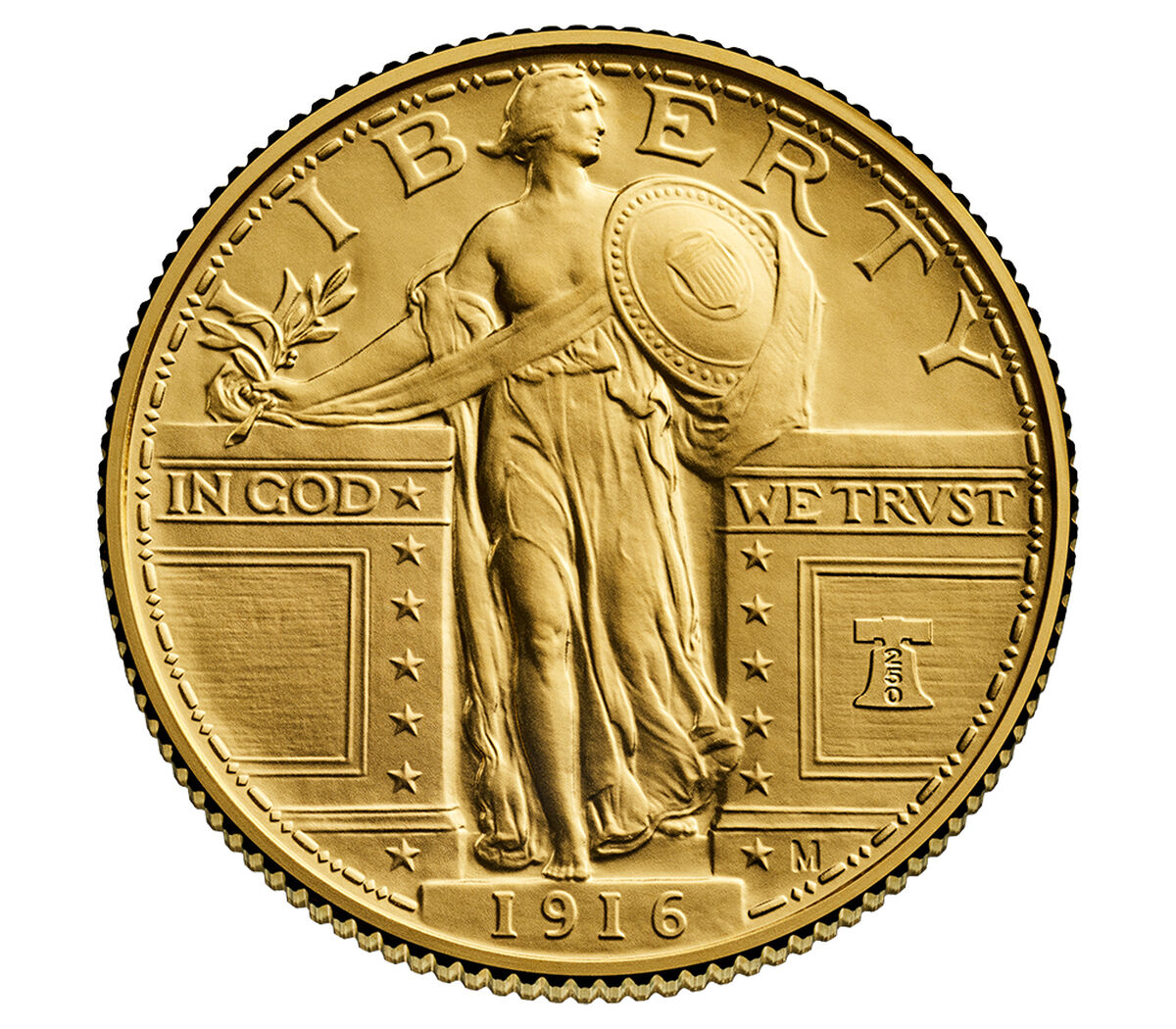
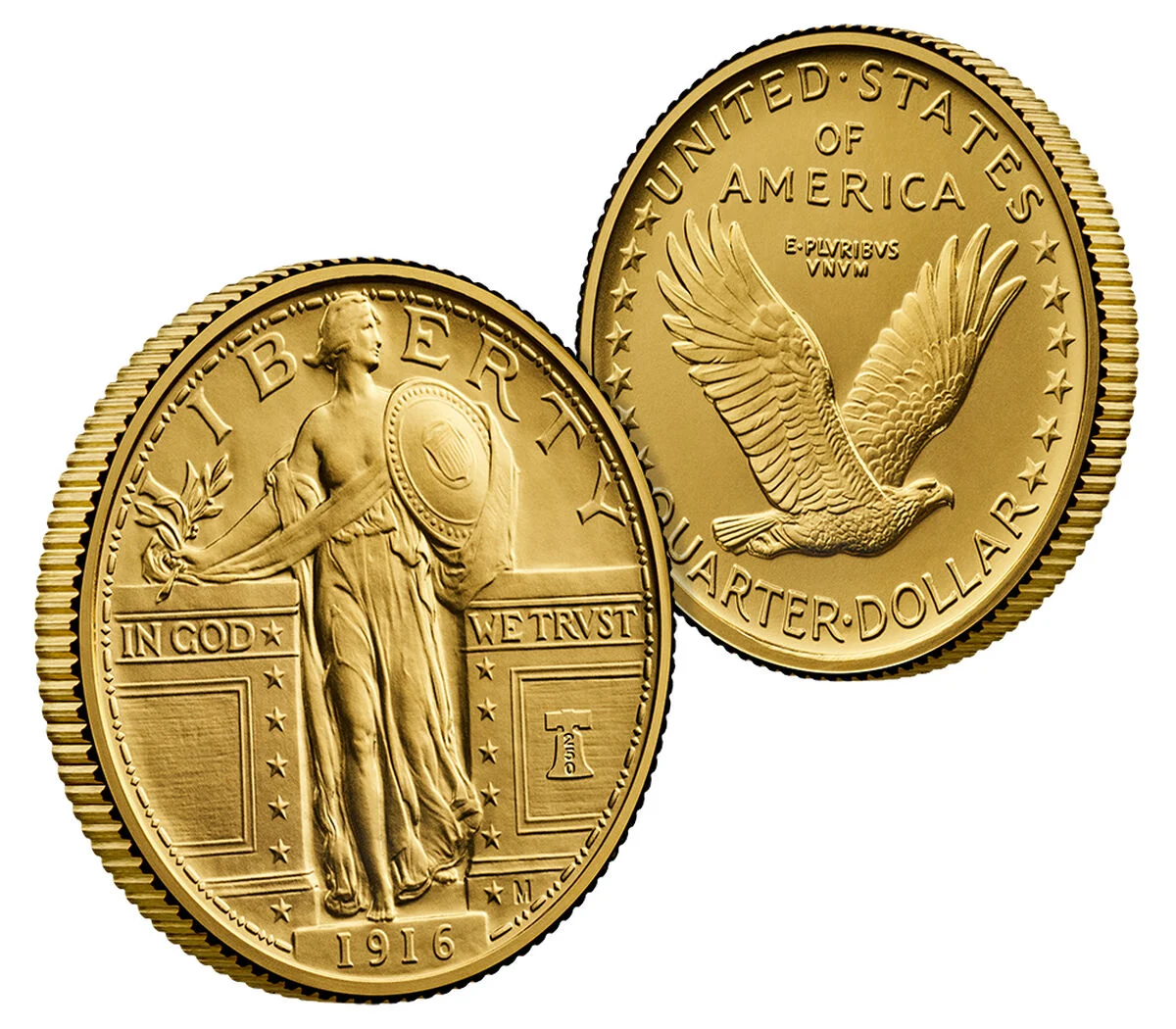
The 24-karat gold coin carries MacNeil’s obverse faithfully. Liberty turns her head to look out over the shield braced on her left arm, an olive branch in her right hand, standing in an opening in a wall bearing 13 stars, the peace-but-prepared posture that read so clearly in 1916, with war already consuming Europe. The inscriptions are LIBERTY, IN GOD WE TRVST, and the date 1916, the archaic “V” for “U” preserved as MacNeil rendered it. Marking this coin as a Semiquincentennial issue rather than a straight restrike is a Liberty Bell privy mark bearing the numeral 250.
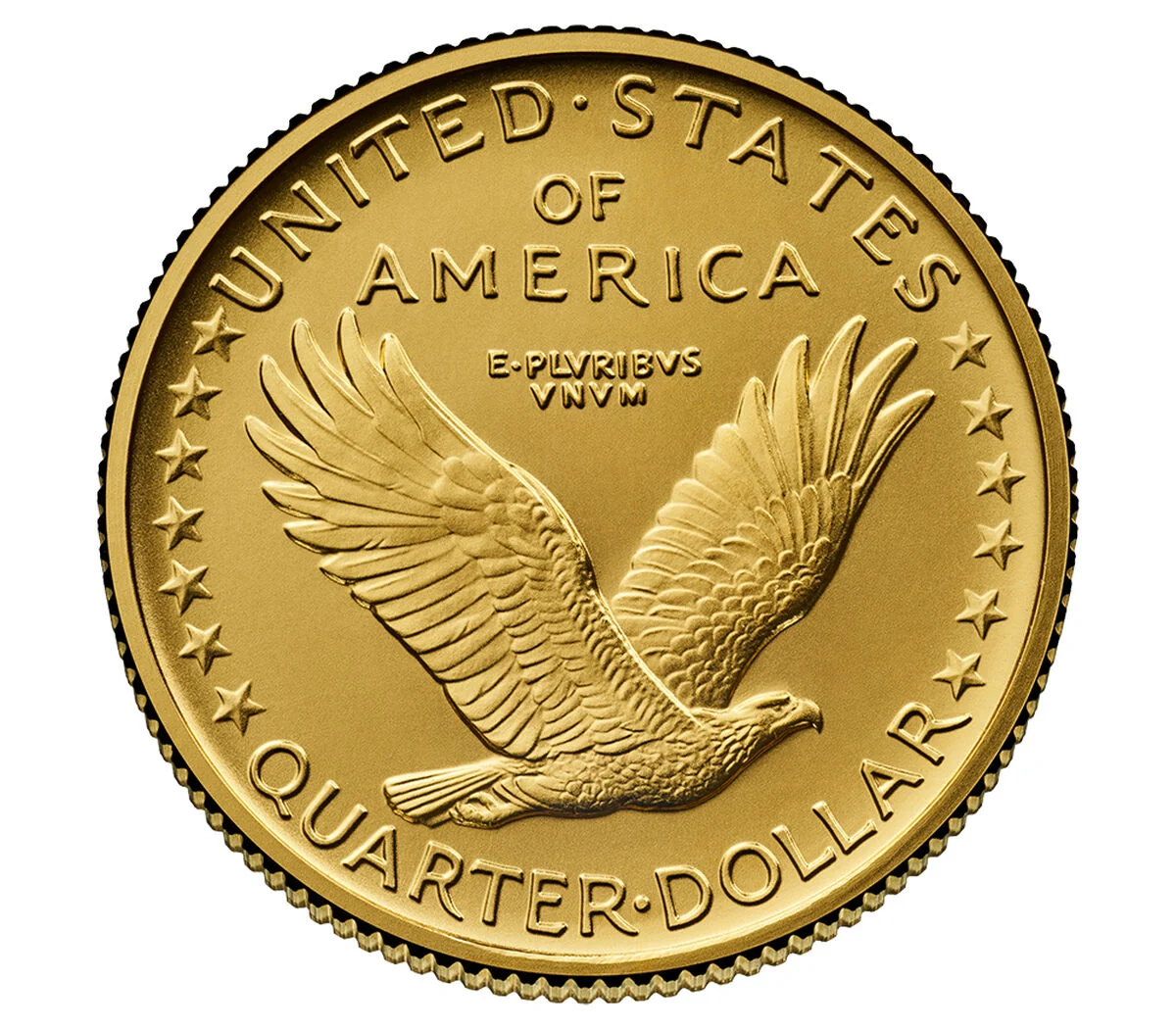
The reverse shows an eagle in flight flanked by 13 stars, with UNITED STATES OF AMERICA, E PLVRIBVS VNVM, and the denomination QUARTER DOLLAR. The coin is struck in a quarter-ounce of .9999 fine gold at 22 millimeters with a reeded edge, a quarter denomination rendered in a quarter-ounce of gold and a small symmetry that suits the subject. It is a product of the West Point facility.
The silver medal
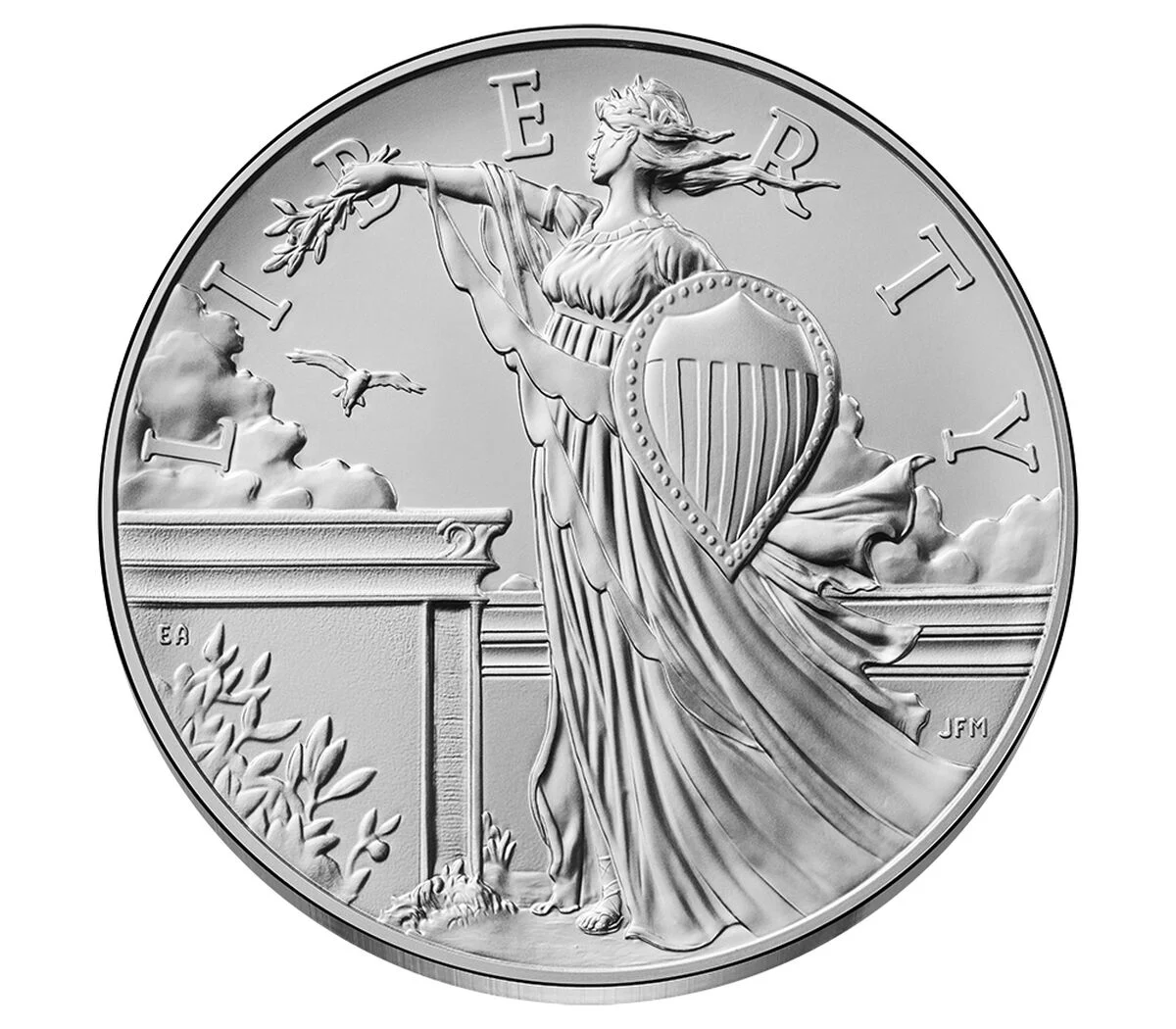
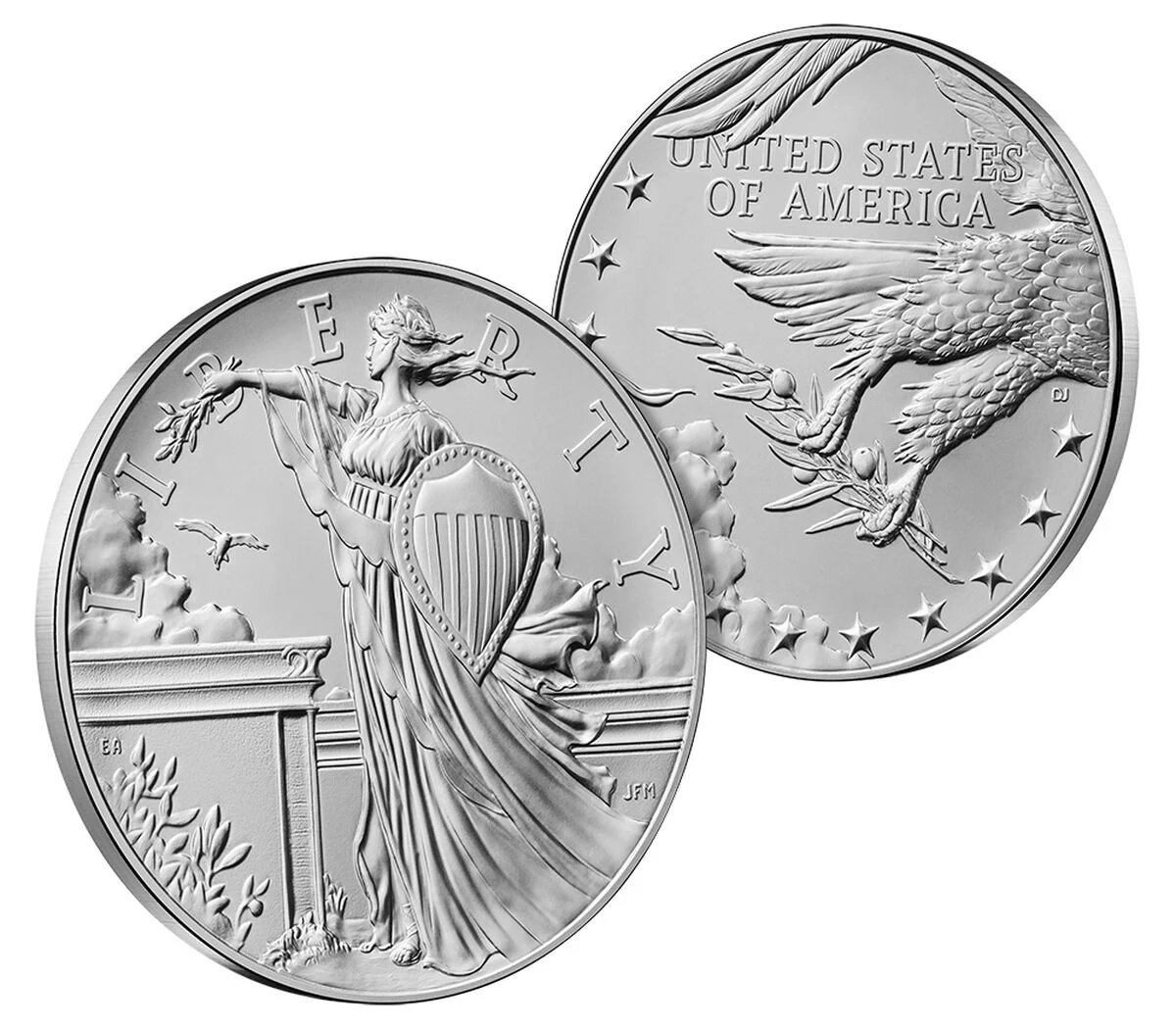
The companion is not a copy but a fresh composition. On its one-ounce .999 silver obverse, a windswept Liberty holds her shield as she turns to offer the olive branches in her hand to an eagle in the distance, the static sentinel of 1916 set into motion. The shield itself carries the storytelling: 50 rivets for the states of the Union and 13 stripes for the original colonies. The single inscription is LIBERTY.
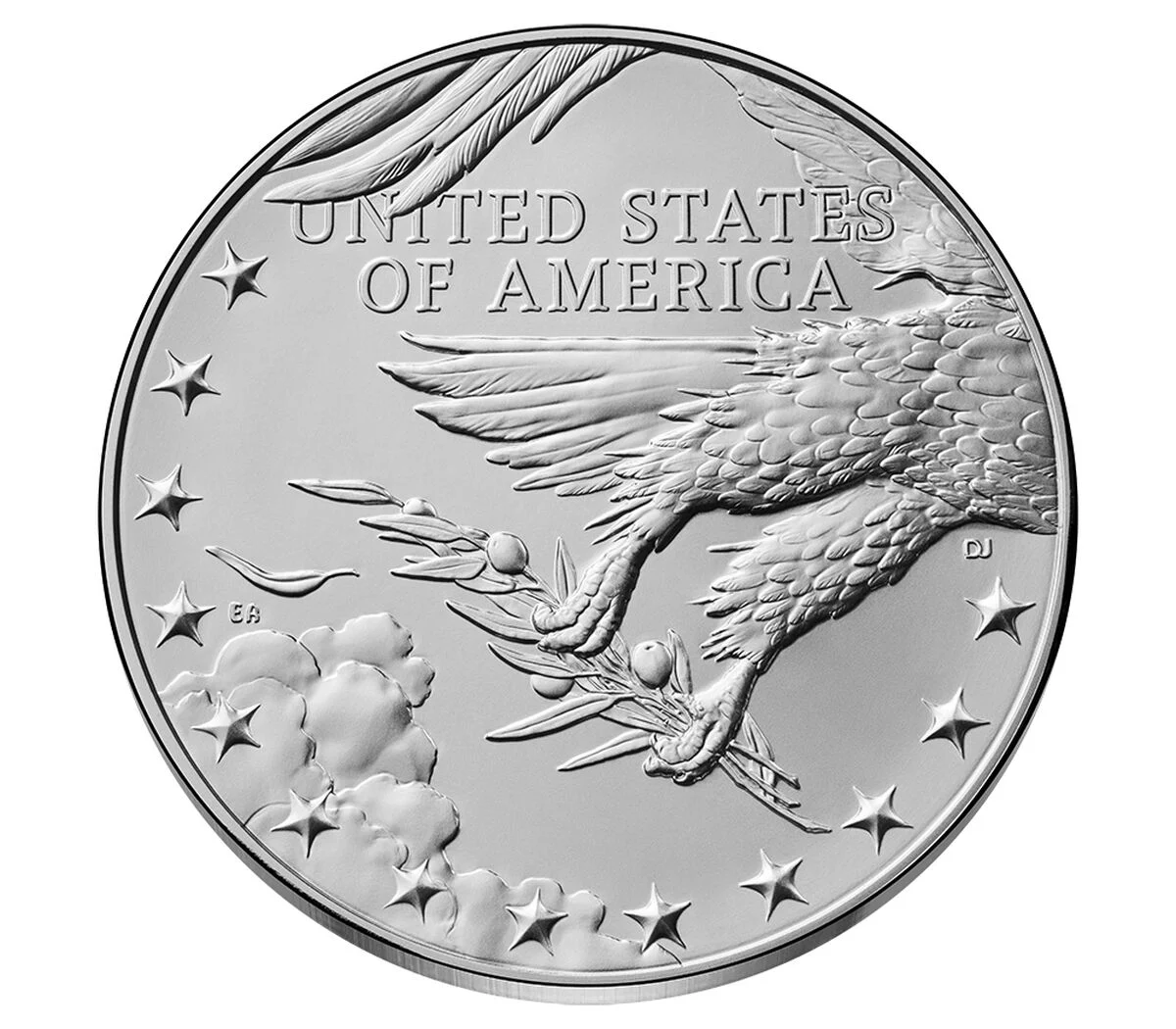
The medal’s reverse completes the gesture, closing in on the olive branches now passed from Liberty to the eagle, the bird flanked by 13 stars beneath the inscription UNITED STATES OF AMERICA. Struck at Philadelphia with a plain edge at 40.60 millimeters, the medal reads as a sequel to the coin, the moment after the pose, when the offer of peace is accepted.
What to know before July 10
Pricing follows the Mint’s gold pricing range table rather than a fixed figure, meaning the final number will track the gold market at release, standard practice for the Mint’s gold products and a reminder to check the current tier before ordering. The Mint has set the price at $1,540 for the two-piece set. That sits well above the $765 charged for the first release, the 1916 Mercury Dime pairing, and the gap owes at least partly to metal content: each set’s gold coin is scaled to its denomination, so the dime set carried a tenth-ounce coin while the Standing Liberty quarter is struck in a full quarter-ounce of gold. With a 30,000-set mintage limit and a one-per-household cap through July 13, the early window favors patience over speed only up to a point; sets built around marquee designs in the Best of the Mint series have a way of moving.
Three of the five sets remain to come. If the Standing Liberty entry is any guide, the Mint is not merely reissuing old designs; it is asking collectors to revisit why these coins were great in the first place, and pairing each with a new medal that argues the point. For a series built to honor 250 years of American coinage, choosing MacNeil’s quarter was less a decision than an inevitability.