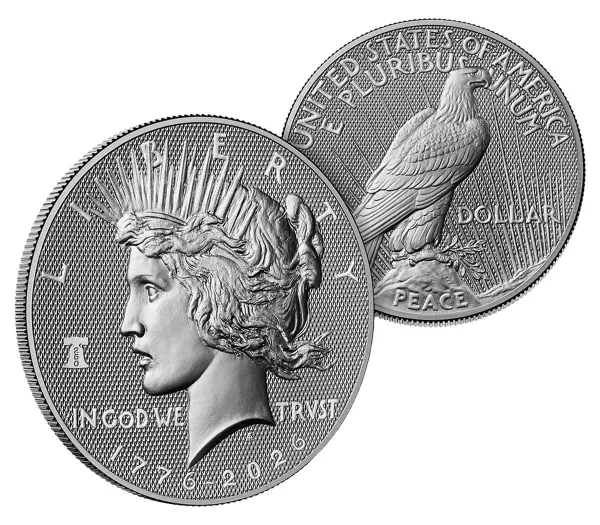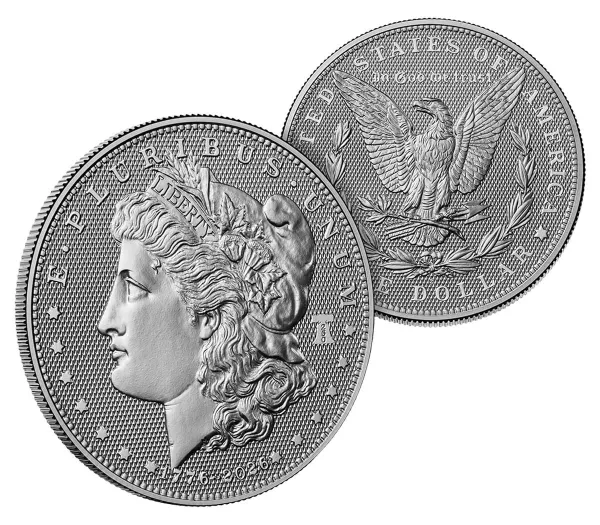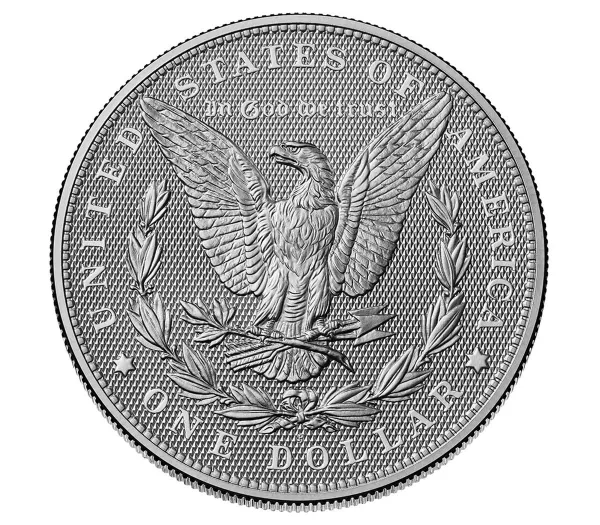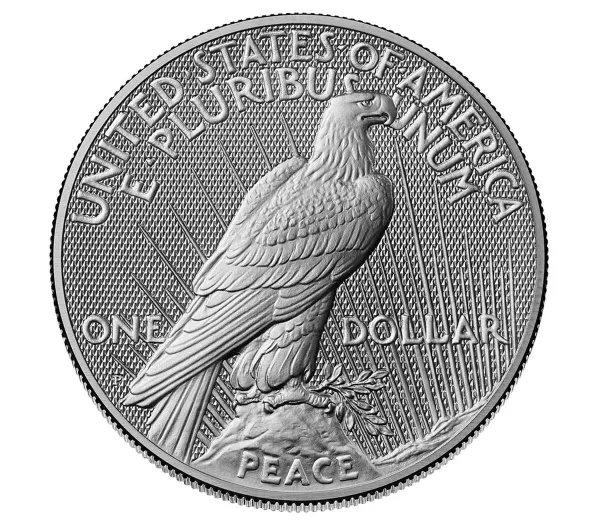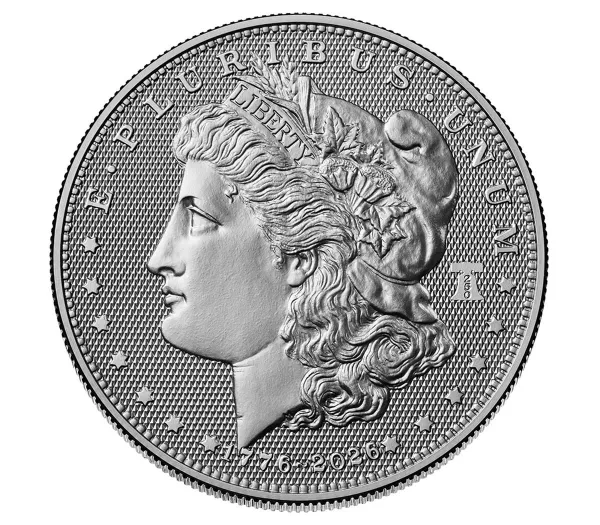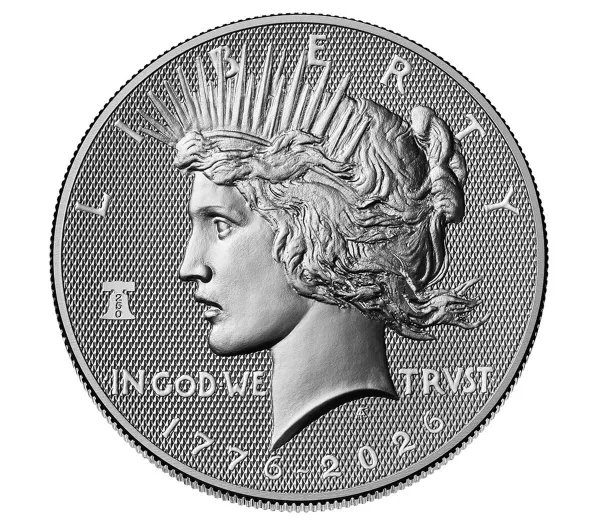
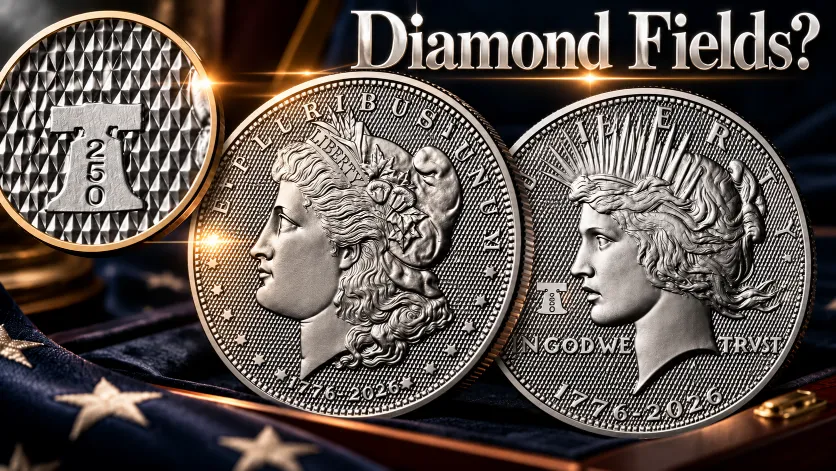
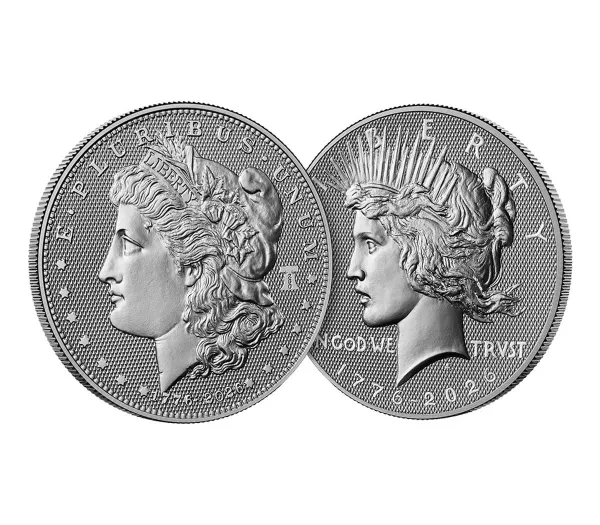
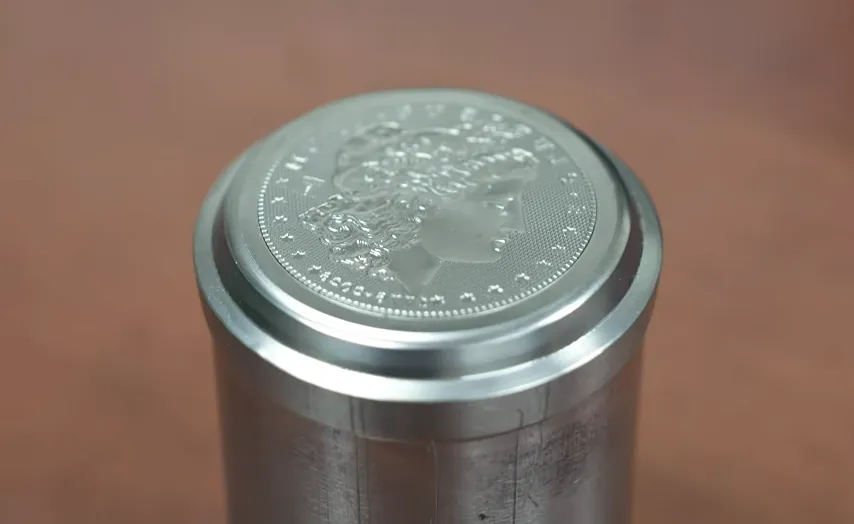
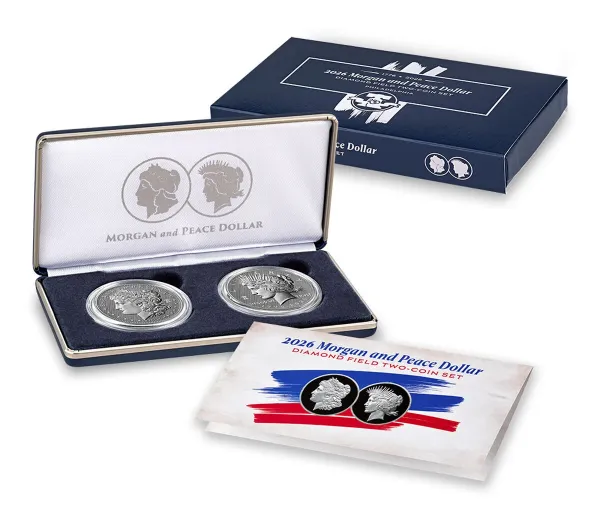
The U.S. Mint is giving its 2026 Diamond Field Morgan and Peace dollars a new surface, and it has nothing to do with the portraits. The Morgan and Peace Dollar 2026 Diamond Field Two-Coin Set goes on sale November 12 at 12 noon Eastern for $375, and in place of the smooth, flat field that has framed both designs for more than a century, each coin carries a laser engraved lattice of tiny diamond facets.
The Mint is selling the finish on its looks, but the account given by the people who built it is more interesting than that. In a short behind the scenes video, three Mint staff explain that the faceted field began as a search for a fresh finish for a historical product, and ended up solving a production problem as well: it helps the dies hold fine detail that a smooth field tends to erase.
From the tooling room to the coin
The finish grew out of a technology the Mint has been folding into its die shop for several years. Michael Costello, the Mint’s director of design and engraving, explains in the video that laser engraving moved into the Mint’s tooling process over that period, to the point where master dies are now being laser engraved. With that capability in hand, the question became what else the laser could do to a coin’s surface.
Steven Bernstein, the Mint’s laser engraving engineer, describes his current role as pushing the technology further into daily production. The brief, as he puts it, was a distinctive finish for a historical issue. After some brainstorming, the team settled on the diamond, a classic pattern chosen because it plays with light so well, and treated it as a starting point rather than a finished answer.
Why a faceted field protects the design
The part of the story collectors will not find on the product page comes from Matthew Newell, the Mint’s product design specialist for the U.S. market, and it turns the usual logic of a decorative finish on its head.
On a smooth field, Newell explains, metal flows fast under the strike because nothing resists it, and that rush of metal can soften fine detail and blur the edges of lettering. The diamond pattern changes that. Its many facets spread the load across the field, and the fine detail survives. In other words, the textured background is not competing with the artwork. It is protecting it.
The team is candid that it did not know at the outset how the finish would make the engraving look. The answer, they say, was that it flatters the historic designs rather than crowding them. Because the pattern is engraved into the master tooling, it carries through from the working hub to the working die, so every die in the chain inherits it. The Mint says this improves the manufacturability of both the tooling and the coins themselves.
That detail matters. A finish applied at the master level is a capability, not a one off effect, and it means the Mint can put the same surface on future issues without reinventing it each time.
The 2026 Diamond Field Morgan and Peace dollars up close
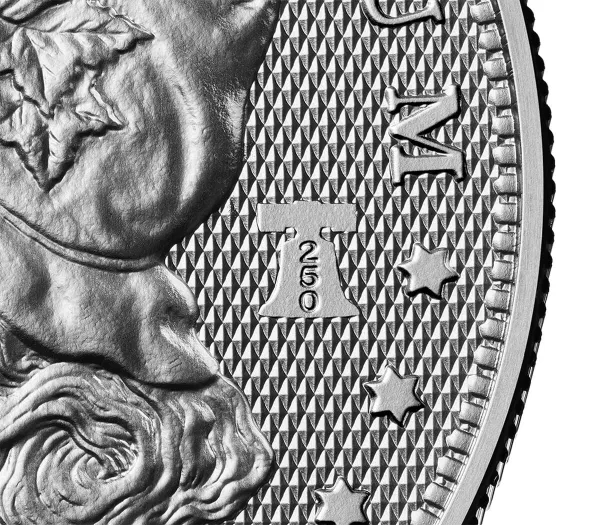
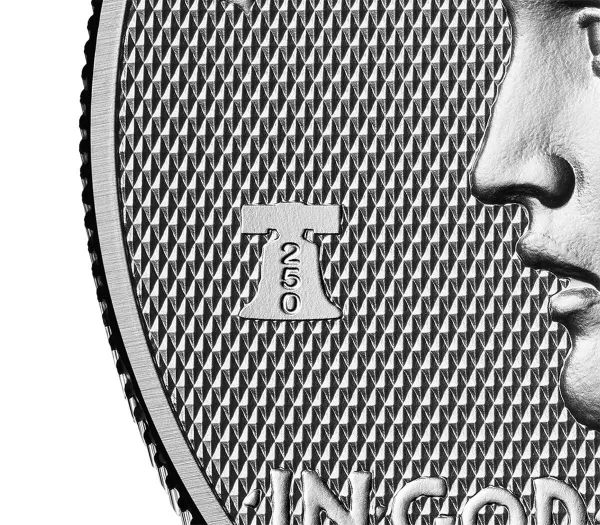
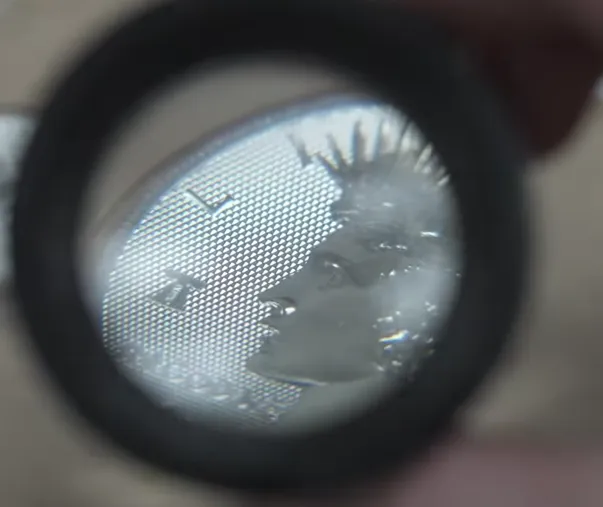
A close up released by the Mint shows the field of the Peace dollar obverse resolved into dense rows of small pyramidal facets running right up to the profile of Liberty and the lettering of IN GOD WE TRVST. Sitting in that field is the Liberty Bell privy mark carrying the numeral 250, rendered as a smooth, flat island that stands out sharply against the texture around it. The effect is closer to a cut gemstone than to the cameo contrast of a proof.
According to CoinNews, both coins are struck in .999 fine silver, weigh 0.859 troy ounce, measure 38.10 mm, and carry the P mintmark of the Philadelphia Mint. Both bear the dual date 1776~2026 alongside the Liberty Bell 250 privy mark marking the nation’s semiquincentennial. The pair ships in a black presentation case with a certificate of authenticity.
The designs underneath are the familiar ones: George T. Morgan’s dollar of 1878 and Anthony de Francisci’s Peace dollar of 1921, the two coins that shared the famous silver dollar handoff of 1921.
Limits, timing, and where this set fits
CoinNews reports a mintage and product limit of 160,000 sets. The Mint’s product page currently lists no household order limit. That differs from earlier reporting by CoinWeek, which said the fall set would carry a limit of two per household, so buyers should treat the Mint’s page as the current word and check it again on release day.
The Diamond Field set closes out a busy year for the pairing. The 2026 reverse proof Morgan and Peace dollars went on sale individually on July 9 at $173 each, with limits of 180,000 for the Morgan and 170,000 for the Peace, followed by enhanced uncirculated versions on August 25. CoinNews counts this as the fourth two-coin set pairing the two designs. The previous three were reverse proof sets from San Francisco, limited to 250,000 in 2023, 262,500 in 2024, and 160,000 in 2025. This year, the reverse proof finish has gone to the individual coins, and the two-coin set gets the laser.
What comes next
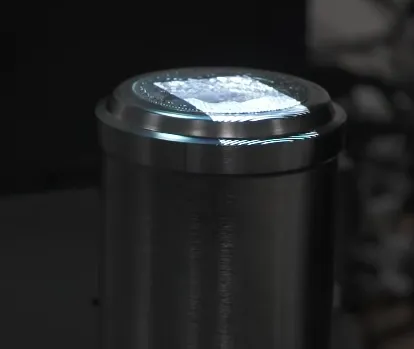
The Mint is clear that the Diamond Field finish is an addition, not a replacement. Mirror proofs, uncirculated, and circulating finishes all stay. But the video closes with an unmistakable hint that more is on the way, and the logic of a finish built into the master tooling supports it.
For collectors, the Diamond Field Morgan and Peace dollars are more than another variant in a crowded run of 250th anniversary issues. They are a clear look at what the Mint’s laser can do to a whole field on a major collector coin, applied to two designs from 1878 and 1921. The oldest silver dollar designs in the modern catalogue are carrying the newest technology in the Mint’s die shop, and if the engineers are right, the field will never look quite as plain again.
Frequently asked questions
What are the Diamond Field Morgan and Peace dollars? They are the two coins in the U.S. Mint’s Morgan and Peace Dollar 2026 Diamond Field Two-Coin Set. Instead of a smooth field, each coin has a background laser engraved with a repeating pattern of small diamond facets that catches and breaks up light. The designs themselves are the classic 1878 Morgan and 1921 Peace dollar.
When do the Diamond Field Morgan and Peace dollars go on sale, and what do they cost? The set goes on sale from the U.S. Mint on November 12, 2026, at 12 noon Eastern Time. The price is $375 for the two-coin set. A subscription option is also listed on the Mint’s product page.
How many sets will be made, and is there a household limit? CoinNews reports a mintage and product limit of 160,000 sets. The Mint’s product page currently shows no household order limit, although earlier reporting by CoinWeek mentioned a limit of two. Check the Mint’s page on release day for the final terms.
Are the coins silver, and which mint strikes them? Yes. According to CoinNews, each coin is .999 fine silver, weighs 0.859 troy ounce, and measures 38.10 mm. Both are struck at the Philadelphia Mint and carry the P mintmark.
Why did the Mint use a diamond pattern on the fields? Mint staff say the pattern was chosen because it captures light well, but it also helps production. On a smooth field, metal flows quickly during striking and can soften fine detail and lettering edges. The many facets of the diamond finish spread that load and help preserve the detail of the design.
Is the Diamond Field finish a type of proof? No. The Mint presents it as a separate finish alongside its existing mirror proof, uncirculated, and circulating finishes, not as a version of any of them. The pattern is laser engraved into the master tooling and carried through the hub to the working dies.
Do the coins carry a privy mark? Yes. Both coins carry a Liberty Bell privy mark containing the numeral 250 and the dual date 1776~2026, marking America’s 250th anniversary. On the Diamond Field coins the privy mark appears as a smooth, flat device set against the textured field.