*Updated October 8, 2026. Upcoming release dates and production limits reflect the Mint’s announcements as of this date; limits are not final mintages.
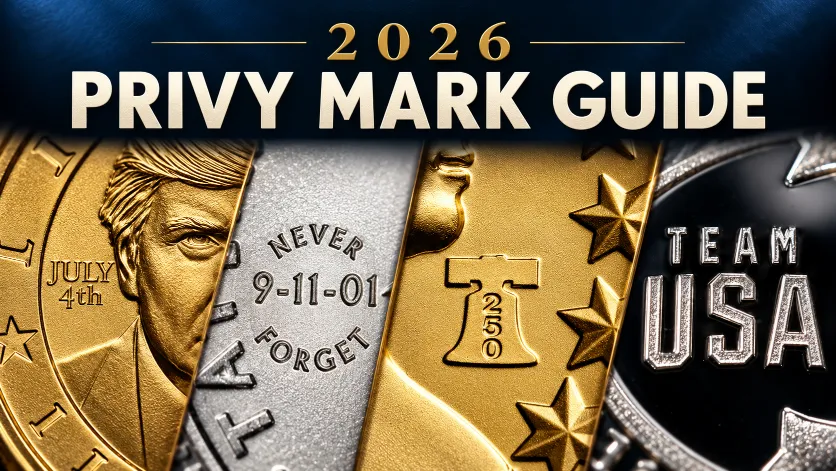
The United States Mint has made privy marks a prominent feature of its 2026 releases. The released and announced 2026 privy mark coins covered here fall into four main groups: a Liberty Bell carrying the numeral 250 on dozens of collector issues, a two line JULY 4th inscription on a quarter and a dollar, a 9-11-01 date ringed by remembrance wording on the half dollar, and a TEAM USA mark on a Silver Eagle never offered for direct public sale by the Mint. Some of these coins went out through Federal Reserve Banks for anyone to find in change. Others cost thousands of dollars. A few were never for sale at all.
For collectors trying to make sense of the Semiquincentennial, the privy mark has become the single most important detail on the coin. It can distinguish a special issue from its standard counterpart, although the mark alone does not establish rarity or value. It also has a longer history at the Mint than most people realise, and the road to 2026 runs through the V75 Gold Eagle, a Flowing Hair medal with a 230 on it, and the cents that marked the end of production for circulation in 2025.
A small mark with a long memory
A privy mark is a small symbol or inscription added to a coin to say something about its production. It is not a mintmark. A mintmark tells you where a coin was struck; a privy mark tells you something else, whether that is who struck it, when a specification changed, or what the coin is commemorating.
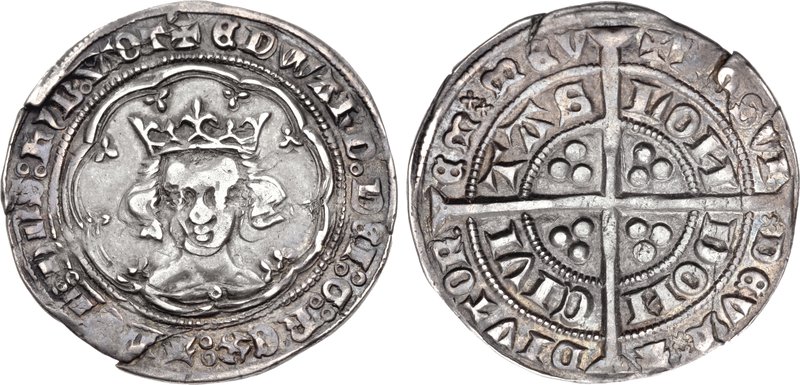
The device is centuries old. English moneyers under Edward III used privy marks in the 14th century to distinguish one striking period from another and to keep the minting process accountable. The word itself comes from the sense of something private, set apart, readable by the people inside the system and invisible to the person spending the coin. Modern mints have turned that logic inside out. A privy mark today is meant to be noticed, and in 2026 it is increasingly meant to be hunted.
How the U.S. Mint learned to use privy marks
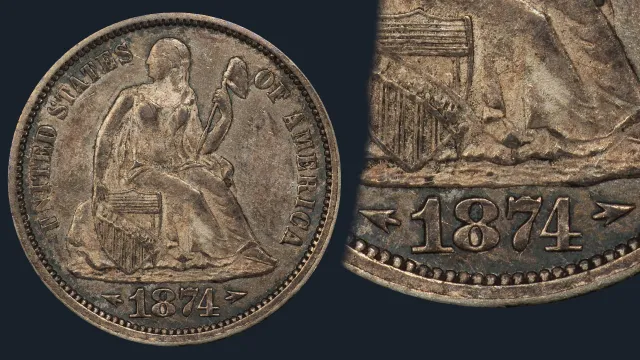
American coinage carried privy marks in function long before it used them in name. In 1853 the Mint reduced the weight of its silver coins and placed arrows on either side of the date to signal the change, removing them again in 1856. When weights changed in 1873 and 1874, the arrows returned. The Mint’s own records never called them privy marks, but they did exactly the job of one.
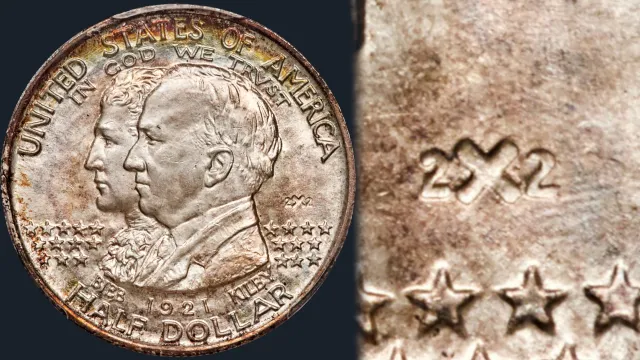
The commemorative boom of the 1920s offers the next examples. The 1921 Alabama half dollar carries 2X2 in the field and the Missouri half dollar 2X4, both added to distinguish special issues and help sales. The 1922 Grant half dollar and gold dollar were struck in versions with a star for the same reason.
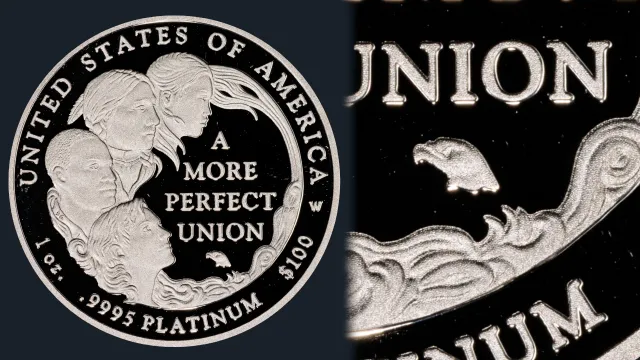
Then the device went quiet for most of a century. It returned in 2009 on the reverse of the American Eagle platinum proof, where the Mint added a small eagle privy mark taken from an original coin punch found at the Philadelphia Mint. That eagle appeared on the platinum proofs through 2014, across the six year Preamble to the Constitution series.
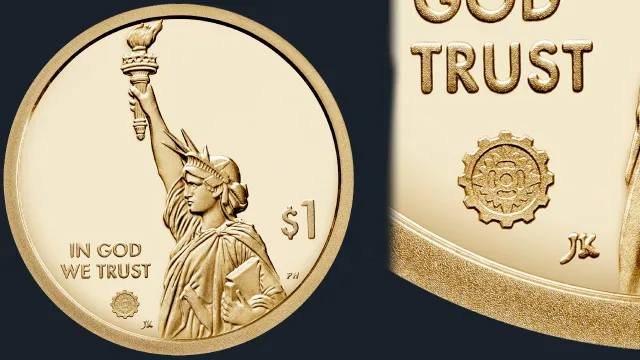
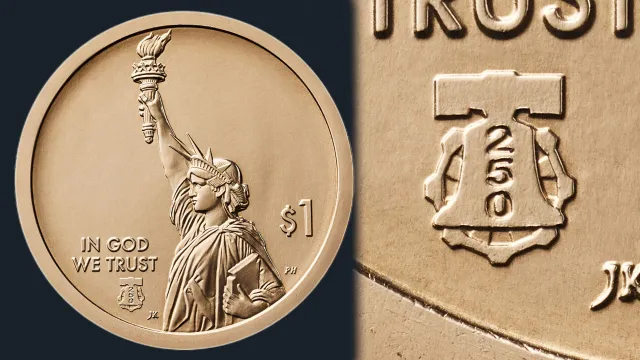
The modern habit began in 2019. The American Innovation dollar program, which runs through 2032, adopted a stylized gear privy mark on its common obverse, below IN GOD WE TRUST, as a unifying device across designs that otherwise change every few months. The Mint based the gear on the reverse of the 2018 introductory coin, and the gear has been subtly redrawn each year since. It was a quiet start, and it turned out to be the template for everything that followed.
V75 and the moment collectors noticed
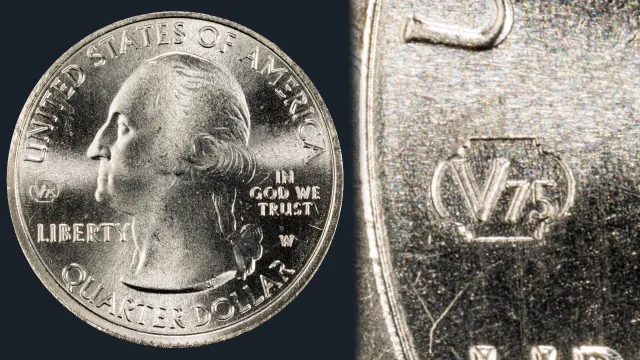
The privy mark became a collector event in 2020. To mark the 75th anniversary of the end of World War II, the Mint created the V75 privy mark, the letters and numerals set inside an outline of the Rainbow Pool at the National World War II Memorial in Washington.
It went first onto America the Beautiful quarters struck at West Point, which the Philadelphia and Denver Mints mixed into bulk bags bound for Federal Reserve Banks, so the marked coins would surface in ordinary change. That distribution model, a privy marked coin hidden in circulation, is the same one the Mint used again six years later.
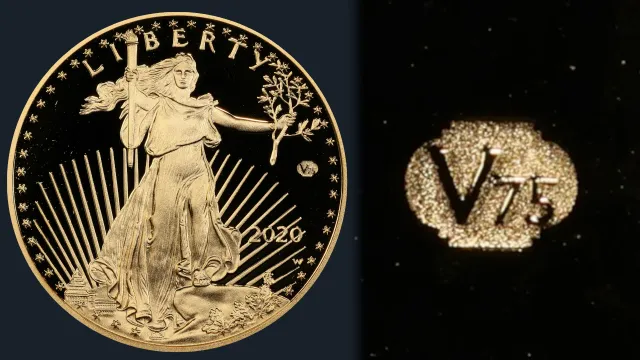
The V75 then went onto proof American Eagles. The Silver Eagle was limited to 75,000 coins. The Gold Eagle was limited to 1,945, a number chosen for the year the war ended, and when it went on sale on November 5, 2020, it sold out in roughly 7 minutes. It remains the lowest mintage American Gold Eagle ever made, and its secondary market prices taught a whole generation of collectors what a privy mark could do to a coin’s standing.
Historic mint tributes, stars, military seals and a 230
In 2021, the Mint added CC and O privy marks to Morgan dollars struck at Philadelphia to honour the former Carson City and New Orleans Mints. These were commemorative devices, not mintmarks identifying where those coins were made.
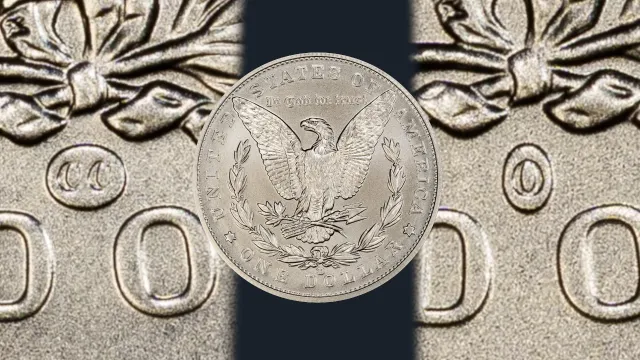
Between 2024 and 2025 the Mint used privy marks almost as a product line.
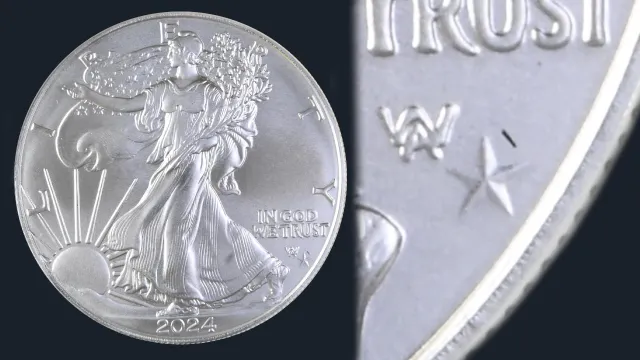
In 2024 it put a five pointed star privy mark on 500,000 bullion Silver Eagles struck at Philadelphia, the first privy mark on a bullion American Eagle. A year later an eagle shaped privy mark appeared on a second limited Mint State Silver Eagle, also capped at 500,000.
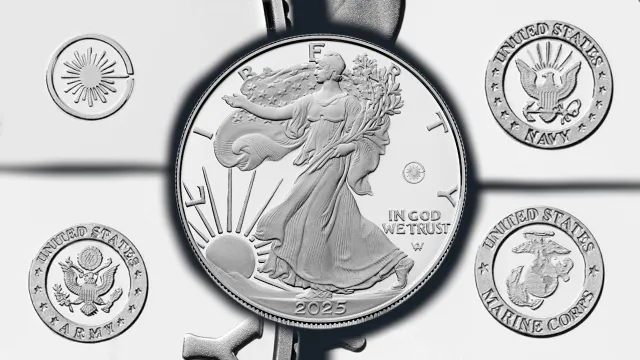
In 2025 the Mint struck three proof Silver Eagles for the 250th anniversaries of the Army, Navy and Marine Corps, each at a different facility and each limited to 100,000 coins, alongside a West Point proof carrying a privy mark engraved with the Mint’s new laser die technology.
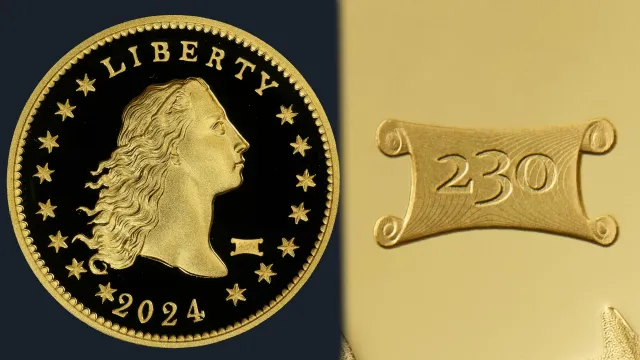
The most precise use of the device came in the autumn of 2024, when the Mint marked 230 years since the first Flowing Hair dollar. Its Flowing Hair silver medal was limited to 75,000 pieces, and exactly 1,794 of them carried a 230 privy mark, the number chosen for the year of the original dollar. Those privy marked medals were mixed into inventory and shipped at random, with 230 of them accompanied by a certificate hand signed by then Mint Director Ventris C. Gibson. The companion one ounce, 24 karat, high relief gold coin was sold without a privy mark, but the Mint struck a separate 230 examples carrying the 230 privy mark and offered them only at auction on December 12, 2024, the first coin sold together with its die.
That release is worth remembering because it shows how the Mint uses symbolic production quantities. The 230 gold coins matched the anniversary, while the 1,794 privy marked silver medals recalled the original dollar’s year. Similar symbolism appears in selected 2026 releases, but there is no general rule that the number on a privy mark matches the mintage.
Omega: marking the end of cent production for circulation
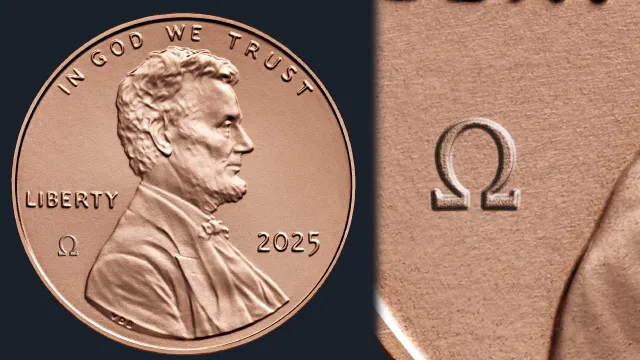
One of the closing privy mark releases before the Semiquincentennial marked the end of an era. When the Philadelphia Mint struck its last cents for circulation on November 12, 2025, the Mint marked the occasion with a small Ω, the Greek letter Omega, the last letter of the alphabet for the last of the line.
Only 232 three coin sets were made, marking the 232-year span from 1793 to 2025. Each held a 2025 Philadelphia cent, a 2025-D cent and a 2025 cent struck in 24 karat gold at Philadelphia, the first gold cent the Mint has produced, all three carrying the Omega privy mark. Stack’s Bowers Galleries auctioned them on the Mint’s behalf in December 2025. The sale realized more than $16.76 million, with prices running from $48,000 to $800,000. The top lot, set number 232, held the very last circulation cents from Philadelphia and Denver, the final gold Omega cent, and the cancelled dies used to strike the series. Stack’s Bowers described the $800,000 set as the most valuable modern U.S. numismatic item sold at that time. The end of circulation production did not end the denomination: the Mint continues to produce collector cents.
It was a fitting prologue. Less than a month later, the Semiquincentennial began.
The Liberty Bell 250: the Semiquincentennial’s house mark
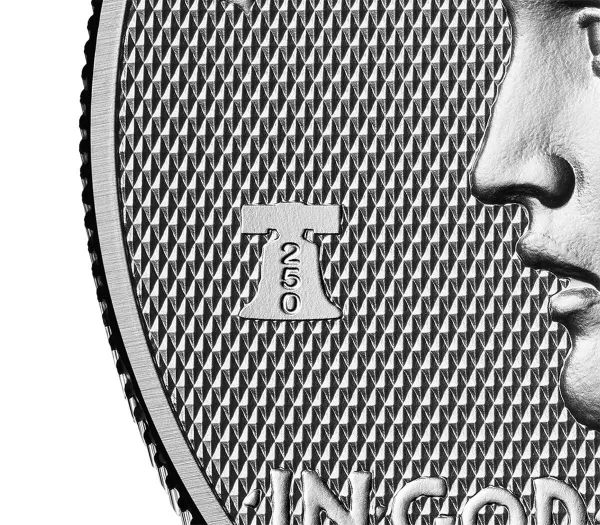
The device that defines 2026 privy mark coins is the Liberty Bell privy mark, a small rendering of the bell hanging from its beam with the numeral 250 arranged vertically on its face. The Mint uses it as a one year only signature for the nation’s 250th anniversary, and it connects a broad range of anniversary issues.
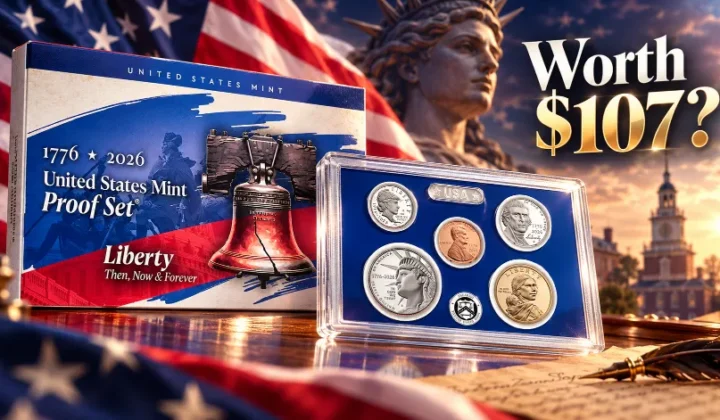
It went first onto the American Innovation dollars, where the Mint overlaid the bell on that year’s gear rather than replacing it. All four 2026 designs carry it, from Iowa’s Norman Borlaug in January through Wisconsin’s Cray-1 supercomputer, California’s Steve Jobs and Minnesota’s mobile refrigeration in July, across Philadelphia and Denver rolls and bags and the announced San Francisco reverse proof set, scheduled for October 13. The reverse proof set’s current Mint listing specifies a mintage limit of 99,792; that limit should not be confused with final production. The standard 2026 Proof Set, on sale since October 6, contains no American Innovation dollars and no privy marked coins.
From there it moved into precious metals, usually paired with the dual date 1776 ~ 2026. The 2026-W proof Silver Eagle carries it in the right obverse field behind Liberty, above IN GOD WE TRUST, with a mintage limit of 500,000. An enhanced uncirculated Silver Eagle also carries it; that coin was released on July 21 with a mintage limit of 125,000. The four proof Gold Eagles released on March 5 carry it in every size from the tenth ounce to the one ounce, making 2026 only the second year a Gold Eagle has worn a privy mark, after the V75, and the first time a fractional Gold Eagle has worn one at all. The one ounce enhanced uncirculated Gold Eagle, released on May 28, also carries the Liberty Bell 250 and dual date. Struck at West Point with a W mintmark, it has a mintage limit of 7,500. The proof Gold Buffalo released on May 7 carries the first privy mark in that series, placed where the W mintmark usually sits, with the mintmark moved up among the headdress feathers to make room. The uncirculated Palladium Eagle released on September 3 carries it with a mintage limit of 5,000.
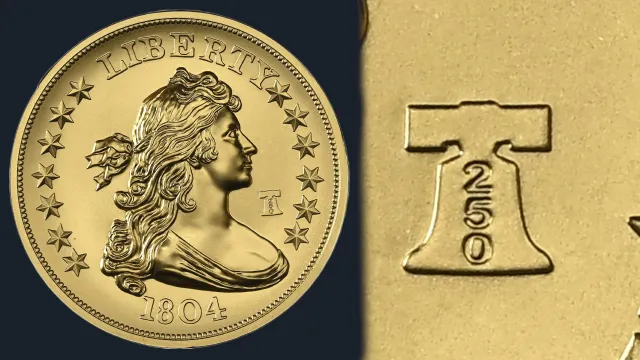
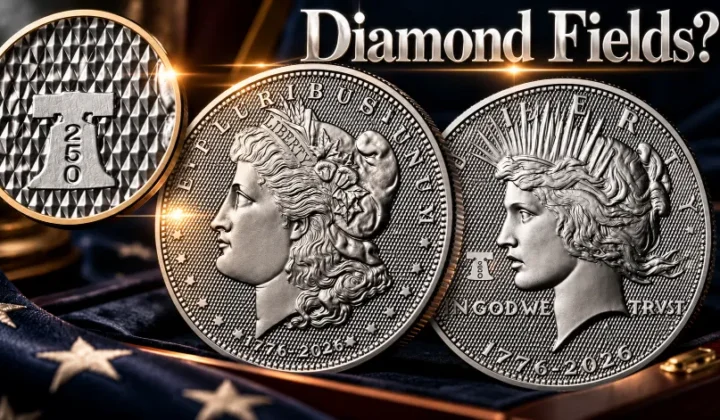
The Morgan and Peace dollars carry it in three finishes: Philadelphia reverse proofs from July 9, enhanced uncirculated coins struck at West Point from August 25, and the laser engraved Diamond Field two coin set due on November 12, where the bell sits as a smooth island against a faceted field. The five 24 karat gold coins in the Best of the Mint series, faithful tributes to the 1916 Mercury dime, the 1916 Standing Liberty quarter, the 1916 Walking Liberty half dollar, the 1804 dollar and the 1907 double eagle, carry their original dates and use the Liberty Bell privy mark to identify them as 2026 strikings.
The Liberty Bell 250 is widespread as a symbol, but the individual coins carrying it have very different production limits. The mark identifies the anniversary; the particular issue, finish and quantity determine how scarce a coin may be.
JULY 4th: one inscription, three different hunts
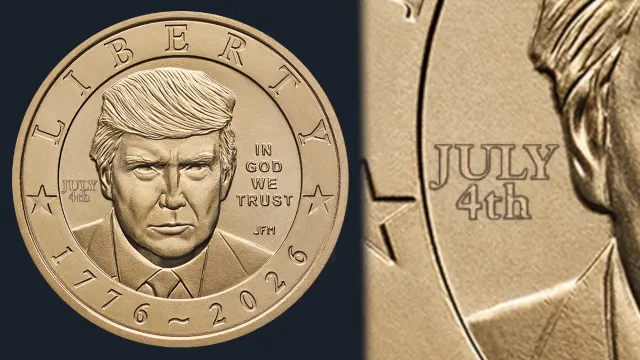
The JULY 4th privy mark is a different kind of device: two short lines of text, JULY above 4th, set into the obverse field to the left of the portrait. It has appeared on three issues, and each one reached collectors in a completely different way.
The first was the Declaration of Independence quarter. The Mint struck 250,000 of them at Philadelphia without a mintmark, then mixed them at random into shipments of standard Declaration quarters heading to banks before Independence Day. They could not be bought from the Mint in any form. The grading services turned the search into a national event, with NGC awarding a bounty for the first submission and PCGS offering $5,000 for its own first discovery.
The second was a gesture rather than a product. On July 4 itself, Philadelphia struck 250 Declaration of Independence quarters in 2.5 ounces of silver, with no mintmark, the same JULY 4th privy mark, and sequential edge numbering from 1 to 250. The Mint says they will be auctioned at a later date.
The third was the 2026 President Donald J. Trump $1 coin. The Mint states that 250,000 of these were struck at Philadelphia on the Fourth of July with the same privy mark, and from September 2 it interspersed them at random through its 25 coin rolls and 100 coin bags. The quarter could be found in change but never ordered from the Mint; the dollar could be ordered but was never released into circulation. Same mark, same quantity, opposite routes.
9-11-01: ALWAYS REMEMBER and NEVER FORGET
The most affecting privy mark of the year sits on the one year only Enduring Liberty half dollar, the coin that replaced the Kennedy portrait for 2026. It appears in two versions, and the difference matters.
The first carries 9-11-01 encircled by ALWAYS REMEMBER, a phrase the Mint also used on its 2011 September 11 National Medal. West Point struck it with a W mintmark. On August 21, 2026, the Mint presented exactly 2,983 of these coins to the National September 11 Memorial & Museum, one for each of the 2,977 people killed in the 2001 attacks and the six killed in the 1993 World Trade Center bombing. Then, on September 14, the Mint shipped another 250,000 West Point ALWAYS REMEMBER halves to Federal Reserve Banks for random release into circulation.
The second carries the same date encircled by NEVER FORGET. Philadelphia strikes it with a P mintmark, and it was offered in 20 coin rolls and 100 coin bags through a pre-order window that ran from September 10 to September 25, with shipping expected from December 3. The Mint listed no mintage or household limit for it. As of October 8, the pre-order window is closed and the product page is marked sold out.
The two announced West Point distributions total 252,983 coins. The 2,983 presentation pieces have a particular provenance, but the announcements do not establish them as a separate design or finish with a mintage of 2,983.
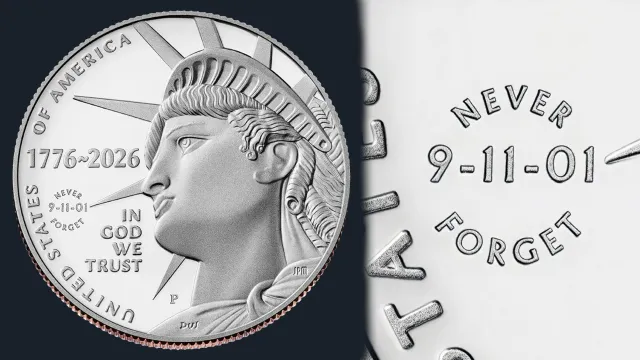
So the 9/11 half dollar exists in two wordings from two Mints by three routes: a memorial presentation, a circulation release and a Mint product. A privy mark used this way is closer to its medieval purpose than its modern one. It means something specific to the people who can read it.
TEAM USA: 403 coins nobody could order
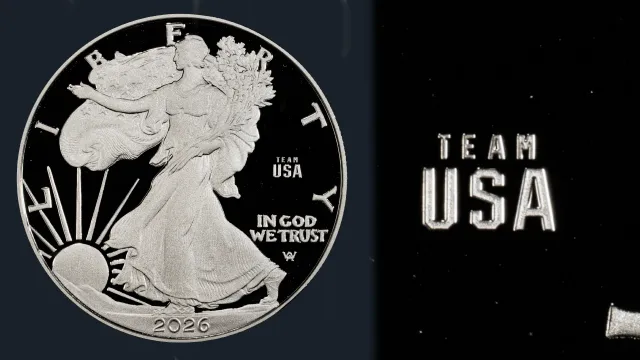
The lowest mintage American Silver Eagle issue reported to date was never offered for direct public sale by the Mint. On August 6, athletes from the 2026 Milano Cortina Winter Olympic and Paralympic teams were presented at the White House with proof Silver Eagles carrying a TEAM USA privy mark. According to GreatCollections, which is auctioning the first example graded, the coins were struck at Philadelphia with a P mintmark, the privy mark sits in the right obverse field above IN GOD WE TRUST, and only 403 were made, with 3 retained by the Mint.
What does not carry a privy mark
With so many marks in play, the misidentifications have followed. The standard 2026 bullion Silver, Gold, Platinum and Palladium Eagles and the bullion Gold Buffalo carry no privy mark and no dual date(though the Proof version does). The 2026-P proof Silver Eagle in the Congratulations Set carries a single 2026 date and no privy mark. The 2026 Native American dollar carries no privy mark, despite appearing on some collector checklists as a Liberty Bell 250 issue. The regular Philadelphia and Denver Enduring Liberty halves, the standard Declaration quarters and the standard Trump dollars are plain. Check the specific Mint product description when identifying a coin; this checklist covers the released and announced issues confirmed for this article as of October 8.
2026 privy mark coins at a glance
| Privy mark | Coin | Mint and mintmark | Announced quantity or production limit | Distribution or scheduled release |
|---|---|---|---|---|
| Liberty Bell 250 on gear | American Innovation $1, all four states | Philadelphia, P; Denver, D; San Francisco, S reverse proof | Limits vary by product; reverse proof set: 99,792 mintage limit | Mint rolls and bags; reverse proof set scheduled October 13 |
| Liberty Bell 250 | Proof Silver Eagle | West Point, W | 500,000 mintage limit | Mint sale |
| Liberty Bell 250 | Enhanced uncirculated Silver Eagle | West Point, W | 125,000 mintage limit | Mint sale from July 21 |
| Liberty Bell 250 | Proof Gold Eagles, four sizes | West Point, W | Mintage limits: 25,000 (1 oz); 18,500 (1/2 oz); 21,000 (1/4 oz); 29,000 (1/10 oz), including coins in four-coin sets | Mint sale from March 5 |
| Liberty Bell 250 | Enhanced uncirculated Gold Eagle, 1 oz | West Point, W | 7,500 mintage limit | Mint sale from May 28 |
| Liberty Bell 250 | Proof Gold Buffalo | West Point, W | 15,000 product limit | Mint sale from May 7 |
| Liberty Bell 250 | Uncirculated Palladium Eagle | West Point, W | 5,000 mintage limit | Mint sale from September 3 |
| Liberty Bell 250 | Morgan and Peace dollars | Philadelphia reverse proof; West Point enhanced uncirculated; Philadelphia Diamond Field | Varies by finish; figures are limits, not final mintages | Reverse proofs July 9; enhanced uncirculated August 25; Diamond Field scheduled November 12 |
| Liberty Bell 250 | Best of the Mint gold coins, five designs | West Point | Limits vary by set | Mint sale, by set |
| JULY 4th | Declaration of Independence quarter | Philadelphia, no mintmark | 250,000 | Random release into circulation |
| JULY 4th | 2.5 oz silver Declaration quarter, edge numbered | Philadelphia, no mintmark | 250 | Auction, date to be announced |
| JULY 4th | President Donald J. Trump $1 | Philadelphia, no mintmark | 250,000 | Random within Mint rolls and bags from September 2 |
| 9-11-01 ALWAYS REMEMBER | Enduring Liberty half dollar | West Point, W | 2,983 presentation coins; part of 252,983 announced distributions | Presented to the National 9/11 Memorial & Museum |
| 9-11-01 ALWAYS REMEMBER | Enduring Liberty half dollar | West Point, W | 250,000 circulation coins; part of 252,983 announced distributions | Random release into circulation from September 14 |
| 9-11-01 NEVER FORGET | Enduring Liberty half dollar | Philadelphia, P | No limit listed | Mint rolls and bags, pre-order September 10 to 25 |
| TEAM USA | Proof Silver Eagle | Philadelphia, P | 403 reported by GreatCollections: 400 for presentation, 3 retained by the Mint | Athlete presentation programme; no direct Mint sale |
What 2026 leaves behind
For most of the Mint’s history, a privy mark was an exception. In 2026 it became the grammar of the anniversary: one mark to label the year, others to mark single days, and a handful to honour people the coins were made for rather than sold to. The 2026 privy mark coins will be sorted, slabbed and argued over for decades, and the hardest lesson they teach is already clear. A privy mark’s value is set less by the mark than by the route a coin took to reach you. A Liberty Bell 250 is a label. A JULY 4th quarter found in change is a story. And a West Point half dollar reading ALWAYS REMEMBER is a little of both, struck in a year when the nation turned 250 and the memory it asks us to keep turned 25.
Frequently asked questions
What are the 2026 privy mark coins? They are the 2026 U.S. Mint coins carrying one of four main groups of marks: the Liberty Bell 250 privy mark for the Semiquincentennial, the JULY 4th privy mark, the 9-11-01 privy mark with either ALWAYS REMEMBER or NEVER FORGET, and the TEAM USA privy mark. The Liberty Bell 250 appears on American Innovation dollars, proof and enhanced uncirculated Gold and Silver Eagles, the uncirculated Palladium Eagle, the proof Gold Buffalo, Morgan and Peace dollars and the Best of the Mint gold coins. The other three groups appear on a small number of specific issues.
What is a privy mark on a coin? A privy mark is a small symbol or inscription added to a coin to communicate something about its production, such as a special striking or an anniversary. It is not the same as a mintmark, which identifies where the coin was struck. Many 2026 privy marked coins carry both.
Can you find 2026 privy mark coins in circulation? Yes, two of them were released that way. The Mint mixed 250,000 JULY 4th Declaration of Independence quarters and 250,000 West Point ALWAYS REMEMBER 9-11-01 half dollars at random into Federal Reserve shipments. The JULY 4th Trump dollars were distributed through Mint rolls and bags, and the NEVER FORGET half dollars were offered by pre-order through Mint rolls and bags. Those are their official distribution routes; coins can later be resold or spent.
How many JULY 4th privy mark coins were made? The Mint made 250,000 Declaration of Independence quarters and 250,000 President Donald J. Trump $1 coins with the JULY 4th privy mark, both struck at Philadelphia without a mintmark. It also struck 250 edge numbered 2.5 ounce silver Declaration quarters on July 4, which it plans to auction later.
What is the difference between the ALWAYS REMEMBER and NEVER FORGET 9/11 half dollars? ALWAYS REMEMBER coins were struck at West Point with a W mintmark: 2,983 were presented to the National 9/11 Memorial & Museum and 250,000 were released into circulation from September 14. NEVER FORGET coins were struck at Philadelphia with a P mintmark and were offered in Mint rolls and bags during the September 10–25 pre-order window, with shipping expected from December 3. The two West Point distributions total 252,983 coins; the presentation group is not established as a separate design or finish. Both carry the date 9-11-01 on the 2026 Enduring Liberty half dollar.
Which 2026 privy mark coin is the rarest? By announced production quantity, the 250 edge numbered 2.5 ounce silver JULY 4th quarters have the smallest quantity among the issues covered here; the Mint has announced a future auction. The TEAM USA proof Silver Eagle is the lowest mintage American Silver Eagle issue reported to date: GreatCollections reports 403 struck at Philadelphia, comprising 400 for the athlete presentation programme and three retained by the Mint. The 2,983 ALWAYS REMEMBER presentation halves form part of 252,983 announced West Point distributions, rather than a confirmed separate coin variety.
Do bullion and Native American 2026 coins have a privy mark? No. Standard 2026 bullion Silver, Gold, Platinum and Palladium Eagles and the bullion Gold Buffalo carry no privy mark and no dual date. The 2026 Native American dollar and the 2026-P proof Silver Eagle in the Congratulations Set also carry no privy mark.
Has the U.S. Mint used privy marks before 2026? Yes. Arrows marked weight changes on silver coins in the 1850s and 1870s, a small eagle appeared on platinum proofs from 2009 to 2014, and a gear has marked the American Innovation dollar since 2019. Recent examples include the V75 coins of 2020, the CC and O privy marked Morgan dollars of 2021, the 230 privy mark Flowing Hair medal and gold coin of 2024, and the Omega cents of 2025.