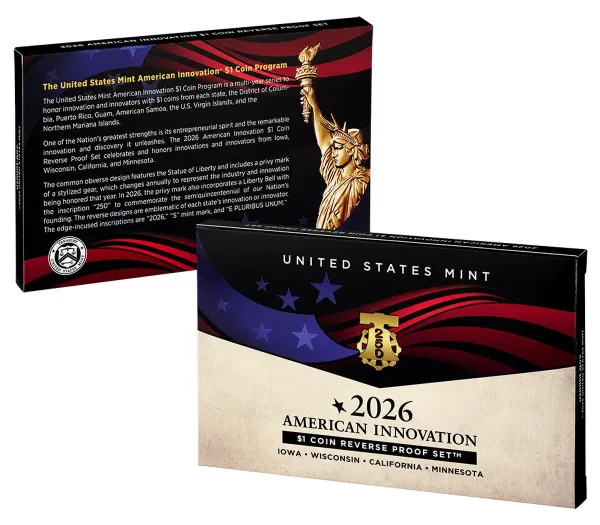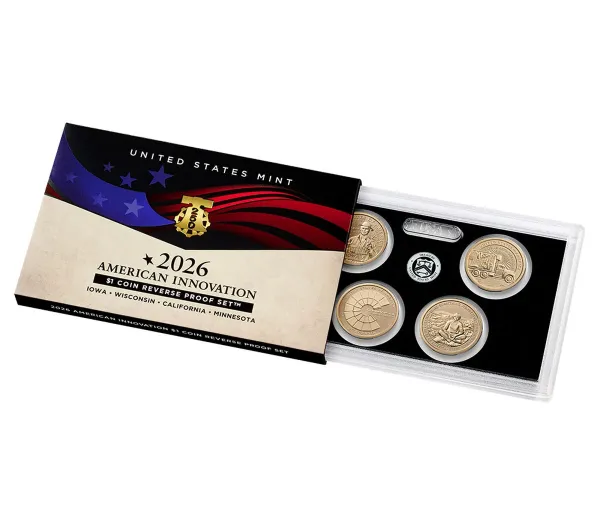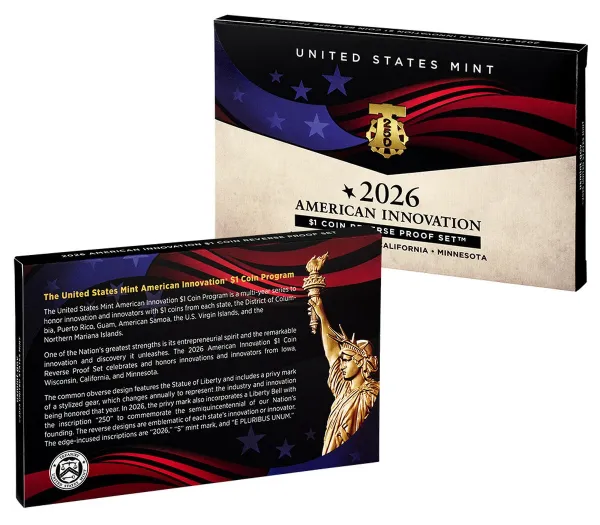
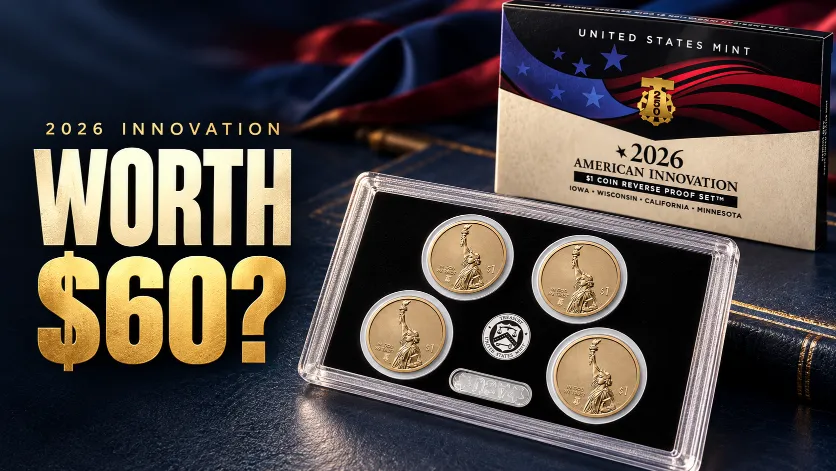
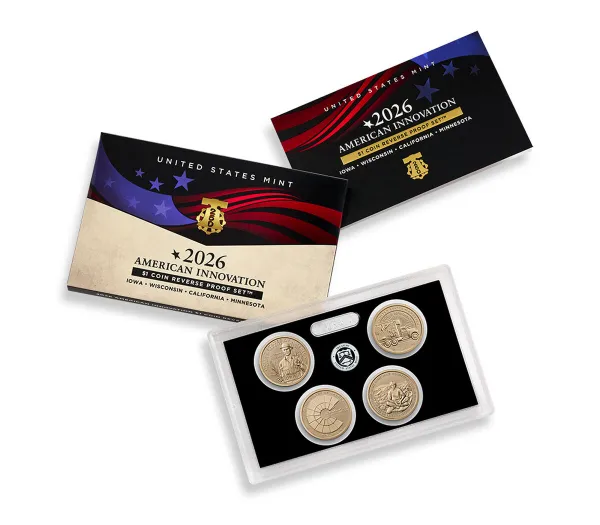
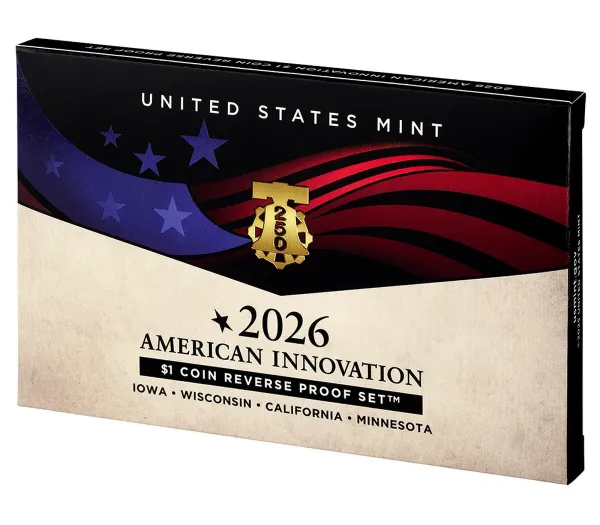
The United States Mint will open orders for the 2026 American Innovation Reverse Proof Set on Tuesday, October 13, at noon Eastern Time. The four-coin set carries Iowa, Wisconsin, California and Minnesota, is priced at $60.00, and is limited to two sets per household. The Mint has set the mintage limit at 99,792.
Those four states have produced an unusually recognizable lineup: the wheat scientist credited with feeding a billion people, the supercomputer that held the world speed record for six years, the most famous product visionary of the personal computer age, and the refrigeration unit that quietly made the modern grocery aisle possible. The numbers behind the set, though, tell a story of their own, and collectors who bought last year’s edition will notice it straight away.
A price and a limit that have both nearly doubled
When the Mint released the 2025 American Innovation Reverse Proof Set, covering Arkansas, Michigan, Florida and Texas, it went on sale on December 30, 2025, at $32.25, also limited to two per household at launch.The Mint capped that set at 50,028.
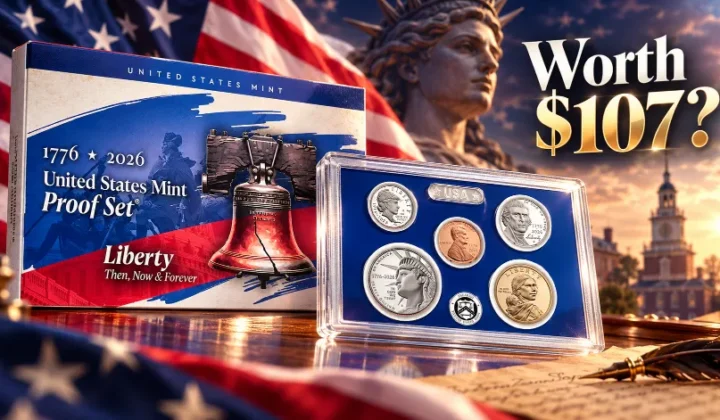
The 2026 edition arrives at $60.00, an increase of roughly 86 percent, with a mintage ceiling of 99,792, close to twice last year’s figure. It also arrives about 11 weeks earlier in the calendar, in October rather than the final days of December. The higher price is not an anniversary premium. The Mint raised prices across its numismatic products in early 2026, with the annual Proof Set moving from $40.25 to $107.00, and its shop now lists the 2025 American Innovation set at the same $60.00 as the new one.
Whether a larger ceiling at a higher price finds its buyers is the question to watch. For context, CoinNews counted 36,030 sales of the 2024 set and 42,431 of the 2023 set by late December 2025, neither close to a 99,792 limit.
The obverse: Liberty, a gear, and a Liberty Bell
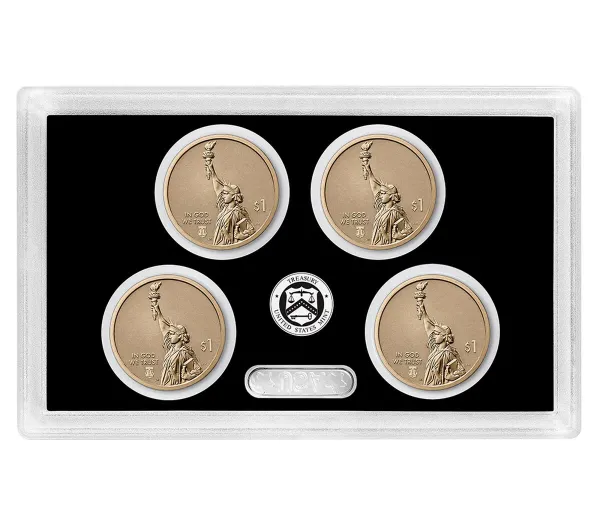
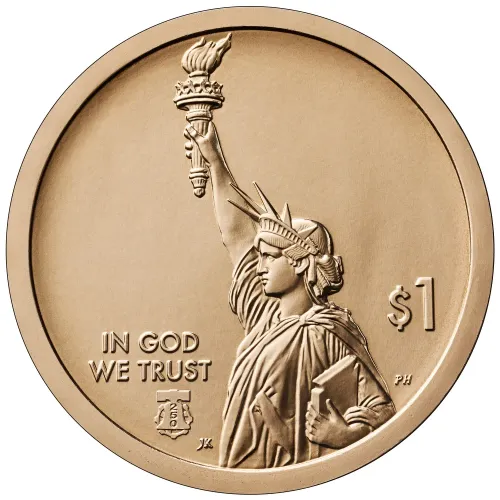
Every coin in the set shares the program’s standard obverse, Justin Kunz’s dramatic profile of the Statue of Liberty, sculpted by Phebe Hemphill, inscribed IN GOD WE TRUST and $1. The program’s privy mark, a stylized gear representing industry and innovation, appears as usual.
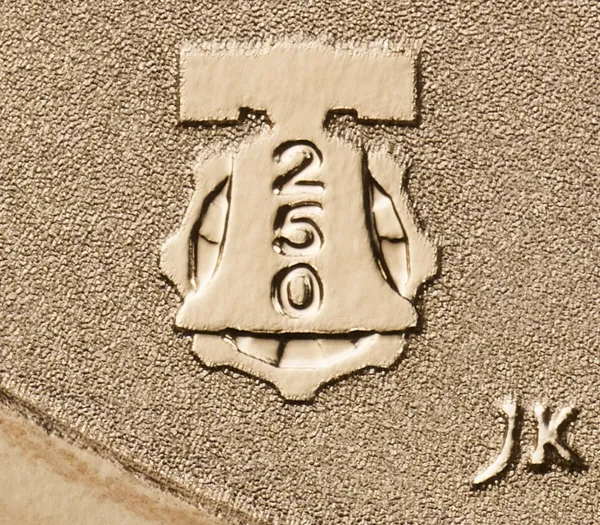
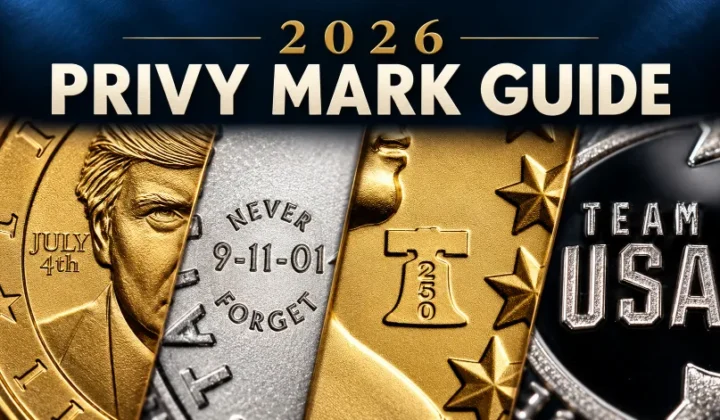
For 2026 the Mint has folded a Liberty Bell bearing the inscription 250 into that privy mark, marking the semiquincentennial of the nation’s founding. It ties the set to the wider anniversary program running through this year’s issues. The date, the S mintmark and E PLURIBUS UNUM are incused on the lettered edge.
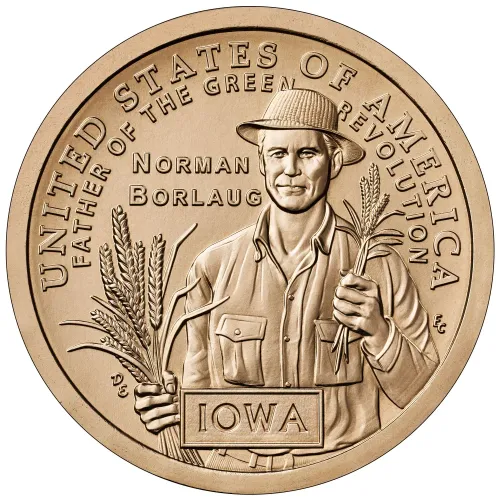
Iowa: Norman Borlaug and the Green Revolution
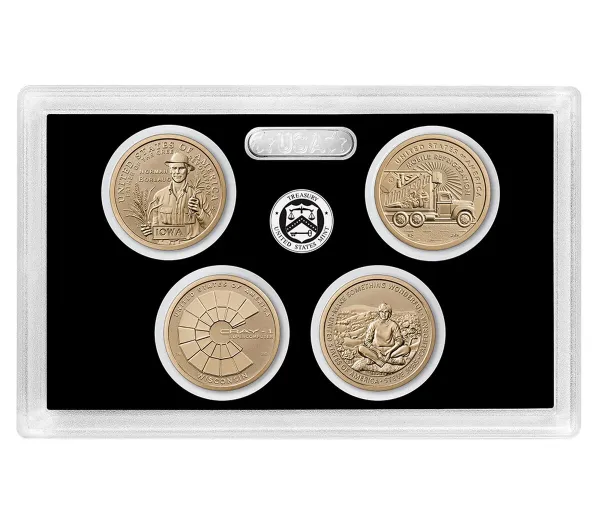
Don Everhart’s Iowa design, sculpted by Eric David Custer, shows Dr. Norman Borlaug holding a sheaf of wheat among the stalks he spent his career improving. Additional inscriptions read NORMAN BORLAUG and FATHER OF THE GREEN REVOLUTION.
Borlaug, a Nobel laureate, developed disease resistant, high yielding varieties of wheat, rice and maize. The Mint credits his decades of work with saving an estimated billion lives from starvation, a figure that gives this small dollar coin a larger claim on history than most in the series.
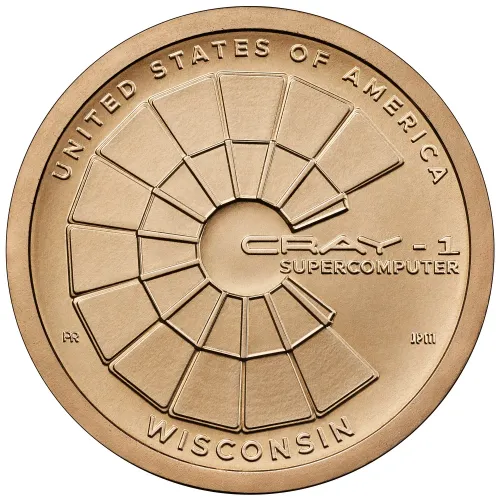
Wisconsin: the Cray-1 supercomputer
The Wisconsin reverse, by Paul Romano and sculpted by John P. McGraw, takes an aerial view of the Cray-1, built by Cray Research of Chippewa Falls. It was the first commercially successful supercomputer and held the title of world’s fastest from 1976 to 1982
Its curved, horseshoe shaped tower was not a styling choice. The circular layout shortened the wiring between components, which cut signal delay and raised speed. Romano’s design makes clever use of that geometry: seen from above, the machine forms a C, for Cray-1 and for computer. The additional inscription reads CRAY-1 SUPERCOMPUTER. The Cray-1 went on to serve in climate and weather prediction, cryptography, nuclear research and pharmacology.
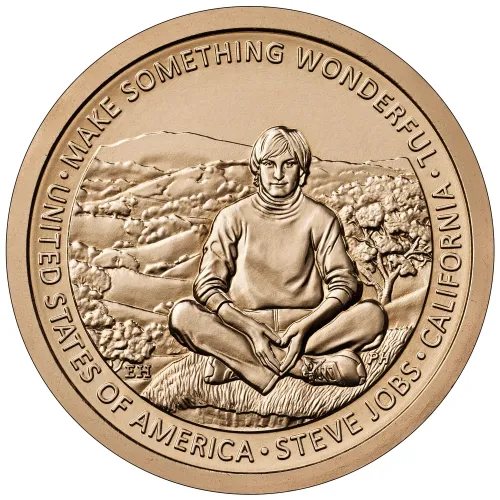
California: Steve Jobs on a Northern California hillside
Elana Hagler’s California design, sculpted by Phebe Hemphill, is the most personal of the four. It shows a young Steve Jobs seated before rolling, oak covered hills, caught in a moment of reflection. The Mint describes the scene as showing how that landscape shaped his ambition to make complex technology feel intuitive and natural.
The additional inscriptions read STEVE JOBS and MAKE SOMETHING WONDERFUL. The Mint’s own copy is careful on the point of credit: Jobs is presented not as the sole inventor of the personal computer, but as the figure who put the mainstream user at the center of it, from the Apple Macintosh to the iPhone.
Minnesota: the truck that kept food cold
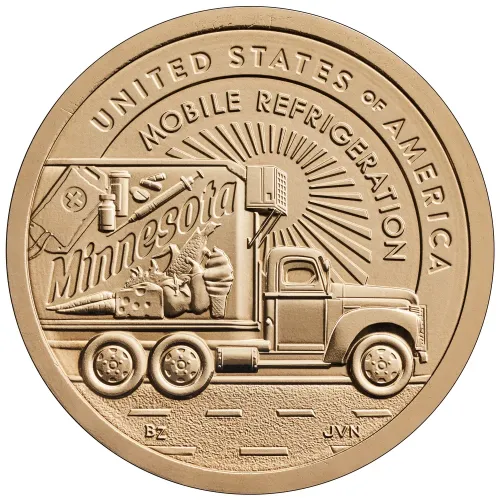
Beth Zaiken’s Minnesota design, sculpted by Joseph V. Noorigian according to the Mint’s specifications, depicts a 1940s era truck with an early front mounted refrigeration unit. The icons along its side represent the temperature sensitive cargo that the invention allowed to travel long distances. The additional inscription reads MOBILE REFRIGERATION.
Before the late 1930s, perishable goods moved packed in salt and ice. According to the Mint, Frederick McKinley Jones developed the first mobile refrigeration unit in 1938, and his improved Model C design received its patent in December 1943. Of the four designs, this is the one most likely to send a casual buyer to look up the story behind it, which is precisely what the program does best.
At a glance
| State | Reverse subject | Reverse designer | Reverse sculptor | Additional inscription(s) |
|---|---|---|---|---|
| Iowa | Dr. Norman Borlaug | Don Everhart | Eric David Custer | NORMAN BORLAUG; FATHER OF THE GREEN REVOLUTION |
| Wisconsin | Cray-1 supercomputer | Paul Romano | John P. McGraw | CRAY-1 SUPERCOMPUTER |
| California | Steve Jobs | Elana Hagler | Phebe Hemphill | STEVE JOBS; MAKE SOMETHING WONDERFUL |
| Minnesota | Mobile refrigeration | Beth Zaiken | Joseph V. Noorigian | MOBILE REFRIGERATION |
All four coins are struck at San Francisco in reverse proof finish, with frosted fields and mirror-like devices. Each is a manganese brass clad coin (6% zinc, 3.5% manganese, 2% nickel, balance copper) weighing 8.1 grams, measuring 1.043 inches (26.49 mm) across, with a lettered edge. The set comes in a clear lens with the Mint’s Certificate of Authenticity, under item number 26GC.
What the 2026 set means for collectors
The reverse proof format remains the only way to obtain these four designs with the inverted finish, and for set builders the 2026 American Innovation Reverse Proof Set is a necessary entry regardless of price. What has changed is the arithmetic. At $60.00 and with nearly 100,000 sets authorized, this is no longer the inexpensive year end afterthought it has been in previous years. The designs, a Nobel laureate, a record breaking computer, Steve Jobs and the refrigerated truck, are strong enough to carry broader interest. Whether that interest stretches to twice the price will be clear soon after noon on October 13.
Frequently asked questions
What is the 2026 American Innovation Reverse Proof Set? It is a four-coin set of 2026 American Innovation $1 coins struck in reverse proof finish at the San Francisco Mint. The coins honor Iowa (Dr. Norman Borlaug), Wisconsin (the Cray-1 supercomputer), California (Steve Jobs) and Minnesota (mobile refrigeration).
When and where can I buy it? The United States Mint opens orders on October 13, 2026, at noon Eastern Time, through its website and customer service line. The item number is 26GC.
How much does the 2026 set cost? The set is priced at $60.00. The 2025 American Innovation Reverse Proof Set launched at $32.25 in December 2025, so the 2026 edition is roughly 86 percent more expensive at release, reflecting the Mint’s general price increase across its numismatic products in early 2026.
How many sets can I order, and how many will be made? Orders are limited to two sets per household. The Mint has set a mintage limit of 99,792 sets, close to double the 2025 set’s limit of 50,028.
What does “reverse proof” mean? On a standard proof coin the fields are mirrored and the design is frosted. A reverse proof inverts that: the fields are frosted and the raised design has a mirror-like finish, giving a strong contrast from a different angle.
What is the Liberty Bell privy mark on the 2026 coins? The program’s obverse always carries a privy mark of a stylized gear. For 2026 that privy mark also includes a Liberty Bell with the inscription “250,” marking the semiquincentennial of the nation’s founding.
Are the coins silver or gold? Neither. They are golden colored dollar coins made of manganese brass clad on copper, with an overall composition of 6% zinc, 3.5% manganese, 2% nickel and the balance copper. Each weighs 8.1 grams.
Who designed the Steve Jobs dollar coin? The California reverse showing Steve Jobs was designed by Elana Hagler and sculpted by Phebe Hemphill. It carries the inscriptions “STEVE JOBS” and “MAKE SOMETHING WONDERFUL.”