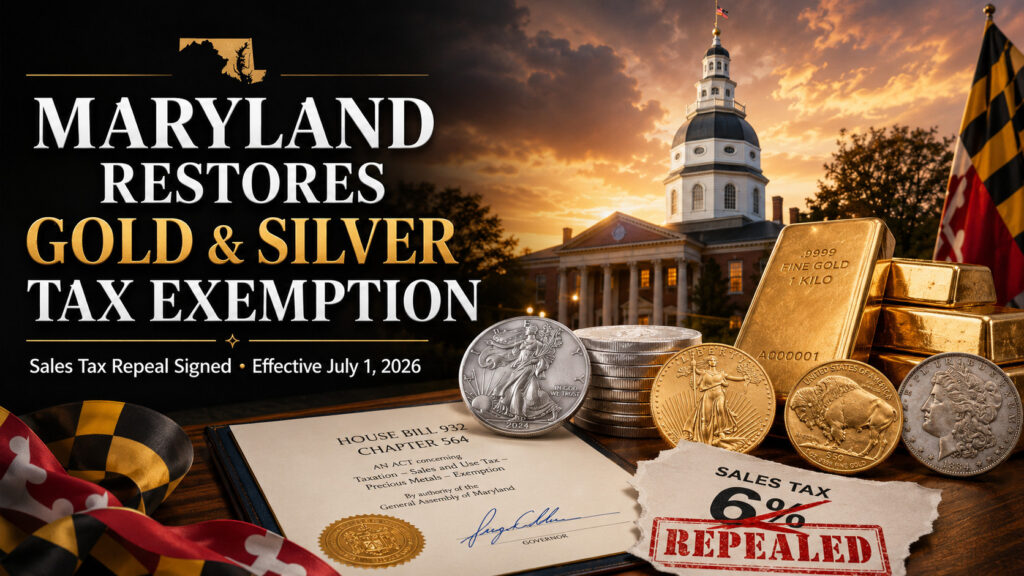
On May 26, 2026, Governor Wes Moore signed legislation restoring Maryland’s longstanding sales tax exemption on gold and silver, closing the book on one of the most controversial tax changes the precious metals trade has seen in years. The new exemption takes effect July 1, 2026.
The reversal undoes a 2025 change that had narrowed the exemption to a single location, qualifying purchases over $1,000 were tax-free only if the sale took place at the Baltimore Convention Center. Everywhere else in the state, a routine bullion purchase suddenly carried Maryland’s 6% sales tax. For a year, that quirk turned an ordinary coin shop transaction into a competitive disadvantage.
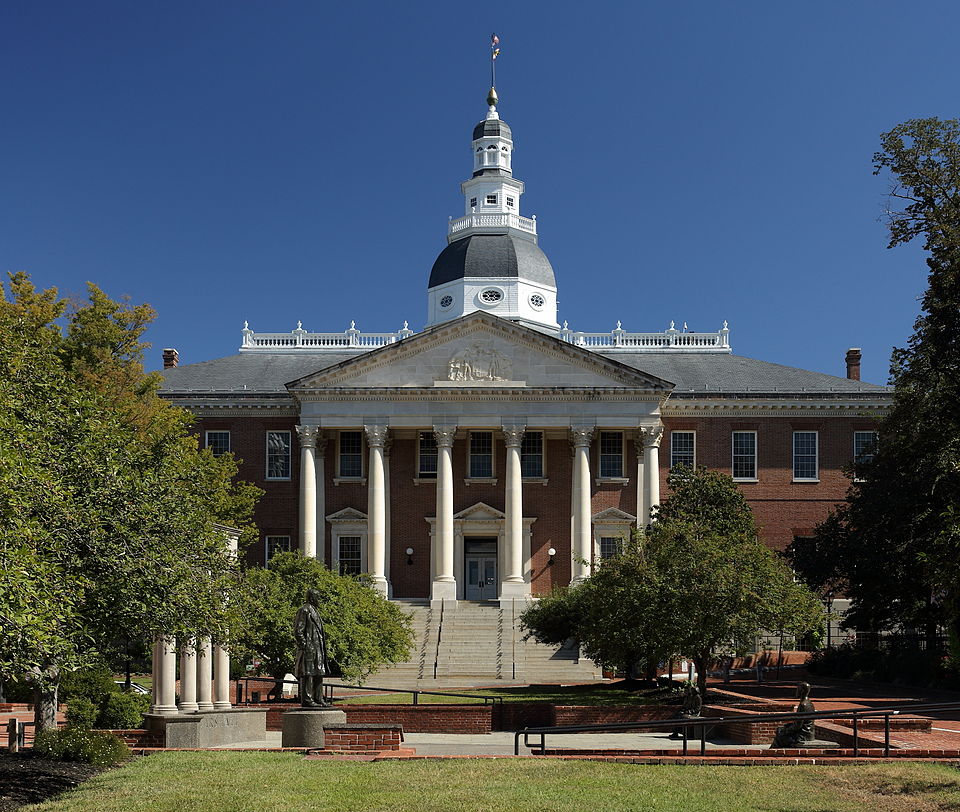
How Maryland Became an Outlier
Before 2025, Maryland exempted qualifying precious metals purchases over $1,000 statewide, in line with the national norm. The change last year put Maryland at odds with 44 other states and sent its standing on the Sound Money Index tumbling to 47th place. The practical effect on dealers was immediate and measurable.
Brett Stelfox, owner of Golden Eagle Coins in Laurel, testified that the tax produced roughly a 72% drop in showroom traffic almost as soon as it took hold. The mechanism was no mystery: on a single one-ounce gold bar near $5,000, the tax could add about $300, and buyers simply drove to Pennsylvania, Delaware, or West Virginia to avoid it. Some Maryland businesses reported losses running into the hundreds of thousands of dollars.
The Coalition That Turned It Around
What distinguishes this story is the organized response. Maryland dealers formed the Sound Money Association of Maryland specifically to lobby for repeal, while the Sound Money Defense League secured the introduction of the measures, testified at hearings, and helped marshal grassroots support behind them.
The legislators credited that turnout directly. Senate sponsor Sen. Jennings (R-7) noted that the bill would not have passed without the business owners and advocates who showed up to testify, it was their testimony before the Budget and Taxation Committee, he said, that moved the legislature to reverse course. House sponsor Del. Hartman (R-38C), who carried House Bill 500, framed the effort as saving the state’s precious metals businesses outright.
A Repeal With an Asterisk
The restored exemption is not a clean slate. Senate Bill 309 and House Bill 500 reinstated the exact pre-existing structure, including the so-called “poor tax” threshold that exempts only purchases above $1,000, leaving smaller buyers to pay full sales tax. Only California, Massachusetts, and New York maintain a comparable provision. Efforts to abolish the tax entirely fell short of that goal.
Still, the broader trend is unmistakable. With Maryland back in the fold, 45 states now fully or partially exempt precious metals from sales tax, a shift recently joined by Kentucky, New Jersey, Florida, and Connecticut. That leaves only Maine, Washington, New Mexico, Vermont, Hawaii, and the District of Columbia outside the consensus.
What It Means for Collectors
For Maryland’s coin shops and bullion sellers, July 1 marks the end of a year in which geography decided whether a sale was taxable. The deeper lesson is about how quickly a single legislative change can hollow out a local market, and how a focused dealer coalition can reverse it inside a single session. Maryland’s score on the Sound Money Index is expected to climb back from 47th, but the more durable takeaway is that the hobby’s trade infrastructure proved it could organize, testify, and win when its livelihood was on the line.