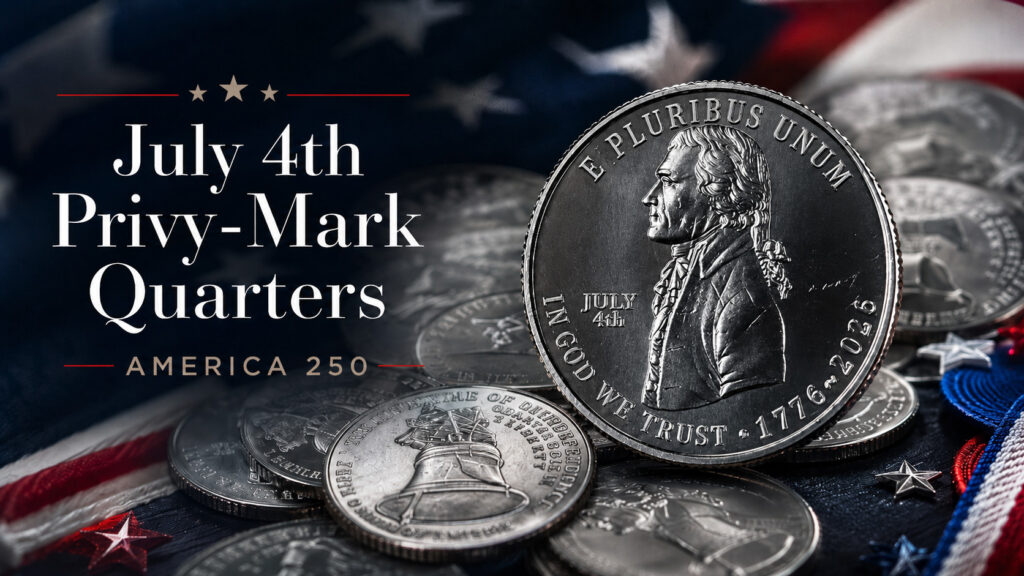
The U.S. Mint has found a way to make a coin nobody can buy. On June 23, the Mint announced it will strike 250,000 limited edition 1776 ~ 2026 Declaration of Independence quarters carrying a special “July 4th” privy mark, then scatter them into circulation nationwide ahead of Independence Day. There will be no product page, no order limit, and no two minute sellout. The only way to own one is to find it in your change.
That single decision, release, don’t sell, is what separates this issue from everything else in the Semiquincentennial program. The Mint is manufacturing a circulating rarity on purpose, and handing the search to the public.
A Privy Mark, No Mint Mark
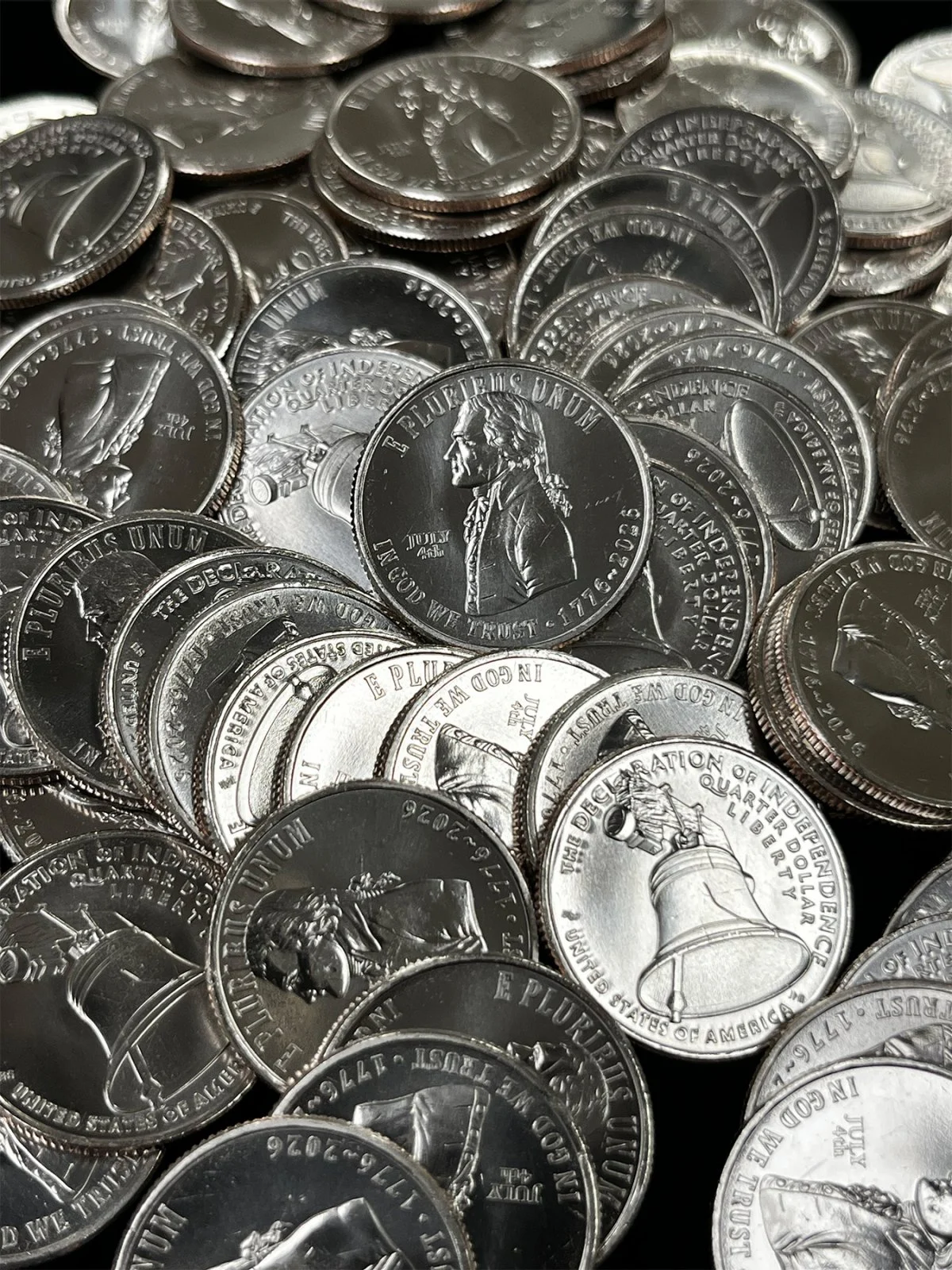
The mechanics are deliberately simple. Unlike the standard Philadelphia and Denver strikes, the privy marked quarters will carry no mint mark, distinguished instead by the “July 4th” privy mark added to the design. The Mint will mix them, at random, with ordinary 2026 Declaration of Independence quarters and ship them to banks and financial institutions across the country in time for the Fourth.
“This is more than a coin; it’s a defining moment in our nation’s story,” said Mint Director Paul Hollis, who framed the issue as something meant to be shared, saved, and remembered rather than catalogued and stored. It is, in effect, a coin designed to enter the wild and disappear into millions of pockets, tills, and coin jars before most people ever learn it exists.
The Numbers Behind the Hunt
The scarcity here is real, and the math explains why. Through May, the Mint had already struck 89.8 million standard Declaration of Independence quarters, and production trends across the first two 2026 designs suggest the final mintage for this issue could clear 200 million. Against that flood, 250,000 privy marked coins is a rounding error, roughly one in every eight hundred Declaration quarters, assuming the design lands near that projected total.
The contrast is the whole appeal. One version pours out by the hundred million; the other slips in unseen, a fraction of a percent of the run, indistinguishable until you turn it over and catch the privy. For collectors chasing the scarce variant of a one year design, that gap between the common and the elusive is exactly the kind of spread that drives a hunt.
Found, Not Bought
The release also lands as a pointed counterpoint to how the rest of this program has gone. The standard Declaration of Independence quarter entered circulation on June 1 as the third of five 2026 designs. When the Mint offered collector rolls and bags on June 16, a two roll Philadelphia and Denver set at $56, and 100 coin bags from each facility at $63, the two roll sets were gone in minutes, the bags in just over a quarter of an hour.
The privy mark quarters sidestep that entire scramble. There is nothing to add to a cart and nothing to lose to a faster checkout. A collector with deep pockets and a teenager with a fistful of laundry quarters have, on paper, the same odds. The Mint has done this kind of thing before: the circulation only West Point mintmarked quarters of 2019 and 2020 set off a genuine national treasure hunt, and the “July 4th” coins are clearly built to recapture that lightning.
The Coin Itself
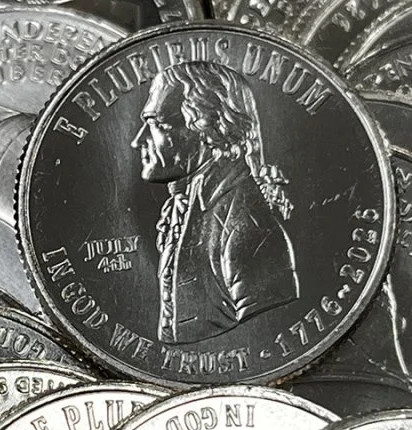
The privy marked piece carries the standard 2026 design. The obverse depicts Thomas Jefferson, author of the Declaration and the nation’s third president, beside the dual date 1776 ~ 2026. The reverse shows the Liberty Bell mid ring, its famous crack plainly visible, with the inscriptions UNITED STATES OF AMERICA, LIBERTY, QUARTER DOLLAR, and THE DECLARATION OF INDEPENDENCE.
It is the third entry in a five coin arc that began with the Mayflower Compact and Revolutionary War designs and will close with the U.S. Constitution and Gettysburg Address quarters. The whole program runs under the Circulating Collectible Coin Redesign Act of 2020, the law that authorized this year long procession of founding era commemoratives for the country’s 250th.
What Happens Next
Once these quarters reach the banks, they belong to chance. Some will be plucked out within hours by collectors searching rolls; most will circulate quietly, spent and re spent by people who never look twice. That is the gamble the Mint has built into the design, a deliberately rare coin set loose in the most ordinary place imaginable, where its scarcity means nothing until someone happens to notice. For the hobby, the appeal isn’t really the 250,000 figure. It’s the idea that, for a few weeks this summer, the next quarter in your change could be one of them.