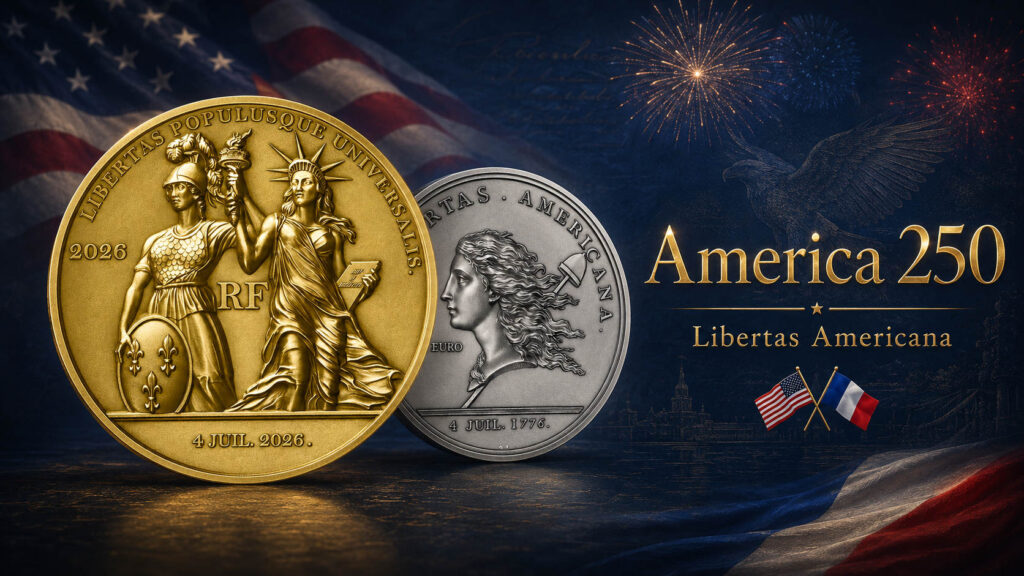
In 1783, a French engraver named Augustin Dupré finished a medal that Benjamin Franklin had dreamed up entirely on his own, no act of Congress, no committee, just a diplomat in Paris who wanted to give American liberty a face. It was struck at the Monnaie de Paris. Two hundred and forty three years later, the same mint has gone back to that medal and rewritten its ending.
To mark the 250th anniversary of American independence, the Monnaie de Paris has issued a five piece Libertas Americana collection for 2026, a reinterpretation of Franklin’s original allegory, and the closing chapter of a “History of American Independence” series the mint launched in 2020. The pieces run from an accessible two ounce silver coin to a half kilo silver showpiece and a 155 gram gold rarity limited to fifty examples worldwide. They are scheduled to ship from 2 July 2026, two days before the anniversary they commemorate.
The medal that started it
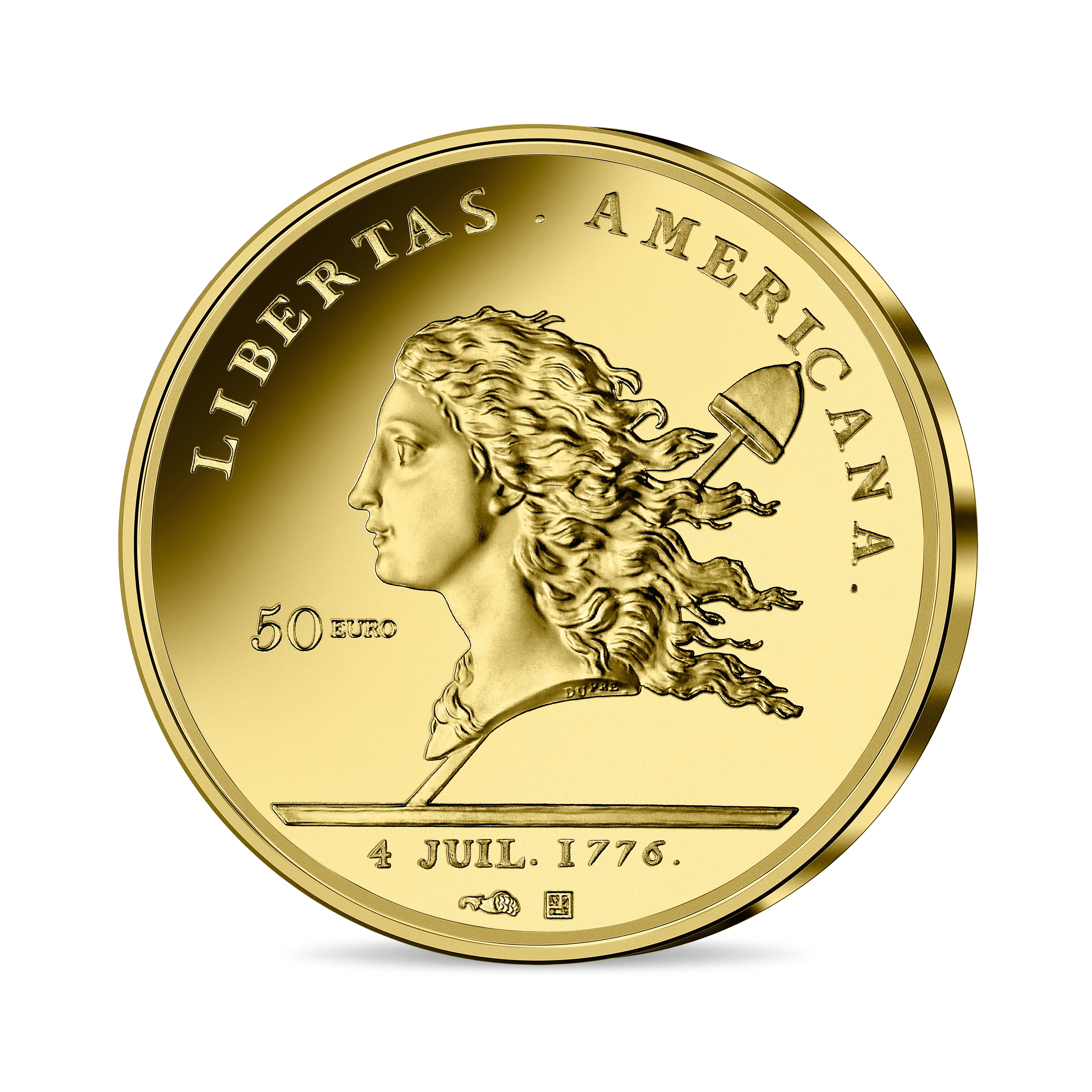
The original Libertas Americana is one of the most celebrated objects in American numismatics, and it was never an American project at all. Franklin commissioned it privately while serving as the young republic’s minister in France, intent on thanking the French for support that he felt Congress had been too slow to acknowledge. He set the program, the French painter Esprit Antoine Gibelin shaped the concept, and Dupré cut the dies. The first medals came off the presses at the Paris Mint in 1783.
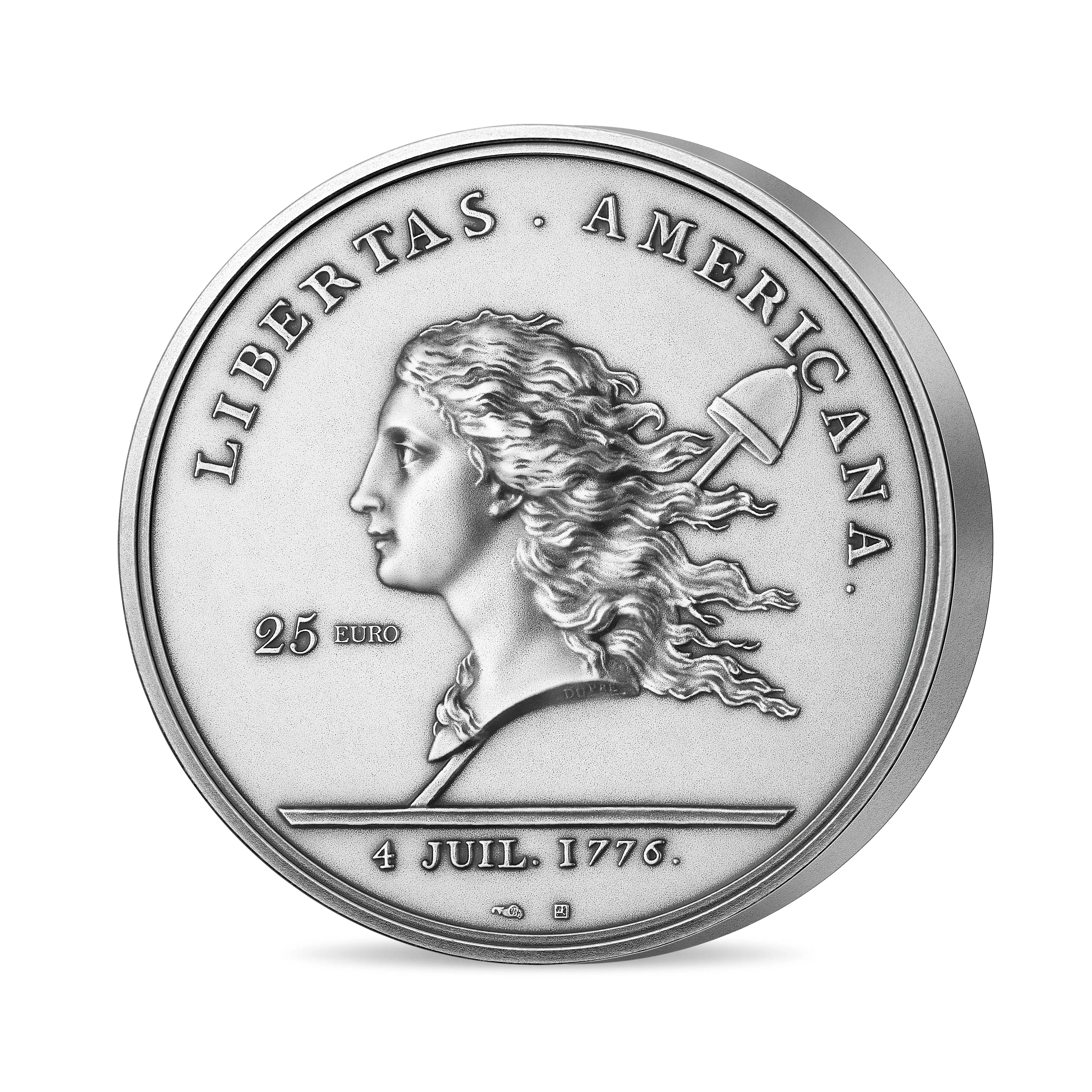
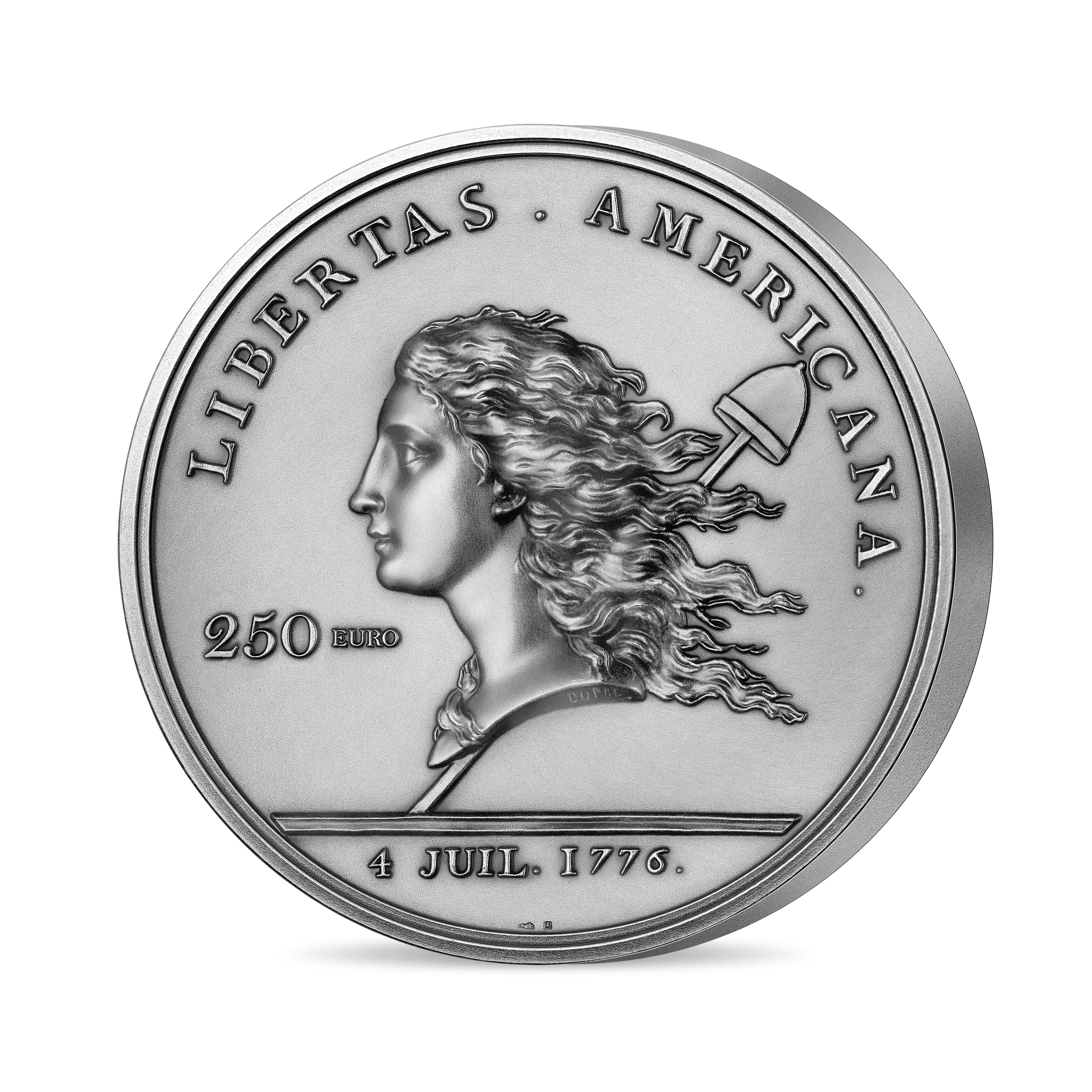
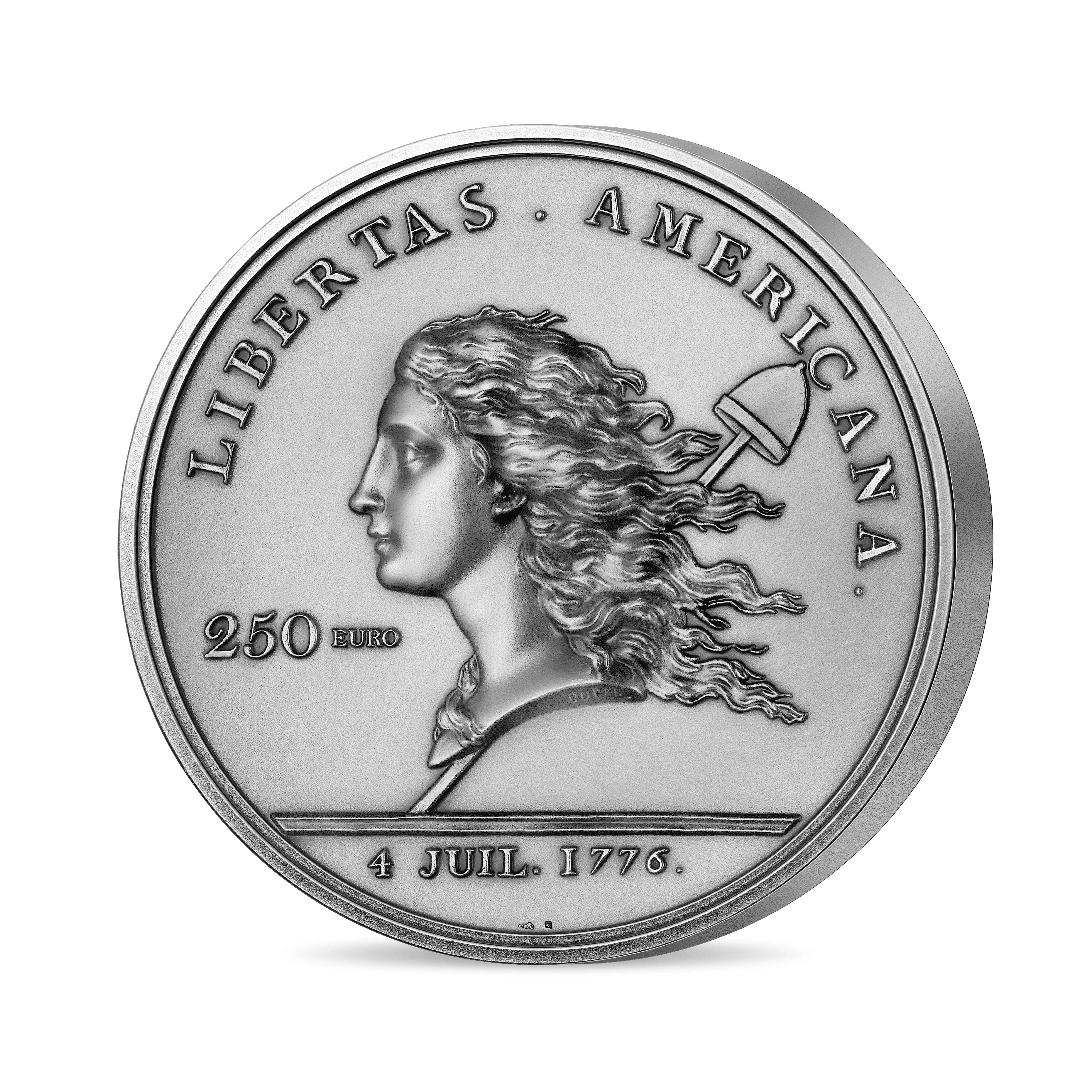
The obverse carried a head of Liberty with her hair streaming behind her, a freedman’s cap on a pole at her back, and the date of the Declaration in the legend. That image of a confident young woman charging into the future went on to shape some of the first coinage of the United States, echoing through the half cents and cents of the 1790s.
The reverse is where the drama lived. At its center, an infant Hercules, the United States, strangled two serpents, each one a defeated British army: Burgoyne’s at Saratoga and Cornwallis’s at Yorktown. Beside him stood Minerva, the goddess representing France, her shield marked with three fleurs de lis, holding back a snarling leopard whose tail curled between its legs in cowardice. The leopard was Britain. Franklin reserved two gold strikes for King Louis XVI and Queen Marie Antoinette; both are believed to have vanished in the French Revolution a few years later. The medal told the world what American liberty looked like, and it did so in the language of myth.
A scene rewritten
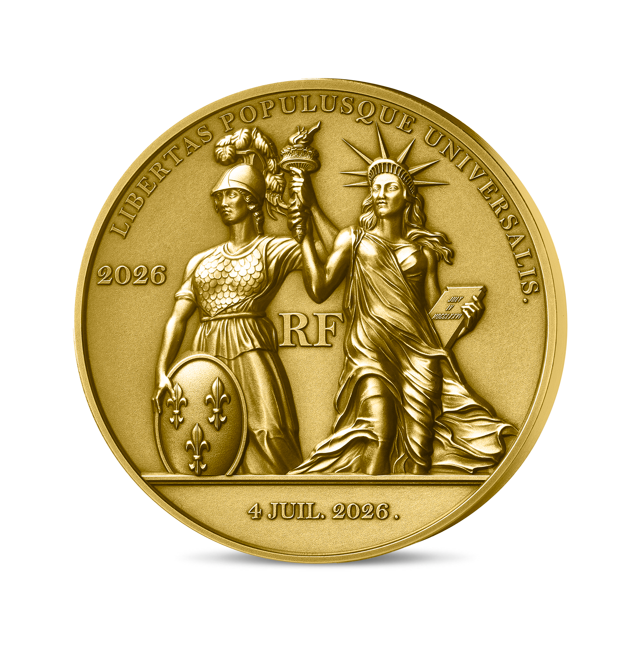
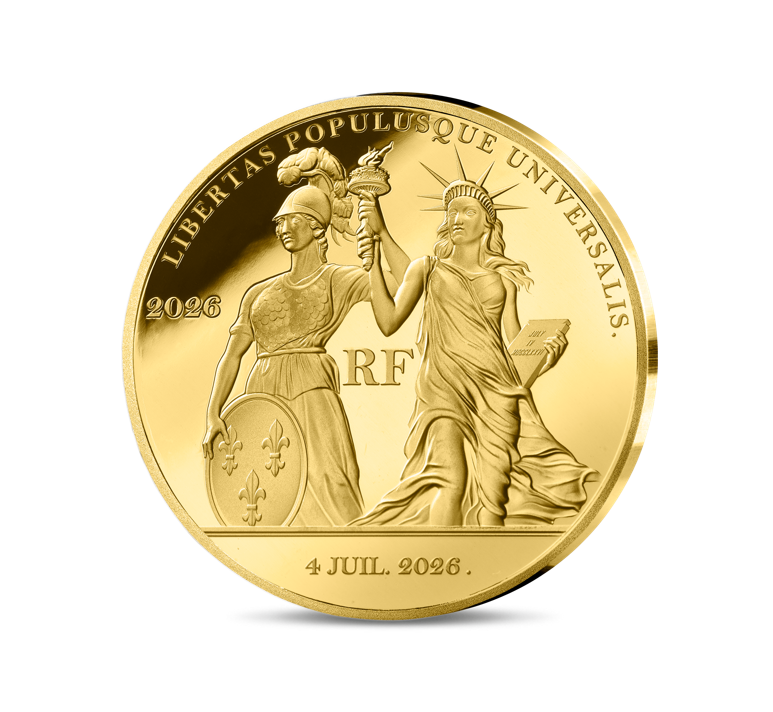
The 2026 reinterpretation keeps Minerva and gives her a partner. Gone is the infant in the cradle, gone are the serpents, and, most tellingly, gone is the leopard. The Monnaie de Paris frames the change plainly: the British threat is no longer part of the story, so the British threat is no longer in the picture.
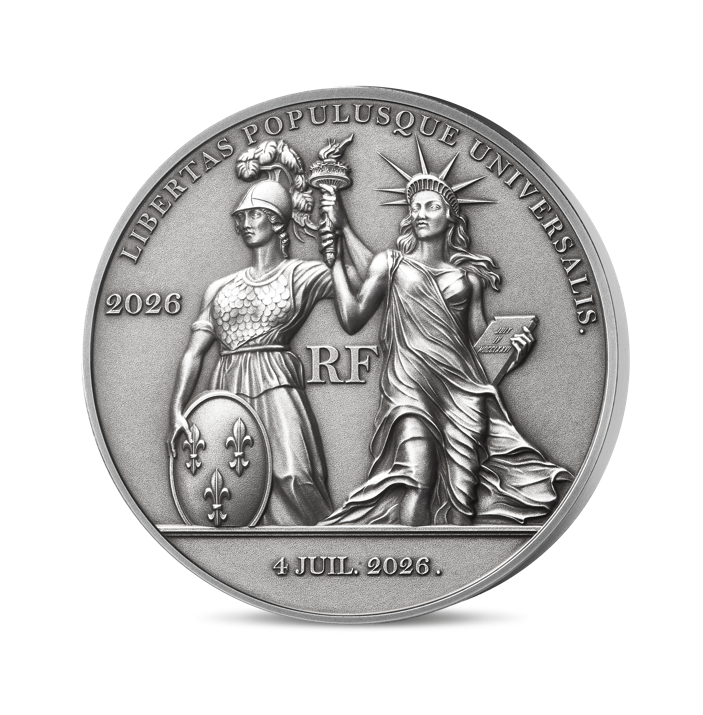
In its place, two figures stand side by side as equals. Minerva still represents France, wearing the same three fleur de lis shield, helmet, and breastplate she carried on Franklin’s medal. Lady Liberty now stands for the United States, holding the tablet of the Statue of Liberty, inscribed with the date of independence in Roman numerals: JULY IV MDCCLXXVI. Together the two of them hold a single flame of liberty and look out, the mint says, serenely toward the future. The allegory that once depicted a nation being defended now depicts two nations standing together.
The composition is ringed by the motto LIBERTAS POPULUSQUE UNIVERSALIS, “Freedom and Universal People”, with the date 4 July 2026 struck below the figures. The reverse of the collection is shared with the Monnaie de Paris’s 2023 Libertas Americana issue, tying the anniversary release back to the series’ earlier tribute.
The lineup
Five pieces make up the 2026 collection, four in an antique finish and one in proof:
| Coin | Metal & finish | Weight | Diameter | Mintage | Face value | Price |
|---|---|---|---|---|---|---|
| Silver, antique | .999 silver | 62.21 g (2 oz) | 41 mm | 2,000 | €25 | €410.00 |
| Silver, antique | .999 silver | 500 g | 85 mm | 250 | €250 | €3,255.00 |
| Gold, proof | gold | 7.78 g | 22 mm | 500 | €50 | €1,350.00 |
| Gold, antique | gold | 31.1 g (1 oz) | 34 mm | 250 | €200 | €5,760.00 |
| Gold, antique | gold | 155.5 g | 50 mm | 50 | €500 | €28,200.00 |
The half kilo silver coin is the showpiece of the set, an 85 mm canvas that lets Dupré’s reimagined figures breathe. The 155.5 gram gold piece, capped at fifty examples, is the rarity collectors will chase. At the other end, the two ounce silver coin and the single proof, the only mirror finish piece in the group, are the accessible entry points, and the proof’s 500 piece mintage makes it the most attainable gold in the collection.
One housekeeping note for the record: the one ounce gold coin is listed on the Monnaie de Paris site under a “500€ Gold coin” title, while its own specification sheet gives a €200 face value. Collectors cataloguing the set should expect that discrepancy.
A six year road to the anniversary
This release does not arrive out of nowhere. The Monnaie de Paris began its “History of American Independence” series in 2020 with the arrival of La Fayette in Boston, then moved year by year through Washington Before Boston in 2021, the Great Seal of the United States in 2022, the Libertas Americana medal itself in 2023, the Battle of Cowpens in 2024, and Benjamin Franklin and the Winged Genius in 2025. The 2026 reinterpretation closes the loop, returning to the very medal that gave the series its emotional center.
It also sits within a broader Semiquincentennial program from the mint, which pairs the Libertas Americana strand with a separate Marquis de La Fayette George Washington collection, two threads, both pulling on the same Franco American history that runs back to 1776.
What it means
Franklin’s medal gave American liberty a face at the moment of the nation’s birth, and it did so from a French mint, in a French engraver’s hand, as a gesture of gratitude across an ocean. The 2026 reinterpretation marks the same friendship a quarter of a millennium on, no longer an infant under guard, but a figure standing as an equal beside the country that once defended it. That the Monnaie de Paris chose to retell its own most famous American story, rather than mint a new one, is the quiet point of the whole exercise. Some anniversaries call for invention. This one called for memory.