Forty years ago, a disused Beaux Arts railway station on the left bank of the Seine reopened as one of the most visited art museums in the world. In 2026 Monnaie de Paris marks that anniversary the only way a mint can, by pressing the building, its great clock, and the masterpieces hanging inside it into gold and silver. The new French Excellence – Musée d’Orsay collection runs from a 10 euro silver coin at €157 all the way up to a one kilo gold piece carrying a €5,000 face value and a mintage of just twelve, and it quietly closes a circle by reissuing the medal first struck for the museum’s 1986 inauguration.
It is less a product line than a portrait of a place, and a reminder that, as the Orsay’s own staff like to say, the most important work in the collection may be the building itself.
A series built on borrowed prestige
Since 2010, the French Excellence series has paired the engravers of Monnaie de Paris with France’s most recognisable luxury houses and cultural institutions, Cartier, Baccarat, Van Cleef & Arpels, Boucheron, Dior and Berluti among the maisons, the Louvre among the institutions, with Lacoste, Notre Dame and Lancôme on the more recent roster. The premise has stayed constant for fifteen years: take the savoir faire of the Mint and the identity of a French icon, and let the two talents meet on a coin.
For 2026 the partner is the Musée d’Orsay, and the occasion is its fortieth birthday. The museum opened to the public in December 1986, the culmination of a decade long campaign to save Victor Laloux’s 1900 railway station, built for that year’s Exposition Universelle and shuttered to mainline traffic by 1939, and convert it to a temple of nineteenth century art. The building’s transformation fell to the firm A.C.T. Architecture, while the interiors that visitors actually walk through were the work of the Italian architect Gae Aulenti. Both names matter here, because the collection takes its cues from exactly those two layers: the art on the walls and the architecture around it.
Beneath the glass roof: the obverse
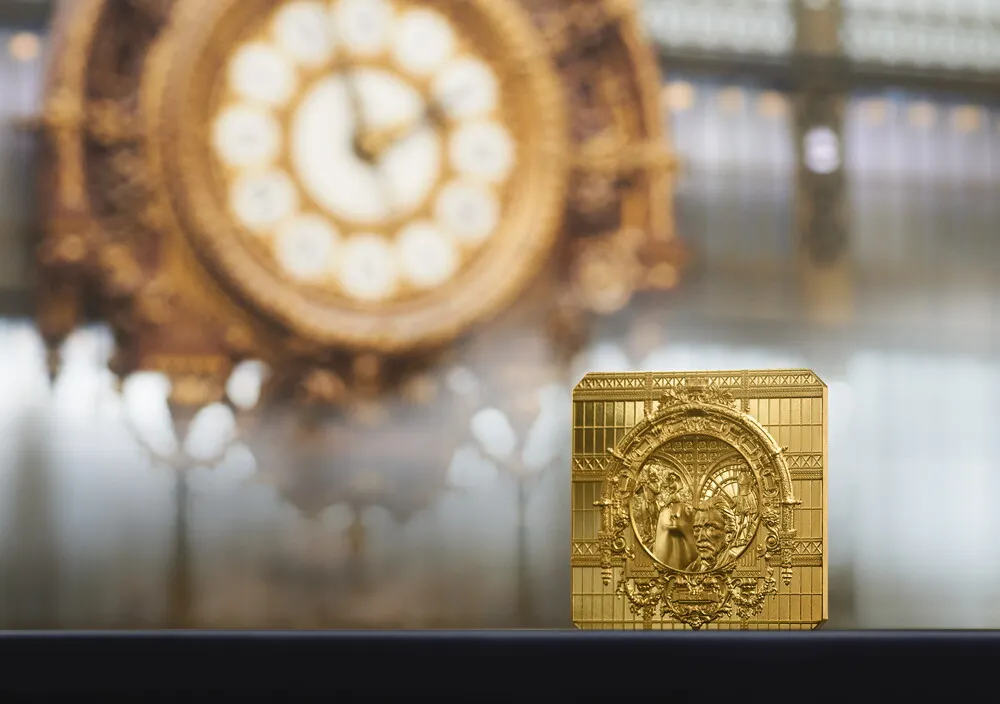
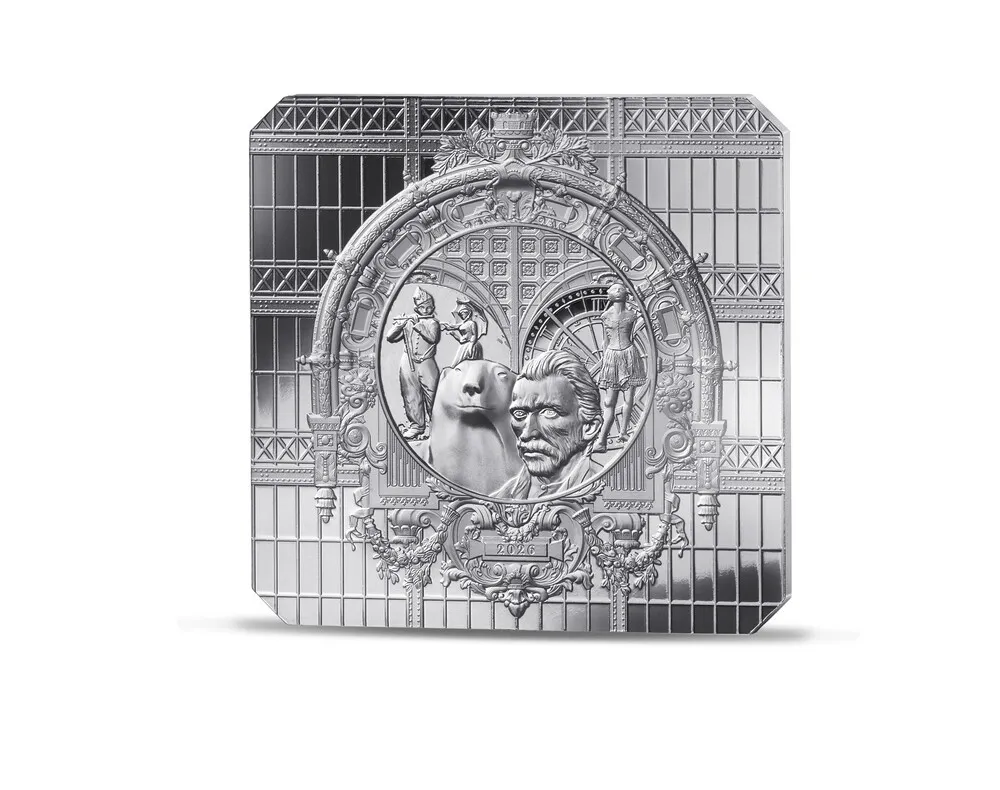
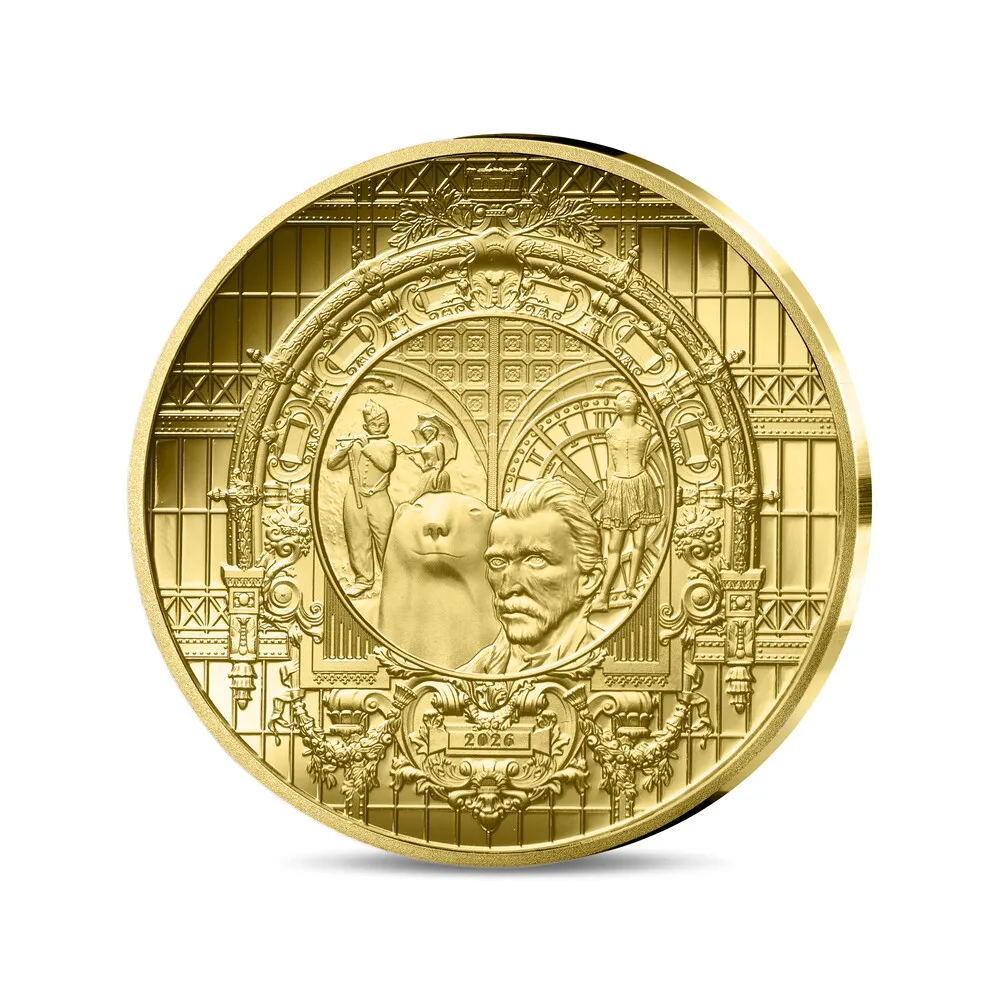
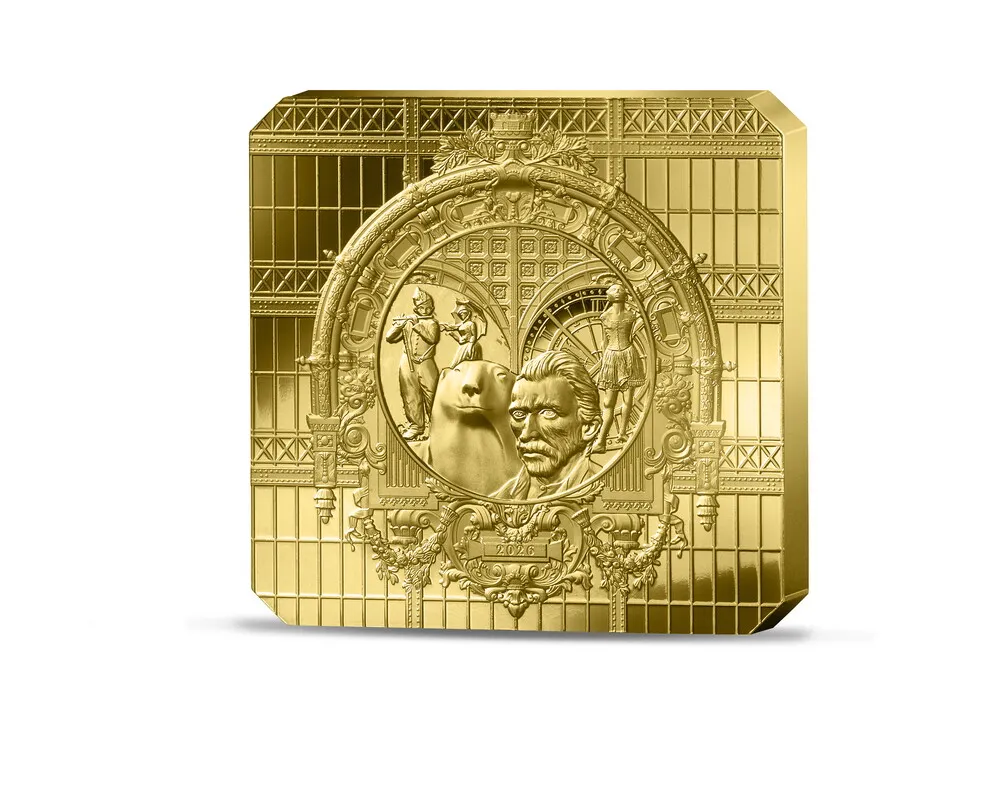
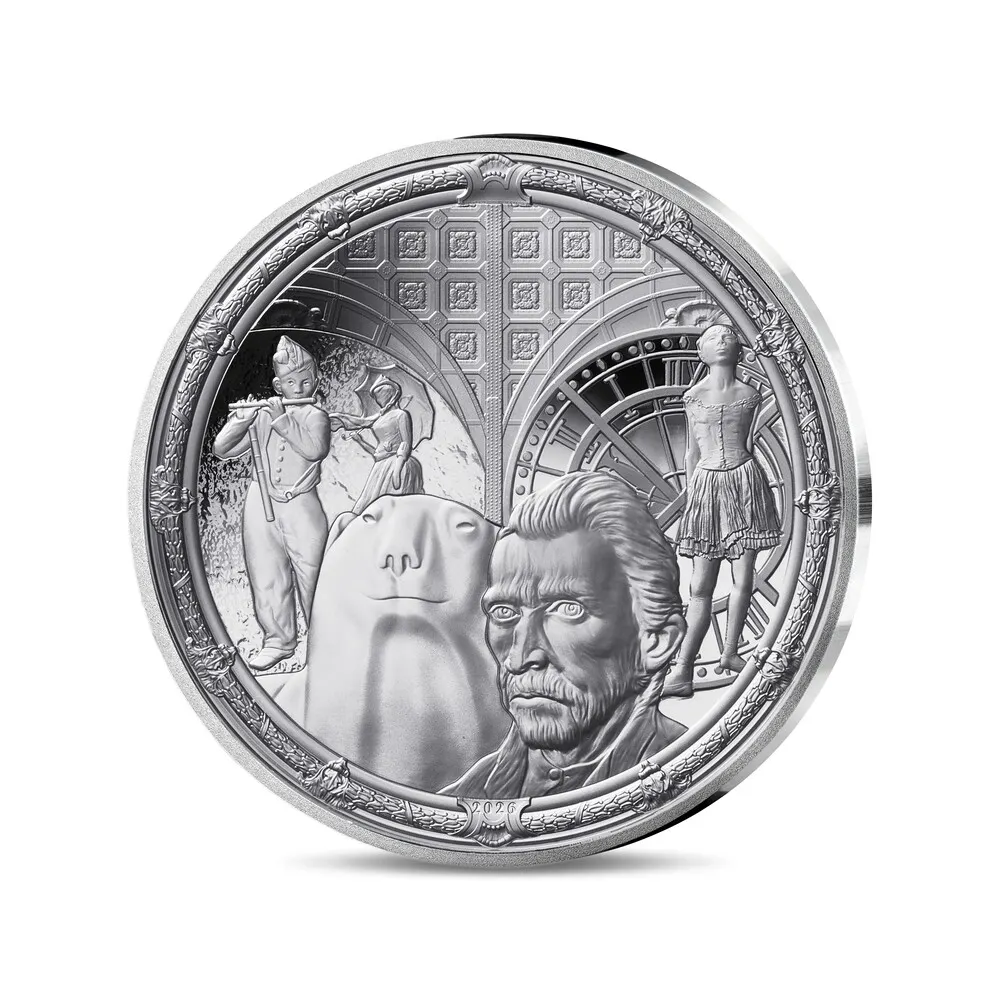
The obverse imagines the museum after hours, its masterpieces stepping out of their frames to discover the building together. François Pompon’s Ours Blanc, the great white bear, all polished curves and no detail, stands beside Vincent van Gogh’s Portrait de l’artiste, the self portrait that needs no caption. Behind them, Édouard Manet’s Le Fifre and Claude Monet’s Femme à l’ombrelle tournée vers la gauche fill out the scene, and Edgar Degas’s Petite danseuse de quatorze ans appears in her bronze tutu, posed inside the building in front of the large fifth floor clock.
That clock is the hinge of the whole design. Its glass face and iron numerals are one of the defining silhouettes of the Orsay, a working remnant of the station the building used to be, and the decorative elements of the obverse are folded into its frame rather than scattered loosely across the field. The effect is a single legible image instead of a montage: the museum as a cast of characters, gathered under the same hands of the same clock.
The nave overhead: the reverse
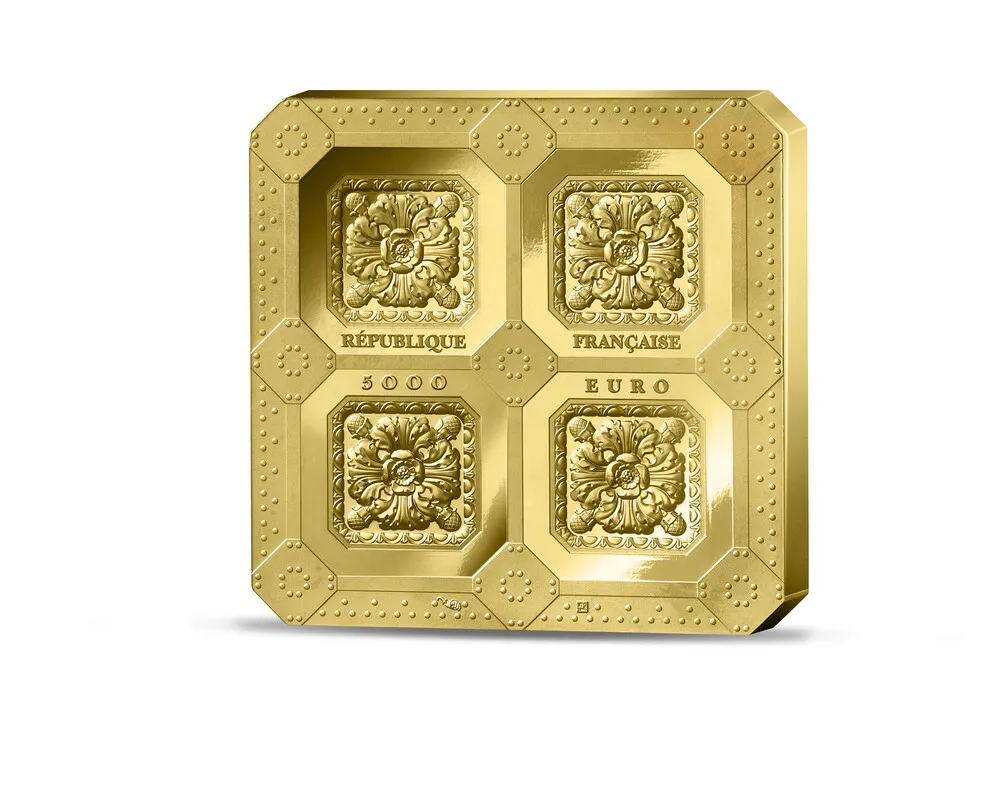
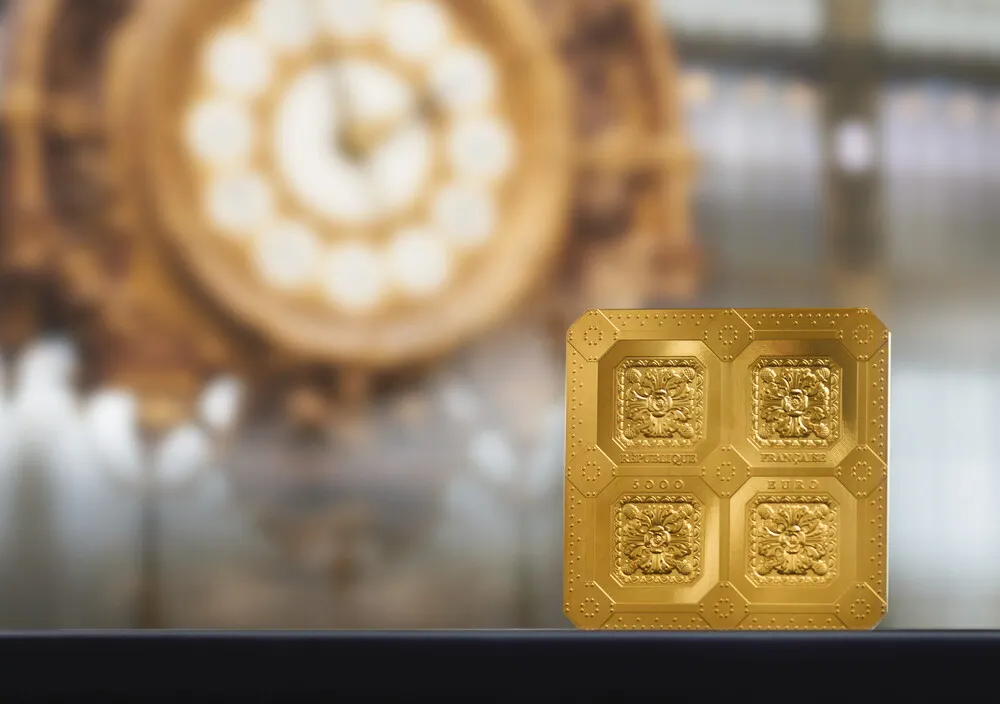
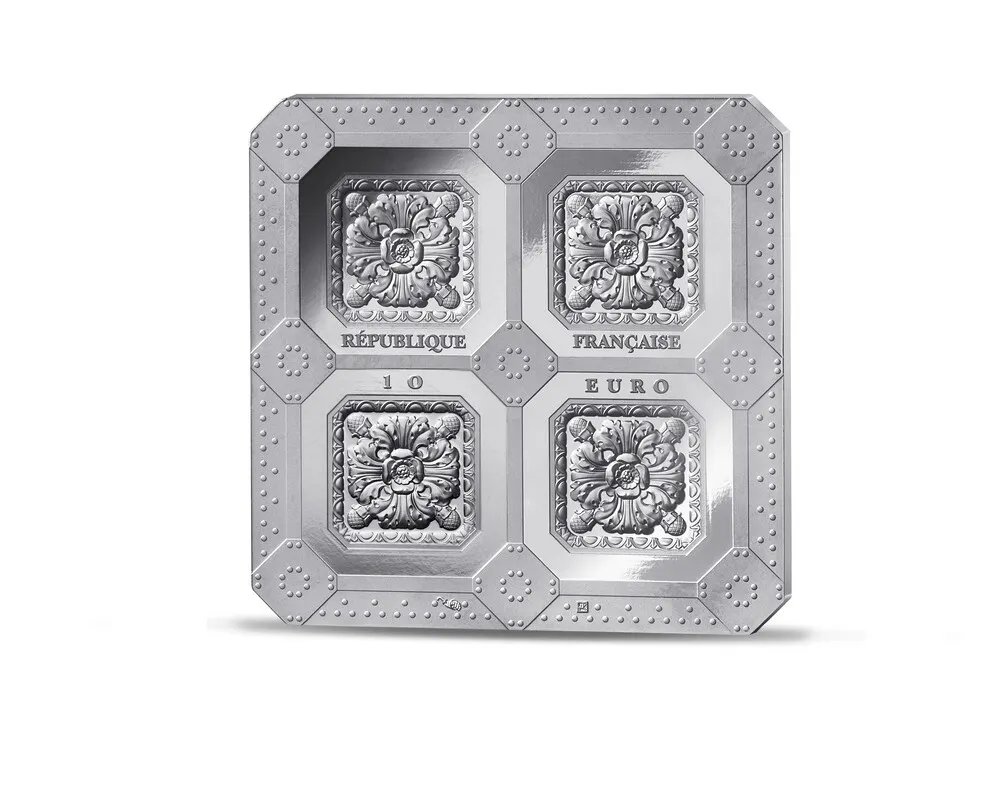
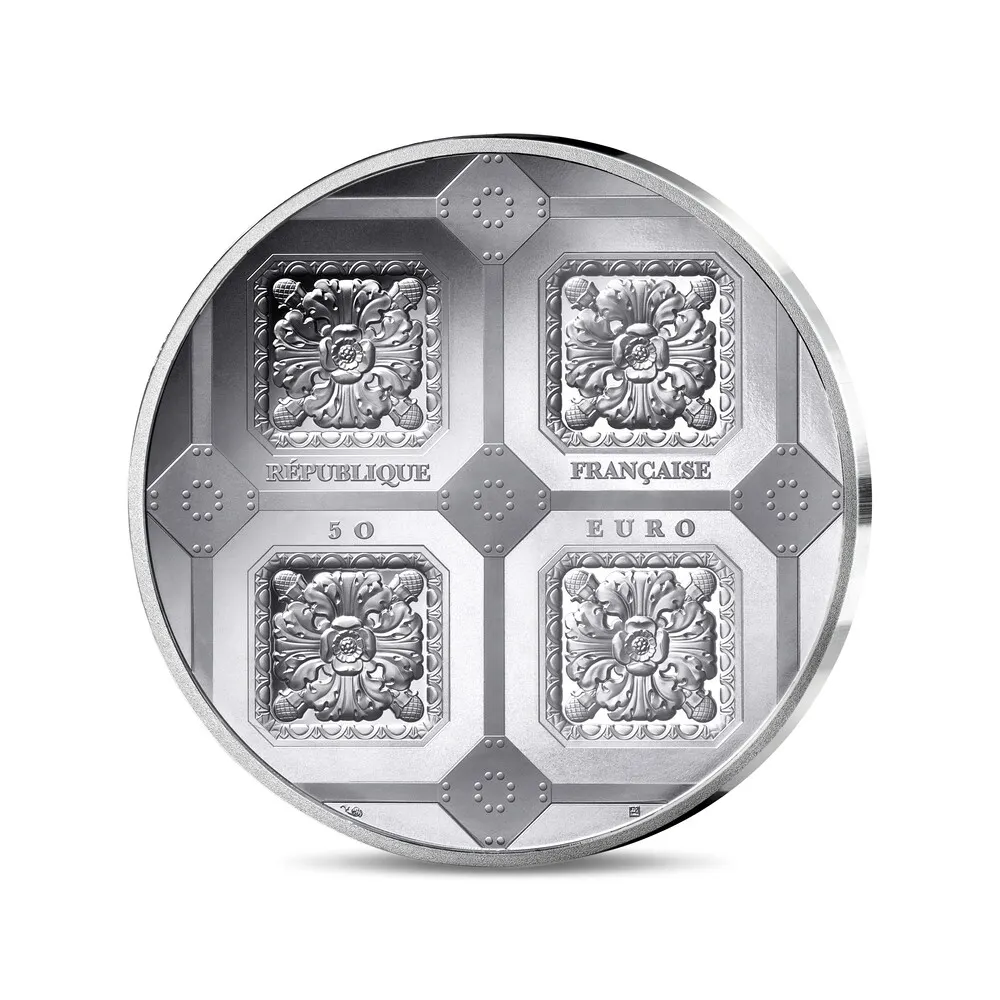
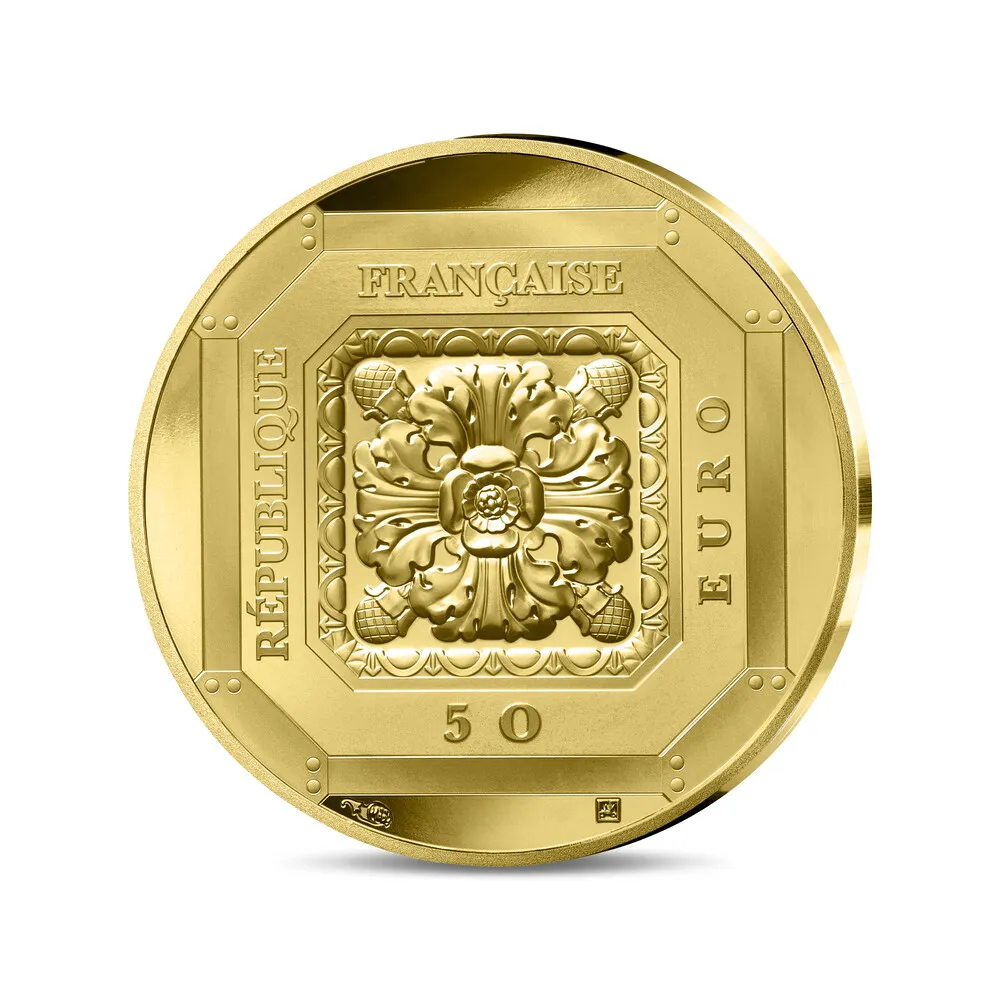
If the obverse is the collection, the reverse is the architecture. It lifts the eye to the coffered ceiling of the great nave, four flower adorned coffers, lined with rosettes and locked inside a riveted metal framework that has kept the rhythm of the old train shed unchanged since 1900. There is no attempt to prettify the industrial bones of the place. The rivets are the point. They are the evidence that this cathedral of Impressionism was, and structurally still is, a station.
It is a confident editorial choice to give an entire coin face to a ceiling. It works because the ceiling is the argument the whole collection is making: that at Orsay, the container and the contents are inseparable.
A collection in two metals
The range is where the Mint shows its hand, and the specifications carry the story rather than interrupt it. In silver, the entry point is the 10 euro coin in .999 fine metal, 22.2 grams, a 5,000 piece mintage at €157. Above it sits the 20 euro High Relief one ounce piece, 37 mm, 31.1 grams, capped at 3,000 and priced at €220, where the deeper strike lets the nave’s architecture cast real shadow. The silver tier tops out with the 50 euro five ounce coin: 50 mm, 155.5 grams of proof silver, 2,000 struck, €1,140.
The gold climbs the same staircase but with far steeper drops in mintage. A 50 euro quarter ounce coin (22 mm, 7.78 grams) opens the tier at €1,460 with 500 pieces. The 200 euro one ounce coin breaks format entirely, a square “shape” piece of 31.1 grams, limited to 200, at €5,760, its silhouette echoing the flagship to come. Then the 500 euro five ounce gold coin, 50 mm and 155.5 grams, restricted to just 50 examples at €28,900. Across the set the through line is consistent: the heavier the metal, the smaller the edition, until the numbers stop reading like a price list and start reading like a rarity table.
The flagship and its trunk
The piece the whole collection is built around is the 5,000 euro, one kilogram gold coin, a square format measuring 95 by 95 millimetres, struck to proof quality in an edition of twelve. At time of release it was already listed as unavailable, which tells you what you need to know about how twelve pieces move.
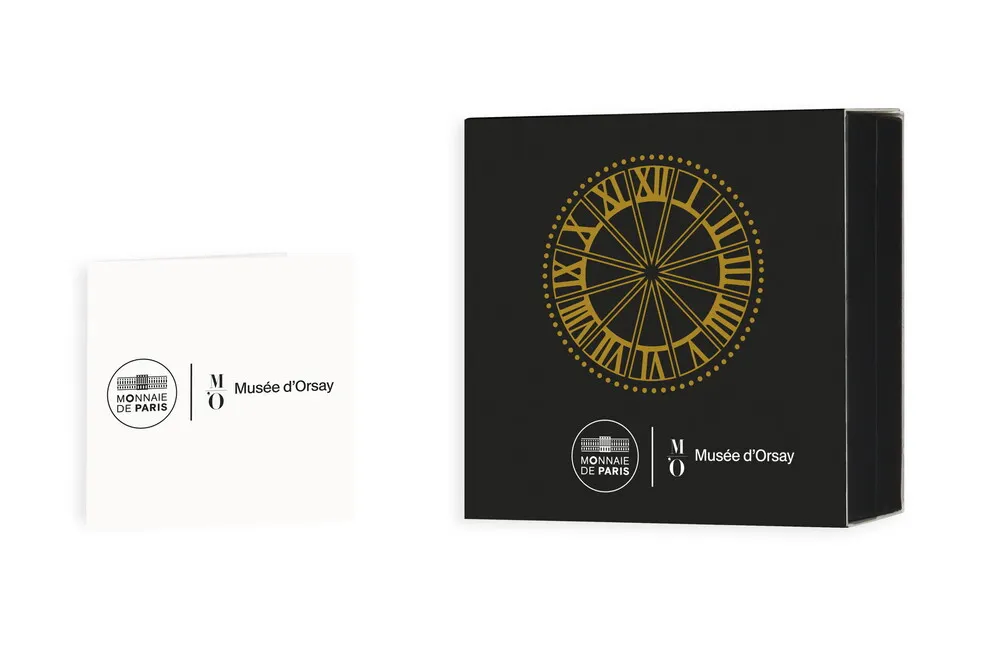
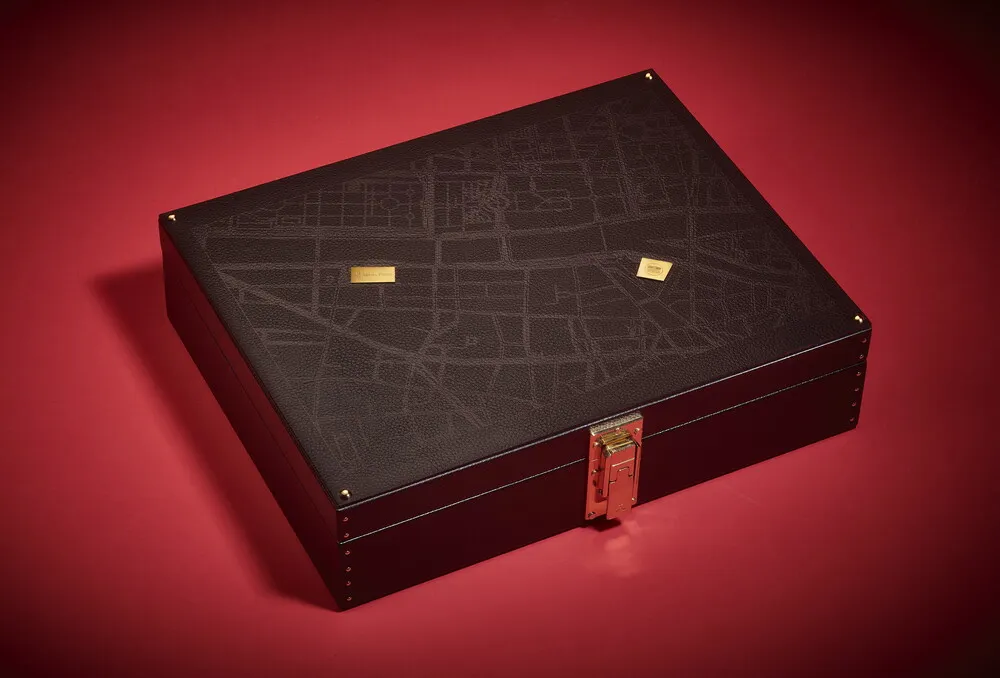
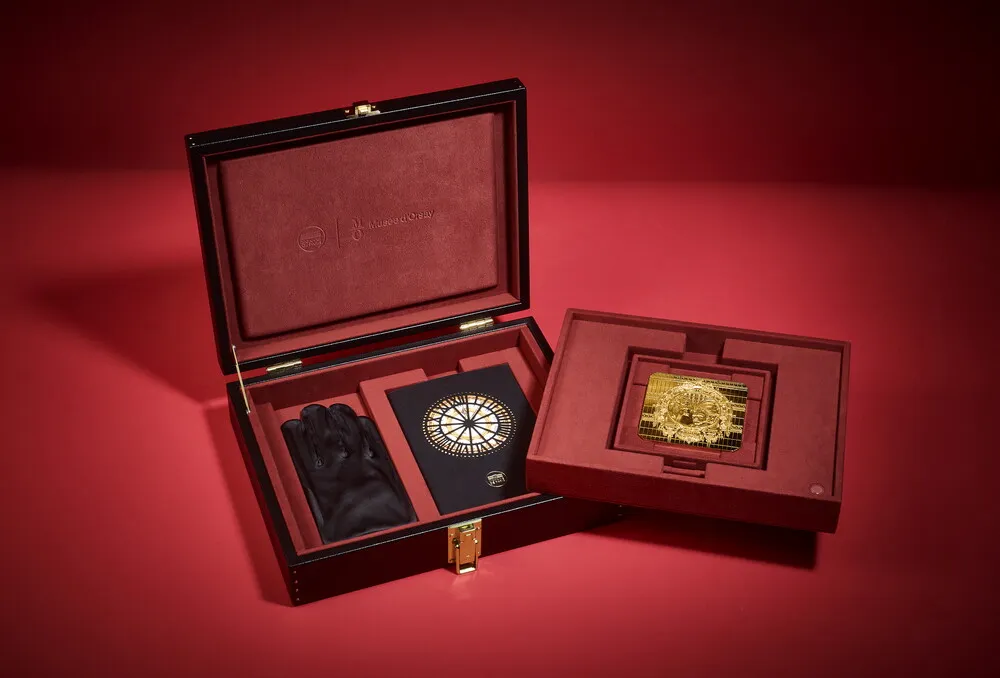
Joaquin Jimenez, the General Engraver of Monnaie de Paris, drew the design directly from the building and its collections, and the kilo coin is presented like the museum object it aspires to be. It arrives in a case built to resemble a travelling trunk, bound in black leather, its lid printed with a map of Paris centred on the Pont Royal, the bridge that links the Orsay to the Louvre across the river, a geography made literal. Gold plated rivets run down the trunk’s sides in deliberate echo of the nave’s ironwork, and the interior is lined in the deep red that runs through the museum’s own galleries, a colour chosen at Orsay to make the paintings sing. The coin rests in its capsule above a tray; the booklet, certificate and handling gloves sit beneath. The packaging is not an afterthought to the coin. It is a continuation of the coin’s argument about the museum.
Closing the circle: the 1986 medal
The collection’s final gesture reaches back to where the museum began. Alongside the coins, Monnaie de Paris is reissuing the medal first created in collaboration with Gae Aulenti for the museum’s inauguration, the architect who gave the Orsay its interior, returning to the collection four decades on. A companion paperweight medal in silvered Florentine bronze, 62 by 60 millimetres at €229, rounds out the offering for collectors who want the design without the bullion.
It is a neat piece of editorial symmetry: a series that exists to honour the museum’s fortieth year ends by reprinting the object that marked its first.
French Excellence – Musée d’Orsay (2026)
| Item | Face value | Metal | Weight | Mintage | Price | Status |
|---|---|---|---|---|---|---|
| Silver | ||||||
| 10 € silver coin | €10 | Silver .999 | 22.2 g | 5,000 | €157 | Available |
| 20 € High Relief 1 oz | €20 | Silver .999 | 31.1 g (37 mm) | 3,000 | €220 | Available |
| 50 € 5 oz | €50 | Silver .999 | 155.5 g (50 mm) | 2,000 | €1,140 | Available |
| Gold | ||||||
| 50 € ¼ oz gold | €50 | Gold* | 7.78 g (22 mm) | 500 | €1,460 | Available |
| 200 € 1 oz gold (square) | €200 | Gold* | 31.1 g | 200 | €5,760 | Available |
| 500 € 5 oz gold | €500 | Gold* | 155.5 g (50 mm) | 50 | €28,900 | Available |
| 5,000 € 1 kilo gold (square, 95×95 mm) | €5,000 | Gold* | 1,000 g | 12 | — | Sold out |
| Medal | ||||||
| Paperweight medal | — | Silvered Florentine bronze | 62 × 60 mm | Not stated | €229 | Available |
What it means for collectors
French Excellence has spent fifteen years borrowing the prestige of French icons, but the Orsay tie up is one of its better matched marriages, a building that is itself a converted monument, depicted by a mint that converts history into metal for a living. For collectors, the appeal sorts cleanly by appetite: the 10 and 20 euro silver pieces are accessible, design led buys; the five ounce and quarter ounce golds are for set builders; and the kilo, at twelve pieces, was never really for sale so much as for allocation. Whether the secondary market rewards the lower tiers will depend, as ever, on how the design ages. But the premise is sound. When the container and the contents are this inseparable, a coin that captures both has a story it can tell long after the mintage closes.