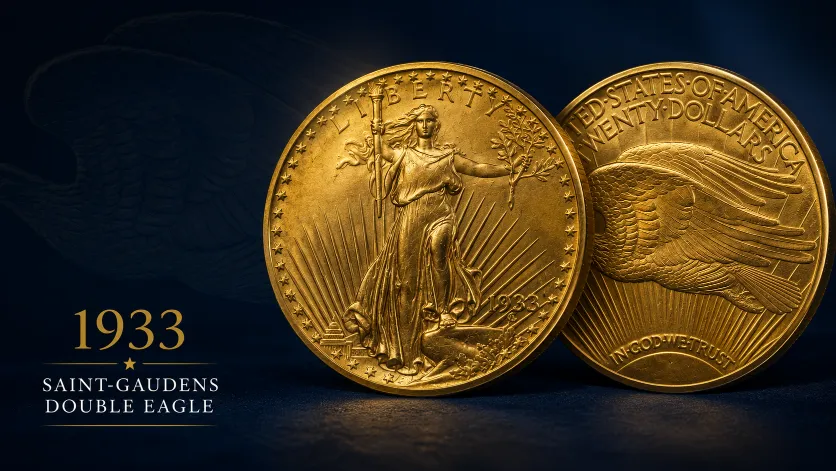
Eleven coins that were never issued, never lawfully released, and never once assembled in public will share a single case next month. The United States Mint announced on July 28 that all 11 of the 1933 Saint-Gaudens double eagles in its custody, the $20 gold pieces that became the most litigated coins in American history, will go on display together for the first time at the American Numismatic Association’s 2026 World’s Fair of Money in Pittsburgh on August 28. The show runs August 25 to 29 at the David L. Lawrence Convention Center.
Mint Director Paul Hollis framed the display as an act of national memory rather than a numismatic curiosity, noting that “Mint history is American history” and tying the exhibit to the Semiquincentennial year. That framing is generous to a group of coins whose history is mostly theft, seizure, litigation and forfeiture. It is also, in its way, exactly right. No other American coin carries more of the twentieth century inside it.
Why the 1933 Double Eagle Was Never Issued
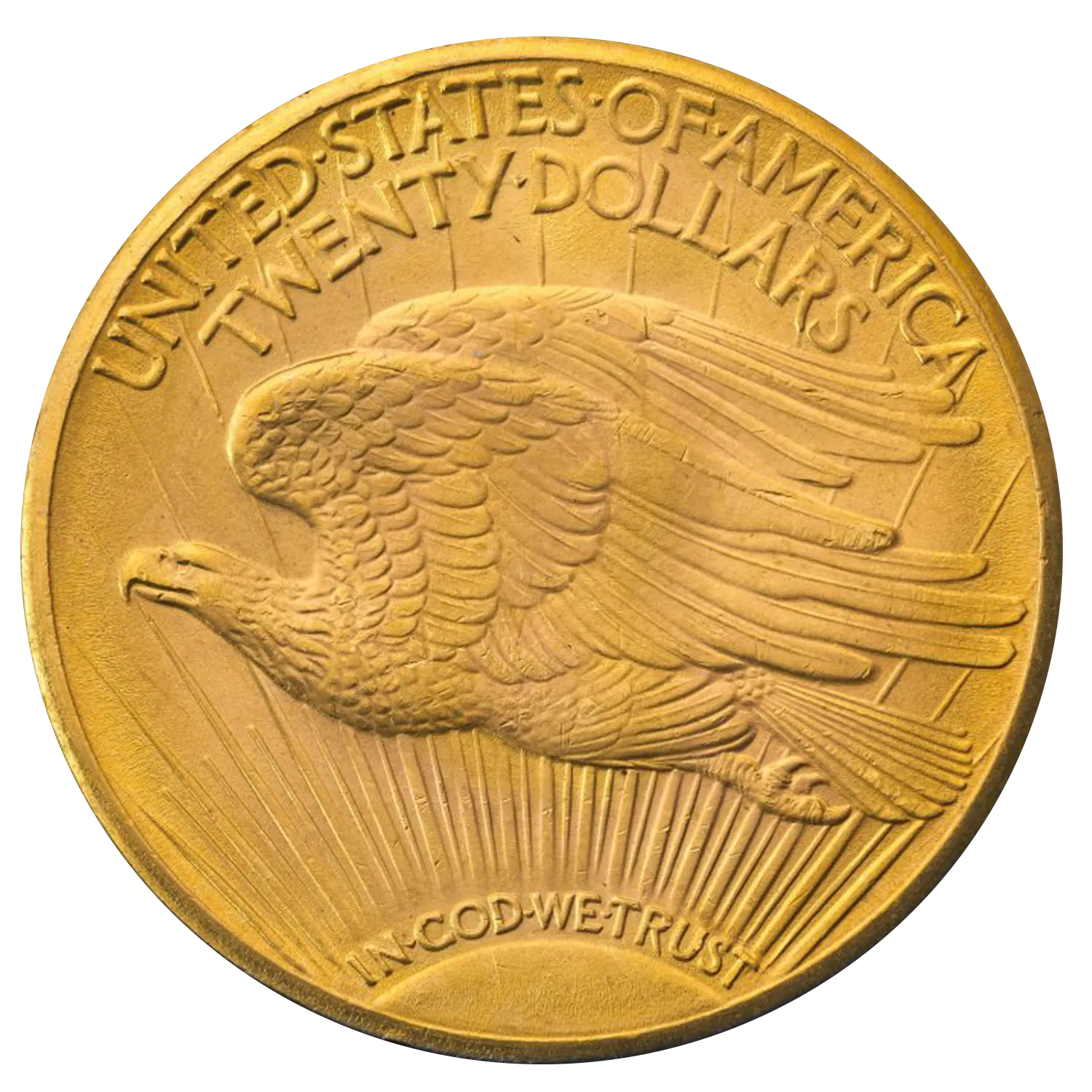
In March 1933, as part of the emergency response to the Depression, President Franklin Delano Roosevelt issued a proclamation prohibiting the payment of gold coins, reinforced by later executive orders, Treasury regulations and statutes. By then the Philadelphia Mint had already struck 445,500 double eagles dated 1933. Not one of them was ever issued to the public as legal tender. They were counted, stored, and eventually melted.
Two pieces left the building lawfully. Both went to the Smithsonian Institution for preservation in the National Numismatic Collection, where they remain. Every other 1933 double eagle known to exist today left the Mint some other way.
How the Secret Service Recovered the 1933 Double Eagles
A Secret Service investigation opened in 1944 and, over the following decade, traced and recovered nine pieces. All nine were destroyed. The trail in that investigation ran through a Philadelphia jeweler and part time coin dealer, Israel Switt, and through a Mint cashier; the statute of limitations expired before charges could be brought.
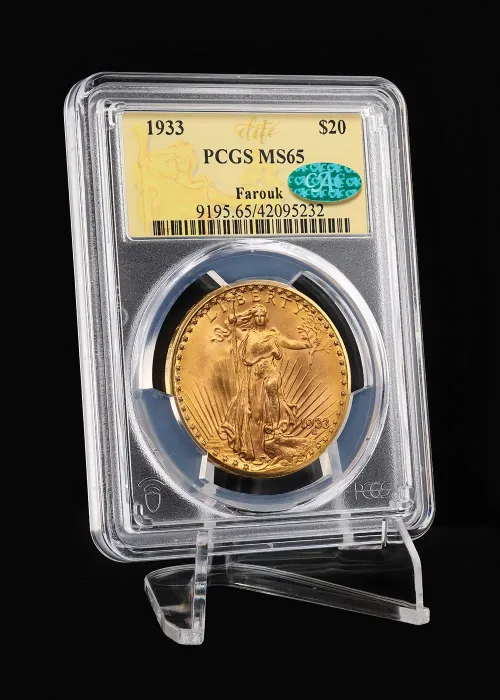
A tenth coin surfaced in 1996, the piece with the celebrated pedigree running back to King Farouk of Egypt. That case ended not in destruction but in a settlement without precedent: the government monetized and issued that single specimen, and a buyer paid an additional twenty dollars in cash to make it legal to own. It sold at auction in 2002 for $7.59 million. The anonymous purchaser, later revealed as designer Stuart Weitzman, consigned it again to Sotheby’s on June 8, 2021, where it realized $18,872,250 and became the most valuable coin ever sold at auction.
It remains the only 1933 double eagle a private citizen may lawfully own, and it will not be in Pittsburgh. That coin’s absence is the shape of the whole story.
The Langbord Double Eagles and the 2011 Verdict
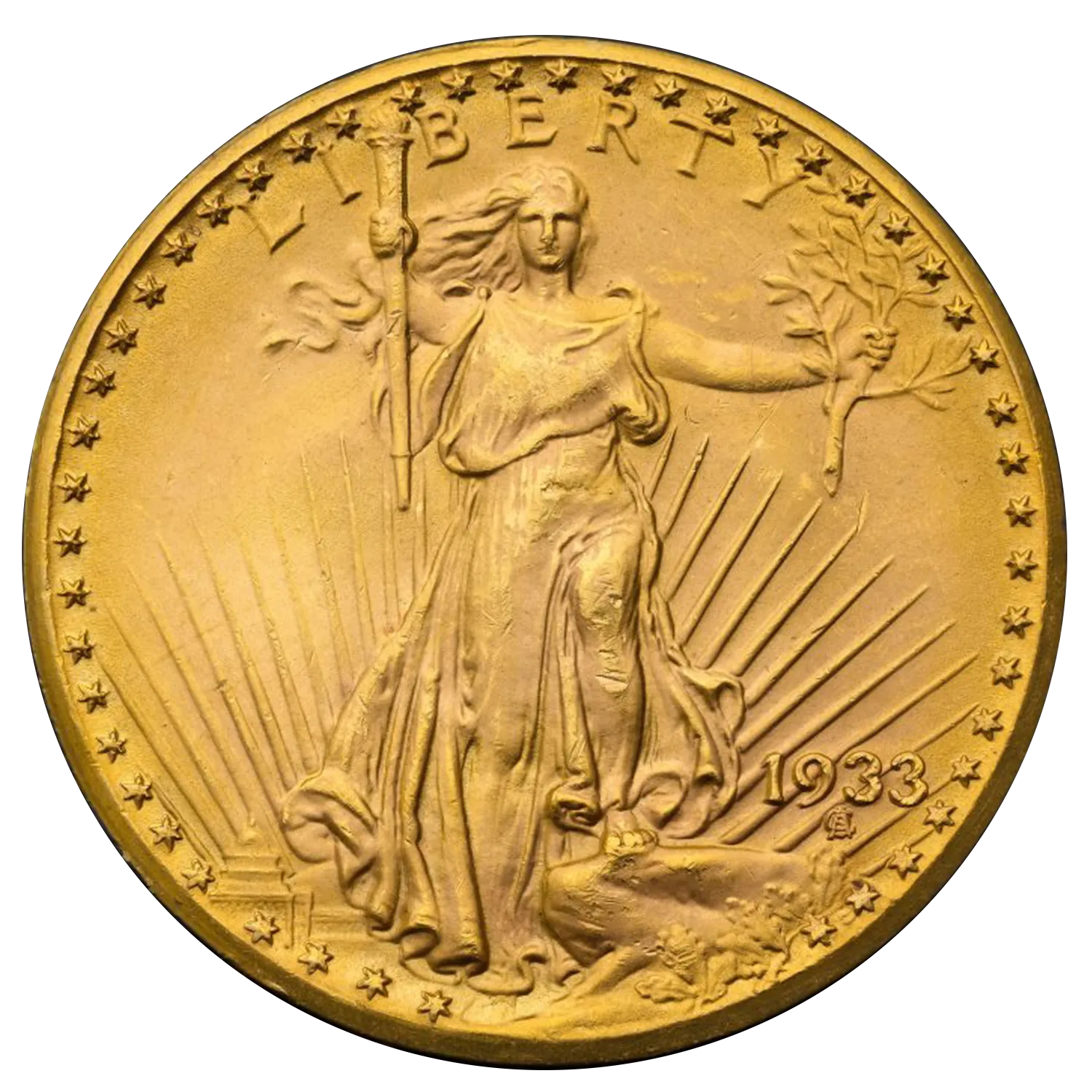
In 2004, ten more specimens surfaced in the possession of the family of that same Philadelphia jeweler. Joan Langbord, Switt’s daughter, and her sons submitted the coins to the government for authentication. The government authenticated them and kept them.
Litigation followed for more than a decade. A jury heard the case in Philadelphia in 2011 and, after a trial lasting two weeks, found unanimously for the government. The presiding judge subsequently entered a declaratory judgment that the coins had not been lawfully removed from the United States Mint and, as a matter of law, remain the property of the United States. The Third Circuit affirmed, and the Supreme Court declined to take the case in 2017.
Ten coins, one verdict. That accounts for ten of the eleven going on display.
The Eleventh Coin
The eleventh has never been shown before, and its provenance is the quietest and strangest of the group. Following the 2011 trial, a private citizen who had acquired a 1933 double eagle on the open market surrendered it to the government voluntarily and unconditionally. By the government’s account, the owner did not know at the time of purchase that private ownership of the piece was unlawful. There was no seizure, no forfeiture action, no settlement.
Like every 1933 double eagle recovered by the United States since 1944, that coin traces back to the same Philadelphia jeweler. Nearly a century of investigation, prosecution and civil litigation has produced a single common ancestor for every surviving example outside the Smithsonian.
How Many 1933 Double Eagles Still Exist?
Fourteen 1933 double eagles are known to survive out of the 445,500 struck. Two sit in the Smithsonian. One sits in private hands, monetized by settlement and sold twice at record prices. Eleven sit with the Mint. For one week in August, eleven of the fourteen will be in the same room.
Collectors have seen individual 1933 double eagles before, at the Federal Reserve Bank of New York, at Long Beach, in the ANA’s own showcases. What no one has seen is the government’s holdings assembled as a group, which is a different kind of object entirely: not a rarity on a velvet pad but the physical residue of a policy, a theft, a fifty year investigation and a decade of federal litigation, laid out in a row. The coins have spent most of their existence as evidence. In Pittsburgh, briefly, they get to be coins again.