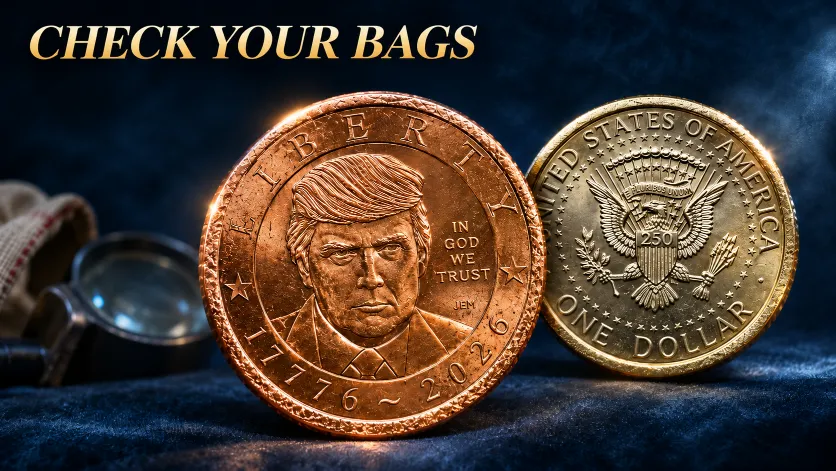
A 1776-2026 Trump dollar missing a clad layer, its obverse showing bare copper where a golden surface should be, has become the first major mint error reported on the new Semiquincentennial dollar, and it did not stay alone for long. Within days of the discovery coin being certified by NGC as MS 65, two more examples turned up in collectors’ hands, one of them pulled from a 100-coin bag bought directly from the U.S. Mint.
Three coins is not a population. It is, however, enough to turn an isolated curiosity into a search, and every collector holding unopened rolls or bags of this issue now has a reason to look twice.
The coin that should have weighed 8.1 grams
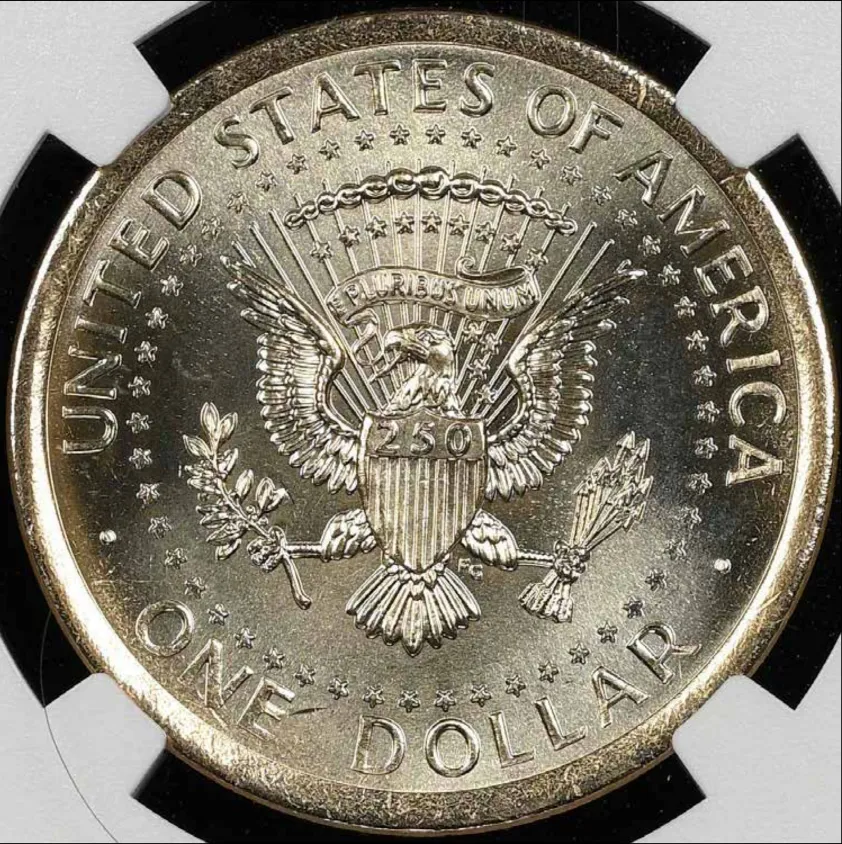
The 2026 Semiquincentennial President Donald J. Trump $1 coin went on sale on September 2, 2026, in 25-coin rolls and 100-coin bags, with product limits of 150,000 rolls and 50,000 bags. Its obverse carries Trump’s portrait by Joseph Menna; its reverse uses the Presidential Seal, with the shield bearing the inscription “250” for the nation’s anniversary. The coins were struck at Philadelphia without a mintmark.
The Mint added a lure of its own. It struck 250,000 of the dollars with a July 4th privy mark and scattered them at random through the rolls and bags, so many buyers were already searching every coin before anyone knew there was an error to find.
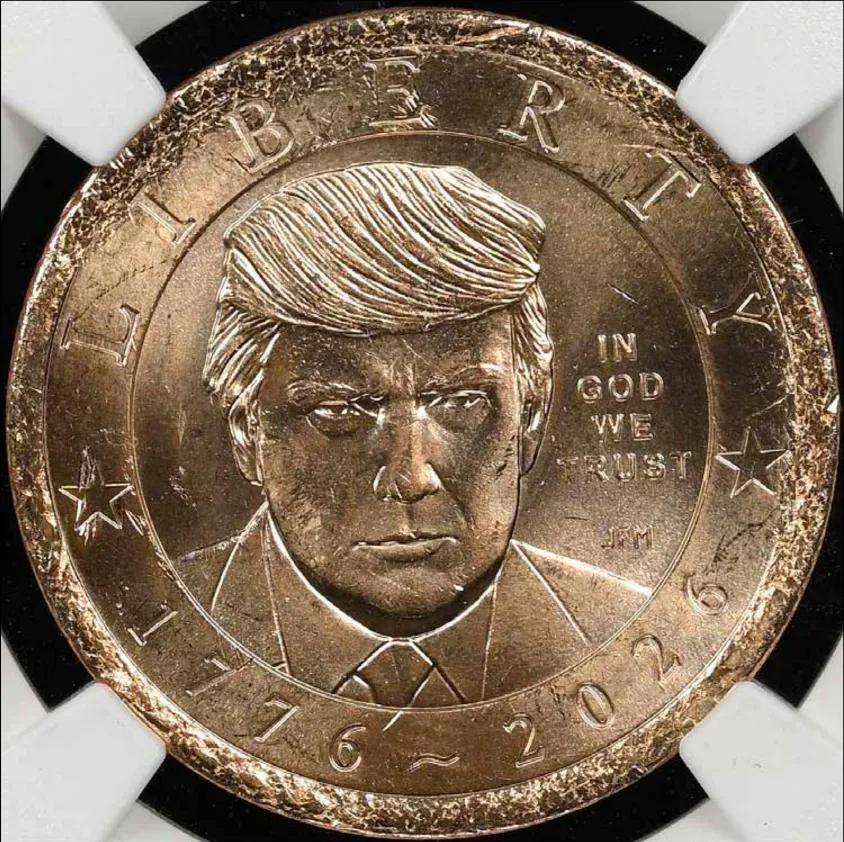
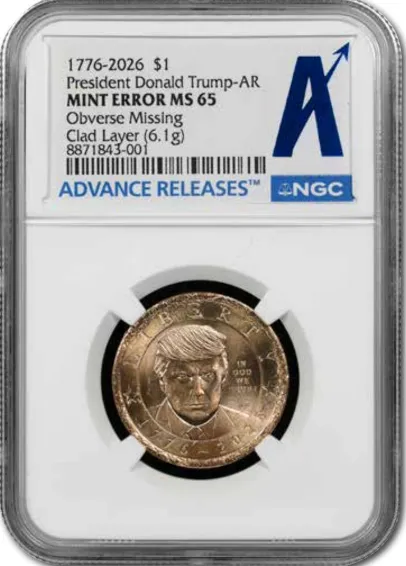
The discovery coin turned that search in a new direction. Certified by NGC as MS 65 with the Advance Releases designation, which NGC reserves for coins bought by designated Mint customers ahead of the public release date, it shows a coppery obverse and a normal golden reverse. On a scale it reads 6.1 grams. A normal example weighs 8.1.
According to Mike Byers, publisher of Mint Error News, through whose firm the coin is being offered, and as reported by CoinWeek on October 7, the missing two grams are the whole story. They are the obverse clad layer, gone.
How a dollar loses a layer of metal
The Trump dollar looks golden but contains no gold. It follows the three-layer construction the Mint has used on its golden dollars since the Sacagawea issue of 2000: a pure copper core bonded between two outer layers of manganese brass. NGC’s Dave Camire, who authenticated the discovery coin, gave the outer layer composition as 77% copper, 12% zinc, 7% manganese and 4% nickel.
When the bond between core and cladding fails, an outer layer can peel away. If it goes before striking, the dies meet a planchet roughly a quarter lighter and noticeably thinner than intended, and the strike suffers for it, particularly at the rims. That separation can also happen after striking, and NGC recognises both within the missing clad layer category. Coin World reported that on the discovery piece the layer separated before the coin was struck, leaving the copper core to take the obverse die directly.
Camire described the coin as visually striking and argued that MS 65 is a stronger grade than it sounds in an era of MS 69 and MS 70 moderns, because the thin planchet makes a soft strike unavoidable. The grade, in other words, is judged against what the error allows rather than against a perfect coin.
Missing clad layer errors are not new to manganese brass dollars. Presidential dollars missing an obverse layer, such as a 2007-P Jefferson certified by PCGS as MS 62, have been documented before. What makes this one different is the coin it struck: a one year anniversary dollar that has drawn attention well beyond the error collecting world.
“That means there’s at least 2”
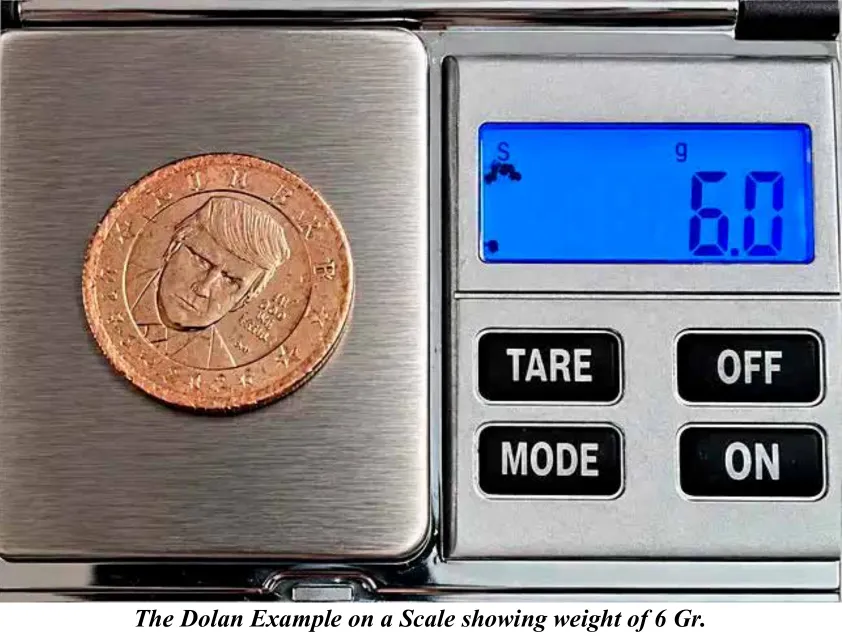
The second coin came from Florida. Collector Patrick Dolan bought a 100-coin bag directly from the Mint, and on October 10 he found a dollar with a copper obverse inside it, along with four of the July 4th privy marked coins. After reading CoinWeek’s report, he weighed his find, recorded roughly 6.0 to 6.1 grams, and drew the obvious conclusion in a comment the next day: “That means there’s at least 2.”
Byers later reviewed Dolan’s coin and accepted it as genuine, according to CoinWeek. It remains raw and uncertified, and Dolan has not offered it for sale.
The third followed before the second had finished making news. Tyrone Kemp sent photographs and weights to Byers, who judged that the coin met the diagnostics for a missing clad layer. Like Dolan’s, it is raw and not for sale.
| # | Example | Status | Reported weight | Origin and notes |
|---|---|---|---|---|
| 1 | Discovery coin | NGC MS 65, Advance Releases | 6.1 g | Missing obverse clad layer; offered by Mike Byers Inc. at $25,000 |
| 2 | Patrick Dolan, Florida | Raw; accepted by Mike Byers | 6.0 to 6.1 g | Found October 10 in a U.S. Mint 100-coin bag; not for sale |
| 3 | Tyrone Kemp | Raw; accepted by Mike Byers from photographs and weights | Not published | Not for sale |
Roster per CoinWeek’s registry, updated October 15, 2026. Only the discovery coin has been independently certified.
Copper colour is not the test
The arrival of three genuine pieces has been accompanied by a much larger wave of copper and bronze toned Trump dollars posted to forums and social media. Byers is blunt that most of them are not missing anything. They weigh close to the normal 8 grams, and their colour more likely reflects problems in annealing, the heating step that softens blanks before they are cleaned and struck, or ordinary surface discolouration. NGC has documented improperly annealed Presidential dollars ranging from dark brown to copper red.
Byers suspects production and quality control problems lie behind the volume of off colour coins reaching collectors. CoinWeek is careful to note that nobody has established a rushed production run, a faulty alloy or a specific equipment failure, and that confirming any of those would need evidence from the Mint itself.
The practical difference is weight. A genuine missing clad layer coin sits around 6.0 to 6.1 grams, about two grams light. A discoloured coin at roughly 8 grams is a different animal, and Byers puts the value of some of the more unusual normal weight pieces at $50 to $100, while cautioning that an odd colour alone does not make a collectible error.
What the discovery coin is worth
The $25,000 figure attached to the discovery coin is a dealer’s asking price, not an auction result. Byers told Coin World that several experts have placed its value in the low five figures, that he expects the second example to be worth around $10,000, and that prices would soften if more turn up. Its standing as the first piece, he argued, gives it an appeal that reaches beyond error collectors.
That last point is the variable nobody can price yet. Mint Error News notes that major errors on U.S. coins discovered since 2020 are extremely rare, and that very few are known on U.S. commemorative coinage at all. Whether this one stays at three coins or runs to dozens will decide what each of them is worth.
Checking your own rolls and bags
The search method is simple and costs nothing but time:
- Look at both sides of every coin for a copper surface paired with a normal golden opposite side.
- Weigh any suspect on a digital scale that reads to at least 0.01 gram. A reading near 6.0 to 6.1 grams merits a closer look; one near 8.1 grams almost certainly does not.
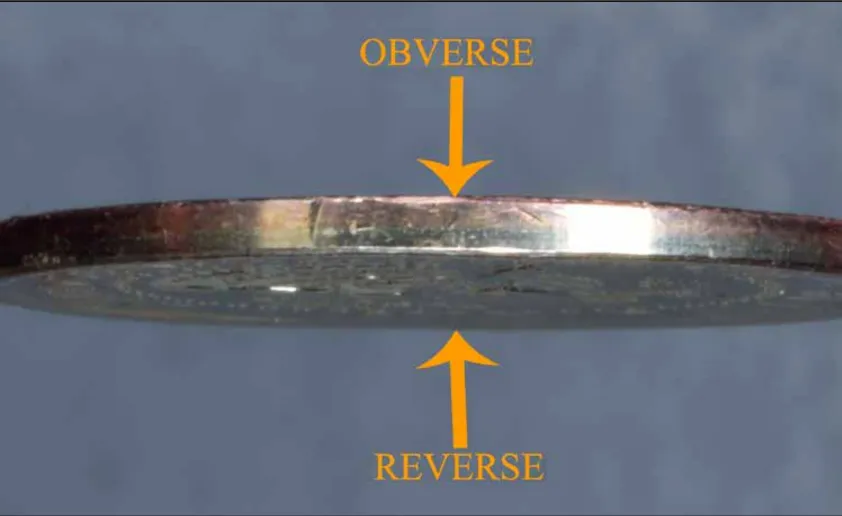
- Examine the edge, where the layered construction, or the absence of one layer, can be visible.
- Do not clean, polish or scrape a suspected error, and keep the original Mint packaging and purchase records.
Byers has asked collectors who find a candidate to send photographs of the obverse, reverse and edge, with the measured weight, to Mike Byers Inc., and to report it to CoinWeek, which is maintaining the roster and will name owners only with their permission. Weight and colour can flag a coin, but only professional authentication can confirm one.
The next one may already be in someone’s drawer
Three Trump dollars missing a clad layer have now escaped Philadelphia, one through the Mint’s early distribution channel and at least one through an ordinary bag sold to the public. That is the detail that matters. An isolated manufacturing defect can affect more than one planchet, and with 150,000 rolls and 50,000 bags in collectors’ hands, many still sealed, the honest answer to how many exist is that nobody knows. For a one year Semiquincentennial issue already searched coin by coin for its privy mark, this error has given collectors a second reason to open every roll, and quite possibly the more rewarding one.
Frequently asked questions
What is a Trump dollar missing clad layer error? It is a 1776-2026 Trump dollar that has lost one of the two manganese brass layers bonded to its copper core, so one side shows bare copper while the other stays golden. Because a whole layer of metal is gone, the coin weighs about 6.0 to 6.1 grams instead of the normal 8.1 grams. The discovery example was certified by NGC as MS 65.
How many Trump dollars missing a clad layer have been found? Three have been reported as of CoinWeek’s October 15, 2026 roster. Only the discovery coin has been certified by a grading service; the other two, found by Patrick Dolan and Tyrone Kemp, were accepted as genuine by mint error specialist Mike Byers but remain raw. The roster is not a complete census, and more may exist.
Is my copper coloured Trump dollar an error? Probably not, unless it is significantly underweight. Most copper or bronze toned Trump dollars posted online weigh close to the normal 8 grams, and their colour is more likely due to annealing problems or surface discolouration. A genuine missing clad layer coin weighs roughly 6.0 to 6.1 grams.
How much is a Trump dollar missing clad layer worth? The NGC MS 65 discovery coin is offered by Mike Byers Inc. at $25,000, which is an asking price rather than an auction result. Byers has suggested the second example could be worth around $10,000 and that prices would fall if more are found. Some unusual normal weight, off colour examples might sell for $50 to $100, according to Byers.
Where were the error coins found? The second example was found in a 100-coin bag bought directly from the U.S. Mint, which also held four July 4th privy marked coins. The discovery coin carries NGC’s Advance Releases designation, meaning it was bought by a designated Mint customer before the public release date. The finding circumstances of the third coin have not been published.
How do I check my Trump dollars for this error? Look for a coin with copper on one side and gold on the other, then weigh it on a scale accurate to 0.01 gram; a reading near 6.0 to 6.1 grams is worth investigating. Check the edge for signs of a missing layer, and do not clean or alter the coin. Professional authentication is the only way to confirm a genuine error.
Why do Trump dollars have a copper core? The Trump dollar uses the same three-layer construction as the Mint’s golden dollars since the Sacagawea dollar of 2000: a pure copper core between two layers of manganese brass. The coin contains no gold. When a bonded outer layer separates from the core, the copper underneath is exposed.