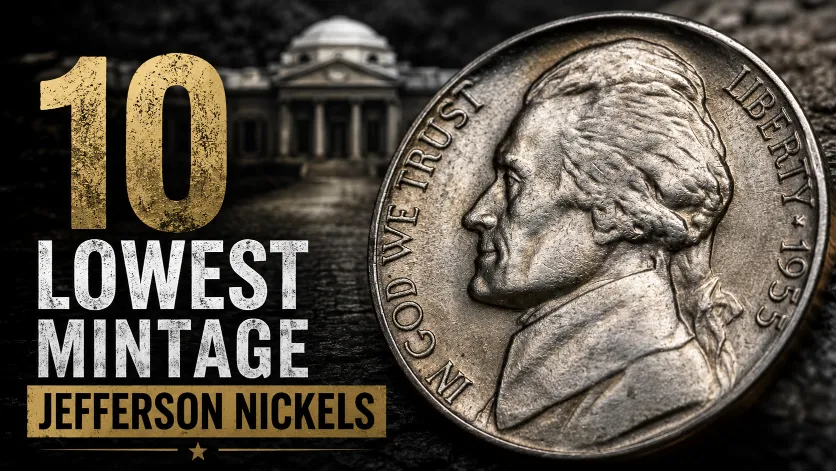
The lowest mintage Jefferson nickels are not the most valuable Jefferson nickels, and the distance between those two lists is the most useful thing this series has to teach. The scarcest of them all, the 1997-P matte finish nickel, was struck to just 25,000 pieces, and you can buy one slabbed today for $175.
The reason is the same in almost every case. These dates were recognised as scarce while they were still being produced, and collectors and speculators responded by putting the coins away by the roll and by the bag. What survives is plentiful, well preserved and cheap. What does not survive, in any quantity, is a coin struck sharply enough to show five or six fully separated steps at the base of Monticello. In this series, the mintage tells you almost nothing about value. The strike tells you everything.
What follows is the countdown: the ten lowest mintage Jefferson nickels ever struck, what each one sells for, and the auction results that show where the money actually goes.
| Rank | Coin | Mintage | Top auction result cited |
|---|---|---|---|
| 10 | 1955 | 7,888,000 | $2,193.75 (NGC MS67 Full Steps, 2026) |
| 9 | 1951-S | 7,776,000 | $10,238 (PCGS MS67 Full Steps, 2021) |
| 8 | 1939-S | 6,630,000 | $13,825 (PCGS MS67+ Full Steps, 2025) |
| 7 | 1938-D | 5,376,000 | $33,600 (PCGS MS68+ Full Steps, 2022) |
| 6 | 1938-S | 4,105,000 | $2,418 (NGC MS68 Full Steps, 2026) |
| 5 | 1939-D | 3,514,000 | $17,437 (MS68 Full Steps, 2023) |
| 4 | 1950-D | 2,630,030 | $2,018 (PCGS MS67+ Full Steps, 2026) |
| 3 | 2020-W Proof / Reverse Proof | 465,080 / 313,184 | About $80 slabbed |
| 2 | 1994-P Matte Finish | 167,703 | $480 (SP70 Full Steps, 2023) |
| 1 | 1997-P Matte Finish | 25,000 | $175 (MS69, 2026) |
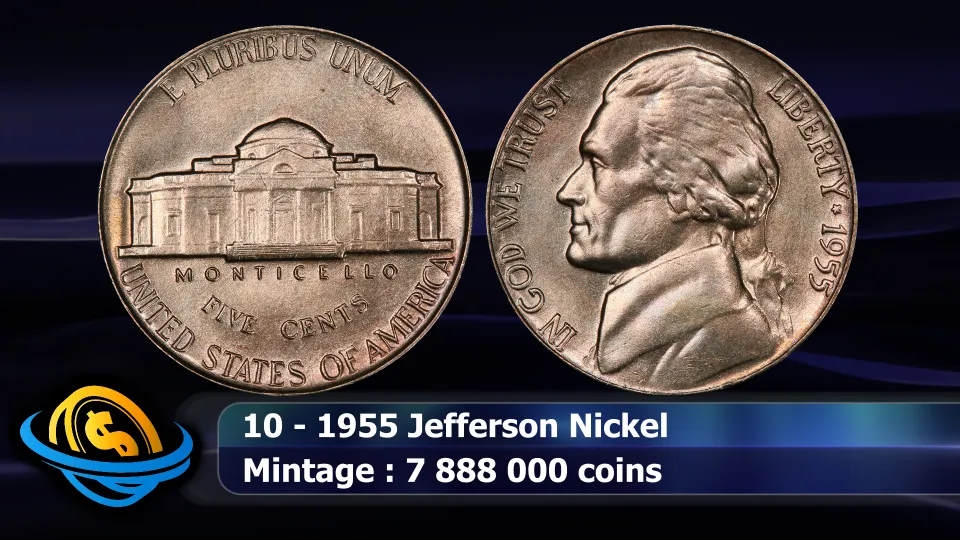
10. 1955 Jefferson Nickel (7,888,000 Minted)
The 1955 nickel opens the countdown, and it opens the argument. The problem with this issue is not how few were made. It is how they were made. The strike is notoriously soft, most survivors show mushy central detail, and on a great many examples the steps of Monticello barely register at all. Bernard Nagengast, in his series reference The Jefferson Nickel Analyst, was blunt enough to describe most of the issue as garbage quality.
That splits the market cleanly in two. Circulated pieces change hands for a dollar or two, and ungraded BU examples run between $3 and $5 depending on the seller. Attach the Full Steps designation and the coin becomes something else entirely. Heritage sold a PCGS MS65 with Full Steps in 2026 for $317. GreatCollections took an NGC MS66+ with Full Steps to $625.50 in 2023, and an NGC MS67 with Full Steps to $2,193.75 in 2026. Seven point eight million coins were struck, and the market is still paying for the ones the dies got right.
9. 1951-S Jefferson Nickel (7,776,000 Minted)
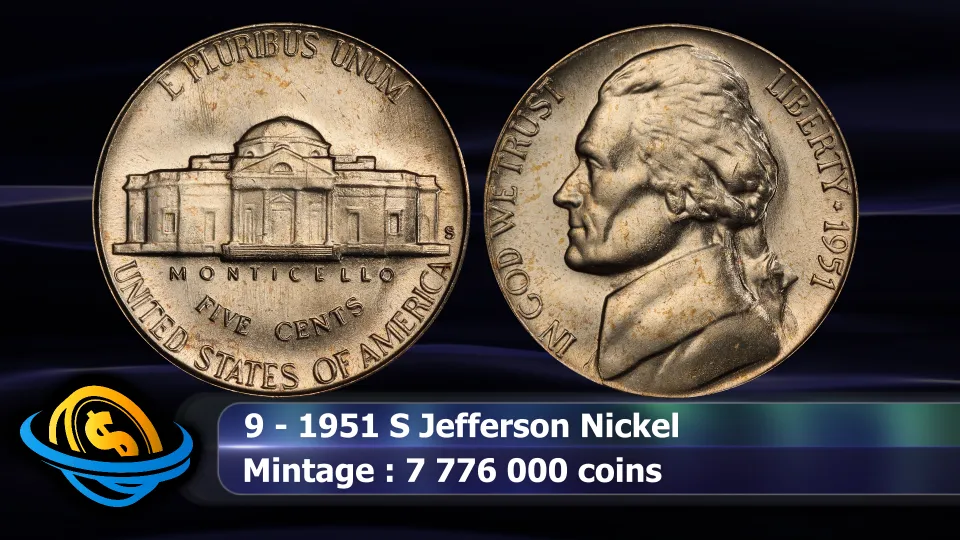
The 1951-S is a curious entry, because apart from the mintage there is very little about it that stands out. Strike quality holds to the usual San Francisco standard of the era, though the lustre tends to be flat rather than attractive. Once word of the low mintage reached collectors, the rolls and bags went into storage, and today the coin is easy to find in genuinely high grades.
Circulated examples can be surprisingly attractive for $2 to $5, and raw BU coins sit around $10 to $15. The Full Steps examples are another matter, and they are the part of this issue that is actually rare. GreatCollections sold a PCGS MS65 with Full Steps for $405 in 2026 and a PCGS MS66 with Full Steps for $735 the same year. At MS67 with Full Steps, where the issue becomes conditionally rare, a PCGS example brought $10,238 at GreatCollections in 2021. The hoarders saved the coins. They could not save the steps.
8. 1939-S Jefferson Nickel (6,630,000 Minted)
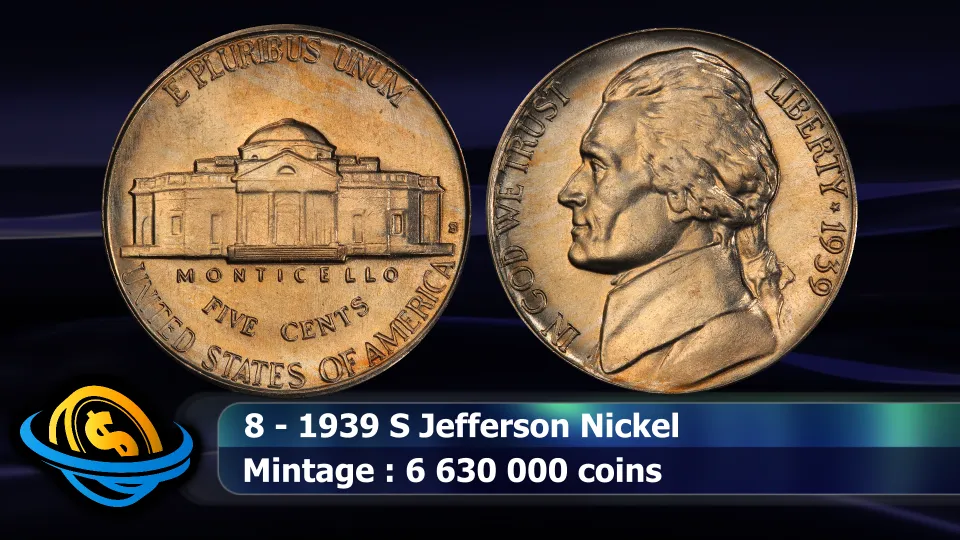
San Francisco struck 6,630,000 nickels in 1939, and the production run is split roughly evenly between the Reverse of 1938 and the Reverse of 1940 design types. For reasons that have never been fully explained, the Reverse of 1940 coins from this mint are generally the poorer struck of the two.
Availability is not the issue. Circulated examples sell for as little as $2 to $5. Grade is the issue, and it matters considerably more here than the reverse type does. Heritage sold an MS65 with Full Steps for $159 in 2026, with most coins in that range trading at or below $200, and at MS66 without Full Steps the prices are much the same or lower. Add the designation and the picture changes: an MS66 with Full Steps realised $512.40 at Heritage in 2026. At the top of the registry, a PCGS MS67+ with Full Steps of the Reverse of 1938 type sold for $13,825 at GreatCollections in 2025.
7. 1938-D Jefferson Nickel (5,376,000 Minted)
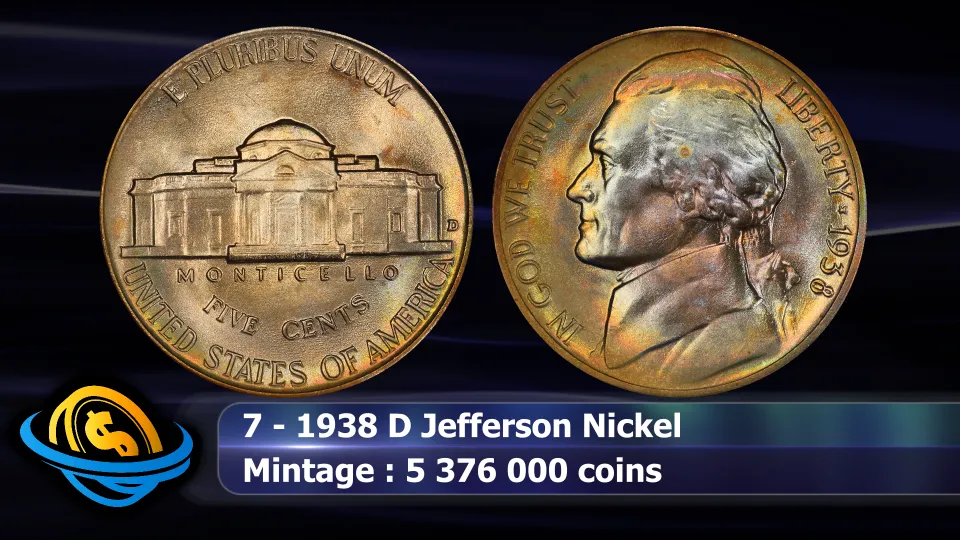
1938 was the debut year, the year Jefferson replaced the Buffalo nickel that the Mint had found so difficult to coin at scale. Denver struck 5,376,000 pieces, but most of them did not reach the public until early 1939, because the Treasury only approved the new coin for circulation on November 15, 1938.
Availability today is broad across every grade, with low grade coins costing as little as $3 to $10. Even certified examples stay modest for a long stretch of the grading scale. GreatCollections sold a PCGS MS65 for barely $55 in 2026, and a PCGS MS68 for $1,243 the same year. The real money, as always in this series, sits behind the steps. The record belongs to a PCGS MS68+ with Full Steps, the finest known of its type, which Heritage sold in 2022 for $33,600. That is roughly six hundred times what an MS65 of the same date will cost you, and it makes the 1938-D the most valuable coin on this list.
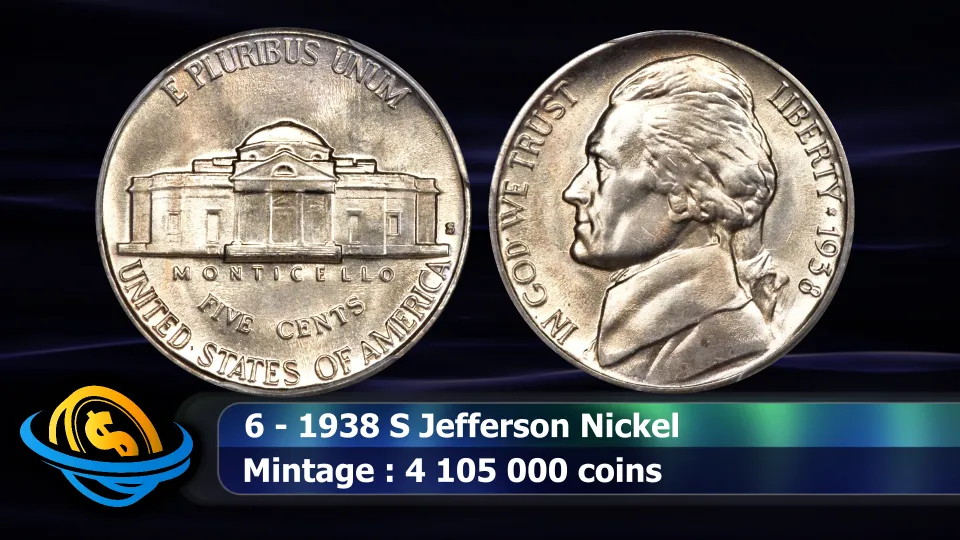
6. 1938-S Jefferson Nickel (4,105,000 Minted)
At 4,105,000 coins, San Francisco produced the smallest of the three debut year mintages, and the 1938-S is another issue that refuses to behave the way its figures suggest. It remains easy to obtain today, including in mid range mint state grades.
Quality is the recurring concern. Weak steps and soft strikes are the norm, even though the coins generally carry pleasing eye appeal in hand. Raw examples in decent condition run from $5 to $20, and certified coins struggle to command much more for a long way up the scale: a PCGS MS64 sold for $42 in 2026, and a PCGS MS68 brought $1,418 at GreatCollections in 2025. The trick, to the extent there is one, is the Full Steps designation, which on this date is exceedingly rare. An NGC MS68 with five full steps sold at GreatCollections in 2026 for $2,418.
5. 1939-D Jefferson Nickel (3,514,000 Minted)
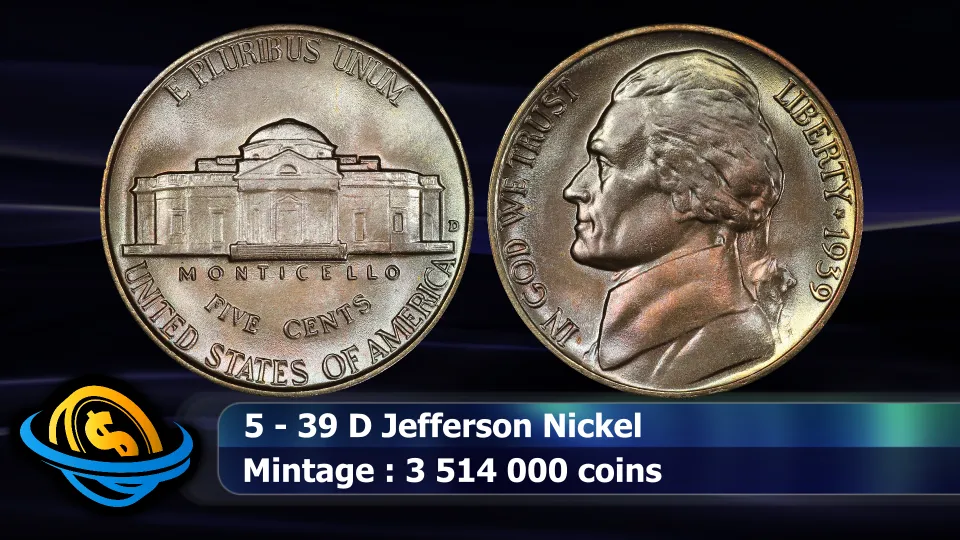
The 1939-D is the genuine key date of the early series, with just 3,514,000 coins struck. Like its San Francisco counterpart, the mintage is divided between the Reverse of 1938 and the Reverse of 1940, the Mint having sharpened the reverse detail roughly halfway through the production run.
The steps are the easiest way to tell them apart. On the Reverse of 1938 they are wavy, soft and poorly defined. On the Reverse of 1940 they are razor sharp, straight and level by comparison. In practice most collectors do not distinguish between the two types, and the difference in value is marginal at best. A circulated example can still be had for $5 to $10, which for a key date is remarkable in itself. Above MS67 the market changes character completely. In 2023 GreatCollections sold an MS68 of the Reverse of 1938 type with the coveted Full Steps designation for $17,437.
4. 1950-D Jefferson Nickel (2,630,030 Minted)
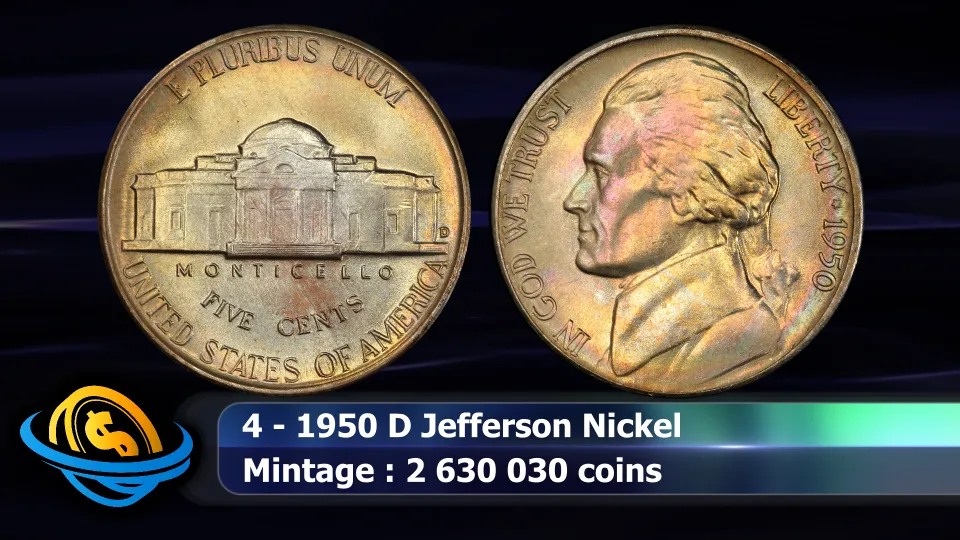
With 2,630,030 coins, the 1950-D carries the lowest circulation strike mintage on this list, and it presents the series paradox in its purest form. This is a coin that is genuinely awkward to find in worn, circulated condition, and one of the most plentiful nickels in the series in mint state.
The explanation is entirely a matter of timing. The moment the mintage figure was published, collectors and speculators began setting the coin aside by the roll and by the bag, and comparatively few were ever allowed to circulate. It is the same trap the 1931-S Lincoln cent fell into two decades earlier. A raw lower mint state example costs about $15 to $20 today. Higher gem grades are more of a challenge, and in 2026 GreatCollections sold a PCGS MS67+ with Full Steps, a beautiful coin with subtle toning, for $2,018. The 1950-D is the date every beginner is told to look for in change, and it is the one date that was never really there to find.
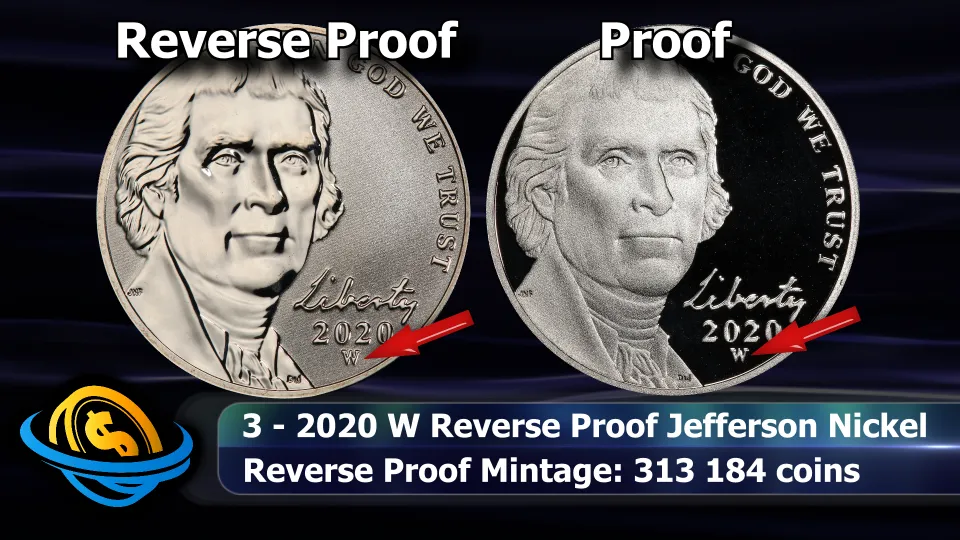
3. 2020-W Proof and Reverse Proof Nickels (465,080 and 313,184 Minted)
This entry bends the rules slightly. Proof coins are normally excluded from a list of this kind, because a list that included them would consist of nothing else. The 2020-W nickels earn an exception as special strikes with a story attached.
Carrying the W mint mark of the West Point Mint, they were issued as bonus coins: the proof, with a mintage of 465,080, accompanied the 2020 proof set, and the reverse proof, at 313,184, accompanied the silver proof set. Values have been stable since, at roughly $25 to $30 in the original Mint packaging, or around $80 for a decently graded slabbed example of either finish. They are the rare case in this series where a modern coin’s scarcity is real, well documented and priced accordingly, which is to say sensibly.
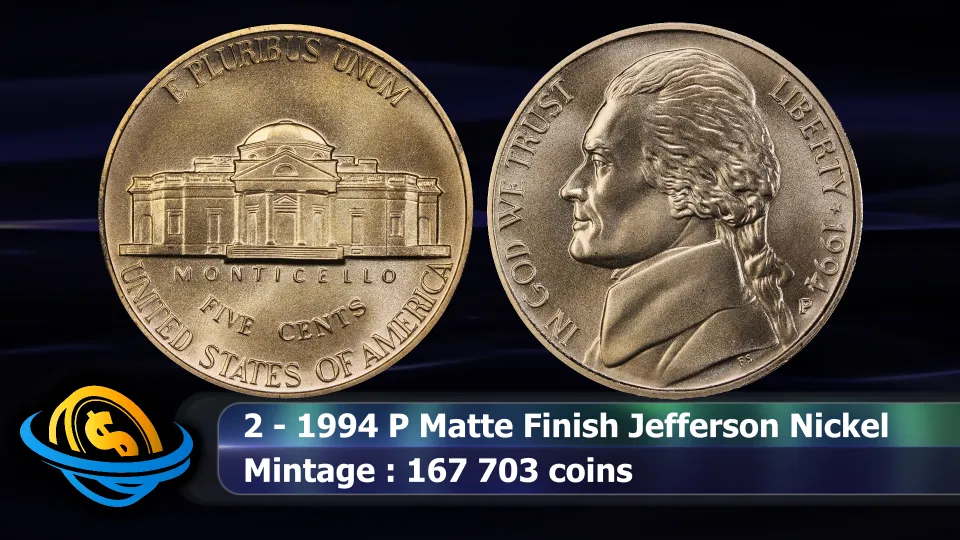
2. 1994-P Matte Finish Jefferson Nickel (167,703 Minted)
The first runner up is a coin that never entered circulation at all. The 1994 Philadelphia matte finish nickel was struck to a mintage of 167,703 and distinguished from its business strike counterpart by that finish alone. The only way to obtain one was to buy the 1994 Thomas Jefferson Coinage and Currency Set, which the U.S. Mint sold at $39.
Those sets remain readily available, trading between $50 and $100 with most changing hands around the $80 mark. That ceiling is the whole story of the issue: with supply this comfortable, the only route to a genuinely valuable example is perfection. Heritage sold an SP70 with Full Steps in 2023 for $480, though grades between 67 and 69 are the norm and priced as such.
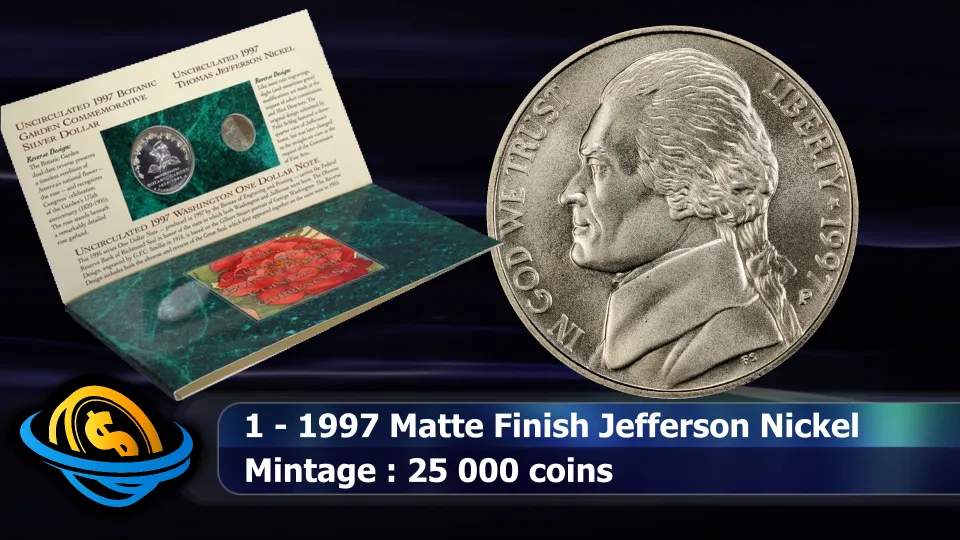
1. 1997-P Matte Finish Jefferson Nickel (25,000 Minted)
And so to the lowest official mintage figure in the entire Jefferson nickel series. Just 25,000 satin matte finish nickels were struck at Philadelphia in 1997, and every one of them was reserved for the Botanic Garden Coinage and Currency Set. Each set contained an uncirculated 1997 Botanic Garden commemorative silver dollar, a Series 1995 currency note, and the matte finish nickel, struck from specially prepared planchets and dies so that its surfaces differ visibly from the coins produced en masse for circulation.
Twenty five thousand coins, in a series collected by hundreds of thousands of people, and the market has never quite responded. Complete sets can be bought online today for $200 to $250, and a slabbed example in a respectable grade costs less than the set: GreatCollections sold an MS69 for $175 in 2026. It is the scarcest Jefferson nickel there is, and one of the least expensive coins on this list.
The Long View
Read the ten together and a pattern emerges that no mintage table will show you. Every coin here that collectors were warned about in advance is cheap today, because the warning worked and the rolls went into storage. Every serious price on this list, from the $13,825 1939-S to the $33,600 1938-D, was paid not for a scarce date but for a sharp one. In the Jefferson series the registry sets are a census of strike quality, not of production figures, and the coins that command real money are the ones nobody could have saved deliberately, because nobody could tell which ones the dies would get right.
Frequently Asked Questions
What is the lowest mintage Jefferson nickel ever made? The 1997-P satin matte finish nickel, with a mintage of just 25,000 coins. It was available only inside the 1997 Botanic Garden Coinage and Currency Set, and complete sets still sell for $200 to $250 today.
What is the lowest mintage Jefferson nickel struck for circulation? The 1950-D, at 2,630,030 coins. Because the mintage was publicised immediately and the coins were hoarded in rolls and bags, it is easier to find in mint state than in worn, circulated grades.
Which Jefferson nickel on this list is worth the most? The 1938-D, by auction record. A PCGS MS68+ with Full Steps, the finest known of its type, sold at Heritage Auctions in 2022 for $33,600. The 1939-D follows at $17,437 and the 1939-S at $13,825, and all three results were paid for strike quality rather than scarcity.
What does Full Steps mean on a Jefferson nickel? It means the coin was struck sharply enough to show five fully separated, unbroken steps at the base of Monticello on the reverse. Most Jefferson nickels were not, which is why the designation, rather than the mintage, drives nearly every high price in the series.
Are low mintage Jefferson nickels valuable? Usually not. A certified PCGS MS64 1938-S sold for $42 in 2026 despite a mintage of just 4,105,000, and the scarcest coin in the series can be bought slabbed for $175. Demand and strike quality set the price, not the mintage figure.
Read next: The 10 Lowest Mintage Lincoln Cents: America’s Rarest Pennies, Ranked